


News
Greens cite 13% poll boost ahead of Senedd election


Party claims support could deliver up to eleven seats under new proportional system
THE GREEN PARTY says new polling suggests it could secure around thirteen percent of the vote at next year’s Senedd Cymru election, a figure the party claims could translate into as many as eleven seats under Wales’ expanded electoral system.
In a press release issued this week, the local branch of the Green Party of England and Wales said recent surveys showed the party “on target to win eleven seats” when the Senedd grows from sixty to ninety-six members in 2026.
The Herald has checked the claim. A January voting intention poll carried out by YouGov for ITV Cymru Wales and Cardiff University placed the Greens on thirteen percent across Wales.
The same poll put Plaid Cymru ahead on around thirty-seven percent, followed by Reform UK, with Labour and the Conservatives further behind.
However, political analysts stress that polls are only snapshots of opinion and not predictions of the final result. Support levels can change significantly during a campaign, and smaller parties’ seat totals depend heavily on regional performance and turnout.

Under the new fully proportional “closed list” system, voters will choose parties rather than individual constituency candidates, with seats allocated to better reflect overall vote share. This change is expected to make it easier for smaller parties to gain representation compared with the current system.
Amy Nicholass, the Greens’ lead candidate in Ceredigion Penfro, said the shift meant voters could “vote for what they truly believe in” without needing to vote tactically.
“It’s important that people understand their vote will count,” she said.
Tomass Jereminovics, second on the regional list, said the party wanted to focus on devolved issues including NHS waiting lists, access to NHS dentists and tackling poverty.

Both candidates are due to attend a People’s Assembly event in Penparcau on Friday (Feb 7).
While the poll suggests growing support, experts caution that translating thirteen percent of the vote into double-digit seats would depend on how evenly that support is spread across Wales. Final projections are unlikely to become clearer until closer to polling day.

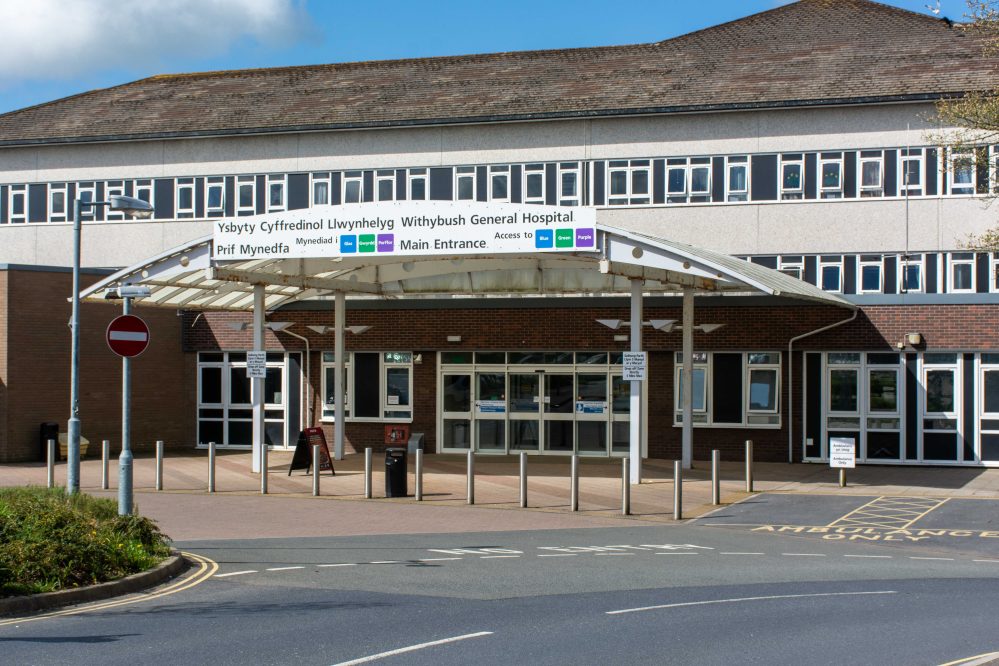
A HEATED exchange in the Senedd has laid bare growing tensions over the future of hospital services in west Wales.
During the final First Minister’s Questions session, Paul Davies MS challenged First Minister Eluned Morgan to intervene and stop Hywel Dda University Health Board from removing services from local hospitals.
Mr Davies told the Senedd: “Residents across west Wales are understandably upset and angry at these decisions to strip services from their local hospitals.
“They want the Welsh Government to stand up for them and stop the health board from removing those vital services.”
He said he had repeatedly called on ministers to act, adding: “I have asked you time and time again to work with me and stand up for the people of west Wales… will you now intervene and stop the health board removing services from west Wales, yes or no?”
First Minister rejects intervention
In response, the First Minister acknowledged public concern but refused to commit to direct intervention.
Eluned Morgan said: “I recognise that communities are very upset about the situation. I understand that people are committed to their local services.
“These services are deeply valued and they’ve got to remain safe. They’ve got to be sustainable. They’ve got to be deliverable.”
She stressed that decisions must be based on clinical advice, adding: “This has got to be a decision that is clinically led and really thinks about the objectives that it’s trying to achieve to get people better.”

Accusations of ‘spin’
The First Minister also accused Mr Davies of misrepresenting proposals around Withybush Hospital.
She said: “What about the spin that you put up… to say that emergency departments in Withybush were actually going to close?”
She pointed to planned improvements, including expanded orthopaedics, increased cancer care, seven-day diagnostics, and enhanced same-day emergency care.

“You fail to mention this every time you talk, Paul,” she added.
Ms Morgan then challenged the Conservative MS directly, asking: “Do you agree that we should have a brand new hospital in west Wales? Yes or no?”
Key election issue
The exchange underlines how healthcare in west Wales — and particularly the future of services at Withybush Hospital — is becoming a key battleground ahead of the upcoming Senedd election.
Concerns over service changes, travel times, and hospital capacity have been repeatedly raised by campaigners and politicians across the region.

Latest survey suggests Labour could be pushed into third place as Plaid and Reform battle for top spot
THE FIRST MINISTER Eluned Morgan could lose her Senedd seat at the upcoming election, according to a major new opinion poll which signals a dramatic shift in Welsh politics.
The YouGov poll for ITV Cymru Wales, carried out in partnership with Cardiff University, suggests Welsh Labour is facing a significant downturn in support, with projections indicating the party could fail to win in several constituencies – including Morgan’s own seat of Ceredigion Preseli.

Plaid Cymru is forecast to emerge as the largest party, despite a slight dip in vote share to 33%. The party is projected to secure 43 seats – just short of an outright majority – putting leader Rhun ap Iorwerth in a strong position to attempt forming the next Welsh Government.
Reform UK has surged to 27% in the poll, closing the gap on Plaid and potentially securing around 30 seats in the Senedd. The figures underline a rapidly shifting political landscape, with Reform now firmly in contention as a major force.
Labour, meanwhile, is projected to win just 12 seats on 13% of the vote, placing it behind both Plaid and Reform. The results suggest the party may not return any Members of the Senedd in four constituencies.


Race for power tightening
Political analysts say the latest figures point to a two-horse race between Plaid Cymru and Reform UK.
Dr Jac Larner of Cardiff University’s Welsh Governance Centre said the poll shows a narrowing contest for the largest party, but added that Plaid remains better positioned to form a government due to wider coalition options.
He also noted that Labour’s support appears to have stabilised slightly since earlier in the year, following a difficult period, although the party remains well behind its traditional standing.
The Greens continue to perform strongly, polling at 12%, which could translate into around ten seats. Their rise does not appear to be eating into Plaid Cymru’s support, suggesting they are attracting a different group of voters.

Tories face wipeout threat
The poll paints a bleak picture for the Conservatives, who are projected to secure just one seat with around 7% of the vote. The Liberal Democrats, polling at 5%, are at risk of losing representation in the Senedd altogether.
Experts warn that the new electoral system could amplify small changes in vote share, leading to disproportionate losses for smaller parties.
Major change expected
With just weeks to go until polling day, the findings point towards a potentially historic reshaping of the Senedd.

The Herald understands that parties across Wales are now intensifying campaign efforts as the prospect of a change in government becomes increasingly likely.
A large number of new Members of the Senedd are expected to be elected, with the balance of power shifting away from traditional parties and towards a more fragmented political landscape.

Suspected drug driver report leads to major police response and multiple arrests
DRAMATIC scenes were reported in Pennar on Monday afternoon (Mar 23) after multiple police vehicles were deployed to stop a car.
The incident happened at around 5:00pm near Pennar Court, Pembroke Dock, where officers located a stationary vehicle following reports of a suspected drug driver in the area.
Police attended and pre-emptively stopped the vehicle, also blocking a second car nearby.
Officers carried out searches of both vehicles and discovered suspected controlled substances.
A 32-year-old woman and a 47-year-old woman were arrested on suspicion of possessing class A and class B drugs with intent to supply. A 31-year-old man was arrested on suspicion of drug driving and possession of class A and class B drugs with intent to supply.
The 32-year-old woman has been released under investigation, while the 31-year-old man and 47-year-old woman have been released on unconditional bail.
Dyfed-Powys Police confirmed the incident followed reports of a man believed to be driving under the influence in the area earlier that afternoon.


Health7 minutes ago
Clash over Withybush Hospital services as Paul Davies challenges First Minister
A HEATED exchange in the Senedd has laid bare growing tensions over the future of hospital services in west Wales....


Crime18 hours ago
Police stop car in Pennar as three arrested in drugs investigation
Suspected drug driver report leads to major police response and multiple arrests DRAMATIC scenes were reported in Pennar on Monday...


Business23 hours ago
New pilot vessel Llanion arrives at Milford Haven
State-of-the-art 22-metre craft marks reset after £3.6m pilot boat controversy THE PORT OF MILFORD HAVEN has taken delivery of a...


Business2 days ago
Could Primark be coming to Haverfordwest? Major retailer in talks for former Wilko site
Council confirms advanced discussions as speculation grows over high street boost HAVERFORDWEST could soon see a major high street revival,...


Business2 days ago
Rail investment ‘could unlock 40,000 jobs and £11bn for Wales’ says new report
RAILWAY stations across Wales could help unlock around 40,000 jobs and more than £11 billion for the economy by 2036,...


Local Government2 days ago
Milford Haven set for £200m investment with schools, leisure centre and rail upgrade
Council outlines major plans for town with backing from Welsh Government MILFORD HAVEN is set for a major transformation with...


Community3 days ago
Broad Haven volunteers secure ‘national asset’ status for nature reserve
A SMALL stretch of woodland and former opencast coal mine has been transformed into a nationally recognised biodiversity site, in...


Entertainment4 days ago
Tenby steams up in spectacular style as crowds flock to festival
Colourful parade, towering creations and Victorian flair bring town centre to life TENBY was transformed into a vibrant Victorian fantasy...


Crime5 days ago
Publican jailed for six years for supplying cocaine and cannabis
Milford Haven man sentenced at Swansea Crown Court following drug dealing operation A MILFORD HAVEN publican has been jailed for...

Local Government5 days ago
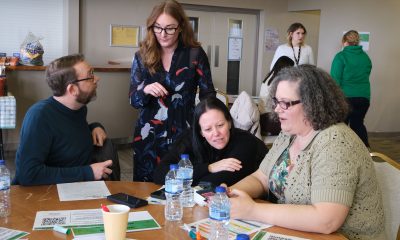
Poverty summit highlights support efforts across Pembrokeshire
A SUMMIT bringing together key organisations from across Pembrokeshire has highlighted both the scale of local poverty and the work...
-

 Crime7 days ago
Mother given community order after admitting child cruelty offence
-

 Health6 days ago
NHS waiting list falls — but cancer delays and diagnostic backlog worsen
-

 Crime6 days ago
Illegal workers found at Cardigan takeaway after immigration raid
-

 Crime7 days ago
Woman stole from pharmacy despite ban, court hears
-

 Crime5 days ago
Pembroke man remanded in custody over knife threat, assault and damage allegations
-

 Crime7 days ago
Man pleads guilty in illegal ‘smokies’ food safety case
-

 Crime5 days ago
Broad Haven man remanded in custody over sexual harm prevention order breach
-

 News6 days ago
Council unveils plans for new state-of-the-art secondary school in Milford Haven