


Climate
Newgale coastal road relocation plans pause welcomed

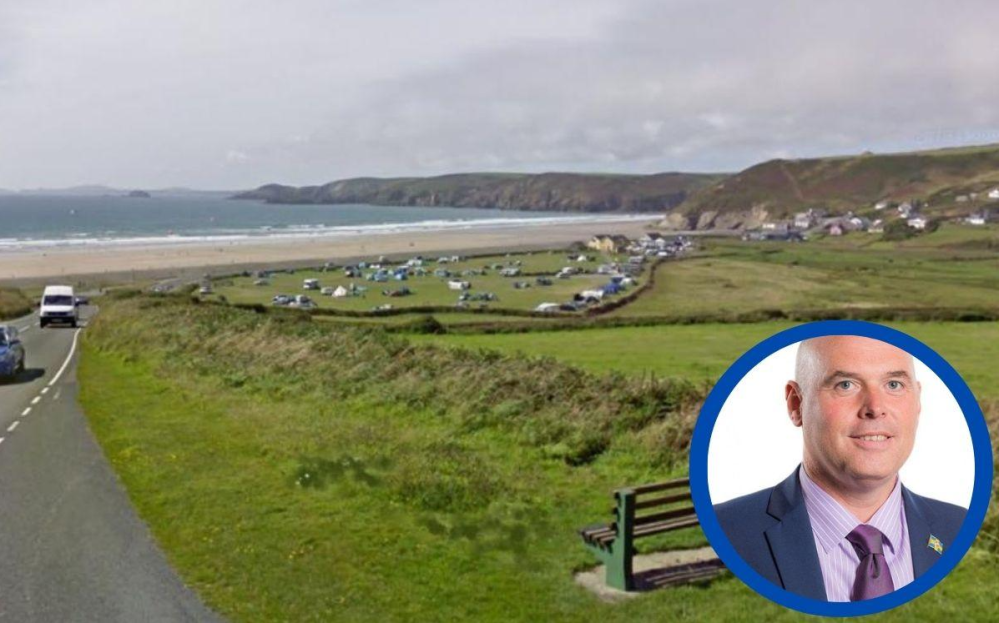
LOCAL Senedd Member Paul Davies has welcomed the decision taken by Pembrokeshire County Council’s Cabinet to pause its proposed road‑realignment scheme in Newgale.
Newgale was hit hard by flooding following storms in early 2014 storms, and later by Storm Dennis in 2020.
In 2014 it even saw a visit by the-then Prime Minister David Cameron following the storms.
A public consultation – through agent AtkinsRéalis – was launched last year ahead of a formal council application to Pembrokeshire Coast National Park for Phase 1 of the Newgale Coastal Adaptation Project, which would see the development of a new inland section of road with bridge over Brandy Brook some 2.3km inland, to replace the coastal section of A487 at Newgale that will be closed.
Varied claims have been made about the cost of this scheme, from £20m upwards, some even saying it could cost as much as £60m, with millions spent on consultation fees to date.

An alternative, cheaper, scheme had been proposed by STUN – Stand Up for Newgale, proposing a section of the shingle bank at Newgale be realigned 10-12 metres seaward leaving an over-wash barrier between it and the A487 to capture any pebbles and sea water.
At the February meeting of Pembrokeshire County Council’s Cabinet, in a report presented by Residents’ Services Cllr Rhys Sinnett, members received an update on the scheme, which included options of a formal submission, abandoning it, and the favoured option of putting it on hold for a period of between 18 and 24 months.
The option recommended, and later backed by members, was: “Acknowledge that the scheme is required to be delivered, in light of climate change, the work undertaken to date and the results of the WG Roads Review and Pre Application Consultation. “However, taking into account the current financial climate and the immediate risk to the A487; pause the scheme prior to submitting planning application, and review the position in the next 18- 24 months.”
It also recommended maintain surveys of the scheme “with a view of future progression of the scheme to planning application as the scheme is required in the long term,” along with reviewing “options available for short term improvements, including passing places and signage, to the division route implemented during road closures as a result of storm/ flooding impacts at Newgale through the Regional Transport Plan Funding,” and to “continue to review external funding options to support the delivery of the construction phase of the project”.

Mr Davies, who has supported the alternative proposals, said he was pleased that the Cabinet had halted its plans and urged the authority to give full consideration to the alternative community‑led scheme.
Mr Davies said: “Coastal erosion in Newgale has been a longstanding issue, and it’s crucial that any response is both effective and proportionate. The community has developed its own Newgale Beach Access and Shingle Bank Realignment Scheme which offers a less invasive approach that would significantly reduce costs for the council and local taxpayers.”
“Pembrokeshire County Council’s Cabinet is right to stop its own scheme from going ahead and I now urge the Council to consider the community’s proposal, which strikes a far better balance between environmental protection, financial responsibility and the needs of local residents.”



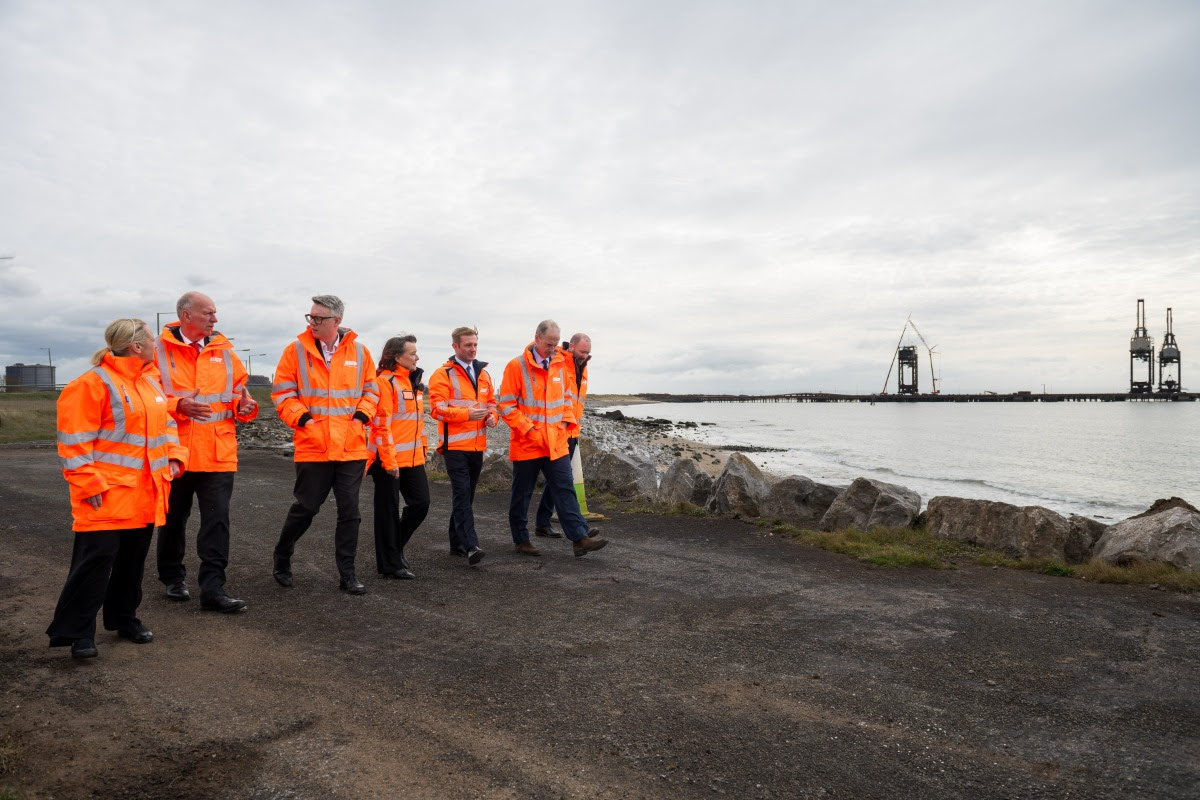
New government-backed deal with ABP reinforces Port Talbot’s central role in Celtic Sea wind plans
PORT TALBOT has been firmly established as the “cornerstone” of the UK’s floating offshore wind ambitions in the Celtic Sea, following a major agreement between the UK Government and Associated British Ports.
The deal confirms government support for the development of large-scale port infrastructure at Port Talbot, enabling manufacturing, assembly and deployment of floating wind turbines for gigawatt-scale projects.
The announcement strengthens Port Talbot’s position as the primary industrial hub for the emerging sector.
Henrik L. Pedersen, Chief Executive of Associated British Ports, said the development would “establish the port as a cornerstone of the Celtic Sea floating offshore wind industry.”
Clear role for Port Talbot
The agreement, subject to final regulatory approval, will support the delivery of major offshore wind projects awarded through the latest Celtic Sea leasing round.

Government ministers visiting the site described the development as a key step in building the UK’s clean energy future.
Energy Secretary Ed Miliband said the project would help Wales “storm ahead in floating offshore wind,” supporting thousands of jobs and driving economic growth.
Secretary of State for Wales Jo Stevens added that the investment would “further cement Port Talbot as a hub of the industries of the future.”
Milford Haven still waiting for detail
The latest announcement comes just days after questions were raised about Milford Haven’s role within the wider Celtic Freeport.

While Port Talbot’s position as a manufacturing and assembly hub is now clearly defined, there has still been no detailed breakdown of what activity will be based in Pembrokeshire.
Industry figures continue to point to Milford Haven’s strengths in operations, maintenance, logistics and servicing of offshore wind projects.
However, no formal commitments have yet been made.

Industry backing grows
Developers involved in Celtic Sea wind projects welcomed the progress at Port Talbot, describing it as essential infrastructure for delivering future schemes.
Ocean Winds said strengthening port infrastructure was “essential” to ensuring regional ports can support the rollout of offshore wind.
The Crown Estate also described the move as a key step towards unlocking the economic potential of the Celtic Sea, which could create thousands of jobs across Wales and beyond.
Growing pressure for answers
With Port Talbot now firmly positioned at the centre of construction and deployment, attention is likely to turn to how other ports—including Milford Haven—fit into the wider strategy.
For Pembrokeshire, the question remains unchanged:
As billions of pounds flow into the Celtic Sea over the coming decade, will Milford Haven secure a defined share of that investment—or continue to wait for clarity?
Pictured above:
From left to right: Cabinet Secretary for Economy, Energy and Planning, Rebecca Evans; David Rees MS for Aberavon; Minister for Energy Consumers, Martin McCluskey; Secretary of State Jo Stevens; Ashley Curnow, Divisional Port Manager (ABP); Julian Walker, Chief Commercial Officer and Regional Director (ABP), Mike Goddard, Head of Programme, Future Port Talbot (ABP)
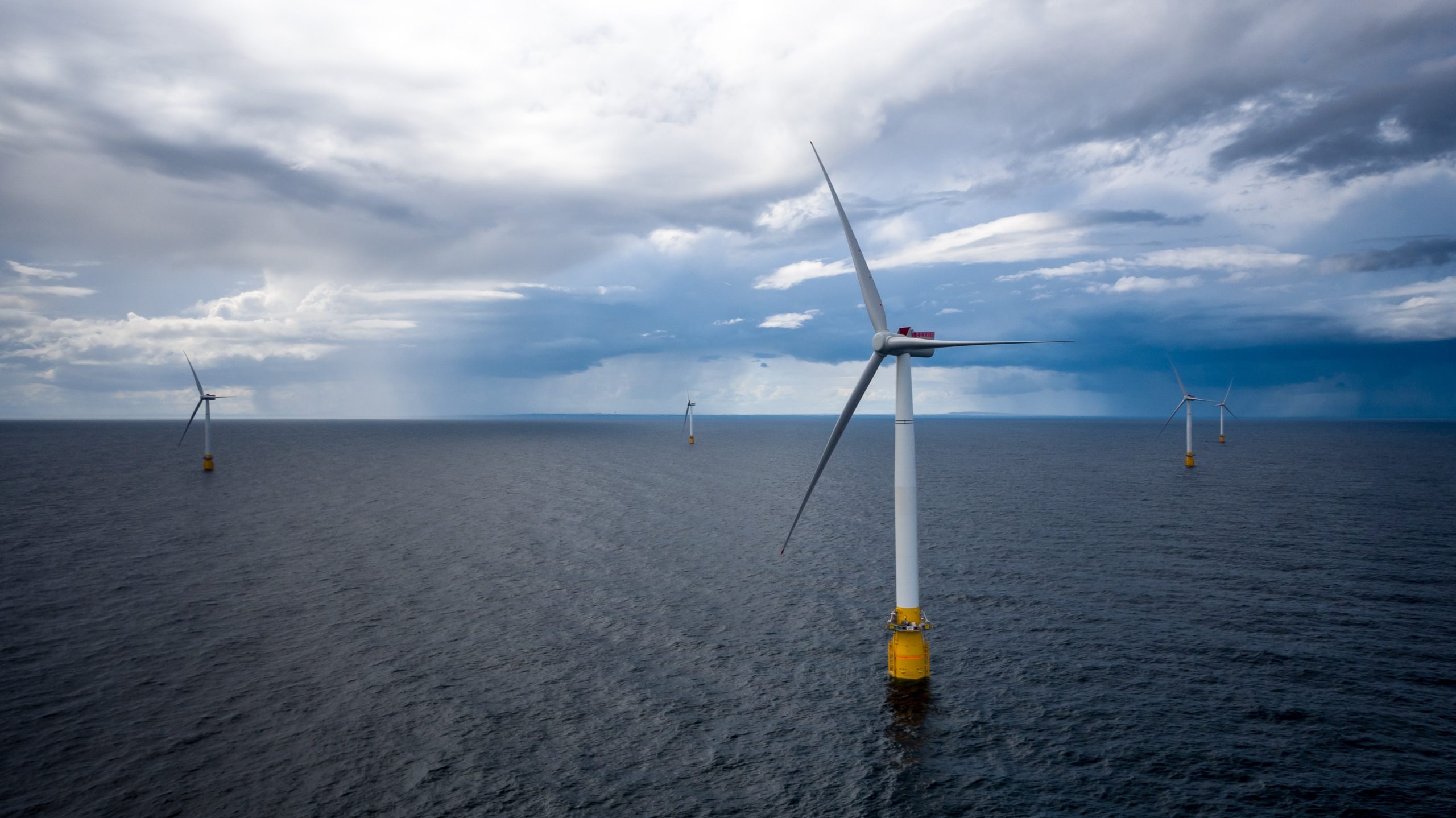
Port Talbot secures £64m backing as questions grow over Pembrokeshire’s share of offshore wind boom
MILFORD HAVEN’S role in Wales’ clean energy future is under intense scrutiny after a major government-backed wind project placed Port Talbot firmly at the centre of the Celtic Sea boom.
The UK Government has confirmed up to £64 million in funding to transform Port Talbot into the UK’s first dedicated floating offshore wind hub—unlocking up to 4.5GW of capacity and thousands of jobs.
But as the scale of the investment becomes clear, a critical question is now being asked across Pembrokeshire: what does Milford Haven actually get?

Freeport partnership — but unequal detail
The UK Government has made clear the scale of its backing for Port Talbot, describing it as central to its “clean power mission.” The £64 million grant will fund design and engineering work to develop a specialist floating wind port, expected to unlock at least 4.5GW of projects in the Celtic Sea—enough to power around 6.5 million homes. Officials say the scheme could support up to 5,000 jobs and attract more than £500 million in private investment.
Energy Secretary Ed Miliband said: “With its deep waters and strong winds, we are supporting Wales to storm ahead in floating offshore wind – a pioneering industry that will support thousands of good jobs, drive growth across the country and unlock the next generation of clean, homegrown power.”

Both Port Talbot and Milford Haven form part of the Celtic Freeport, a flagship project intended to drive growth across South West Wales.
Yet while Port Talbot has secured clear backing as the main construction and assembly hub, there has been no detailed explanation of Milford Haven’s role.
That lack of clarity is raising concern locally.
Milford Haven is one of the UK’s most strategically important energy ports, handling a significant share of the nation’s gas imports and boasting deep-water access ideal for large-scale offshore operations.
For many, it appeared an obvious candidate to play a central role in floating wind.
WHY THIS MATTERS
- Floating wind in the Celtic Sea could power millions of homes
- More than £500 million in private investment expected
- Up to 5,000 jobs linked to port and supply chain activity
- Wales could attract tens of billions in long-term renewable investment
- Early decisions will determine where those jobs are based
‘Value will go elsewhere’
The announcement has also triggered political criticism over how much economic benefit Wales will actually retain.
The Welsh Liberal Democrats have warned that key components for the turbines are likely to be manufactured abroad, with only assembly taking place in Port Talbot.

Welsh Liberal Democrat MP David Chadwick said: “Any job creation is a positive step for Port Talbot, but Labour need to be honest about what this actually contains.
“These turbines are set to be built using imported steel and only assembled locally, not manufactured. This means much of the real economic value will still go elsewhere.”

Major projects already linked to Milford Haven
Despite the uncertainty, significant clean energy investment is already being directed into Milford Haven itself.
A £50 million green hydrogen project within the Freeport tax site is set to begin construction this year, producing low-carbon hydrogen using renewable electricity—much of it expected to come from offshore wind.
UK Energy Minister Michael Shanks said the investment was “crucial in de-carbonising industry, driving investment, boosting our energy security and creating hundreds of jobs in our industrial heartlands.”
Welsh Secretary Jo Stevens added: “This is a huge milestone… which will create jobs and help grow the Welsh economy.”
Meanwhile, a major 1.5GW floating wind project in the Celtic Sea has already secured an Agreement for Lease, with Welsh Government backing.
Economy Secretary Rebecca Evans said: “These projects will create thousands of skilled jobs and help secure our energy independence for generations to come.”
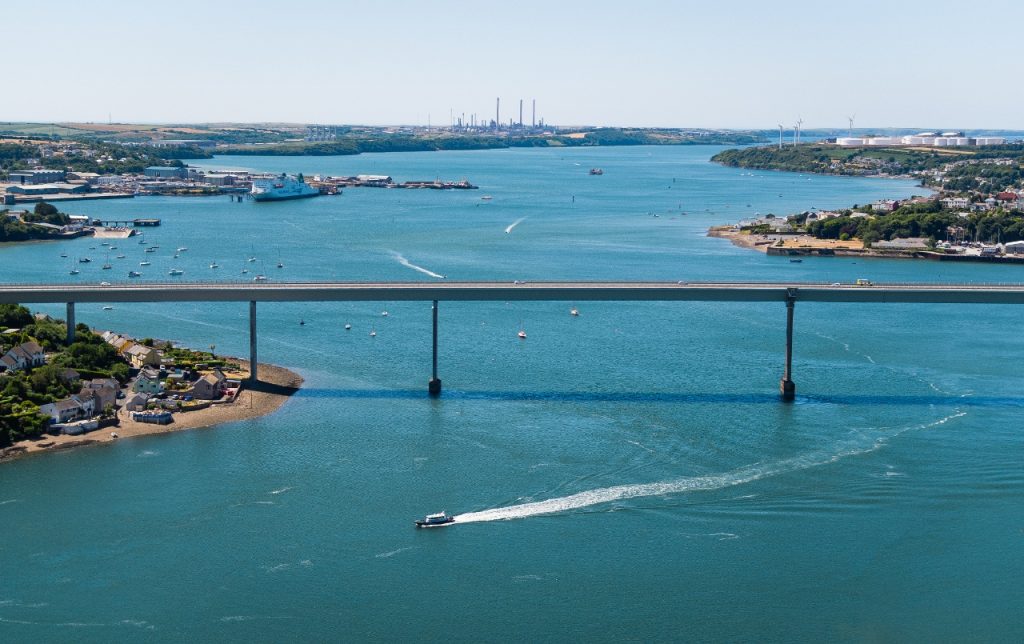
Labour promises jobs — but few specifics
On Friday (Mar 27), Eluned Morgan is set to visit the Port of Milford Haven, where she will pledge to bring more jobs to West Wales through clean energy investment.
She is expected to say the region has “a wealth of opportunity” in the sector and promise that rural communities will benefit from the transition.
However, no specific commitments have yet been made about what proportion of offshore wind activity will be based in Pembrokeshire.
What could Milford Haven secure?
Industry expectations suggest Milford Haven could play a key role in:
- Servicing and maintenance vessels
- Crew transfer operations
- Storage and logistics for turbine components
- Long-term operations bases for offshore wind farms
The Herald understands that discussions around Milford Haven’s role in operations and maintenance have been ongoing for several years, but no formal allocation of work has yet been confirmed.
In contrast, Port Talbot has already secured early-stage government backing and a clearly defined role in construction and assembly.
Opportunity — but no guarantees
Floating offshore wind development in the Celtic Sea is expected to accelerate later this decade, with the first large-scale projects likely to come online in the early 2030s.
Supporters argue the expansion of offshore wind is key to reducing long-term energy bills and protecting the UK from volatile global fossil fuel markets.
Milford Haven’s location, infrastructure, and experience in handling large-scale energy logistics place it in a strong position.
But without firm agreements, there is no certainty over how much work will ultimately come to the area.
With billions of pounds expected to flow into the Celtic Sea over the next decade, early decisions could shape the economic balance of the region for a generation.
A defining moment for the Haven
For Milford Haven, the stakes could hardly be higher.
The port has long been central to the UK’s fossil fuel economy.
Floating offshore wind represents the next chapter—but whether Pembrokeshire becomes a key player or a supporting act remains unresolved.
As political parties set out competing visions ahead of the next Senedd election, local leaders are now under pressure to secure clear commitments.
The opportunity is real.
The investment is coming.
The only question now is whether Pembrokeshire secures its share—or watches it land elsewhere.

Lib Dems warn jobs boost may be limited as turbines set to be built abroad
MILFORD HAVEN’S role in Wales’ flagship floating wind project remains unclear after new criticism emerged over the Port Talbot investment.
The UK Government has announced £64 million to turn Port Talbot into the UK’s first floating offshore wind hub in the Celtic Sea, a move expected to support thousands of jobs.
However, fresh political concerns have now been raised over how much of that economic benefit will actually stay in Wales.
The Welsh Liberal Democrats have warned that the project risks becoming an assembly operation rather than a full industrial supply chain.
David Chadwick MP said: “Any job creation is a positive step for Port Talbot, but Labour need to be honest about what this actually contains.
“These turbines are set to be built using imported steel and only assembled locally, not manufactured. This means much of the real economic value will still go elsewhere.”
Milford Haven still waiting for clarity
The announcement has also left unanswered questions about Milford Haven’s role within the Celtic Freeport.
While Port Talbot has secured clear backing as the main construction hub, there has been no detailed explanation of what activity will be based in Pembrokeshire.
That lack of detail is significant.

Milford Haven already has deep-water access, established energy infrastructure, and a long-standing role in UK energy security—factors which many expected would place it at the centre of offshore wind operations in the Celtic Sea.
Jobs — but where is the value?
The UK Government says the project could unlock over £500 million in private investment and support up to 5,000 jobs.
But critics argue that if key components are manufactured overseas, Wales risks missing out on the higher-value parts of the supply chain.
That raises a broader concern for Pembrokeshire: whether Milford Haven will secure meaningful long-term work, such as maintenance, servicing, and logistics—or be left with only limited involvement.
Energy transition moment
For Milford Haven, the stakes are high.
The port has long been a cornerstone of Britain’s fossil fuel infrastructure.
Floating offshore wind represents the next phase of that story—but exactly how big a role the Haven will play is still to be defined.
With billions in investment expected in the Celtic Sea, local leaders are now likely to push for clearer commitments to ensure Pembrokeshire is not left behind in the transition.



Business7 hours ago
Fishguard to Wexford rail tunnel plan backed by Elon Musk firm
Six-hour London to Dublin service proposed in £32bn project ahead of Senedd election PLANS for a rail tunnel linking west...


Charity20 hours ago
Milford Haven charity honoured with King’s Award for voluntary service
A PEMBROKESHIRE charity supporting vulnerable young people has received one of the highest honours in the UK for voluntary work....


News2 days ago
Plaid Cymru launches bid to lead next Welsh Government
Party positions itself as ‘government-in-waiting’ ahead of May election PLAID CYMRU has formally launched its campaign for the 2026 Senedd...


Crime2 days ago
Police appeal after attempted child abduction in Haverfordwest
DYFED-POWYS POLICE has launched an appeal for witnesses following a reported attempted abduction of a 12-year-old girl in Haverfordwest. The...


Crime3 days ago
Gunshot fired by police during incident in Milford Haven
A POLICE officer discharged a firearm during an incident in Milford Haven on Saturday evening (March 28), prompting an investigation...


Community4 days ago
Three Amigos Easter Run roars through Pembrokeshire
MOTORCYCLE enthusiasts turned out in force today (Saturday, March 28) as the popular Three Amigos Easter Run returned to the...


Education5 days ago
Ysgol Henry Tudor reassures parents over Sikh ceremonial kirpan
School says religious item worn by pupil is secured, symbolic and non-functional YSGOL HENRY TUDOR has moved to reassure parents...


Crime6 days ago
Teen jailed after starting fire while others slept
Fire set in shared home left sleeping residents at risk and caused £130,000 damage A TEENAGER who started a fire...


Health6 days ago
GP crisis driving NHS pressure in Wales, Senedd report warns
Falling GP numbers and funding gaps blamed for worsening hospital delays THE NHS crisis highlighted earlier this week is being...


News7 days ago
Reform reveals west Wales candidates for Senedd battle
Monkton councillor tops Pembrokeshire list as party confirms Carmarthenshire names and includes Haverfordwest councillor in unwinnable Swansea spot REFORM UK...
-

 News7 days ago
Welsh Government outlines progress on flood resilience plans
-

 Community6 days ago
Hero female officer keeps job after sexual touching finding
-
Education5 days ago
Ysgol Henry Tudor reassures parents over Sikh ceremonial kirpan
-

 Business6 days ago
Popular Italian restaurant hit with £278,000 tax bill plus £186,000 fine
-

 Health7 days ago
Clash over Withybush Hospital services as Paul Davies challenges First Minister
-

 Crime7 days ago
Hakin motorist banned after drink-drive crash
-

 Sport7 days ago
Record-breaking disability swim gala celebrates success in Fishguard
-

 Health7 days ago
Doctors say Wales is failing to value NHS staff over new pay award