


News
Sea Empress: 30 years since the grounding that transformed safety in Milford Haven

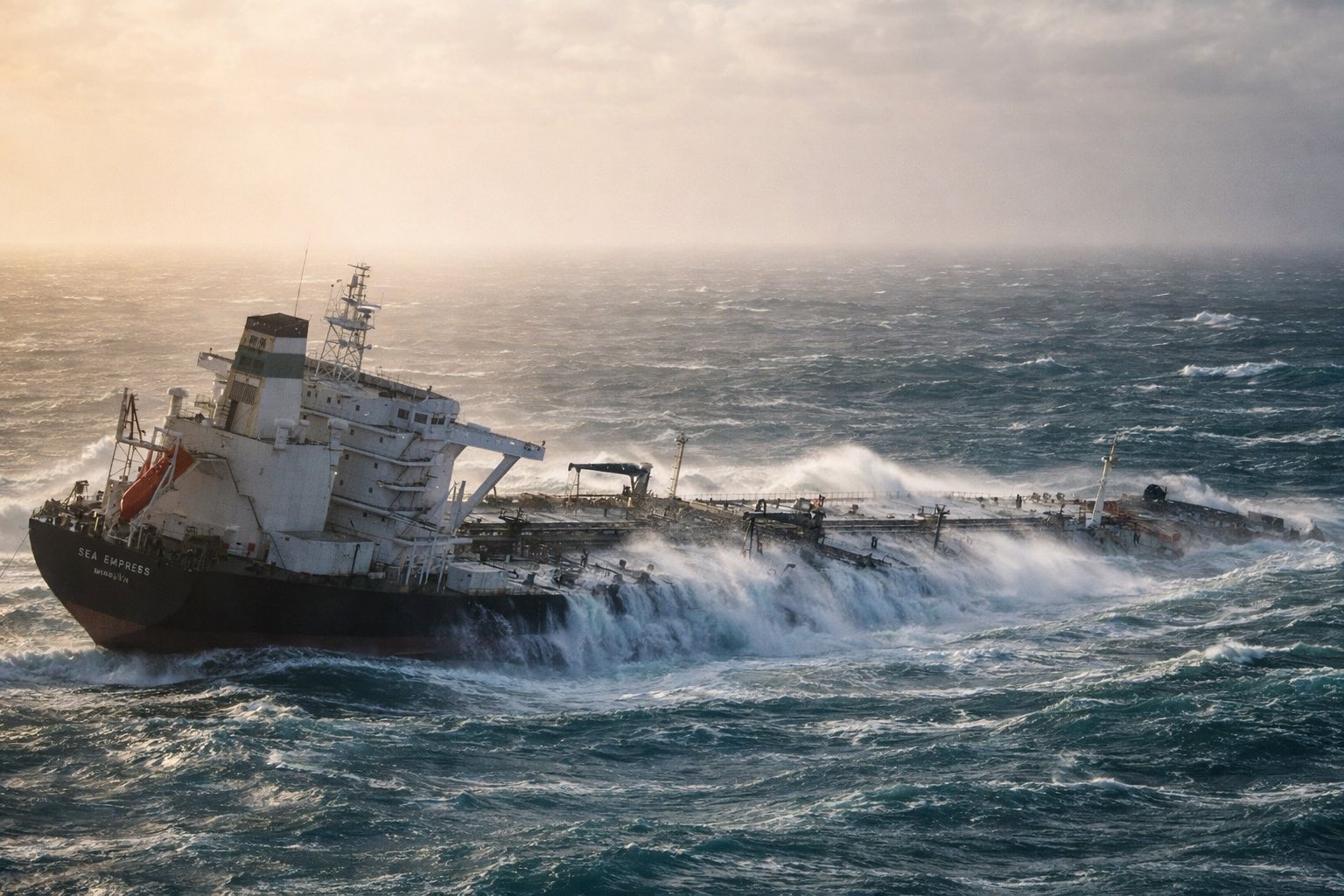
Human error, storm conditions and salvage decisions combined in one of Britain’s worst maritime disasters
THIRTY years ago this week, the oil tanker Sea Empress ran aground while entering Milford Haven, triggering a maritime emergency that would ultimately reshape safety procedures in one of the UK’s most important ports.
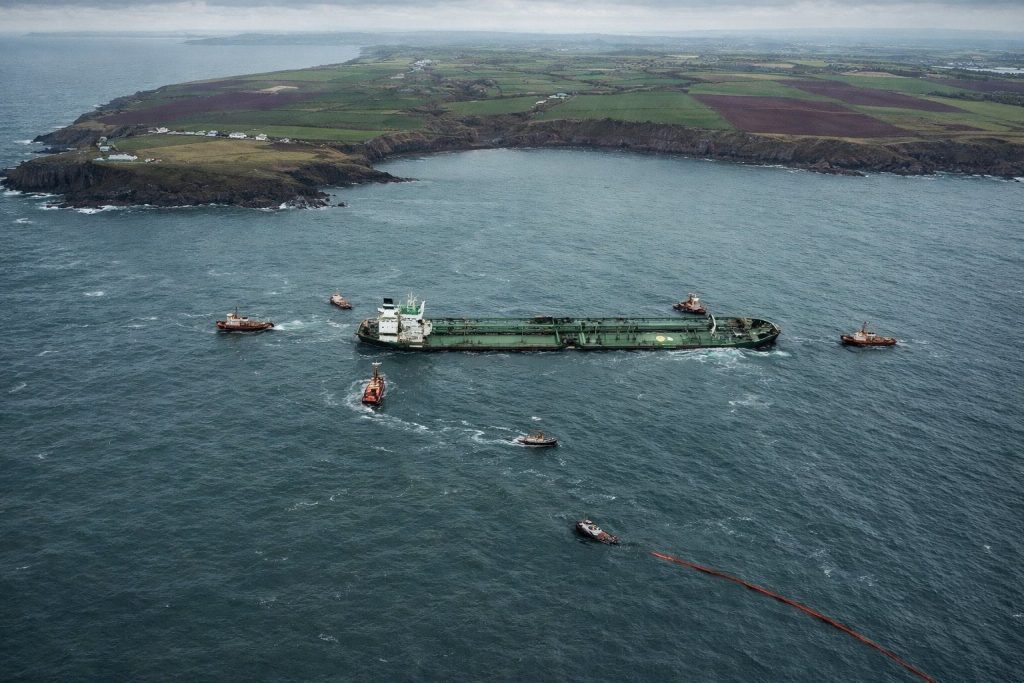
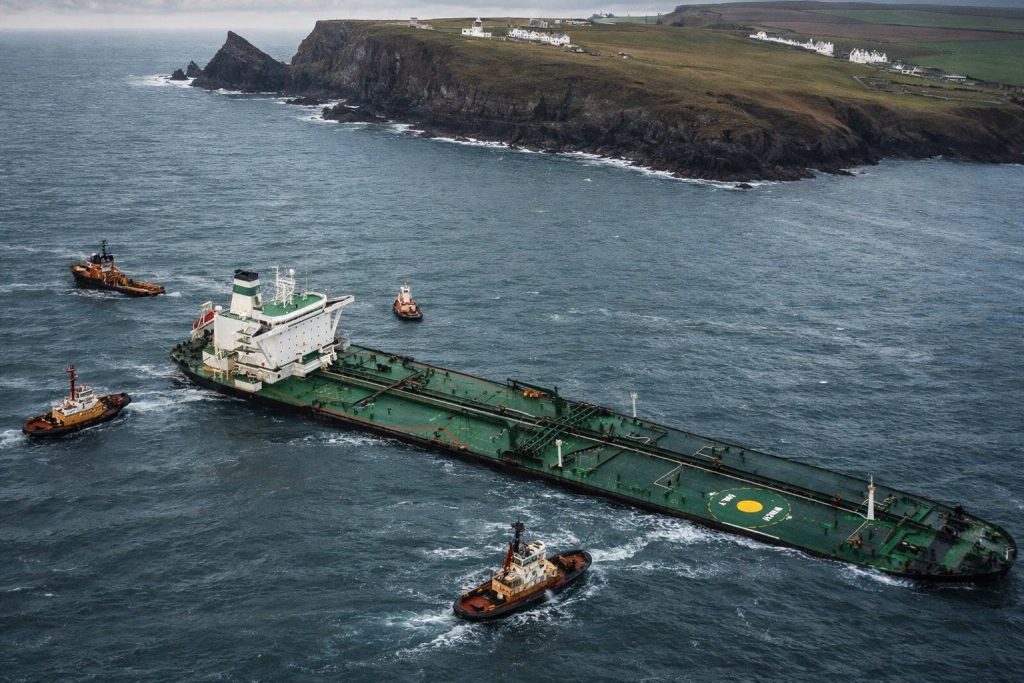
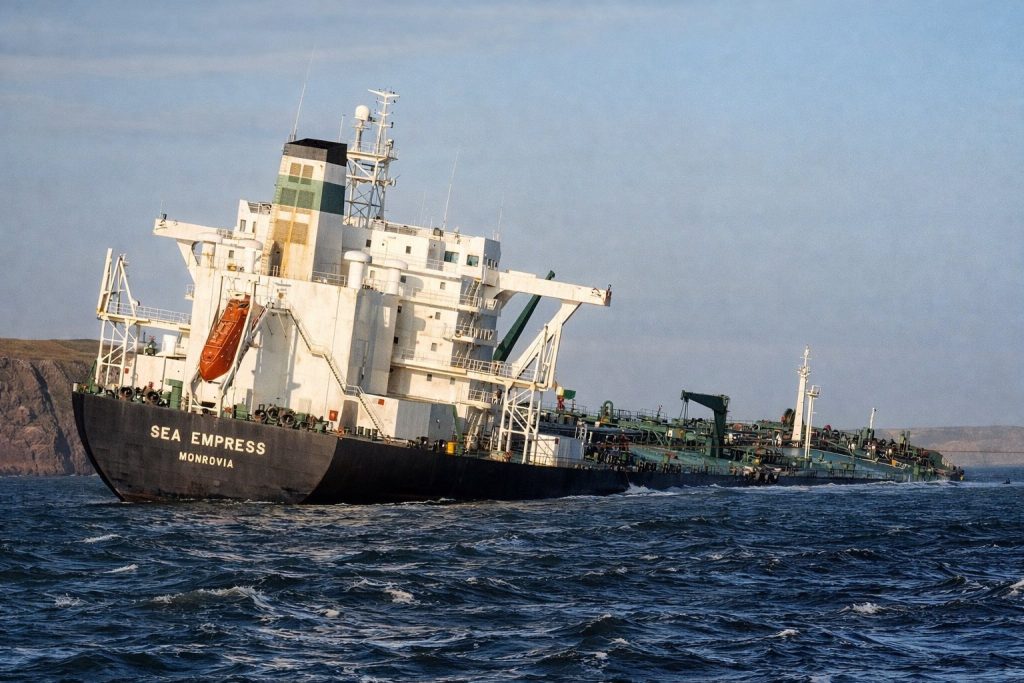
On the evening of February 15, 1996, the Liberian-registered tanker was inbound to the Texaco refinery carrying approximately 130,000 tonnes of North Sea crude oil when it struck rocks at the entrance to the Haven.
What followed was a complex and dangerous salvage operation carried out in severe weather, repeated groundings, and eventually the release of more than 70,000 tonnes of oil into the sea — making it one of the worst environmental disasters in British waters.
What actually went wrong
The Marine Accident Investigation Branch later concluded that the grounding was primarily caused by human and operational error rather than mechanical failure.
The tanker’s steering gear and propulsion systems were found to be functioning normally.

Investigators identified a sequence of navigational decisions and communication issues between the ship’s master and harbour pilot that led the vessel too close to the rocks while manoeuvring into the channel.
Strong tidal conditions and environmental factors then compounded the situation once the vessel was aground.
In simple terms, the ship was not where it should have been.
A salvage operation under pressure
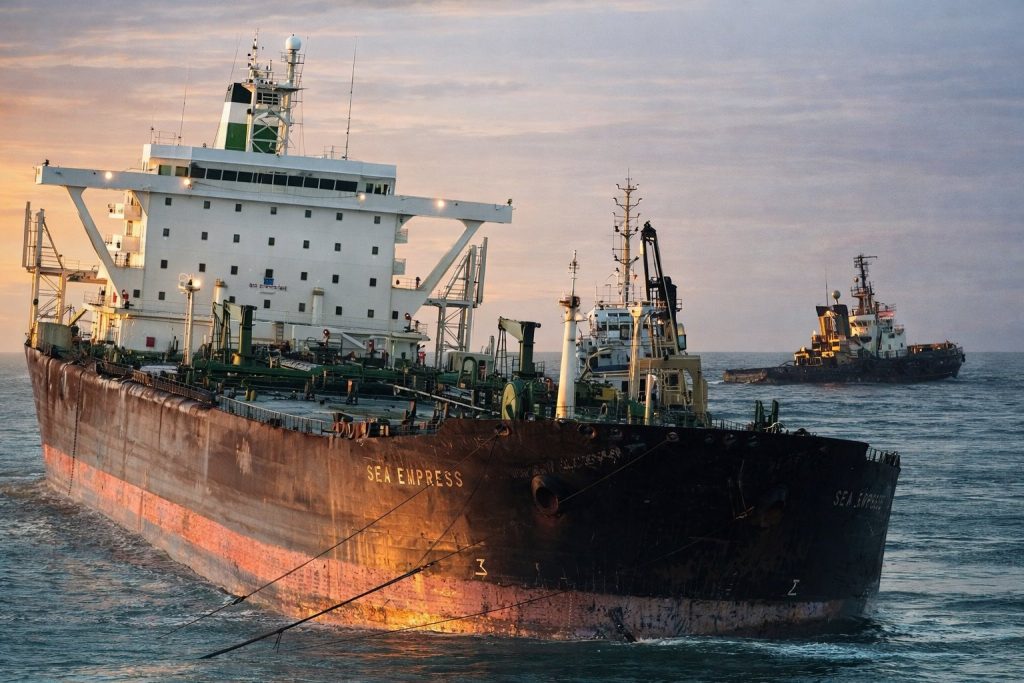
Initial efforts focused on stabilising the vessel and preventing further oil loss, but worsening weather quickly made operations far more dangerous.
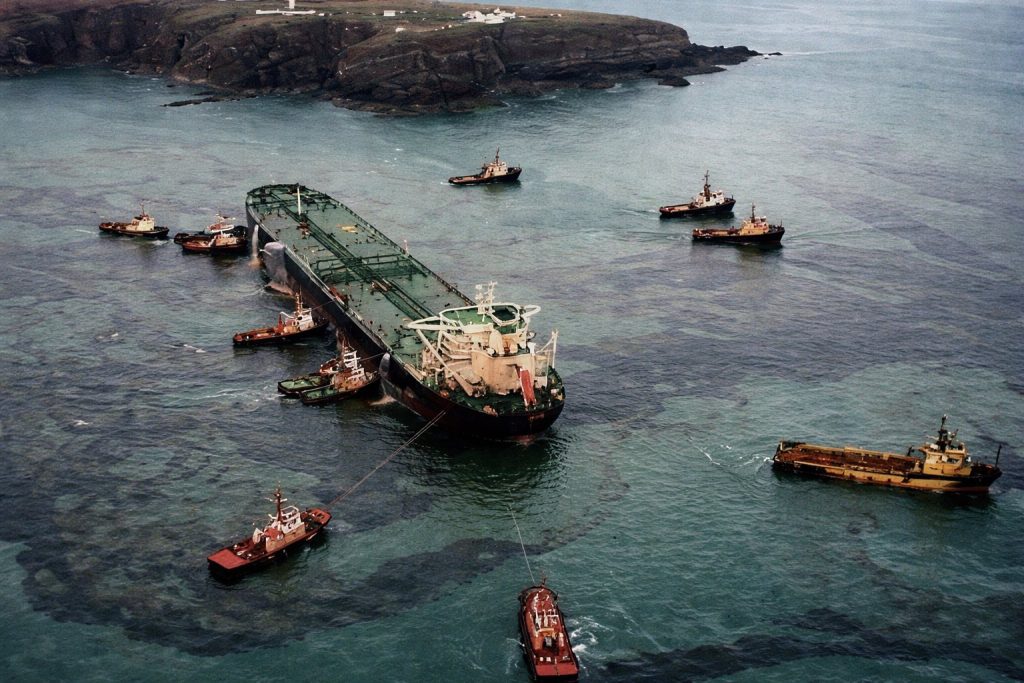
Tugs worked in gale-force winds attempting to pull the tanker clear.
During one critical phase, a tow line parted under extreme tension, allowing the ship to ground again and spill additional oil.
At the same time, fears grew that vapours from the cargo could ignite, prompting evacuations near St Ann’s Head.

Aircraft sprayed dispersants over the spreading slick while emergency services prepared for a potential explosion scenario.
The priority at that stage was to prevent the vessel breaking apart completely.
Eventually, after several days of effort, salvage crews succeeded in refloating the tanker and moving it to a safer position where the remaining cargo could be removed.
Who was blamed
Responsibility for the disaster became the subject of legal and regulatory scrutiny.
The official investigation placed primary fault on navigational decisions during the vessel’s approach rather than any equipment failure.
The ship’s master and pilot both faced criticism over judgement and coordination, though the complex operational environment was also acknowledged.
In subsequent legal proceedings, liability for the spill was largely addressed through civil compensation mechanisms involving the ship owners and insurers under international maritime conventions.
There was no single individual publicly identified as solely responsible for the scale of the environmental damage.
However, the incident exposed weaknesses in escort tug arrangements, navigation procedures and emergency response planning.
Impact on Milford Haven operations
One of the most significant long-term outcomes was the strengthening of escort tug requirements for large vessels entering the Haven.
Navigation procedures were reviewed and risk management protocols improved.
Emergency pollution response capability across the UK was also reassessed.
For the port itself, the disaster became a turning point.
Milford Haven continued operating as a major energy hub, but with tighter safety controls and increased scrutiny.
Environmental and community consequences
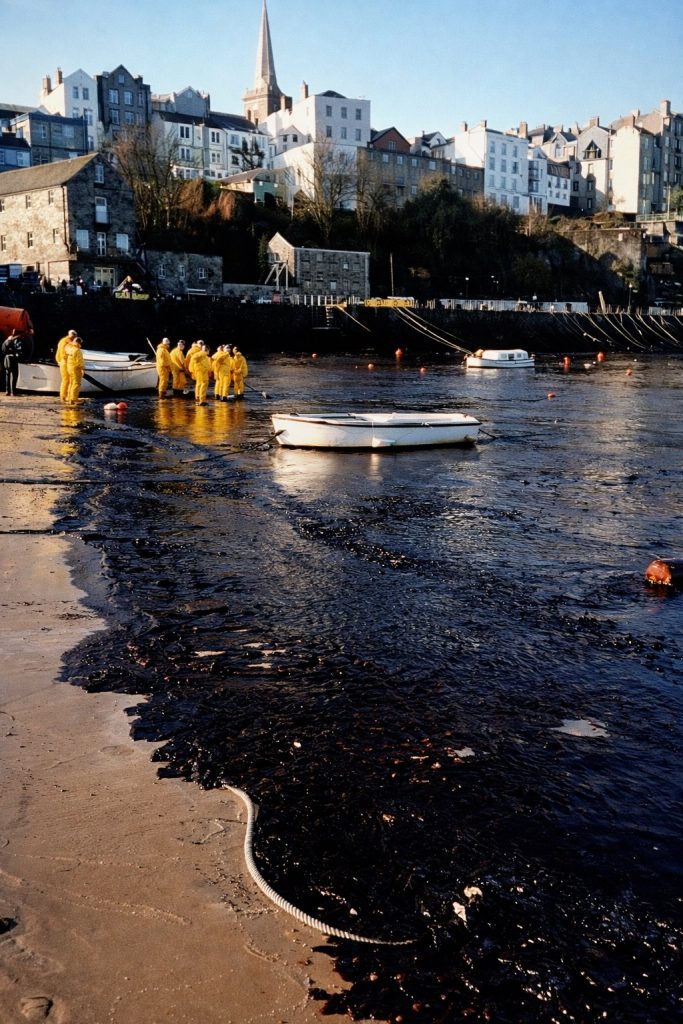
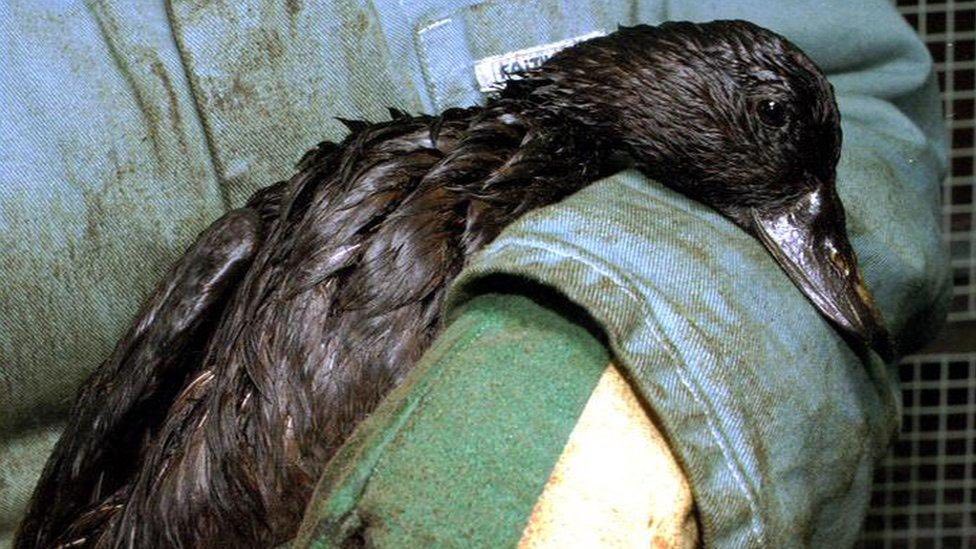
Oil contamination spread across miles of coastline, affecting wildlife habitats, fisheries and tourism.
Thousands of volunteers joined military personnel and contractors in an enormous cleanup effort that lasted months.
While environmental recovery has been substantial over the decades, the psychological impact on coastal communities and those directly involved in the response remains part of local memory.
Maritime lessons that endure
Today, the Sea Empress is widely viewed within the maritime industry as a case study in how small navigational errors can escalate into major incidents when combined with environmental pressures.
The disaster reinforced the importance of escort towing, pilotage coordination and emergency planning in high-risk ports.
Thirty years on, the Haven remains one of the UK’s busiest energy ports — operating under safety frameworks shaped directly by the events of February 1996.








A 20-YEAR-OLD man remains in a critical condition in hospital after being seriously assaulted in New Quay.
Dyfed-Powys Police said the incident happened at around 12:51am on Saturday (July 4) in Margaret Street, leading to Uplands Square.
The victim suffered serious, life-threatening injuries and was taken to hospital, where he remains in a critical condition.
A 37-year-old man has been arrested on suspicion of grievous bodily harm and remains in police custody.
Police said enquiries are progressing, led by CID and the Major Crime Team. A visible police presence is expected to remain in the area over the coming days.
Officers are appealing for witnesses, or anyone with information, to come forward.
Anyone who can help is asked to contact Dyfed-Powys Police online, by emailing [email protected], by direct message on social media, or by calling 101.
Quote reference: DP-20260704-028.

Around 70 tractors joined the annual charity road run, hosted by the Begelly Arms Hotel
THE ANNUAL Kilgetty and Begelly Charity Tractor Run brought a colourful convoy to the roads around the Narberth area on Saturday (Jul 4), with around 70 tractors taking part.
The event was hosted by the Begelly Arms Hotel, where farmers, families and supporters gathered before the start of the run.
Entrants were treated to bacon rolls and coffee by the hosts before setting off, while many families took the opportunity to pose for photographs alongside the tractors.
The road run once again proved to be a popular community event, bringing together local farmers, vintage tractor enthusiasts and supporters for a good cause.




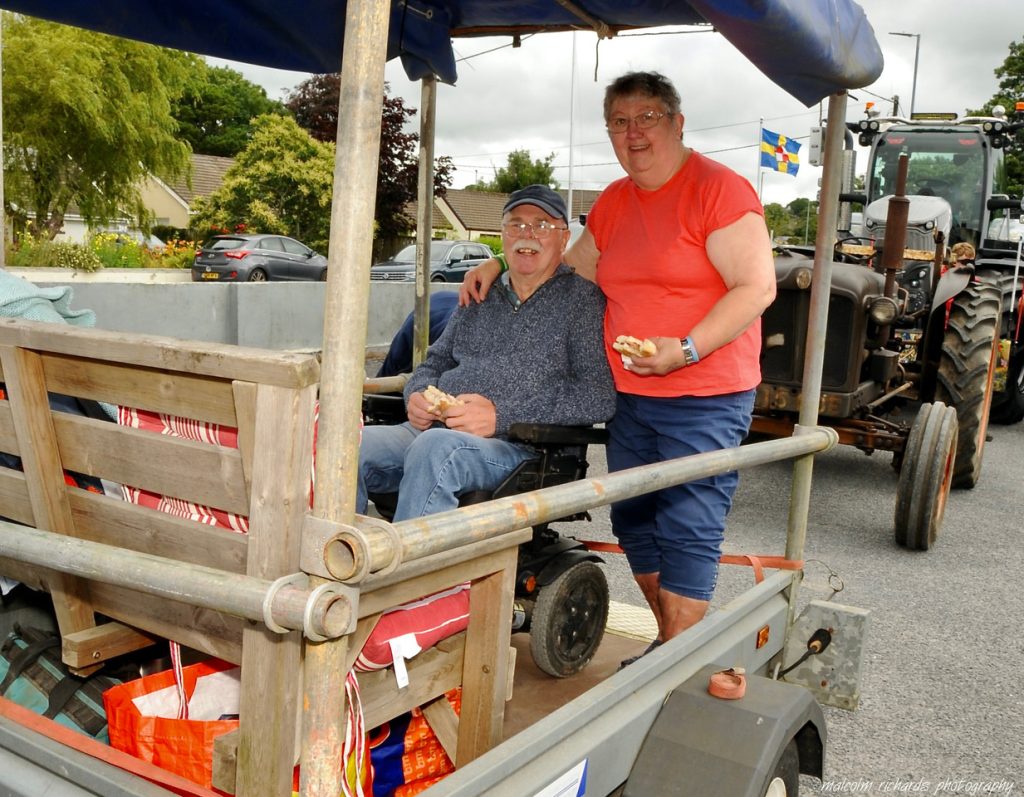







The sight of dozens of tractors heading out together made an impressive display as the convoy travelled through the local area.
Organisers said local charities are set to benefit from money raised at the event.
The annual run has become a well-supported fixture in the local calendar, with farming families turning out in force to take part and support the fundraising effort.
For further information, contact Peter Adams at the Begelly Arms on 01834 812601.
Pictures: Malcolm Richards

PONTRHYDFENDIGAID Carnival returned in style on Saturday, with a strong community turnout as villagers, families, children and young people gathered on the Village Green before the procession moved on to Bont Pavilion.
The afternoon was full of colour, music and community spirit, with bunting, balloons, decorated floats and smiling faces helping to create a true village celebration.
Among the highlights were the children’s and young people’s entries, which showed real creativity, confidence and effort. Farmyard scenes, animal costumes, a Noah’s Ark-themed float and brightly decorated tableaux all helped bring the carnival to life.



Organisers praised the work that had gone into the displays, competitions and activities, with many families clearly spending hours preparing costumes, props and entries.
The carnival programme featured a wide range of competitions, including floats and tableaux, children’s age-group entries, adverts, pairs, “anything on wheels” and the ever-popular welly throwing competition.
The mix of Welsh and English throughout the event reflected the strong local identity of Pontrhydfendigaid and the importance of keeping village traditions alive for the next generation.
Thanks were also paid to the organisers, volunteers, presidents, compères, families and all those who gave their time behind the scenes. Events of this kind take a great deal of work, and the turnout showed how much the carnival continues to mean to the community.
Pontrhydfendigaid Carnival 2026 proved to be a joyful reminder of what can be achieved when a village comes together.
Photographs and report by Jeremy Rundle



Crime14 hours ago
Man in critical condition after serious assault in New Quay
A 20-YEAR-OLD man remains in a critical condition in hospital after being seriously assaulted in New Quay. Dyfed-Powys Police said...


Community16 hours ago
Kilgetty and Begelly tractor run raises funds for local charities
Around 70 tractors joined the annual charity road run, hosted by the Begelly Arms Hotel THE ANNUAL Kilgetty and Begelly...


Community16 hours ago
Milford Haven Carnival brings colour, music and crowds to the town
MILFORD HAVEN was filled with colour, music and community spirit on Saturday as the town’s annual carnival brought crowds onto...


News2 days ago
A40 closed near Llandeilo following collision
A SECTION of the A40 in Carmarthenshire has been closed in both directions following a collision. The road is currently...

Local Government2 days ago
Award-winning Saundersfoot sauna faces refusal over location concerns
PLANS to allow an award-winning outdoor sauna to remain permanently at Saundersfoot Harbour have been recommended for refusal by Pembrokeshire...


Health2 days ago
NHS at 78: A moment to give back to the service Wales helped create
As the health service marks its 78th birthday, people in Pembrokeshire are being urged to support local NHS charities helping...

Community2 days ago
Saundersfoot Harbour regeneration project wins national planning award
SAUNDERSFOOT HARBOUR’S redevelopment has been named Best Project at the RTPI Cymru Awards for Planning Excellence 2026. The award recognises...


Business3 days ago
Pembrokeshire-based Ascona Group expands UK portfolio with Truckhaven acquisition
PEMBROKESHIRE-BASED Ascona Group has completed the acquisition of Truckhaven (Carnforth) Ltd, a major trunk road services area in Lancashire. The...

Health4 days ago
Wales begins early NHS winter planning after long waits and ambulance pressure
Ministers say health boards and councils must act now to ease pressure on hospitals, ambulances and social care before winter...


Crime5 days ago
Judge calls pensioner a ‘dirty old man’ as he avoids jail for exposing himself to women
Judge says 75-year-old Stewart Laugharne behaved ‘disgracefully’ as he avoids jail but is ordered to sign sex offenders register A...
-

 News6 days ago
Biker dies and woman seriously injured in Black Mountain crash
-

 Community7 days ago
Thousands line Cardigan streets for Lord Rhys homecoming parade
-

 Crime5 days ago
Estate agent banned after drug-drive crash in Milford Haven
-
 Local Government6 days ago
Flood defence scheme moves closer as community invited to view plans
-

 Community7 days ago
Civic service brings Pembrokeshire towns together in Haverfordwest
-

 Crime5 days ago
Eight guilty over ‘industrial scale’ cocaine conspiracy into Pembrokeshire and Carmarthenshire
-

 Crime5 days ago
Men threatened to have prisoner killed in chilling phone call to his father
-
Crime5 days ago
Judge calls pensioner a ‘dirty old man’ as he avoids jail for exposing himself to women