


Health
Financial hardship fuelling health crisis in Wales, senior commissioner warns


Call for politicians to treat financial wellbeing as a public health priority ahead of Senedd election
WALES cannot fix its growing health crisis without confronting the financial pressures facing households, a senior public policy figure has warned.
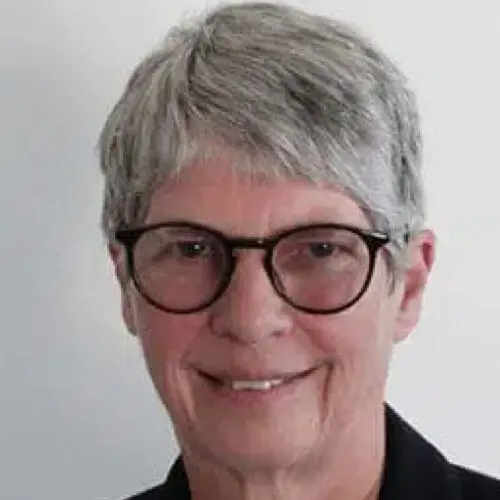
Fran Targett, a Bevan Commissioner and chair of the Welsh Government’s National Advice Network, says economic insecurity is driving poor physical and mental health outcomes across communities — and that the NHS will remain under strain unless the root causes are tackled.
She argues that financial wellbeing must be recognised as a core determinant of health, not simply a social issue.
“Health matters, and Wales cannot fix its long-term health challenges without confronting the economic realities that shape people’s daily lives,” she said.
Her intervention comes as health services across Wales continue to face waiting list backlogs, emergency care pressures and widening inequality in outcomes between communities.

Money worries damaging health
Targett said financial wellbeing — the ability to pay bills, cope with unexpected costs and feel secure about the future — directly affects both life expectancy and quality of life.
People struggling to afford essentials such as food, heating, rent and transport are more likely to experience chronic illness, mental distress and premature death, she warned.
Cold homes worsen respiratory conditions, while financial stress can lead to unhealthy coping behaviours including smoking, alcohol misuse and gambling.
“Unless we address the financial insecurity that underpins so many of these issues, we will be treating symptoms, not causes,” she said.
She also highlighted stark inequalities affecting vulnerable groups, including social renters, lone parents, disabled people and those with long-term conditions.
Political action needed
Targett said Wales already has policy frameworks that recognise prevention and fairness, but warned that stronger political leadership is now required.
She called for closer alignment between health policy, housing, employment and financial support systems, arguing that improving financial resilience would reduce pressure on NHS services over time.

“As Wales approaches the Senedd elections, we have a choice — continue firefighting the consequences of poor financial wellbeing or finally confront the root causes,” she said.
She acknowledged that tackling health inequality may require difficult financial decisions, including increased investment, but said the long-term benefits would include healthier communities and a more sustainable health service.
Long-term benefits
Targett said building financial confidence and stability through education, workplaces and community support could lead to lower stress, stronger participation in society and better health outcomes.
“When people feel secure with their money, they are happier, participate more in their communities and are better able to make healthy choices,” she said.
Her comments add to growing debate about how Wales should tackle health inequality ahead of the 2026 Senedd election campaign, with increasing focus on prevention and the social causes of illness.


Health board says it is increasing capacity after figures revealed hip replacement patients waited an average of 64 weeks
HYWEL DDA UNIVERSITY HEALTH BOARD has appointed two additional surgeons as part of efforts to reduce lengthy waits for orthopaedic treatment across west Wales.
The health board confirmed the appointments after figures revealed that patients undergoing elective hip replacement surgery waited an average of 450 days during the 2025/26 financial year.
That is equivalent to more than 64 weeks from referral to treatment.
As of May 28, 2026, a total of 1,608 patients were on Hywel Dda’s waiting list for hip replacement surgery.
Sixteen patients were also removed from the list during the financial year after deciding to undergo private treatment.
Responding to questions from The Herald, Gareth Cottrell, Deputy Chief Operating Officer at Hywel Dda University Health Board, acknowledged the effect prolonged waits were having on patients.
He said: “The current national delivery expectation for health boards in Wales is to treat orthopaedic patients within a maximum of 104 weeks from the point of referral to treatment.
“In recent years, waiting times for orthopaedic treatment in Hywel Dda have been among the lowest of any health board in Wales, but we recognise that waiting times remain too long and the impact these have on our patients while awaiting the treatment they need.”
The health board said it continued to maintain dedicated ward and theatre capacity for elective orthopaedic procedures at Prince Philip Hospital in Llanelli and Bronglais Hospital in Aberystwyth.
Day-case surgery is also being carried out at units across Hywel Dda’s hospital sites.
Mr Cottrell said: “We remain committed to improving waiting times and are working closely with our regional health board partners to maximise the treatment capacity we can offer patients across the wider South West Wales area.
“During the past year, we have appointed two additional surgeons to support our continuing efforts to reduce waiting times.”

The health board did not provide details of where the new surgeons would be based, how many additional operations they were expected to carry out or when patients would begin to see a significant reduction in waiting times.
Plans to expand orthopaedic capacity also formed part of Hywel Dda’s Clinical Services Plan consultation.
Mr Cottrell added: “Improving our orthopaedic services has also been a key part of our Clinical Services Plan that we consulted upon last year, with plans being developed to increase capacity and help more patients access the care they need.”
Hip replacements are commonly offered to patients suffering severe pain, stiffness and loss of mobility after other treatments, including physiotherapy, medication and injections, have failed to provide sufficient relief.
Lengthy waits can leave patients struggling with worsening pain, disturbed sleep and a loss of independence, while some may be forced to reduce their working hours or leave employment.
The waiting-time figures were obtained through a Freedom of Information request submitted by healthcare marketplace My Medical Gateway.
The company said the health board returned its response on June 8, 2026.

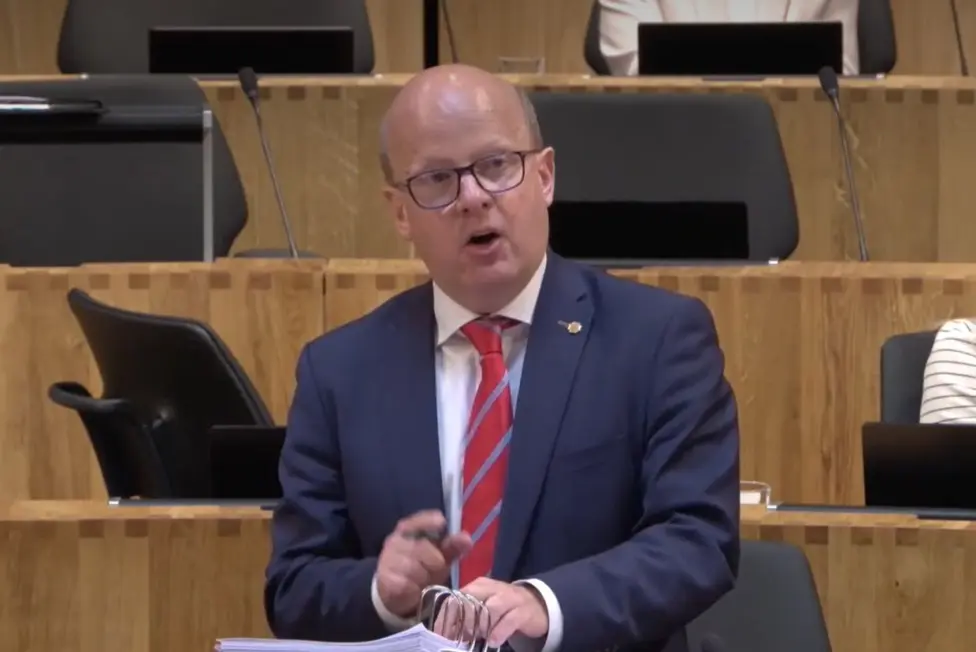
SENEDD Members clashed over plans to review Wales’ funding formula, following the Welsh Government’s defeat in its pursuit of change.
Constitution minister Dafydd Trystan Davies defended the Welsh Government’s stance amid Reform calls for the plans to be abandoned.
On Tuesday July 14, Reform’s Cai Parry-Jones said Plaid Cymru had experienced a “crushing defeat” last week when they were “refused” permission from the Senedd to argue for a different funding model for Wales.
He said: “Reform, with the support of Labour and the Conservatives, potentially saved £1.5 billion annually for the Welsh Government’s budget. You’re welcome.
“Now that the Senedd has spoken, will you abandon your plans to argue for a change for the funding model for Wales?”
Responding with a simple “no”, Dr Trystan Davies said: “What has become very clear in assessing the financial situation facing Wales is that we need fair funding for Wales and funding that reflects the needs of the population. Wales has nothing to fear from a review of that kind.”
Reform’s shadow finance and government efficiency minister pointed to Plaid’s manifesto promises – much of which Mr Parry-Jones described having “hinged on an optimistic change of the funding model”.
He said: “Now that the Senedd has rejected your calls to change the funding model, what changes have you made to your programme for government?”

Dr Trystan Davies responded: “I hope that colleagues across this Senedd will work to ensure that the Welsh Government and the public sector in Wales work at their most effective and that we, over the next four years, can identify more funding that can be invested in the priorities of the people, to support childcare, to support the economy, to support the health service.”
Huw Thomas – Labour’s spokesperson for finance and democracy – questioned the minister on Plaid’s funding formula review.
The former Cardiff Council leader revealed he had received a written response from local government minister Sian Gwenllian, who said that as part of the government’s funding formula review it is “reviewing the data on primary indicators” such as “those relating to deprivation and sparsity of population”.

Mr Thomas said there are “huge concerns” in parts of Wales that Plaid will “copy what Rishi Sunak did in England and redistribute funding via the funding formula away from poorer urban areas towards relatively wealthier rural ones.”

The Caerdydd Penarth MS asked the minister what issues he has identified in the “underlying data and indicators” that have prompted this review.
In response, Dr Trystan Davies said: “As with all official statistics, the government keeps a close eye on the accuracy and effectiveness of that data to ensure that they are clearly and accurately reflected in the formulas.
“The spokesperson himself [Mr Thomas] comes from Aberystwyth and he knows full well that there are areas of significant poverty in rural Wales as well as industrial Wales.”
He continued: “Setting those communities against each other is a disappointing approach from the spokesperson, I would suggest.”
Mr Thomas noted in response that he “didn’t hear” the minister share “what figures had pushed [him] to hold that review.”
Calls for a Welsh Covid inquiry came from both the Reform and Conservative benches in Tuesday’s plenary.
Following his questions on Plaid Cymru’s plans to argue for a change to the funding model for Wales, Mr Parry-Jones pressed the minister to confirm what actions his government will take to bring about a Welsh Covid review.
He said: “Responding to the Covid inquiry’s fifth report today, the First Minister rather vaguely said that Plaid remains committed to reviewing the Wales Covid response.
“In March, Plaid said it would hold a short, sharp and focused review of the Welsh Government’s Covid response, a far cry from the full-fat all-Wales inquiry Plaid previously called for for years, including during your 2024 manifesto.
“Now, following that u-turn, nobody knows what your review actually is – not when it’s happening, not for how long, not even what elements of the Covid response it would focus on.
“Surely, Minister, now is the time to make it clear to bereaved families what actions exactly your government is going to take.”
Dr Trystan Davies said the government is committed to conducting a Covid review. He said: “That’s what we said in our manifesto and that’s what we intend to do.
“I’m pleased to say that I have already been in correspondence with the Covid Bereaved Families on our intentions and hope to arrange a meeting with them soon, because it’s important that the voices of those who have suffered are part of that discussion and feed in to the work of government.”
Andrew RT Davies, Welsh Conservative MS for Pen-y-Bont Bro Morgannwg, also pressed the minister on his inquiry plans.

Mr Davies said it was “vital” the government “sticks to their commitment” and “enacts a Covid inquiry – not a review”.
He called on the minister to confirm that “the government’s thinking, whatever emerges, will be set up under the Inquiries Act 2005, which would compel witnesses to come before that inquiry and give evidence”.
Dr Trystan Davies reiterated that work is “progressing” on the government’s Covid review and noted he will be “liaising closely” with the bereaved families.
The Conservative MS thanked the minister for his “warm words” but described the response as of “little substance”.
Mr Davies said: “The reality is that we found out, with the Covid committee that was set up in the previous Senedd term, that unless witnesses were compelled to give evidence, that committee was thwarted in its endeavours to get to the truth.
“Today, for example, the Covid inquiry reports that, on the FFP3 respirator masks that we were told Wales was well stocked with prior to the Covid pandemic in its emergency allocation, there wasn’t a single mask in Wales available for the health service to use.
“These are the things we need to get to the core of as to what was not provided, what was mislaid, what was deliberately not ordered to save money, and what was not acted on on the emergency planning trials that were held prior to the Covid pandemic.”
He called on the Welsh Government to “stick to your guns, stick to your morals, stick to the votes that you made prior to the Senedd election and have a full-blown inquiry that gets to the truth and, ultimately, prepares Wales for any future pandemic.”
Responding, Dr Trystan Davies said: “Reading the most recent module report on Covid brings home the sobering impact of Covid right across this country.
“Those lessons must be learnt, and the review that we are committed to undertaking must have the ability to address those precise issues that you have set out and that is what we will seek to do.”
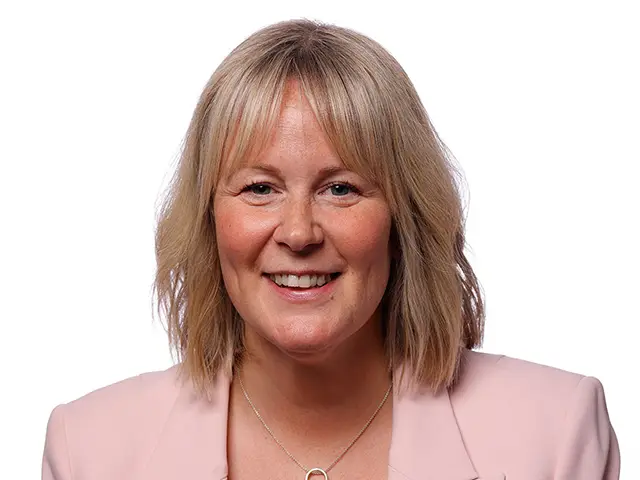
SENEDD Members have questioned the Welsh Government over a new £8 million obesity strategy, tightening restrictions on youth vaping, and regional inequalities in cancer screening.
Deputy Minister for Public and Preventative Health, Nerys Evans, confirmed Public Health Wales has secured the funding through the obesity pathway innovation programme.
The funding will be used to develop new NHS treatment models for obesity, viewing it as a chronic condition rather than a short-term issue.
The announcement on Tuesday July 14 followed a speech to the Senedd, where Ms Evans outlined her preventative healthcare priorities and drew on the words of Aneurin Bevan: “The victories won by preventive medicine are much the most important for mankind.”
Emphasising the importance of prevention in healthcare, Ms Evans said: “The need to make this change is not new. What has been missing is the determination to deliver it.
“For too long, our models, processes and ways of working have been built around responding to crises, rather than preventing them and helping people to live healthier and happier lives.
“This changes now. Under this government, success will be measured not by the number of hospital admissions, but by the number of people who stay healthy enough to avoid hospital altogether.”
Ms Evans told Senedd colleagues that providing healthy environments, better access to sustainable and nutritious food, and addressing vaping amongst young people were among her top priorities as minister.
Concluding her speech she said: “We firmly believe that building a healthier population is not only a moral imperative, particularly in tackling deep-rooted inequalities, but is also fundamental to improving the wider prosperity and resilience of our nation.”
Facing questions from the opposition benches, Ms Evans took questions on funding for weight loss jabs, screening and vaccinations, and vaping and smoking.
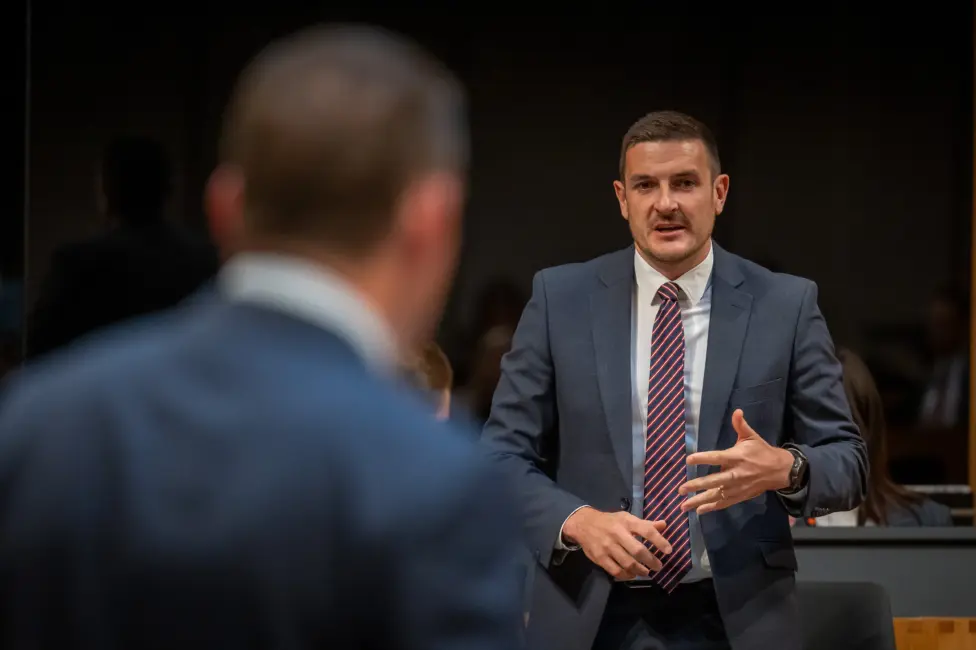
Reform’s James Evans pressed the deputy minister on the longer term impacts of weight loss medication.
He said: “I think one thing we have to be careful with, with weight-loss medication, is that, yes, it is changing lives, but it’s not changing lifestyles.

“It cannot be seen as a silver bullet to losing weight long term, because we do know about the longer term health impacts, with osteoporosis in women, with people with cardiovascular problems emerging from these jabs”.
Mr Evans asked his opposite number if she will be working with primary care, gyms, and leisure providers to ensure people on weight loss medication are also making lifestyle changes.
“If you don’t, it’s just a vicious circle,” Mr Evans explained. “You’ll come off it, you’ll put weight back on again, and you’re back on the jabs and then end up in A&E with longer term problems, and that’s no way to help our health service.”
The deputy minister agreed, adding that it is about “creating that system of support around individuals for those lifestyle choices”.
Ms Evans revealed Public Health Wales has recently been successful in co-ordinating a Wales-wide bid for funding through the obesity pathway innovation programme.
She said: “That’s £8 million of funding in order to look at these issues, to develop and test approaches that could form part of that delivery model going forward.
“We want to be looking at treating obesity as a chronic condition, and, obviously, the changes that would mean in terms of how the NHS would respond to that would be key.”

Drawing attention to the national lung cancer screening programme that was introduced by Welsh Labour, Jayne Bryant quizzed Ms Evans on her plans to encourage participation in screenings and vaccination programmes.
Ms Bryant – who is Labour’s spokesperson for public and preventative health – also acknowledged the HPV vaccine, noting that since its introduction in 2008 the vaccine has “reduced cervical cancer rates by almost 90% in women in their 20s”.
She also highlighted the importance of cervical screenings, but said work needs to be done to make them more accessible Wales-wide.
The Labour spokesperson called for Ms Evans to share how the Welsh Government will encourage participation in vaccines and screenings.
The deputy minister said: “One of the things that worries me is the differences within our deprived communities in terms of screening and vaccine uptake.”
She spoke of making sure Public Health Wales, in its efforts to boost screening and vaccinations, understands what the barriers are to uptake.

Ms Evans also faced questions on her plans for preventing smoking and vaping among children and young people by Conservative MS Natasha Asghar.
Ms Asghar, of Casnewydd Islwyn, told the Siambr that Wales sees almost 4,000 preventable deaths each year because of smoking.
She acknowledged the deputy minister has already launched a consultation on vaping as part of the four-nation approach to prevent children from smoking, but called for clarity on what other actions will be taken.
Ms Evans said that tackling the increasing number of children vaping is a “key priority” for her as minister.
She urged the public to take part in a consultation into vaping, which is looking at changing vape product packaging to be more like tobacco packaging – and less attractive to young people.
Ms Evans also confirmed she has asked officials to provide an outline of what other powers the Welsh Government has to tackle tobacco and vaping.


News4 hours ago
Andy Burnham set for No 10 as Wales awaits change
Incoming Prime Minister pledges to move power out of Westminster and deliver growth in every postcode, but questions remain over...


Health13 hours ago
Two new surgeons appointed as Hywel Dda admits orthopaedic waits remain too long
Health board says it is increasing capacity after figures revealed hip replacement patients waited an average of 64 weeks HYWEL...


Community1 day ago
84-year-old man rescued after falling overboard near Tenby
A MAYDAY call sparked a major nighttime rescue after an 84-year-old man fell from a tender and was swept towards...

Crime2 days ago
Jury hears final arguments in Milford Haven teacher stabbing trial
Defence says there was no motive or intention to kill as judge reviews competing accounts of classroom knife incident SPECIAL...
News2 days ago
Andy Burnham becomes Labour leader and prepares to enter No 10
Former Greater Manchester mayor promises an ‘unashamedly Labour’ government after completing extraordinary return to Westminster ANDY BURNHAM has been formally...


News3 days ago
Motorcyclist dies following collision near Narberth
Police appeal for witnesses and footage after fatal crash on B4313 at Redstone A MOTORCYCLIST has died following a collision...


Local Government3 days ago
Stepaside school saved as council abandons closure proposal
Governors welcome decision but maintain original plans were based on outdated information STEPASIDE Community Primary School will remain open after...

Crime3 days ago
Footballer given 200 hours’ unpaid work for eye-gouging assault during match
Magistrates heard Robert Hedley put an opposing player in a headlock before gouging at his eyes during a match in...


Community4 days ago
Tenby Summer Spectaculars brought to an end after harbour licence revoked
Round Table says it was willing to make major safety changes but could not secure the access controls needed to...

Local Government5 days ago
Catapult attacks suspected after wildlife deaths at Pembroke Mill Pond
Wildlife Crime Officers are investigating after the town council said around five animals showed signs of deliberate injury WILDLIFE found...
-
Community1 day ago
84-year-old man rescued after falling overboard near Tenby
-

 Crime2 days ago
Fears wildlife at Mill Pond beauty spot being targeted by catapults
-

 Business2 days ago
Seasonal campsite at former scrapyard approved by National Park planners
-

 Crime1 day ago
Drug-driver sent vehicles airborne in terrifying M4 collision
-
 Community2 days ago
Protests against removal of school’s VC status at County Hall
-
Health13 hours ago
Two new surgeons appointed as Hywel Dda admits orthopaedic waits remain too long
-
 Community2 days ago
Councillor say Stepaside should “never have been considered for closure”
-

 Local Government2 days ago
Call to help properties facing thousands in second homes tax bills