


Farming
Unions outline calls for fair farm funding

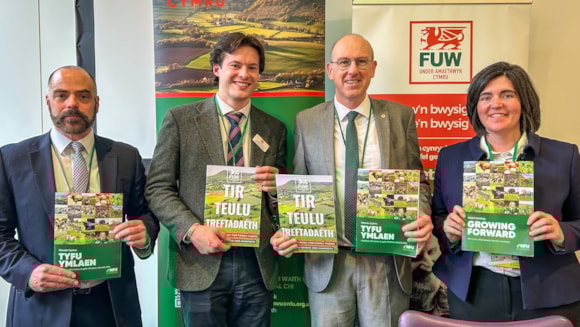
The Farmers’ Union of Wales (FUW) and NFU Cymru used their joint fringe event at Plaid Cymru’s recent Spring Conference, held at the ICC Newport, to reinforce their shared manifesto priorities and urge the next Welsh Government to deliver a fair, forward-looking budget that properly supports Welsh agriculture and the rural communities it sustains.
Chaired by Llyr Gruffydd MS, Plaid Cymru’s Agriculture and Rural Affairs spokesperson, the event provided a platform for both unions to set out the sustained financial pressures facing the sector.
They pointed to what they described as more than a decade of stagnation in the agricultural budget, warning that funding has failed to keep pace with rising costs and increasing regulatory and environmental expectations.
The unions argued that had overall funding kept pace with inflation over the past 13 years, the agricultural budget would now exceed £500 million – underscoring what they see as a substantial and growing gap between current allocations and the sector’s actual needs.
Speaking at the event, NFU Cymru President Abi Reader outlined the union’s key manifesto calls for a ring-fenced, multi-annual budget to support the sustainable growth of Welsh food and farming.
She said: “Welsh farmers must not be expected to do more for less. The next government must commit to providing a ring-fenced, multi-annual budget that matches our ambitions for the sustainable growth of the sector.
“This funding must underpin the financial resilience of our family farms and rural communities, while working in harmony with our environmental and climate obligations. We are calling for a budget in excess of £500 million per annum, with the majority of funding directed towards stability, productivity and efficiency gains on farm.
“We also call on the next Welsh Government to challenge the UK Government to ensure that future uplifts to agricultural support funding fairly reflect Wales’ needs, rather than being constrained by the limitations of the Barnett formula.”
The calls were echoed during the session by the FUW’s Senedd and Parliamentary Officer, George Lewes, who stressed that the next Welsh Government must also strengthen budgetary support for the forthcoming Sustainable Farming Scheme (SFS).
He argued that the transition to the new framework represents a significant structural shift for farm businesses and must be underpinned by adequate, long-term financial backing to ensure its success.
Commenting, he said:
“If we are to deliver on food security, climate and biodiversity goals, the scheme must be backed by a budget that matches those expectations.”
The fringe event also provided an opportunity for the unions to outline their wider shared ambitions for the sector ahead of the Senedd election. These included reducing on-farm bureaucracy, delivering a science-led and properly resourced strategy to eradicate bovine TB, and addressing ongoing concerns surrounding NVZ regulations and the unintended consequences they continue to create for family farms.
Concluding FUW President, Ian Rickman said: “Both unions have emphasised that alongside fair and sustained funding, meaningful regulatory reform and practical, evidence-based policies are essential to safeguarding the viability and long-term sustainability of Welsh agriculture.
Ahead of the Senedd election, we look forward to continuing constructive engagement with all parties to ensure these priorities are delivered for the benefit of our farmers, rural communities, and the wider Welsh economy.”



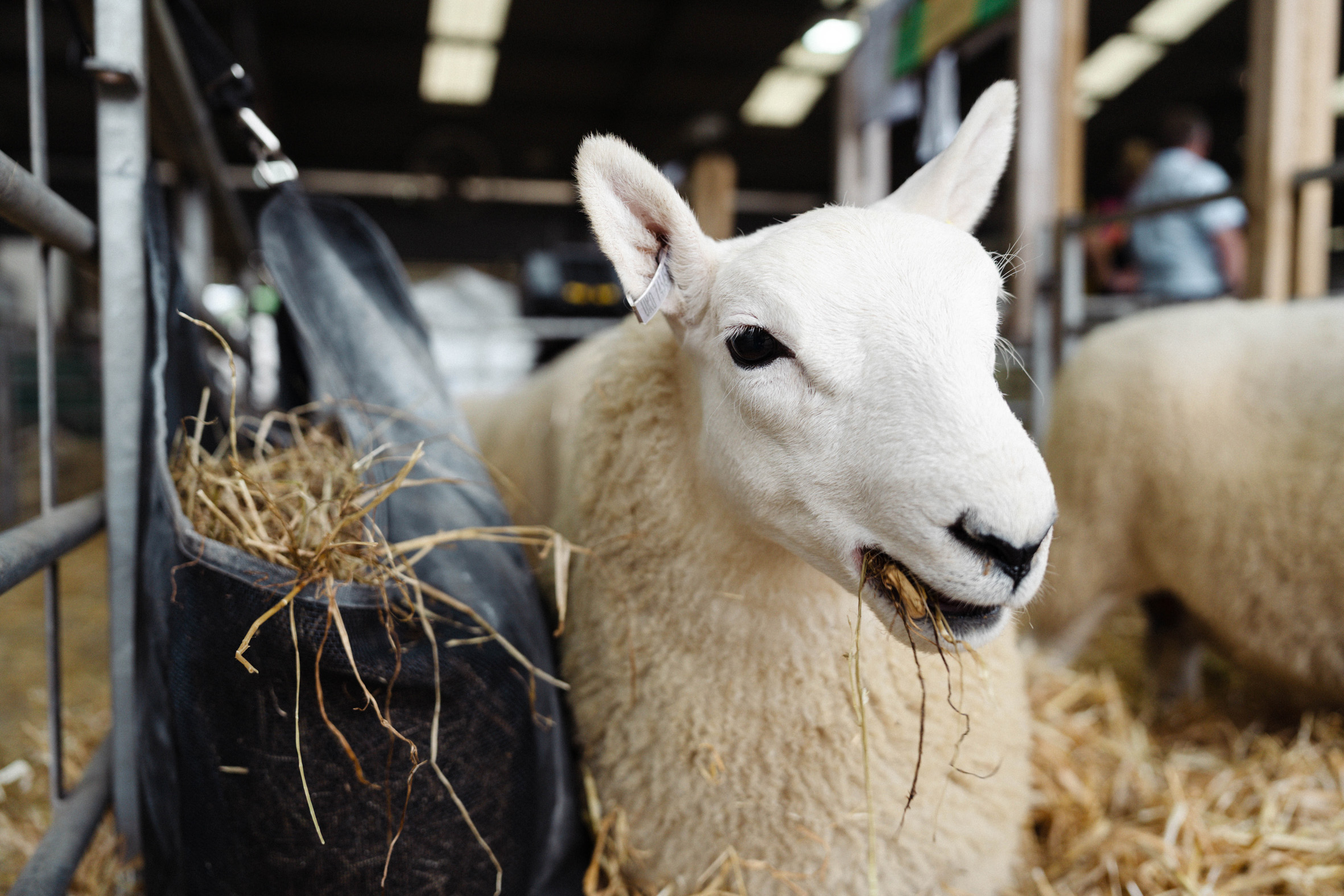
THE ROYAL WELSH Agricultural Society (RWAS) and the National Sheep Association (NSA) are collaborating to launch a new Welsh Sheep Village at this year’s Royal Welsh Show.
Located on the site of the former NSA Pavilion, the village will celebrate the Welsh sheep industry’s importance. Including trade stands and educational activities, it’s designed to showcase innovation and good practice to farmers, whilst helping the wider public understanding of sheep farming and the vital role it plays in shaping our landscape and heritage.
Called Cynefin – Welsh for “habitat” or “place of belonging” – the village will reflect the deep connection between land, sheep farming, and community in Wales.
RWAS chief executive, Aled Rhys Jones, said: “Sheep farming and the generations of farmers who have worked the land have shaped our Welsh landscape. We are delighted to be working closely with the NSA to introduce this exciting new concept which celebrates our rich farming history.
“The sheep section already covers almost four acres of our showground, so it’s evidently a major part of the Royal Welsh Show. We host one of the largest and most diverse collection of sheep breeds of any show in the world and have world-class shearing and wool handling competitions.
“The new Sheep Village, alongside the Meirion Shearing Centre, the exhibition halls and the sheep ring, will further elevate the industry’s status.”
Phil Stocker, NSA chief executive, added:“Cynefin, the sheep village, is a new concept that gives NSA and RWAS an opportunity to introduce a fresh approach on how we profile sheep farming at the Royal Welsh Show.
“One of the most valuable things we can do for the industry is to play our part in explaining and showcasing sheep farming to the public and celebrate the great innovation and technology that we use.
“We have a great industry which is far more progressive than many realise and our approach to producing food and fibre works well alongside managing our landscape, providing for nature and maintaining rural communities and economies.
“If we can do more to showcase this, then our new partnership venture at the Royal Welsh Show will be worthwhile.”
The popular NSA Bar and Restaurant will also form part of the new village, together with a new open air courtyard offering a welcoming space for farmers and showgoers to meet and relax.
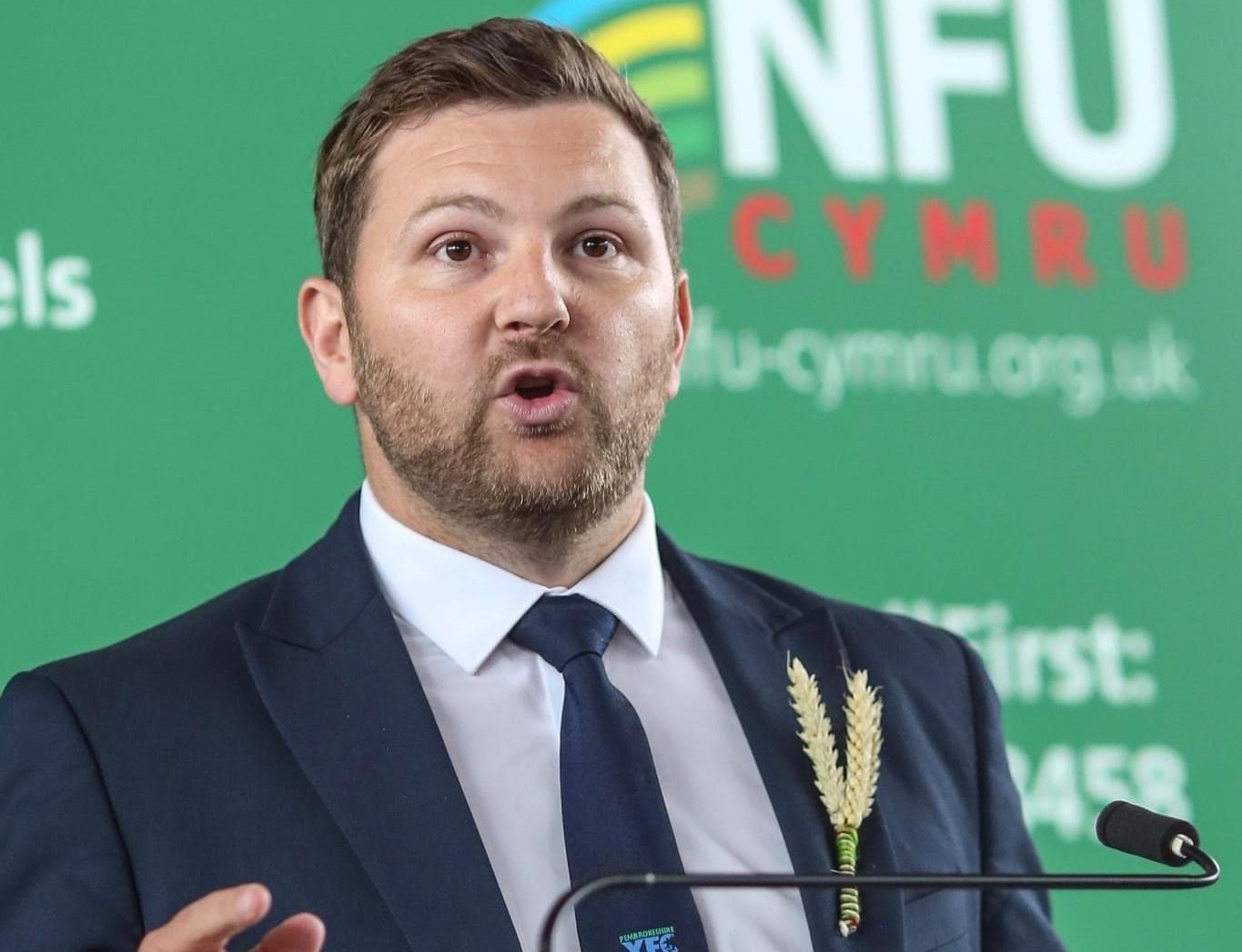
SCHEME DETAILS MISSING, SAYS PEMBROKESHIRE MS
FARMERS across Wales are facing continued uncertainty after the Welsh Government confirmed that full details of two key elements of the Sustainable Farming Scheme (SFS) will not be available when the application window opens on Monday (Mar 2).
Officials have acknowledged that further information on the Optional and Collaborative actions — two of the scheme’s core layers — will be published “in due course”, with applications for many of these measures not expected to open until later this year.
While some actions, including organic maintenance and woodland creation, will proceed independently of SFS participation, significant parts of the scheme remain incomplete as farmers are being asked to begin the application process.
The situation has prompted concern within the sector, with farm businesses warning that uncertainty over the scheme’s full scope makes forward planning difficult at a time when margins are already under pressure.
Commenting on the launch, Welsh Conservative Shadow Cabinet Secretary for Rural Affairs, Samuel Kurtz MS said: “It is unacceptable that, as the Sustainable Farming Scheme application window opens, two of its core components — Optional and Collaborative — are still not fully designed. After years of consultation, farmers are being asked to commit to a scheme where significant elements remain undefined or delayed until later in the year.

“Farm businesses cannot plan on the basis of ‘further detail in due course’. Decisions about land use, investment and cashflow require clarity from day one. This last-minute uncertainty reflects a clear lack of foresight from the Welsh Labour Government.
“Farmers were promised stability and certainty. Instead, they are being given ambiguity and a rolling timetable. That is not good enough for an industry that needs confidence, not confusion.”
The Sustainable Farming Scheme is intended to replace the EU-era Basic Payment Scheme and form the backbone of agricultural support in Wales, linking public funding to environmental and land management outcomes.
The Welsh Government has been approached for comment.

Charity urges shoppers to support Welsh farmers this St David’s Day
MORE than 2.6 million farmed animals in Wales benefited from higher welfare standards last year, thanks to the work of farmers signed up to the RSPCA Assured scheme, the charity has said.
The organisation is now encouraging shoppers to mark St David’s Day by supporting Welsh producers committed to improved animal welfare by choosing products carrying the RSPCA Assured label.
RSPCA Assured — which describes itself as the only UK food assurance scheme dedicated solely to farmed animal welfare — has nearly 280 members in Wales. All are required to follow strict welfare standards covering housing, diet, health and day-to-day care.
Charlotte Thomas, RSPCA Assured assessment manager for Wales, said: “St David’s Day is a chance for us to take pride in the dedication of RSPCA Assured members who are committed to giving farmed animals a better life.
“To become an RSPCA Assured member, farms must follow hundreds of higher welfare standards every single day. These ensure animals are cared for properly throughout their lives — we don’t allow cages or crates, and animals must have plenty of room to move, perform normal behaviours and enjoy a healthy diet.
“Members are assessed every year to make sure these higher standards are met, and we carry out a check on a farm in Wales nearly every working day of the year.
“We hope this St David’s Day will inspire more people to support higher welfare farming in Wales by looking for the RSPCA Assured label if they choose to buy meat, fish, eggs or dairy products.”
The charity said its standards cover more than 64 million animals across the UK, with independent assessments carried out at over 4,000 farms and businesses. Both indoor and outdoor systems — including free-range and organic — can qualify, provided the welfare requirements are met. The scheme does not permit the use of cages.
RSPCA Assured operates as a not-for-profit organisation and receives no government funding. Member farms and businesses pay fees which cover the cost of inspections and licensing the label, with income reinvested into improving farm animal welfare.
Consumers who wish to support higher welfare farming are being encouraged to look for the RSPCA Assured logo when buying meat, fish, eggs and dairy products.
More information is available at the RSPCA Assured website.



Crime2 hours ago
Man who threatened to kill police during Milford Haven standoff avoids jail
Judge tells defendant his ‘erratic and reckless’ behaviour caused serious disruption to emergency services A MILFORD HAVEN man who threatened...


Crime4 hours ago
Police investigating nightclub assault in Saundersfoot
POLICE are appealing for information following a serious assault at a nightclub in Saundersfoot which left two people with significant...


News22 hours ago
Greens oppose US space radar plan for St Davids Peninsula
CANDIDATE CRITICISES DARC PROPOSAL THE GREEN PARTY has voiced strong opposition to plans for a major US military radar installation...


Crime1 day ago
Chinese intelligence probe reaches Dyfed-Powys Police area
Counter-terror officers arrest man in Powys as part of national security investigation THREE men have been arrested in Wales and...


Crime1 day ago
Man sentenced after punching convicted paedophile in Haverfordwest pub
A HAVERFORDWEST man has been sentenced after punching a convicted paedophile inside a town centre pub. Haverfordwest Magistrates’ Court heard...


Health2 days ago
Davies and Kurtz attack ‘fantasy hospital’ pledge for west Wales
Senedd Members demand immediate investment in Withybush and Bronglais as election campaign intensifies SENEDD Members Paul Davies and Samuel Kurtz have launched a fresh...


Health2 days ago
Hywel Dda warns of ‘significant pressure’ as A&E departments remain packed
Patients urged to use NHS 111 as Withybush, Glangwili and Bronglais face continued strain HYWEL DDA University Health Board has...


News3 days ago
War stops Qatar gas: Milford Haven LNG supplies disrupted
UK energy security concerns grow after shutdown at major export facilities ENERGY bills in the UK could rise sharply after...


Community3 days ago
Martyn Butler dies aged 71 months after Haverfordwest visit
Co-founder of Terrence Higgins Trust attended local plaque unveiling honouring friend Terry Higgins A LEADING figure in the UK’s response...


Crime3 days ago
Nine deny Class A drugs conspiracy as case set for Crown Court trial
Eight remanded in custody as four-week trial fixed for May 18 NINE people have denied conspiring to supply Class A...
-
 Business7 days ago
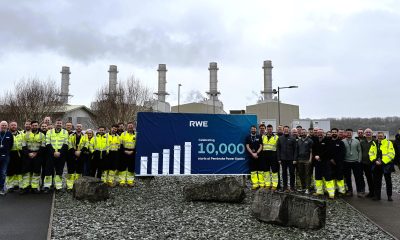
Pembroke Power Station marks 10,000th turbine start
-

 Crime7 days ago
Pembroke Dock man admits sending sword death threat message
-

 Crime7 days ago
Man given suspended sentence after assault and damage offences
-

 Crime7 days ago
Haverfordwest woman banned from road after second drink-drive conviction
-

 Crime7 days ago
Axe gang stormed home as couple feared they would be killed, court hears
-

 Crime7 days ago
Father-of-two banned for three years after second drug-driving offence
-

 Crime7 days ago
Man accused of Haverfordwest burglary remanded in custody
-

 Crime7 days ago
Driver banned after admitting cannabis use day before police stop