


international news
Why Toronto should be your top travel pick for 2026

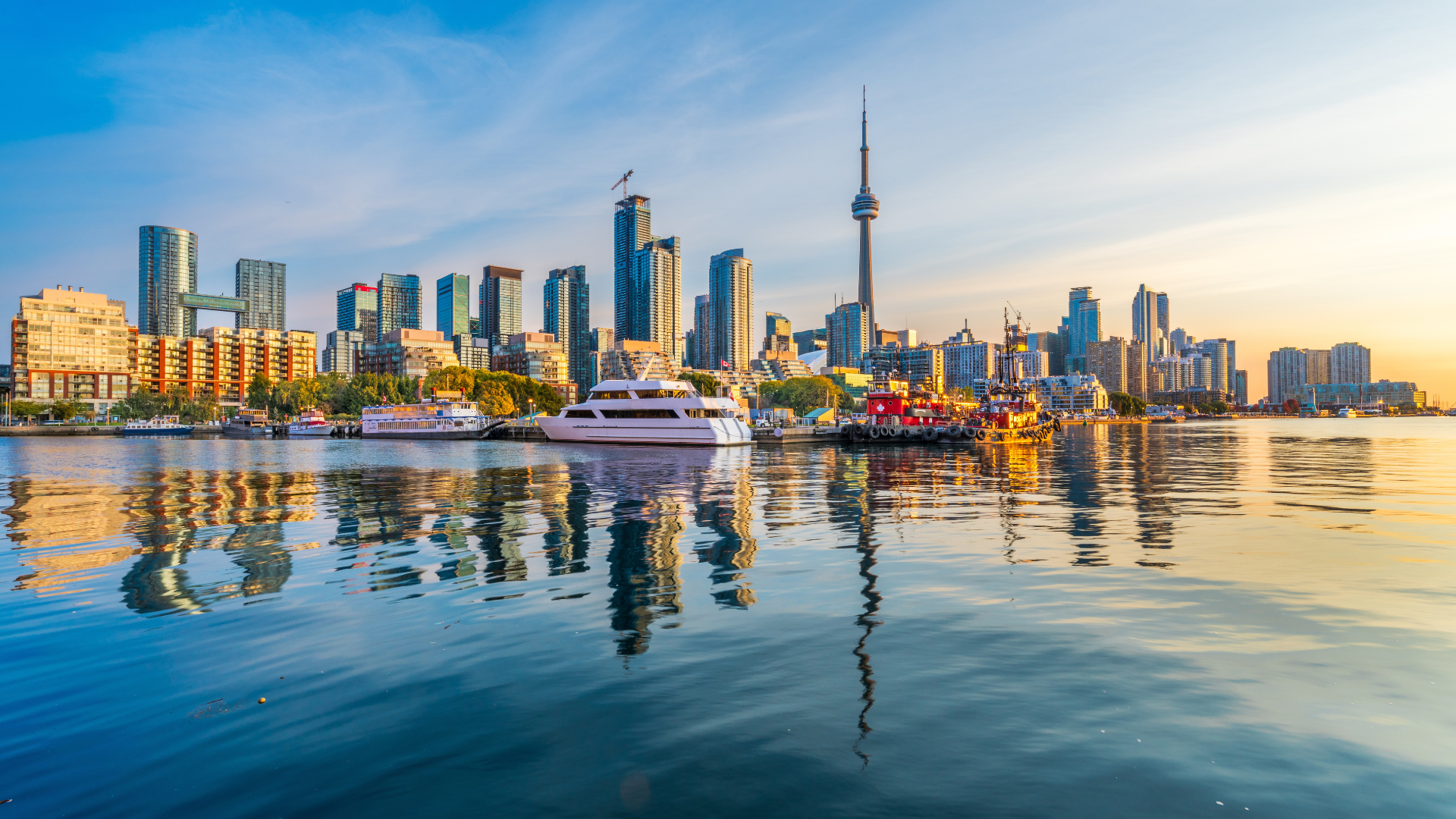
Direct flights from Cardiff make Canada more accessible than ever
TORONTO has long been one of the world’s most dynamic cities—but in 2026, it is set to shine brighter than ever.
With a packed calendar of major sporting events, new attractions, and a renewed focus on arts, culture, and design, Canada’s largest city is fast becoming one of North America’s must-visit destinations.
For travellers across Wales and the West of England, getting there has never been easier. New direct flights from Cardiff Airport with WestJet launch on Friday (May 23), with return fares starting from £425*, offering a convenient alternative to travelling via London.
A city constantly reinventing itself, Toronto offers something new on every visit. In 2026, visitors can expect expanded waterfront experiences, new cultural spaces, and a thriving creative scene that continues to redefine the city.
Neighbourhoods such as Queen West, Riverside, and the Distillery District are at the heart of this energy—home to independent boutiques, craft breweries, contemporary galleries, and live music venues that showcase Toronto’s creative pulse.

The city’s diversity is perhaps its greatest strength, and nowhere is this more evident than in its food. From authentic Chinatown dumplings and Little Italy pasta to Caribbean street food and cutting-edge chef-led pop-ups, Toronto offers a global dining experience unlike any other. Nearby Ontario wine regions and lakeside farm-to-table restaurants add even more depth to its culinary appeal.
Despite its urban scale, Toronto also offers easy access to nature. A short ferry ride brings visitors to the peaceful beaches of the Toronto Islands, while scenic parks, lakes, and hiking trails are all within easy reach. Just 90 minutes away, Niagara Falls provides one of the world’s most iconic natural day trips.
The city will also take centre stage in 2026 as a host city for the FIFA World Cup, giving visitors the chance to experience world-class football in a truly global setting.
Toronto’s position as a major international hub makes it an ideal gateway for further travel. From here, visitors can easily extend their journey to destinations including Montreal, Ottawa and Quebec City, or major US cities such as New York, Chicago and Boston. Canada’s vast national parks and scenic regions are also within reach.

Whether it’s a family holiday, a cultural escape, or a multi-city North American adventure, Toronto offers a compelling alternative to traditional long-haul destinations.
With direct flights now operating from Cardiff Airport, travellers can begin their journey closer to home—avoiding long transfers and enjoying a smoother start to their trip.
Cardiff Airport CEO Jon Bridge said: “Toronto is one of the most vibrant and exciting destinations in North America, offering visitors an incredible mix of culture, cuisine, sport and natural beauty.

“With direct flights now available from Cardiff with WestJet, travellers across Wales and the West of England can discover everything the city and the wider region has to offer, while enjoying the convenience of starting their journey from their local airport.”

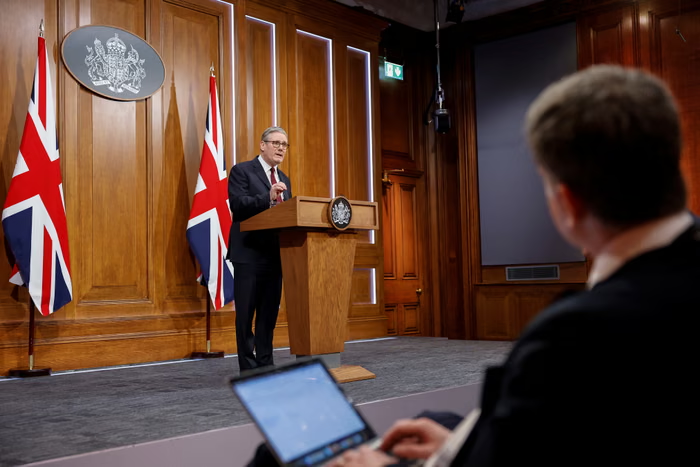
PRIME MINISTER Keir Starmer is walking an increasingly delicate diplomatic tightrope as tensions in the Middle East threaten to spill into a broader international conflict.
Speaking at a press conference on Monday (Mar 16), Starmer repeatedly declined to be drawn into speculation about military escalation, stressing that any potential effort to reopen the strategic Strait of Hormuz would not be a NATO operation but rather “an alliance of partners”.
The narrow waterway between Iran and Oman is one of the most important shipping routes in the world, with around a fifth of global oil supplies passing through it.
Recent tensions in the region have raised fears that disruption there could trigger a major international crisis.
But Starmer’s message was clear: Britain will support efforts to keep trade routes open while avoiding being pulled into a full-scale conflict.

When asked directly about comments made by former US President Donald Trump suggesting NATO allies should help reopen the strait, Starmer refused to engage in the escalating rhetoric.
Instead, he emphasised diplomacy and cooperation.
“It’s not straightforward,” the Prime Minister said, adding that discussions with international partners were ongoing.
Observers noted that Starmer also avoided responding to speculation about potential military commitments, a move widely interpreted as an attempt to prevent Britain being boxed into a position before negotiations with allies are complete.

Relations with Washington
Starmer was also pressed by journalists about his relationship with Donald Trump, who has been increasingly critical of some NATO allies.
Asked to rate their relationship on a scale of one to ten, the Prime Minister said simply that it was “a good relationship”.
“We’re strong allies and have been for decades,” he said, adding that his responsibility was always to act “in the best interests of Britain”.

Despite the diplomatic language, the exchange underlined the growing pressure facing the UK government as global tensions rise.
The United States has been urging partners to support efforts to secure key shipping routes, while some European leaders remain cautious about the risks of escalation.
Energy and economic stakes
The stakes are not purely military.
Any disruption to shipping through the Strait of Hormuz could have immediate consequences for global energy markets, pushing up fuel costs and inflation.
That prospect is already weighing heavily on governments across Europe.
At the same press conference, Starmer announced new financial support for households struggling with rising heating costs and outlined plans to strengthen regulation of the heating oil market.
The move was widely seen as preparation for potential energy price shocks linked to instability in the Middle East.
A careful balancing act
For Starmer, the challenge now is balancing Britain’s commitments to international allies with a public that remains wary of overseas military entanglements after conflicts in Iraq and Afghanistan.
So far, the Prime Minister appears determined to keep the UK involved diplomatically while resisting pressure to escalate militarily.
Whether that position can hold if tensions in the region worsen remains the key question facing Downing Street.
For now, Starmer’s strategy is clear: support allies, protect global trade routes — but avoid sliding into a wider war.
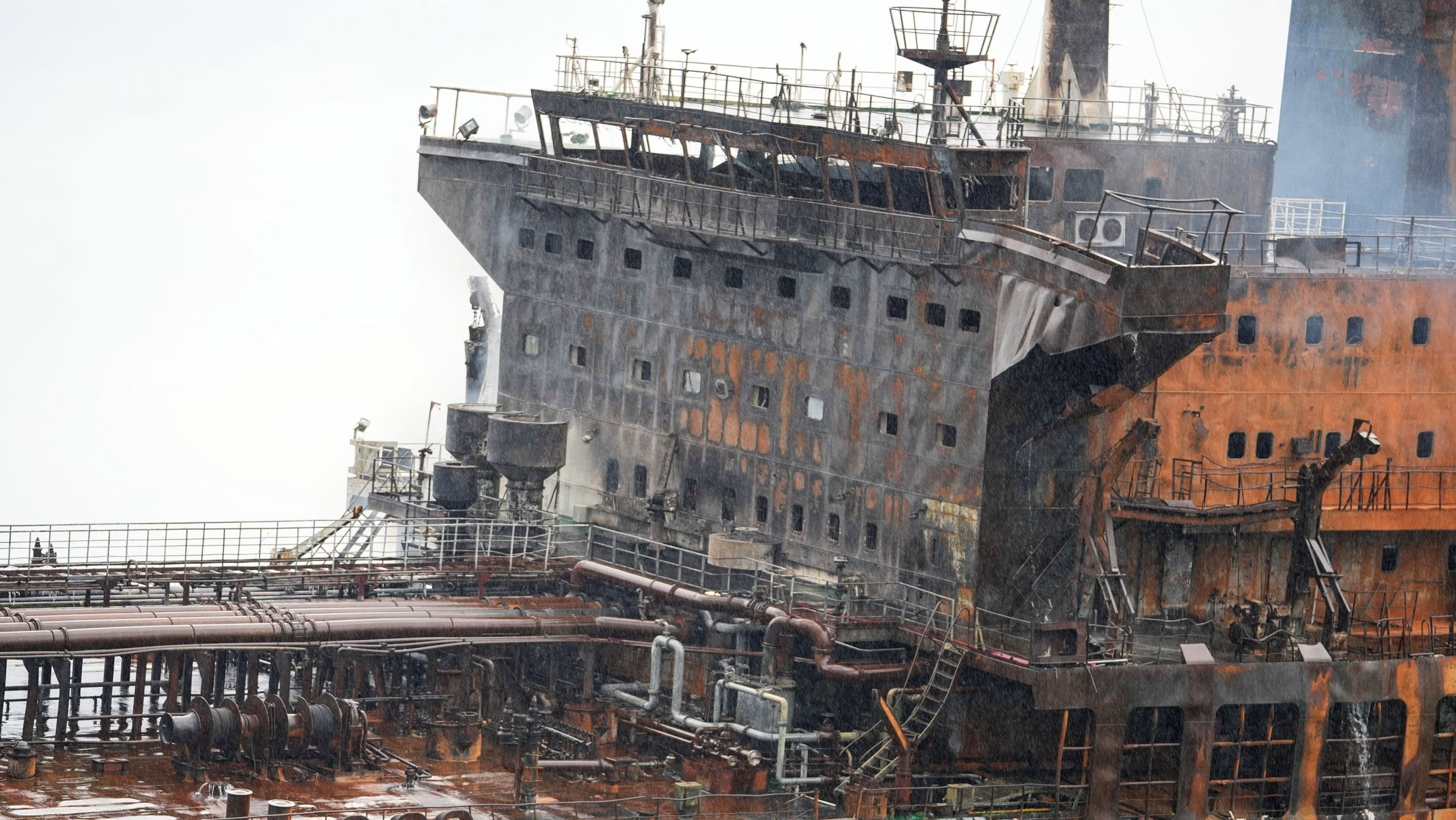
Ministers confirm talks with allies after Donald Trump calls on Britain to help protect vital oil shipping route
THE UK GOVERNMENT is examining “all options” to help secure the Strait of Hormuz as tensions in the Middle East threaten one of the world’s most important oil routes.
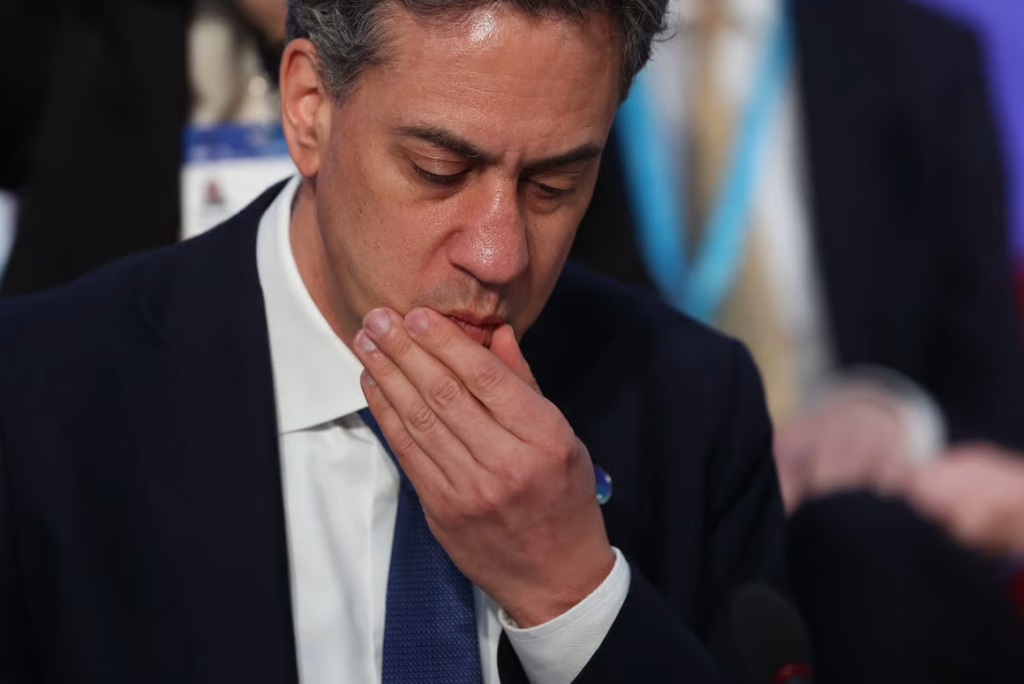
Energy Secretary Ed Miliband said Britain is already in discussions with allies, including the United States, about how to restore safe navigation through the narrow shipping corridor, through which around one fifth of the world’s oil supply passes.
Speaking on BBC One’s Sunday with Laura Kuenssberg, Miliband said reopening the strait was a global priority but stressed the government favours de-escalation rather than military confrontation.
“It is very important that we get the Strait of Hormuz reopened,” he said. “We are in talks with allies about how to secure that key shipping route. Any options to help the Strait reopen are being looked at.”
The comments come after US President Donald Trump called on several major powers — including the UK, France, Japan, South Korea and China — to send warships to the region to ensure the vital oil corridor can no longer be threatened by Iran.
The escalating conflict between the US, Israel and Iran has already led to attacks on shipping in the Gulf, raising fears that Tehran could attempt to block or severely disrupt the strait.
Political divisions in Westminster
The prospect of British military involvement has exposed sharp political divisions in Westminster.
Shadow energy secretary Claire Coutinho said the UK should explore deploying ships or surveillance drones to the region if doing so would protect Britain’s national interests.
She argued that keeping international shipping lanes open and protecting military assets abroad was vital for global stability and the UK economy.
However, Liberal Democrat leader Ed Davey warned Britain should not automatically follow Washington into another conflict.
He said the quickest way to stabilise oil markets and secure the route was through diplomatic de-escalation rather than military intervention.
Davey also criticised President Trump’s approach to the crisis, warning the UK should not be “at the beck and call” of an American president.

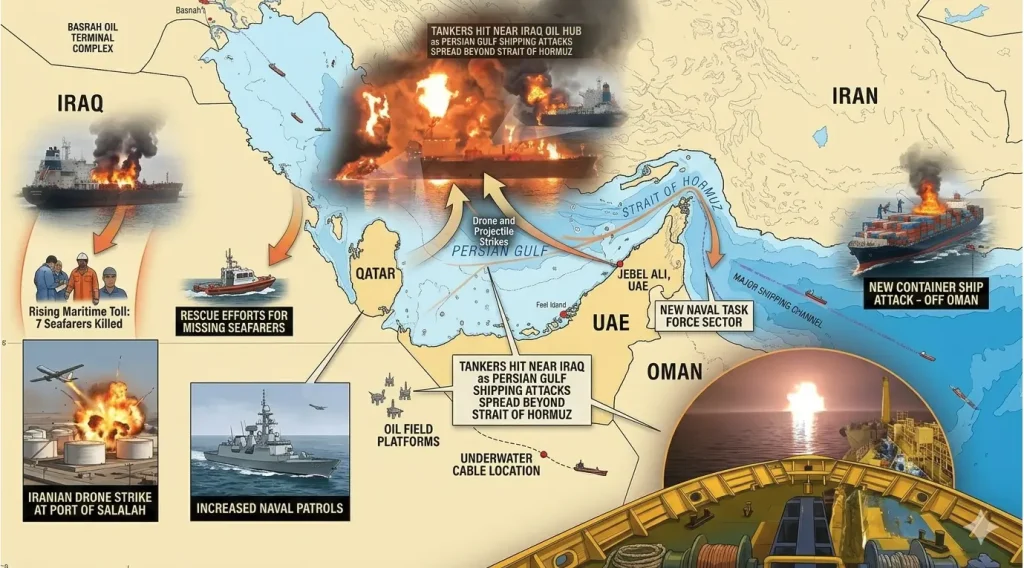
Global oil supply at risk
The Strait of Hormuz is widely regarded as one of the most strategically important shipping routes in the world.
Bounded by Iran to the north and Oman and the United Arab Emirates to the south, the narrow channel connects the oil-rich Gulf region to the Arabian Sea and global markets.
Around 3,000 vessels pass through the strait every month, carrying an estimated 20 million barrels of oil per day.
Any prolonged disruption could send global oil prices soaring and drive up fuel and energy costs in countries including the UK.
Government sources have warned the economic impact of the Middle East conflict could be “huge”, with ministers already examining measures to shield households and businesses from potential spikes in energy prices.
The developments are being closely watched in Pembrokeshire, home to the South Hook and Dragon LNG terminals at Milford Haven. Tankers carrying Qatari liquefied natural gas frequently pass through the Strait of Hormuz before reaching the UK, meaning any disruption in the Gulf could have implications for energy supplies and prices in Wales.
For now, the government insists diplomacy remains the preferred path — but with tensions rising and pressure from Washington increasing, Britain may soon face difficult choices about how far it is willing to go to secure the world’s most critical oil chokepoint.
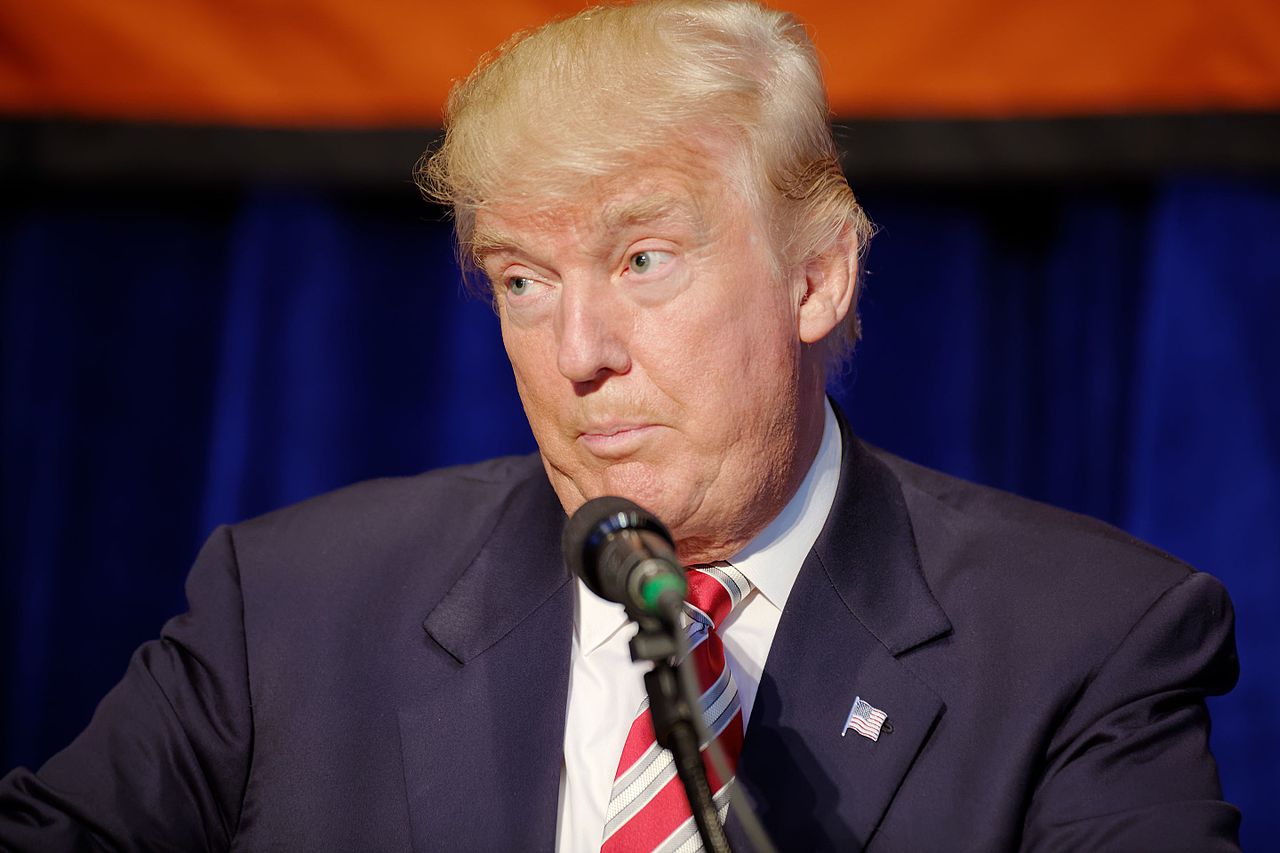
STRAIT OF HORMUZ CRISIS
US President Donald Trump has urged the United Kingdom to send warships to the Middle East to help secure the Strait of Hormuz as Iran’s retaliation in the ongoing conflict continues to disrupt one of the world’s most critical oil routes.
The call comes as shipping through the narrow waterway has effectively ground to a halt following missile, drone and mine attacks linked to the escalating war. Analysts say tanker traffic through the strait has fallen sharply since the fighting began.
Located between Iran and Oman, the Strait of Hormuz is the most important oil chokepoint on the planet. Normally around 20 million barrels of oil per day – roughly one fifth of global supply – pass through the route.
Since the war began in late February, numerous vessels have reportedly been damaged or forced to turn back, while many more have anchored outside the Gulf waiting for the situation to stabilise.
In practical terms, analysts say Iran has been able to use geography to exert enormous leverage over global energy markets.
“Iran cannot permanently close the Strait of Hormuz, but it doesn’t have to,” one maritime security expert said. “If tankers refuse to sail because of the risk of mines, drones or missiles, the effect is almost the same.”
President Trump said Western allies must act together to protect the shipping lanes.
“The UK should be sending warships to help secure the Strait of Hormuz,” he said, calling for an international effort to keep the route open.
The appeal places pressure on the British government to decide whether it will increase its naval presence in the region as tensions escalate.
Britain already maintains naval forces in the Middle East as part of maritime security operations aimed at protecting international trade.
However, the scale of the current disruption has raised fears of a major global energy shock.
Oil prices have surged as markets react to the sudden loss of shipments from the Gulf, with analysts warning that prolonged disruption could trigger wider economic consequences.

The conflict has also exposed the strategic advantage Iran holds through its position along the Strait of Hormuz.
Even without a formal blockade, threats from missiles, naval mines and fast-attack craft have been enough to deter much of the commercial traffic.
For now, Tehran appears able to exert pressure on the global economy simply by making the waterway too dangerous for ships to use.
That reality is now forcing governments around the world to consider military options to reopen the route – a move that could risk drawing more countries into an already widening conflict.
With energy markets rattled and tanker traffic stalled, the struggle for control of one of the world’s most vital maritime passages is rapidly becoming a defining front in the war.



Crime44 minutes ago
Rapist jailed after ‘abhorrent’ attacks on woman and children
Haverfordwest man told police “women won’t have sex without force” A HAVERFORDWEST man who raped a woman and a young...


News3 hours ago
Reform secures first Pembrokeshire councillor in Hakin by-election win
Late Reform candidate takes seat as independent surge and Labour withdrawal shape contest REFORM UK candidate Scott Thorley has won...


News14 hours ago
Scott Thorley elected as Pembrokeshire’s first Reform councillor
REFORM UK candidate Scott Thorley has won the Hakin by-election after securing 179 votes. The full result is as follows:...


News21 hours ago
Police confirm man has died after being recovered from River Cleddau
Major emergency response in town centre after concerns raised for man in water A MAN has died after being recovered...


Community21 hours ago
Davies and Kurtz urge groups to seek employability funding
Community organisations in Pembrokeshire encouraged to apply for new grants supporting skills and job access LOCAL Senedd Members Samuel Kurtz...


News23 hours ago
Emergency services flood Haverfordwest after reports of person in river
Town centre sealed off as multi-agency response continues A MAJOR emergency response is underway in the centre of Haverfordwest after...


News23 hours ago
Detectives receive surge of new information in bid to identify man found at Powys reservoir
Public response follows release of facial image as officers pursue fresh lines of enquiry DETECTIVES investigating the identity of a...

News1 day ago
Senedd committee urges next Welsh Government to prioritise Wales–Ireland links
A SENEDD committee has called on the next Welsh Government to continue prioritising Wales’s relationship with Ireland, describing it as...


Education2 days ago
New facilities open at Portfield School as redevelopment reaches key milestone
THE FIRST phase of a major redevelopment programme at Portfield School in Haverfordwest has been completed, marking a significant step...


News2 days ago
£377m spent saving blast furnaces months after Port Talbot closure
Government intervention keeps UK’s last primary steelmaking furnaces running THE UK GOVERNMENT spent £377 million to prevent the closure of...
-

 Health5 days ago
Welsh Ambulance Service to host bi-monthly Board meeting
-

 News4 days ago
Rayner and Lammy visit Wales to discuss justice and community safety
-

 Local Government7 days ago
Register now to vote in May’s Senedd election
-
 News3 days ago
Fishguard linked to allegations in Many Tears Animal Rescue investigation
-
News23 hours ago
Emergency services flood Haverfordwest after reports of person in river
-
 Community7 days ago
Modern-day maritime hero backs exhibition marking 200 years since launch of HMS Erebus
-

 Crime7 days ago
‘Knife attack’ at Spittal property leaves man in hospital
-
 News6 days ago
Calls grow for water industry overhaul after Welsh Water faces £44.7m fine