


News
‘I am sympathetic to Lib Dems’ says Simon Hart


Simon Hart MP
CONTINUING our interview with Carmarthen West & South Pembrokeshire MP, this week we look forward to May’s General Election and Simon Hart’s ambitions for the next Parliament.
We asked Mr Hart whether the fixed term of this Parliament had led to its last year being wasted on campaigning for a General Election that everyone knows is coming at a fixed point in time.
He disagreed: “I wouldn’t go that far. Every Parliament comes to an end and those are, more or less, predictable, whether a government goes to the country after three or four years. In the final period before an election, very little legislation can get on the statute books because it falls when the election comes along. That period might seem pretty dreary, but that has always been the case. Our country needed certainty in May 2010 and the fixed term of this Parliament helped to provide that.”
The plight of Liberal Democrats, who are widely anticipated to face heavy losses in May, was something with which Simon Hart empathised: “I am probably more sympathetic than some of my colleagues would be. I have a good working relationship in the House with my LibDem colleagues, LibDems in Wales, and with – I think – LibDem voters in my constituency.
“We should remember that it would have been simple for the LibDems to sit back in 2010 and watch the Conservatives try to deal with the economic mess we were in. They could have watched a minority government wallow and be unable to achieve anything or tackle the economic problems it faced. They could have sat back and done nothing, but they did not. The Liberal Democrats made a big, unpopular decision to go into a coalition when they could have acted expediently in the own self-interest. But they did not. That decision has come at a price; I think, however, that history will judge the LibDems’ decision to go into a coalition far more kindly than current commentators.”

Apart from being a member of it, we then asked Mr Hart what his ambitions were for the next Parliament:
“I want to continue as an MP, of course. I love what I do. There are times when you have to fight many frustrations, days when you wonder ‘what’s the point?’, but what I do as an MP is deeply satisfying. That satisfaction comes in a number of ways: I like sticking up for the little guy against a big bureaucracy or the sort of big organisation that can dominate people’s lives; I enjoy the satisfaction of helping a constituent – even if it is in a small way – to sort out a problem.
“I look at my constituency: I enjoy visiting new business and I am delighted to see the children of friends find jobs that could last a lifetime. Everything I care about in life is within thirty minutes or so of where we are now sitting. In terms of a specific fight: I want to continue to fight the battle for local health care.”
He continued: “I am a small cog in the big wheel of an administration that has fought hard to make the UK a growing economy and I want the next Parliament to see the job through that the current government has started.”

About the General Election, Simon finally added: “Party apart, people in this day and age – when it comes to casting a vote – will, I think, look at the individuals who are their candidates as well as their party badges.”
The interview ended and Simon left the office, hurrying off to his next engagement. The purpose of the interview had been to look at his experiences as an MP representing his constituency. The extent and scope of his ambition seemed reassuringly modest and constituency-focused.
There are a few who would have liked him to be probed more fiercely about his links with the Countryside Alliance, about his voting record in this Parliament, about the UK government’s record on welfare. But that was not this interview’s goal. Mr Hart’s is the first of a number of interviews we want to have with General Election candidates before the starting whistle is blown and so-called ‘election-purdah’ begins.

Closer to the election, the questions will change to focus on the specific, as opposed to the general. It is at that time – when we put the same questions to all candidates on health, welfare and their ambitions for the next Parliament – that people can judge the candidates both on their policies and their personalities.


Investigation continues after four teenagers were injured in late-night railway station violence
TWO people arrested after four teenagers were stabbed during violence at Tenby railway station have been released on bail while police continue their investigation.
British Transport Police are leading the inquiry into the incident, which happened at around 9:50pm on Tuesday (Apr 7). Officers were called to reports of disorder involving a group of youths at the station.

Four teenagers, aged between 13 and 17 and all from the Pembroke area, suffered stab wounds and were taken to hospital for treatment. Police have since confirmed that their injuries were not life-threatening or life-changing, and that all four have now been discharged.
A 16-year-old boy and a 19-year-old man were arrested on suspicion of grievous bodily harm. Both have now been released on bail pending further enquiries.
Police said they believe the incident was isolated, but there will be an increased officer presence in the area to reassure the public.

Detectives are urging anyone who witnessed the violence, or saw what happened in the lead-up to it, to get in touch. They have also asked members of the public not to speculate online or share footage while the investigation remains ongoing.
Anyone with information is asked to contact British Transport Police by texting 61016 or calling 0800 40 50 40, quoting reference 916 of Apr 7.
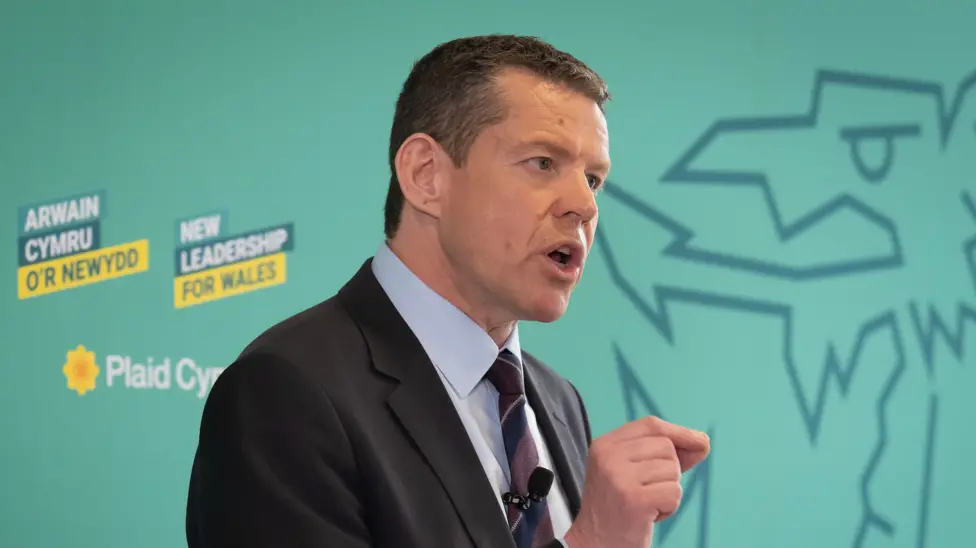
Rhun ap Iorwerth’s party says plan is radical and fully costed as it bids to lead next Welsh government
PLAID CYMRU has launched its manifesto for the 2026 Senedd election, setting out a programme focused on childcare, health, education and tackling child poverty as the party seeks to convince voters it is ready for government.
With opinion polls suggesting Plaid could be in contention for its strongest ever Senedd result, the party is presenting itself as a serious alternative administration under leader Rhun ap Iorwerth.

Rather than putting major constitutional change at the centre of the campaign, Plaid’s manifesto concentrates heavily on public services and living standards. While the party continues to support Welsh independence, it is not proposing an independence referendum during a first term in government.
Instead, Plaid says it would establish a national commission for Wales, with a budget of £500,000, to examine future constitutional options including further devolution and the foundations for a future white paper on independence.
On education, Plaid is promising to widen access to free school meals. The party says it would extend free meals to year seven to 11 pupils in households receiving Universal Credit, with no income cap. It is also pledging new incentives to attract teachers and says it wants to strengthen Welsh-medium education.


However, questions remain over whether enough Welsh-speaking staff could be recruited to support the scale of expansion Plaid is proposing across childcare and education.
The party is also promising a review of the Curriculum for Wales, alongside clearer guidance for teachers, in what appears to be an acknowledgement of continuing concern about how the reforms are working in practice.
In health, Plaid says it wants to cut waiting times, although the manifesto itself does not contain a detailed overall target. Rhun ap Iorwerth has said that under a Plaid-led government no-one would be waiting two years for treatment within the first year, with wider waiting lists brought back to pre-pandemic levels by the end of a Senedd term.
The manifesto also says Plaid would consider “all options” for reforming Betsi Cadwaladr University Health Board in north Wales, leaving open the possibility of structural change at Wales’ largest health board.
On higher education, Plaid says it would prioritise a review of universities and their funding amid growing financial pressure in the sector. The party says it wants to ensure more Welsh government spending on higher education remains in Wales.
The manifesto also proposes refocusing the Seren programme towards Welsh universities and boosting participation from disadvantaged communities. Critics, however, may argue that such a move risks narrowing options for the most academically able students.
Housing and tourism policy also feature prominently. Plaid says it will review the effectiveness of current second homes and self-catering holiday let rules, including the controversial requirement for holiday lets to be rented out for at least 182 days a year to avoid being treated as second homes for council tax purposes.

That rule has been defended by those concerned about housing shortages in tourism hotspots, but it has come under strong criticism from tourism operators who say it is harming local businesses.
Plaid is also proposing to explore a Welsh child payment of £10 a week for children under six in families receiving Universal Credit. The idea would begin as a pilot scheme aimed at addressing child poverty.
But there are doubts over how easily such a scheme could be delivered, given that Wales does not have the same benefits powers as Scotland, where a similar payment already exists. Any full rollout could depend on cooperation from the UK government.
Taken together, the manifesto suggests Plaid Cymru is trying to broaden its appeal beyond its traditional base, offering a platform centred less on constitutional change and more on bread-and-butter issues such as health, schools, housing and family finances.
Whether that approach is enough to persuade voters Plaid is ready to run Wales may prove one of the defining questions of the 2026 election campaign.
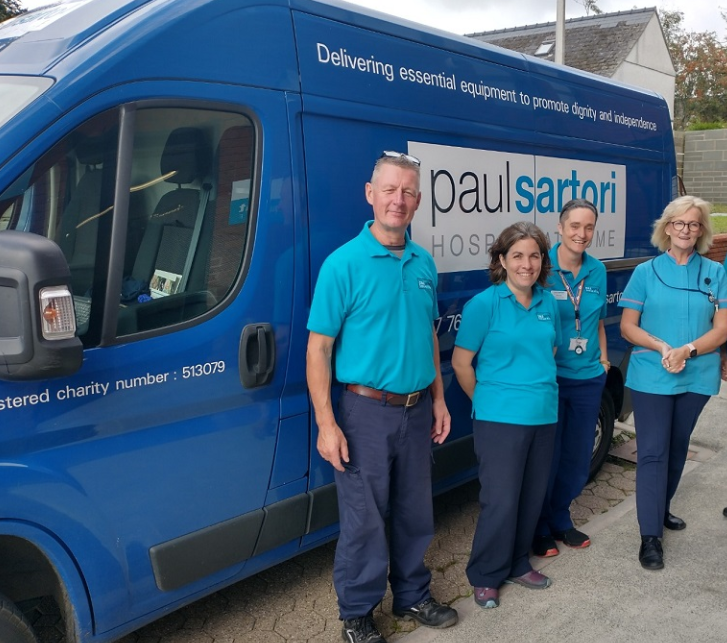
PAUL SARTORI Hospice at Home is calling on the community to help keep end-of-life care moving across Pembrokeshire as it launches an urgent appeal to fund a replacement for its essential Equipment Loan Van.
The appeal, which went live on Friday, April 10, 2026, will run until December 1, 2026, with the aim of raising £40,000 to replace the vital vehicle and safeguard the future of the service.
Every day, families across the county face some of the hardest moments of their lives while living with terminal illness or saying goodbye to a loved one. Paul Sartori Hospice at Home believes everyone deserves dignity, comfort and choice at the end of life, and its Equipment Loan Service plays a crucial role in making that possible.
At the heart of this service is the charity’s van, which delivers essential equipment free of charge directly to people’s homes. From hospital-style beds and wheelchairs to commodes and pressure-relieving mattresses, these items enable patients to remain in familiar surroundings, close to the people they love.
The service often responds on the same day, ensuring urgent needs are met quickly. By providing the right equipment at the right time, the team helps prevent unnecessary hospital admissions and supports faster hospital discharges, giving people the chance to spend precious time at home.
Beyond deliveries, the team also shows families how to use the equipment, supports safe transfers where needed, and fills critical gaps that statutory services are unable to meet. For many people, this service provides something truly invaluable: dignity, independence and comfort during end-of-life care.
However, the current Equipment Loan Van is now reaching the end of its working life, putting this lifeline service at risk. To continue operating safely and efficiently across Pembrokeshire, the charity urgently needs to replace it with a reliable, roadworthy vehicle.
Pat Coombs, Clinical Coordinator and Equipment Facilitator at Paul Sartori Hospice at Home, said: “This van is essential to the care we provide. Every day, we see the difference it makes, helping people return home from hospital, supporting families to care for loved ones, and making sure patients can remain where they feel most comfortable.
“It is not just about delivering equipment; it is about delivering dignity and choice at the end of life. Without a reliable van, we simply cannot respond as quickly or effectively as people need us to.”

The charity is encouraging individuals, businesses and community groups to get involved and support the appeal. Donations of all sizes will help ensure that no one in Pembrokeshire has to face the end of life without the care and equipment they need.
To support the campaign and help fund a new Equipment Loan Van, visit: www.justgiving.com/campaign/equipmentloanvan



News8 hours ago
Plaid Cymru sets out childcare, NHS and child poverty pledges in 2026 manifesto
Rhun ap Iorwerth’s party says plan is radical and fully costed as it bids to lead next Welsh government PLAID...


Community12 hours ago
Police intervene after post raises fears of planned Pembroke Dock fight
Extra patrols launched after social media alert in aftermath of Tenby stabbings POLICE intervened after an online warning raised fears...

Crime14 hours ago
Man arrested after alleged child sexual assault in Haverfordwest
Police enquiries ongoing after incident in Castle Square A MAN has been arrested after an alleged sexual assault of a...


Crime2 days ago
Four youths stabbed at Tenby railway station as two arrested
British Transport Police lead investigation after serious disorder involving group of youths FOUR youths suffered stab wounds during a major...


News2 days ago
Major emergency response in Tenby after incident near train station
Witnesses report injuries as police and ambulance crews remain at scene on Warren Street POLICE and ambulance crews remain at...


News3 days ago
Haverfordwest County AFC faces High Court winding-up threat from HMRC
Chairman says issue has been dealt with, but winding-up notice is still listed ahead of High Court hearing HAVERFORDWEST County...

Local Government3 days ago
Food hygiene checks have not been carried out in parts of a Welsh county since 2019
FOOD hygiene checks have not been carried out in parts of a Welsh county since 2019 due an inspection backlog,...


Local Government3 days ago
Bridge works on Neyland-Burton road to continue into late April
Council says safety repairs remain on programme but traffic lights will stay in place as major bridge scheme moves into...

Charity4 days ago
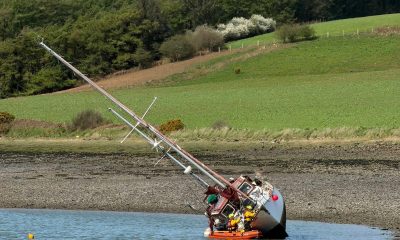
Angle RNLI answers string of call-outs across the Milford Haven Waterway
Volunteer crew launched for searches, police incidents, a medical evacuation and a grounded yacht during a busy spell from mid-February...


Charity4 days ago
St Davids RNLI launches on Easter Monday after drifting kayak spotted off Solva
Missing vessel recovered near shore after coastguard confirms it had been reported lost days earlier ST DAVIDS RNLI launched on...
-

 News7 days ago
Accommodation providers in Wales will be required to register under new law
-
Crime2 days ago
Four youths stabbed at Tenby railway station as two arrested
-

 News5 days ago
Eluned Morgan targets Haverfordwest as Welsh Labour fights to hold its ground
-

 Community5 days ago
Johnston FC pays tribute after sudden death of Rhyan Nolan, 27
-
News3 days ago
Haverfordwest County AFC faces High Court winding-up threat from HMRC
-
Local Government3 days ago
Bridge works on Neyland-Burton road to continue into late April
-

 News6 days ago
Carol Vorderman urges Welsh voters to reject Reform UK ahead of Senedd election
-
 Business7 days ago
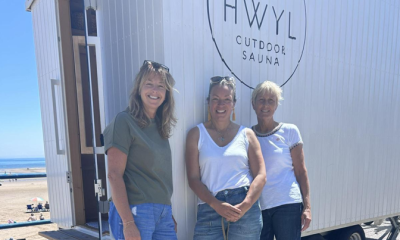
Calls for award-winning Pembrokeshire sauna to be permanent
justice villarreal
October 8, 2025 at 8:02 pm
Loved the tone and clarity. Enjoy news geo urdu — expert analysis and updates. mobile and desktop friendly. interviews, results, program guide. quick start and smooth playback.
小宝影视在线影院
January 28, 2026 at 8:02 pm
夜班医生第四季高清完整版结合大数据AI分析,海外华人可免费观看最新热播剧集。