


Crime
Taylor wins appeal as Crown Court quashes ‘no insurance’ conviction

Judge rules expired licence does not invalidate insurance where driver is not disqualified
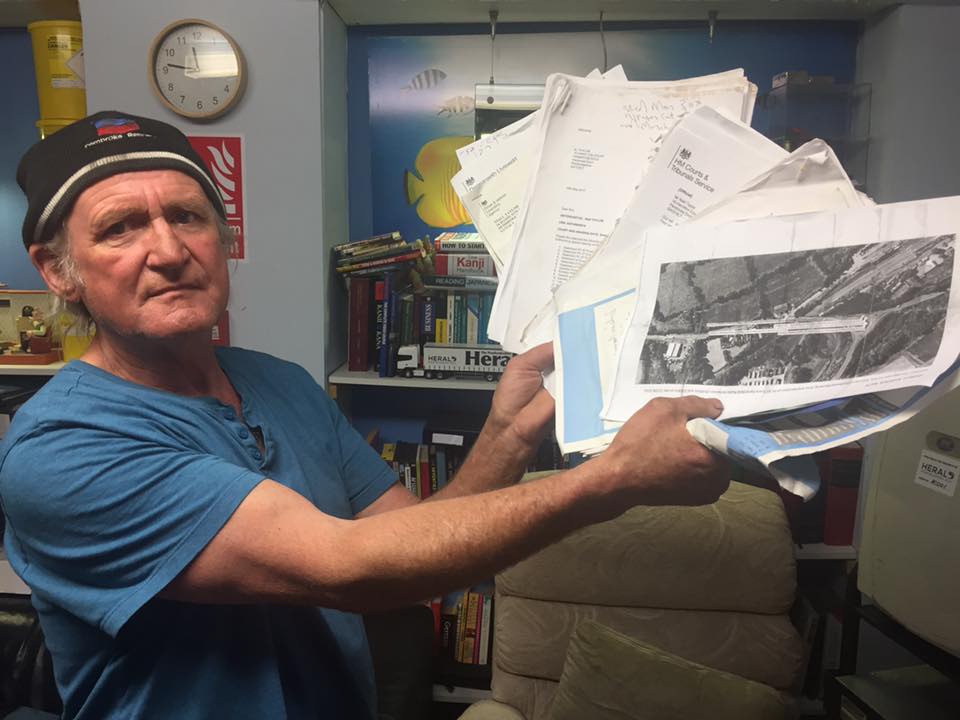
A HAKIN man has successfully overturned his conviction for driving without insurance in a case that could have wider implications for thousands of motorists.
Seventy-six-year-old Niall Taylor, of Haven Drive, won his appeal at Swansea Crown Court on Thursday (Mar 27), after the court ruled there was no case to answer on the insurance charge.
The court found that Taylor was insured in law at the time he was stopped, despite his driving licence having expired.
This is understood to be a landmark ruling on a point of law, directly addressing a long-standing assumption used in policing and prosecutions — that a driver whose licence has expired is automatically uninsured. The judgment provides rare clarification on how standard insurance wording should be interpreted in such cases, and may influence how similar prosecutions are handled in the future.
Key issue: licence expired but not disqualified
The case centred on an incident on January 18, 2023, when Taylor was stopped by police while driving a Vauxhall Zafira in Haverfordwest.

It was accepted that his driving licence had expired in November 2022 and had not yet been renewed, and Taylor did not challenge his conviction for driving otherwise than in accordance with a licence.
However, the appeal focused solely on whether he was also uninsured.
Certificate wording decisive
The court heard that Taylor held a valid insurance policy covering the date in question.
Crucially, the certificate of motor insurance stated that cover applied where the driver:

“holds a licence to drive the vehicle or has held and is not disqualified or prohibited by law from holding or obtaining such a licence.”
The court found that Taylor met this definition, as he had previously held a licence and was not disqualified or prohibited from obtaining one.
Judge relies on leading legal text
In a detailed ruling, the judge referred to Wilkinson’s Road Traffic Offences (32nd Edition), a leading legal authority, which states that policies using this wording commonly cover drivers even where a licence has expired.

The court also considered the case of Adams v Dunne (1978), which established that an insurance policy remains valid unless and until it is formally avoided.
The judge said that, in law, such policies remain effective even if they may later be considered “voidable” rather than void.
Prosecution evidence ‘insufficient’
The Crown had relied on evidence from an insurance company investigator, who said the policy might have been cancelled had the company known about the licence issue.
However, the court found this evidence did not establish that the policy was invalid at the time.
The judge noted that:
- the insurer had confirmed a policy existed,
- no full policy document had been produced, and
- the certificate itself clearly set out the relevant terms.
He concluded that the prosecution had failed to prove that no valid insurance was in force.
Conviction quashed
Allowing the submission of no case to answer, the court ruled:
“We are satisfied that Mr Taylor did indeed have a certificate of motor insurance… which covered him to drive on the 18th of January 2023.”
The judge added that the prosecution evidence, taken at its highest, was not sufficient to justify a conviction.
Taylor’s conviction for driving without insurance was therefore quashed.
Wider implications
The ruling raises important questions about how insurance policies operate where a driving licence has expired — an issue affecting many motorists, particularly those over 70 who must renew their licences regularly.
The court’s interpretation suggests that, where a policy uses standard wording covering drivers who have previously held a licence and are not disqualified, insurance may still be valid despite administrative lapses.
Taylor’s separate conviction for driving otherwise than in accordance with a licence remains in place and was not part of the appeal.
He was asked to write to the court if he wanted to claim travelling expenses to cover the cost of transport for numerous times he has been to court regarding this matter.


Haverfordwest woman claimed fear of police and missing custody footage supported her case
A HAVERFORDWEST woman has lost her appeal against conviction after Swansea Crown Court ruled she had no lawful excuse for refusing to provide a blood sample — despite claims she feared police abuse and that missing custody footage would support her defence.
Sally Nolan, 52, of Three Meadows, appeared at Swansea Crown Court on Thursday (Mar 27) to challenge her conviction for failing to provide a specimen for analysis following her arrest in Johnston on Aug 15, 2025.
Missing footage dispute
At the start of the hearing, Nolan — representing herself — argued that police custody footage had not been disclosed. She said the material would show she was mistreated and had offered to provide a urine sample instead of blood.
The Crown told the court no such footage was available and that custody desk recordings are typically retained for around 28 days. Prosecutors added there was no record on the custody log of any mistreatment or of Nolan offering a urine sample.
The court proceeded with what the judge described as a fresh hearing.

Police stop and roadside test
The court heard PC Dylan Davis stopped Nolan’s vehicle after receiving information it was being driven by someone suspected of being under the influence of drugs.
Body-worn video footage showed the officer activating blue lights and intercepting Nolan’s car before pulling her over.
Nolan provided a roadside saliva test, which gave a positive indication for cannabis. The court heard this was not conclusive but justified her arrest and further testing.
Refusal captured on video
Footage played in court showed Nolan repeatedly refusing to provide a blood sample after being taken to custody.
The officer read out the required legal warnings, including that failure to provide a specimen could lead to prosecution.
Nolan replied: “I’m refusing, take me to court,” and later said: “No, because I don’t trust you or the NHS.”
The court also heard she told officers: “I do not consent to anything that you will do to me,” and even refused to accept a glass of water due to concerns it could be tampered with.

Defence: PTSD and mistrust
Giving evidence, Nolan said her refusal was based on a deep mistrust of police, which she linked to previous experiences.
“I don’t trust the police,” she told the court. “You can do any test you want, but you’re not putting a needle in my arm.”
She said she would have provided a urine sample and maintained she was not under the influence of drugs.
Nolan also told the court she believed she suffered from post-traumatic stress disorder, although she accepted she had no formal diagnosis.
Medical evidence rejected
A letter from her GP confirmed Nolan had not been diagnosed with PTSD, though she was experiencing anxiety and distress.
A healthcare professional present in custody told the court Nolan appeared physically well, understood the procedure, and had no medical condition that would justify refusing a blood sample.
The court heard recognised medical reasons could include conditions such as a clinically supported phobia, but no expert evidence had been provided in Nolan’s case.
Court’s ruling
Delivering judgment, the court said it accepted Nolan held genuine fears and mistrust of the authorities.
However, the judge ruled that a “reasonable excuse” must arise from a physical or mental inability to provide a specimen, or a real risk to health, and would normally require medical evidence.
The court found Nolan’s refusal was instead a willful refusal based on mistrust, which — even if genuinely held — could not amount to a lawful excuse.
The judge also rejected Nolan’s argument that she should have been offered a urine test, ruling that the law does not require police to give drivers a choice between blood and urine samples.
Refusing the appeal, the judge said: “We find that you did not have a reasonable excuse defined by law. Therefore, we refuse the appeal.”
Nolan replied: “That’s all I wanted. A fair trial.”
Sentence and finances
Magistrates had previously imposed an 18-month driving disqualification, a £300 fine, £650 in prosecution costs and a £120 surcharge.
The Crown Court then heard Nolan receives around £1,300 a month in Universal Credit, alongside ongoing household and vehicle costs.
The court confirmed that the penalty imposed at the lower court was correct. Nolan must pay £250 costs to the CPS after losing the appeal.
She was ordered to pay at £20 a month to which she told the judge: “I can’t afford that I am poor. I am very poor. I have three cats to feed, and I won’t starve my cats.”
Despite being unsuccessful in court she added: “Thank you Your Honour for a fair trail. You have been very good. Thank you, thank you.”

A MODIFIED e-bike described as “dangerous” has been seized and will be destroyed following a prosecution at Haverfordwest Magistrates’ Court.
Twenty-four-year-old Joshua Miller, of Monkton, Pembroke, admitted driving dangerously, failing to stop for police, and riding without third-party insurance when he appeared in court on Tuesday (Mar 10).
He was disqualified from driving for 12 months, ordered to complete 150 hours of unpaid work, and must pay £85 costs along with a £114 surcharge. The court also imposed a deprivation order on the e-bike, which had been heavily modified at a reported cost of around £10,000.
The offences relate to an incident on September 6, when officers were called to central Pembroke shortly before midnight following reports of e-bikes being ridden in an anti-social manner.
Police said Miller was among a group of riders who verbally abused officers after being asked to stop while travelling through a narrow pedestrianised alleyway.
Officers approached Miller on a grass verge, but he accelerated the e-bike while two officers were holding onto him, propelling them forward before he was arrested.
The arrest formed part of a wider Dyfed-Powys Police operation targeting illegal e-bike use, including the deployment of SelectaDNA spray to forensically link riders to offences.
Superintendent Louise Harries, of the Pembrokeshire division, said: “This result reflects the determination of officers to tackle an issue that is causing real concern in our communities.
“It is only by good fortune that no one was seriously injured when Miller accelerated in this way.

“These modified e-bikes are often capable of travelling at far higher speeds than intended, and their use in public spaces can be both dangerous and intimidating.
“We are taking robust action to address this problem, and the seizure of this vehicle demonstrates that commitment.
“We would continue to urge members of the public to report any illegal or dangerous use of e-bikes so we can take action.”

Anyone with information can contact Dyfed-Powys Police online, by calling 101, or by emailing [email protected].
Cover image is a stock photo for illustrative purposes only


More than £36,000 in penalties after protected estuary targeted
FOUR men from Llanelli have been fined more than £36,000 after illegally gathering cockles from the protected Burry Inlet.
Natural Resources Wales (NRW) launched an investigation following a report of unlawful cockle harvesting in the Llanelli area on Thursday (June 12, 2025).
Enforcement officers attended and found that Ethan Thomas, Brogan Phillips, Finley Harvey Jones, all from Llanelli, and Korey Kathrens, from Burry Port, had driven 4×4 vehicles more than one kilometre out into the estuary to collect cockles without permission.
The group was intercepted as they attempted to leave the scene. During the incident, two of the vehicles became stuck in the estuary and had to be towed to safety.
Officers seized a large quantity of cockles along with equipment used in the operation.
All four men denied the charges but were found guilty following a trial at Llanelli Magistrates’ Court on Monday (Mar 23, 2026).
Each defendant was fined £4,000, ordered to pay a victim surcharge of £1,600, and prosecution costs of £3,546—bringing the total penalty per person to £9,146. The court ordered payments at a rate of £200 per month.
Huwel Manley, Head of South West Wales Operations at NRW, said: “This case highlights the seriousness of illegal cockle gathering, which can damage fragile ecosystems and undermine licensed fisheries operating within the estuary.
“Natural Resources Wales is committed to protecting our shellfisheries and wider fisheries from illegal activity.
“We welcome the court’s decision and hope it sends a clear message that fishery and shellfish-related crime will not be tolerated. We will continue to take appropriate enforcement action against those who break the law.”



Education7 hours ago
Ysgol Henry Tudor reassures parents over Sikh ceremonial kirpan
School says religious item worn by pupil is secured, symbolic and non-functional YSGOL HENRY TUDOR has moved to reassure parents...


Crime1 day ago
Teen jailed after starting fire while others slept
Fire set in shared home left sleeping residents at risk and caused £130,000 damage A TEENAGER who started a fire...


Health1 day ago
GP crisis driving NHS pressure in Wales, Senedd report warns
Falling GP numbers and funding gaps blamed for worsening hospital delays THE NHS crisis highlighted earlier this week is being...


News2 days ago
Reform reveals west Wales candidates for Senedd battle
Monkton councillor tops Pembrokeshire list as party confirms Carmarthenshire names and includes Haverfordwest councillor in unwinnable Swansea spot REFORM UK...


Health2 days ago
Clash over Withybush Hospital services as Paul Davies challenges First Minister
A HEATED exchange in the Senedd has laid bare growing tensions over the future of hospital services in west Wales....


Crime3 days ago
Police stop car in Pennar as three arrested in drugs investigation
Suspected drug driver report leads to major police response and multiple arrests DRAMATIC scenes were reported in Pennar on Monday...


Business3 days ago
New pilot vessel Llanion arrives at Milford Haven
State-of-the-art 22-metre craft marks reset after £3.6m pilot boat controversy THE PORT OF MILFORD HAVEN has taken delivery of a...


Community3 days ago
Sycamore Gap legacy tree to take root in Pembrokeshire landscapes
A SAPLING grown from the famous Sycamore Gap tree is set to become part of Wales’ protected landscapes — with...


Business4 days ago
Could Primark be coming to Haverfordwest? Major retailer in talks for former Wilko site
Council confirms advanced discussions as speculation grows over high street boost HAVERFORDWEST could soon see a major high street revival,...


Business4 days ago
Rail investment ‘could unlock 40,000 jobs and £11bn for Wales’ says new report
RAILWAY stations across Wales could help unlock around 40,000 jobs and more than £11 billion for the economy by 2036,...
-

 Business3 days ago
Taxi fare shock in Milford Haven as drivers switch to meters
-
Business4 days ago
Could Primark be coming to Haverfordwest? Major retailer in talks for former Wilko site
-
 Crime5 days ago
Child rapist found with abuse images after moving to west Wales
-

 Crime6 days ago
Milford Haven drug dealing pub boss who boasted of ‘best coke around’ jailed
-

 Health3 days ago
Average of 18 deaths a week in Wales linked to A&E delays, figures reveal
-

 Sport5 days ago
Haverfordwest secure bonus-point win over title-chasing Tumble
-

 Local Government4 days ago
Milford Haven set for £200m investment with schools, leisure centre and rail upgrade
-

 Community1 day ago
Hero female officer keeps job after sexual touching finding