


News
First Minister faces the Herald: Withybush, schools, and farming under the spotlight


Eluned Morgan sat down in Milford Haven for a wide-ranging interview with The Herald as voters in Ceredigion Penfro prepare to decide who they trust on the NHS, education, rural Wales and the future of west Wales
IN a major pre-election interview with The Herald, First Minister Eluned Morgan defended Labour’s record in Wales while facing direct questioning on the future of Withybush Hospital, job shortages for newly qualified NHS staff, declining school standards, farming anger, rural school closures, youth violence and environmental failures. In a conversation lasting more than half an hour, she made a series of promises — but also stopped short of giving cast-iron guarantees on some of the issues causing greatest concern in Pembrokeshire.

MILFORD HAVEN became the stage for one of the most important political interviews of the Senedd election campaign this week, as First Minister Eluned Morgan sat down with The Herald to answer the questions many west Wales voters are asking.
With just weeks to go before polling day, the interview cut straight to the issues dominating life in Pembrokeshire and beyond: the future of Withybush Hospital, the state of the NHS, school discipline and standards, pressure on family farms, the fallout from youth violence, river pollution, housing delays and whether Labour, after decades in power in Wales, can still credibly promise change.
From the outset, the Herald challenged the First Minister on the central argument now being made by many disillusioned voters — that Labour has had long enough.
Morgan’s answer was clear: she insisted that Labour remains the only party with the experience to govern responsibly, and warned that opposition parties were making promises they could not afford to keep. But while she repeatedly defended her government’s record, she also conceded on at least one key point that standards in Welsh schools today are “not” good enough.

That exchange alone will resonate with many parents.
But it was the future of Withybush that dominated much of the interview.
Morgan rejected repeated warnings that the hospital is under threat, accusing political opponents of raising closure fears at every election. She said Withybush is not going to close and pointed to millions of pounds already spent on fire safety and concrete repairs. She also claimed there would be more same-day emergency care, more cancer care and more orthopaedic surgery at the site.
Yet when pressed on whether she could rule out any further downgrading of services, the answer was notably less firm. Morgan said such decisions ultimately sit with the health board rather than politicians, while arguing that some highly specialist services may need to be centralised if patients are to see the best surgeons available.

That answer is unlikely to settle nerves in Pembrokeshire, where concern over the long-term future of local hospital services remains deeply rooted.
The Herald also put to the First Minister an increasingly difficult contradiction for Welsh Labour: how can ministers talk about recruitment shortages in the NHS while newly qualified nurses, paramedics and midwives are being told there may be no jobs for them in Wales?
Morgan said NHS staffing had increased by 12 per cent in five years and argued that the current situation reflected a mismatch between recruitment, retirements and specialist vacancies. She said she was confident the problem would “shake out”, but for many students and graduates facing uncertainty right now, that may sound more like hope than a plan.

The pressure did not ease when the discussion turned to waiting times. The Herald raised the example of a 10-and-a-half-hour wait in A&E at Withybush, with not enough seats and people reportedly sitting on the floor. Morgan argued Wales had been slower to recover after the pandemic because it had taken a more cautious approach, but said long waits were coming down and promised improved access to primary care and same-day mental health support if Labour is returned to office.
On dentistry, she acknowledged the depth of the problem. Asked about a woman who had waited three years for NHS dental treatment and was then offered a dentist in Carmarthen, Morgan admitted many dentists had left the public sector for more lucrative private work. Her answer was to point to contract changes and plans for a new dental school in Wales, with hopes that more rural trainees could eventually be kept in west Wales.
Education brought one of the interview’s clearest moments. Asked directly whether Welsh schools are good enough today, Morgan answered with a blunt “no”.
She said the pandemic had damaged attendance, resilience and behaviour, and argued that Labour had responded with free school meals, uniform support and more mental health help in schools. But the admission itself was striking, especially when set against Labour’s long period in office.
The Herald then turned the conversation to west Wales specifically, including concern over standards in Pembrokeshire and the shocking recent incident at Milford Haven School in which a teacher was stabbed. Morgan described that incident as “utterly unacceptable” and said behaviour must improve, while also pointing to investment in school buildings and plans for a new school for Milford Haven.
On rural schools, however, her response was less interventionist. Asked whether she accepted that the closure of a rural school weakens the whole community, Morgan acknowledged their importance but said such decisions must ultimately be made by local councils.
The interview also tackled a subject that has become impossible to ignore in west Wales: youth violence. In the wake of the Tenby stabbings, Morgan said what had happened was “utterly unacceptable” and argued that visible policing and stronger youth support were needed. But when asked plainly whether youth services in west Wales are strong enough right now, she did not give a straightforward yes. Instead, she said some areas were doing well while others needed strengthening.
Farming was another major flashpoint.
The Herald put to the First Minister the anger and anxiety felt by many family farmers over the Sustainable Farming Scheme, and the widespread belief that Welsh Labour has made rural communities feel attacked rather than supported. Morgan rejected that view, saying farmers are receiving more support than ever from the Welsh Government, with hundreds of millions of pounds going into the sector.
But she also insisted that public money must come with public benefit, arguing that farming support must help tackle climate change and environmental damage as well as food production.
Her most politically charged remarks came when she linked current farming pain to Brexit, saying many farmers had voted for promises that had not been kept and were now paying the price. That argument may appeal to Labour supporters, but it is unlikely to calm resentment in a sector that often feels talked at rather than listened to.
The spread of the new enlarged Senedd and the redrawing of the electoral map also featured in the interview. Morgan argued that having more Senedd members was necessary if Welsh democracy was to function properly, despite public frustration over the cost. She also sought to turn geography into an advantage, telling voters that having a First Minister who lives in west Wales means the region has a direct voice “at the top table”.
That was part of a wider effort to present herself as a leader still in mid-delivery rather than a tired incumbent. Morgan repeatedly stressed that she has only been First Minister for around 18 months and pointed to social housing, women’s health hubs, free school meals and reduced waiting lists as evidence she is already delivering change.
For Pembrokeshire readers, though, the most significant parts of the interview may have been her commitments on local healthcare, transport, jobs and infrastructure.
Morgan spoke of the potential for a new west Wales hospital, better primary care access, a proper transport plan for every health board and the long-term economic opportunity of green energy and Freeport-linked investment. She also backed major infrastructure to unlock those opportunities, including pylons, while acknowledging that communities affected by them should be compensated.
That position sets up a clear dividing line in west Wales politics: economic development versus landscape concerns, urgency versus caution.
The discussion ended where it began — at Withybush.
Asked one final time whether she could rule out further downgrading, Morgan again declined to offer a simple guarantee. Instead, she returned to the language of planning, health board responsibility and the need for safe transport to specialist care.
For readers in Pembrokeshire, that may be the clearest takeaway of all.
The First Minister came to Milford Haven with firm talking points, some big promises and a strong defence of Labour’s record. But under questioning from The Herald, she also made important admissions, particularly on school standards, and left some of the biggest local fears only partly answered.
As the election nears, voters will decide whether that is enough.
Five key takeaways from the Herald interview
Withybush remains the number one concern
Morgan insisted the hospital is not closing and said more services are coming, but stopped short of ruling out all future downgrading.
A blunt admission on schools
Asked if Welsh schools are good enough today, the First Minister said no.
NHS jobs contradiction exposed
The Herald challenged Labour on shortages in the NHS while newly qualified staff face uncertainty over jobs.
Farmers offered money — but not comfort
Morgan said farmers are receiving more support than ever, but defended environmental conditions and blamed Brexit for much of the pressure.
Labour’s pitch is experience over risk
Morgan’s core argument was that Labour may be imperfect, but the alternatives are promising what they cannot deliver.
Promises made in Milford Haven
- Withybush Hospital will stay open
- More same-day emergency care, cancer care and orthopaedic support at Withybush
- A long-term ambition for a new west Wales hospital
- Access to a primary care professional within 48 hours for urgent cases
- Same-day mental health support under Labour’s plans
- Continued pursuit of major green energy and infrastructure investment in west Wales

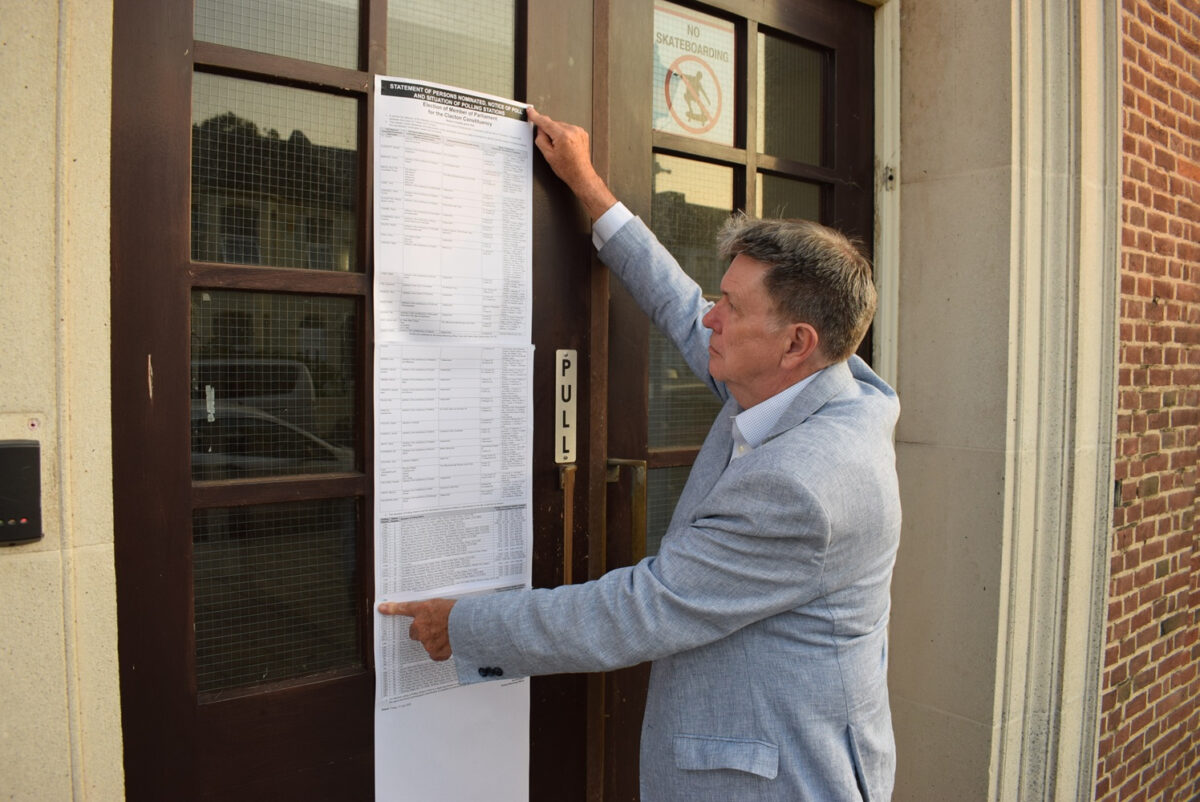
Nigel Farage will face an extraordinary field of 33 opponents when voters in Clacton return to the polls next month
A RECORD 34 candidates have been confirmed for the Clacton parliamentary by-election, which will take place on Thursday, August 13.
The contest was triggered after Mr Farage resigned as the constituency’s MP before announcing that he would stand again for Reform UK.
He said the election would allow local voters to judge his conduct following intense scrutiny of his financial backing and two inquiries by Parliament’s standards commissioner.
Mr Farage has denied wrongdoing and maintains that gifts and other support he received were personal and did not need to be registered under parliamentary rules. He has described the by-election as a contest between the public and the political establishment.
Labour, the Conservatives, the Liberal Democrats and the Green Party are among the larger parties that have declined to field candidates.
Their absence has left political satirist Count Binface and Reclaim Party leader Laurence Fox among the best-known names challenging Mr Farage.
The ballot paper will also feature three candidates from the Official Monster Raving Loony Party, several representatives of smaller political parties and a large number of independents.
Tendring District Council confirmed the final list after nominations closed on Friday.
The council said the field of 34 is believed to be the largest ever assembled for a UK parliamentary election.
The previous record is understood to have been 26 candidates at the Haltemprice and Howden by-election in July 2008. That election was called after Conservative MP David Davis resigned and stood again to campaign over civil liberties.
Full list of Clacton candidates
The candidates standing on August 13 are:
- Joseph 77, Independent
- Adham Alkhatip, The Forward Party
- Count Binface, Count Binface Party
- Nick The Incredible Flying Brick, Official Monster Raving Loony Party
- Tony Cane, Independent
- Woke Trump Carrzee, Independent
- William Stuart James Clouston, Social Democratic Party
- Rees Cowne, Independent
- Glenn Charles Cummings, Independent
- Martin Davies, Freedom Alliance – Real People, Real Alternative!
- Andy Erlam, Independent
- Nigel Farage, Reform UK
- Attieh Fard, Independent
- Laurence Fox, The Reclaim Party
- Tony Francis, Independent
- Robin Green, Independent
- Abi Hookway, Independent
- Howling Laud Hope, Official Monster Raving Loony Party
- Stephen Richard Ingram, Independent
- Amy Morris, Independent
- Derrick Norbert Morris, Independent
- Michael Noel O’Keeffe, Independent
- Martyn OBrien, Independent
- Nick Pelas, Independent
- Ketankumar Pipaliya, UK VOICE safer and stronger UK
- Daniel Pocock, Independent
- James Ransley, Consensus Party Candidate
- Gerry Smith, Independent
- Kai Stephens, British Democrats
- John Stevens, Rejoin EU
- Baron Von Thunderclap, Official Monster Raving Loony Party
- Pamela Walford, Independent
- Marcus White, Everyone is God Party
- Marc Wilkinson, Independent
Almost 80,000 people are eligible to vote across the constituency’s 51 polling stations.

Residents who are not already registered must apply by July 28. The deadline for postal vote applications is 5pm on July 29, while applications for proxy votes and free Voter Authority Certificates must be submitted by 5pm on August 5.
Mr Farage first won Clacton for Reform UK at the 2024 general election, receiving 21,225 votes and securing a majority of 8,405 over the Conservatives.
The seat has officially been vacant since July 8 following his resignation.

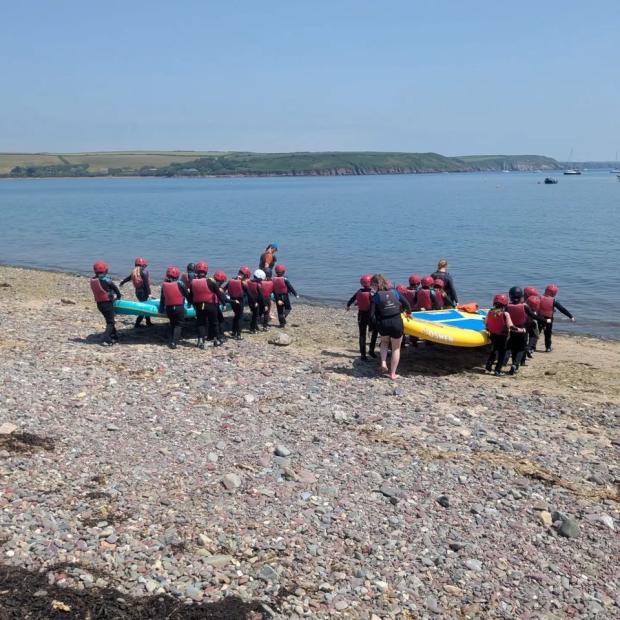
A CHARITY established in memory of 11-year-old Zac Thompson is helping almost 2,000 Pembrokeshire schoolchildren learn potentially life-saving skills in and around the water.
Forever 11 was founded following Zac’s death in 2022, when he was swept into the sea.
The charity began delivering water safety programmes in 2023, initially working with one school. It now supports pupils at 13 primary schools across Pembrokeshire, with around 2,000 children expected to take part in its sessions this year.
Forever 11 chair Carli Newell said the charity believes water safety should be treated as an essential life skill for children growing up in a coastal county.
She said: “Every child in Pembrokeshire deserves the right to have water safety sessions.
“Especially where we live, it should be as important as being able to read.”
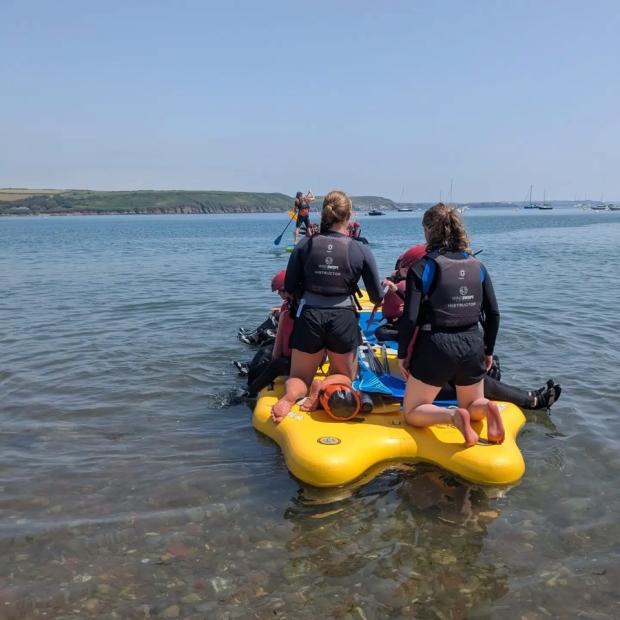
Working alongside organisations including PaddleWest, Activity Pembrokeshire and Windswept Wales, the charity provides practical kayaking, paddleboarding and sea kayaking sessions.
Pupils are also taught important safety advice, including the RNLI’s Float to Live guidance, while some children have the opportunity to gain nationally recognised Paddle Safe and Swim Safe qualifications.
The programme was originally aimed at pupils in Years 5 and 6, but it has since been extended to children in Years 3 and 4.
The charity hopes that introducing younger pupils to the water will help them build confidence and develop essential skills before reaching the age group most at risk of accidental drowning.
Forever 11 trustee Lucy Garett said national drowning figures are reviewed each year to help shape the programme.
She said: “The trends are all the same every year.

“It’s mostly children aged between 10 and 19 who are at risk of accidental drowning.
“We want children to have at least one or two sessions in the water before they reach that higher risk group.”
The sessions are offered to schools free of charge, with the costs covered through fundraising and public donations.
This means children can participate regardless of their family’s financial circumstances.
Forever 11 estimates that it has delivered more than 10,000 hours of water safety education since its work began.
Ms Garett said the response from schools, parents and pupils had been extremely positive.
She added: “Some parents have told us their child had been completely scared of going in the water, but afterwards they said it was one of the best days they’d ever had at school.”
The charity now hopes to work with more watersports providers, allowing the scheme to reach additional schools throughout Pembrokeshire.
Its long-term ambition is for every primary school pupil in the county to finish school with the knowledge and confidence needed to stay safe around the water.
The charity said: “We want every primary-aged child to know what to do to keep themselves and others safe in and around the water.”
Forever 11 will continue raising awareness and funds at Pembroke Regatta on Saturday, July 25, followed by its annual Forever 11 Fun Day on Sunday, July 26.

Coastguard teams and two RNLI lifeboats were called after the group was pushed south while attempting to pass through Jack Sound
THREE kayakers were rescued after getting into difficulty while returning from Skomer Island through Jack Sound.
Watchkeepers at NCI Wooltack Point had been monitoring the group as they attempted to make the crossing, but the kayakers were pushed south and eventually disappeared from view from the station.
One watchkeeper continued searching from the lookout while another went outside to try to locate them. The kayakers were eventually spotted from the cliff-top path in a nearby bay, where it was confirmed that they required assistance.
HM Coastguard was alerted and both Angle RNLI lifeboat and Little and Broad Haven RNLI lifeboat were tasked to the incident.
The rescue was successfully completed, with NCI Wooltack Point praising the teamwork between Pembrokeshire’s search and rescue agencies.
The kayakers later made a donation to the station in recognition of the assistance they had received.
Photo: NCI Wooltack Point watchkeeper Charles


Crime9 hours ago
Jury hears final arguments in Milford Haven teacher stabbing trial
Defence says there was no motive or intention to kill as judge reviews competing accounts of classroom knife incident SPECIAL...

News12 hours ago
Andy Burnham becomes Labour leader and prepares to enter No 10
Former Greater Manchester mayor promises an ‘unashamedly Labour’ government after completing extraordinary return to Westminster ANDY BURNHAM has been formally...


News14 hours ago
Motorcyclist dies following collision near Narberth
Police appeal for witnesses and footage after fatal crash on B4313 at Redstone A MOTORCYCLIST has died following a collision...

Local Government1 day ago
Stepaside school saved as council abandons closure proposal
Governors welcome decision but maintain original plans were based on outdated information STEPASIDE Community Primary School will remain open after...

Crime1 day ago
Footballer given 200 hours’ unpaid work for eye-gouging assault during match
Magistrates heard Robert Hedley put an opposing player in a headlock before gouging at his eyes during a match in...


Community2 days ago
Tenby Summer Spectaculars brought to an end after harbour licence revoked
Round Table says it was willing to make major safety changes but could not secure the access controls needed to...

Local Government3 days ago
Catapult attacks suspected after wildlife deaths at Pembroke Mill Pond
Wildlife Crime Officers are investigating after the town council said around five animals showed signs of deliberate injury WILDLIFE found...

Crime3 days ago
Narberth retailer speaks of shoplifting toll after ‘collectable bear’ stolen
Independent shop owner said rising costs meant businesses could not afford to absorb losses caused by theft A NARBERTH retailer...


Crime3 days ago
Teen accused of attempting to murder teacher says she lied about stabbing
Defendant accepts teacher was terrified and that a knife wound to the head could kill, but denies deliberately attacking her...


Local Government5 days ago
Calls grow for independent investigation into Manorbier school closure
Councillor alleges misleading figures, inadequate insurance and poor treatment of staff CALLS for an independent investigation into the controversial closure...
-
Crime12 hours ago
Milford Haven teacher ‘fought for her life’ during alleged knife attack
-
Crime9 hours ago
Jury hears final arguments in Milford Haven teacher stabbing trial
-
Community2 days ago
Tenby Summer Spectaculars brought to an end after harbour licence revoked
-

 News1 day ago
Welsh broadcasting authority plan sparks row over powers and cost
-
 Community1 day ago
Llangwm LitFest returns with tales of slow travel and inclusive writing
-
Local Government1 day ago
Stepaside school saved as council abandons closure proposal
-
News12 hours ago
Andy Burnham becomes Labour leader and prepares to enter No 10
-
 Crime1 day ago
Police searching for driver who abandoned car after Haverfordwest pursuit