


News
Davies criticises museum ‘decolonisation’ policy

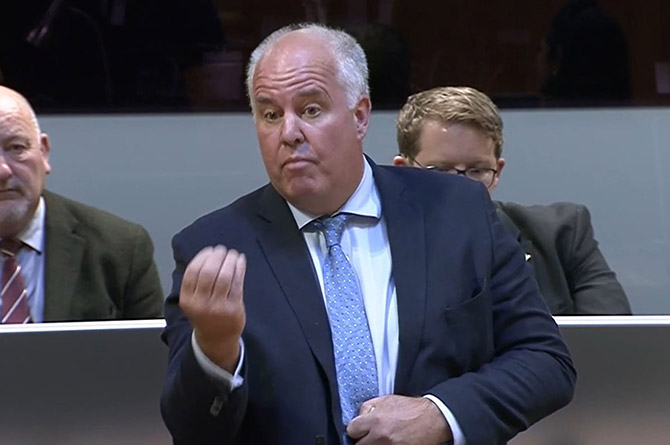
CONSERVATIVE Senedd member Andrew RT Davies has criticised the Welsh Government after a minister confirmed that work on “decolonisation” in museums will remain part of its culture policy.
Mr Davies, who represents South Wales Central, raised the issue in a written question to Heledd Fychan, the Cabinet Minister for Culture and Sport.
He asked the First Minister to outline the new Government’s position on decolonisation in Welsh museums.
In response, Ms Fychan said the Government had a “renewed focus on culture and history” and was committed to strengthening ownership of Welsh heritage.
She said museums had an important role in ensuring collections “serve and reflect the people of Wales and our identity.”

Anti-racist plan
The minister added that the Government would keep the Anti-Racist Wales Action Plan under review, while retaining “a focus on the decolonisation of museum collections to rebalance perspectives, creating inclusive spaces and increasing engagement and participation among all people across Wales.”
She said museums would be expected to use guidance from bodies including the Museums Association when carrying out the work.
Mr Davies criticised the approach, claiming it amounted to the politicisation of Welsh history.
He said: “Plaid Cymru separatists’ attempts to rewrite Welsh history through the inaccurate framing of the progressive left show nothing has changed.

“Rhun ap Iorwerth promised to improve our public services, but instead his administration is doubling down on the worst projects pursued by his Labour predecessors.
“The people of Wales don’t want our museums decolonised, they want a functioning NHS.”
Supporters of museum decolonisation argue that the process does not erase history, but seeks to add context to collections, including the role of empire, slavery, racism and colonial power in how some objects were acquired or displayed.

Critics, however, say the approach risks imposing modern political views on historic collections and diverting attention and funding from core public services.
The Welsh Government has said equality of access to arts, culture and sport will be a priority, and that the museum sector is integral to that work.



Police found 14 plants, harvested cannabis worth thousands of pounds and evidence of small-scale dealing
A CARMARTHENSHIRE woman has received a suspended prison sentence after allowing a professionally equipped cannabis grow to operate from a shed at her home.
Police attended Lucy Pugh’s property in Llanfihangel-ar-Arth on February 28 last year, where they discovered 14 cannabis plants growing inside the outbuilding.
Swansea Crown Court heard that the shed contained specialist equipment consistent with a professional cultivation operation.
A police drugs expert estimated that each plant could have produced between one and three ounces of cannabis, giving the crop a potential maximum street value of more than £13,000.
Officers also discovered that the property’s electricity meter had been bypassed. National Grid engineers were called to make the electrical supply safe.
A further search of the house uncovered around 800 grams of cannabis in the kitchen which had already been harvested. Prosecutors said the drugs had an estimated value of £7,410.
Messages recovered from Pugh’s mobile phone showed that she had been supplying cannabis to a small number of people.
During her police interview, Pugh said two men from Bristol had installed the growing operation in her shed several months earlier. She admitted knowing the plants were there and said she had not objected to the arrangement.
Her phone also contained messages in which she asked one of the men for advice about caring for the plants.
Pugh, aged 50, pleaded guilty to producing cannabis and possessing cannabis with intent to supply.
The court was told she had one previous conviction, dating from 2020, for possession of a Class A drug and drug-driving.
Defending, Craig Jones said Pugh had entered guilty pleas at the earliest opportunity and had cooperated fully with the police.

He stressed that the cultivation operation had not originally been organised by Pugh and said she had only a limited criminal record.
Sentencing her, Judge Catherine Richards said Pugh had permitted the cannabis operation to be established at her property before making the separate decision to supply the drug.
Pugh was sentenced to six months in prison, suspended for 12 months.
She was also ordered to complete 100 hours of unpaid work and 20 rehabilitation activity requirement days.
Prosecutors confirmed that proceedings would be brought under the Proceeds of Crime Act in an attempt to recover any money Pugh had made through her offending.
She is due to return to Swansea Crown Court on November 12 for a proceeds of crime hearing.
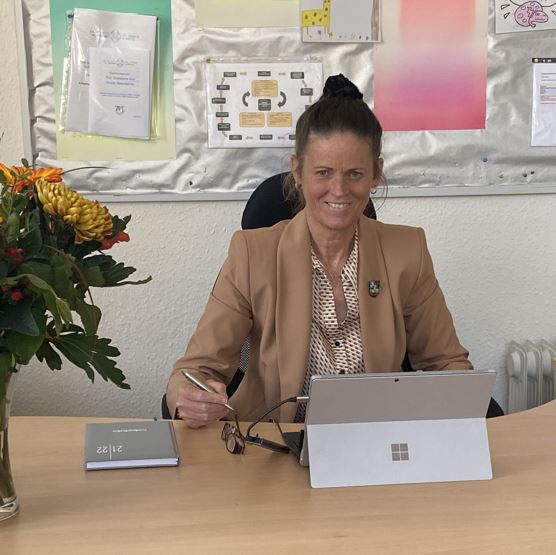
Rachael Thomas describes Ysgol Penrhyn Dewi as her ‘third child’ as she hands over leadership of the school to Sion Mason Evans
AN INSPIRATIONAL Pembrokeshire headteacher has said an emotional goodbye to pupils, parents and staff after completing 37 years in education.
Rachael Thomas is stepping down as headteacher of Ysgol Penrhyn Dewi VA in St Davids, a school she described as her “love, passion and reason for being”.
In a final letter to the school community, Mrs Thomas said she had been dreading the day when she would have to say farewell.
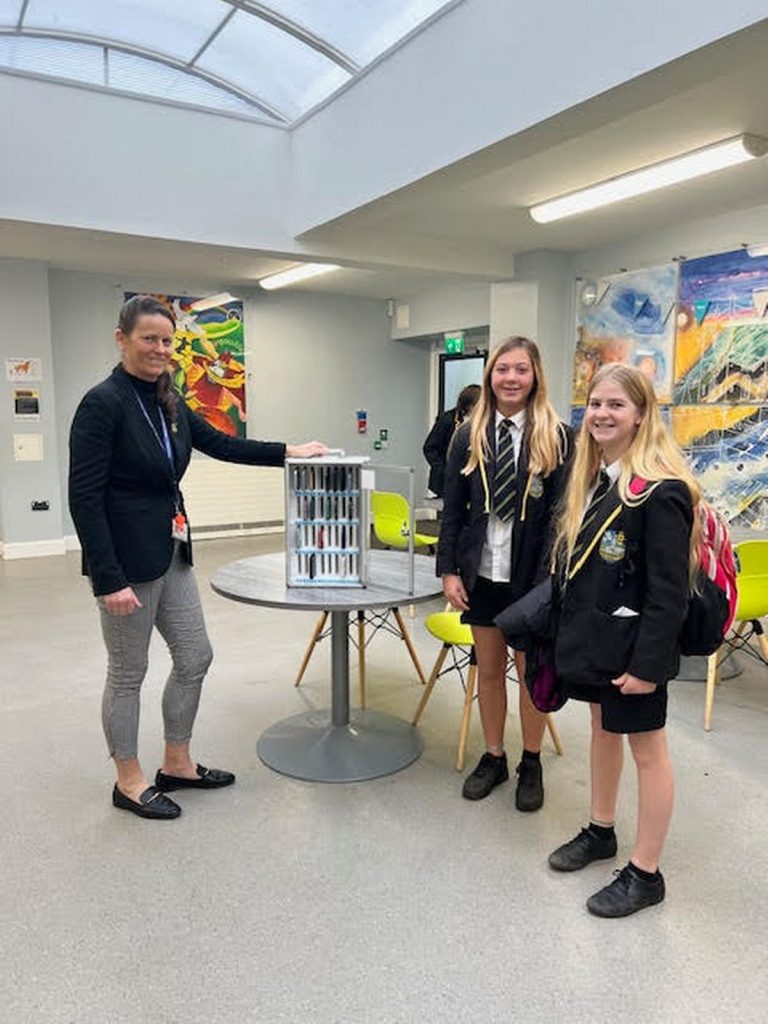
She wrote: “Ysgol Dewi Sant and Ysgol Penrhyn Dewi have been my third child, my love, passion and my reason for being.
“However, it gives me great comfort and pride to leave at this point, with strong leadership and a fantastic team of staff to take it to the next level.”
Mrs Thomas thanked parents and carers for trusting the school with their “most priceless possessions”, their children, and paid tribute to the staff, governors, Diocese, local authority and wider community who had supported her throughout her career.
She said she felt privileged to have worked at “the best school on the planet”, praising its pupils, staff and families for helping to create a nurturing culture based on love and respect.
Under her leadership, the 3-to-16 school has expanded across its campuses and developed a reputation for academic achievement, inclusion, outdoor education, sport and the performing arts.
During the past academic year, pupils helped the school achieve the Armed Forces Friendly Schools Cymru Bronze Award, the Peace Mala Gold Award, the Careers Wales Gold Award, two Green Flag Awards and a Climate Cymru Challenge Award for protecting and restoring nature.
The school also opened a new secondary learning resource centre and two additional classrooms on its Dewi Campus.
Pupils have enjoyed sporting success at local, regional and national level, with the school becoming Welsh champions and runners-up in tennis and basketball.
There have also been school productions, overseas visits, residential trips and a return visit from the school’s partners in Mahoeleng, Lesotho.

Mrs Thomas said the school remained committed to providing high expectations and opportunities for every pupil.
She wrote: “Pupils feel loved when they walk through the door.
“When they leave, this love continues, hence the knowledge that you never really leave YPDVA and YPDVA never leaves you.”
Several other members of staff are also leaving or changing roles at the end of the academic year.
Mrs Bramley has completed her work as assistant headteacher for teaching and learning but will continue as a supply teacher and lead choir and performing arts activities.
Miss Pullin is leaving to pursue a career with the National Park, while Mr Jeff Thomas is retiring, although the school hopes he will return to support its extended learning programme.
Mrs Brockbank is coming to the end of her time as a learning support assistant on the Dewi Campus, while Father Luke Spencer is leaving his teaching role to pursue his ministry.
The school will welcome a number of new staff in September.
Catherine James will become the new additional learning needs coordinator and assistant headteacher for inclusion, while Amy Morgan will become the school’s first deputy headteacher.
Former pupil Rhys Meredith Barrett will join as a full-time music teacher, and Kieran Mackay will become a teacher of English.
Sion Mason Evans will take over as headteacher.
Mrs Thomas said she was confident her successor would embrace the culture and vision of the school and take it into the next stage of its journey.
She concluded her farewell message with the words associated with St David: “Be joyful, keep the faith and do the little things.”
She signed off simply: “Llawer o gariad.”
The school community is now preparing to begin a new chapter, while recognising the enormous contribution Mrs Thomas has made to generations of children and families in St Davids and across Pembrokeshire.



Crown says teenage pupil planned classroom assault and intended to kill, as attempted murder trial reaches closing speeches
LIVE FROM SWANSEA CROWN COURT
A TEACHER accused of being stabbed by a pupil survived only because she fought for her life, a jury has been told during the prosecution’s closing speech.
Christopher Rees KC said the teenage defendant deliberately selected the largest knife he could find, concealed it in his school bag and waited until history teacher Vicki Williams was alone before attacking her.
The 16-year-old, who was 15 at the time and cannot be named for legal reasons, denies attempting to murder Ms Williams at Milford Haven School on Thursday, February 5.
He also denies inflicting grievous bodily harm with intent and unlawful wounding. He has admitted possessing a knife on school premises.
Proceedings at Swansea Crown Court began on Friday (Jul 17) with Judge Paul Thomas KC giving the jury legal directions.
The judge told jurors they were the sole judges of the facts and must decide the case using the evidence, their collective experience and common sense.
He reminded them that the prosecution carried the burden of proving its case and that the defence did not have to prove anything.
Jurors were instructed to decide the case with their “heads, not their hearts” and to put sympathy and emotion aside.
Judge Thomas explained that if they were not sure the defendant deliberately stabbed Ms Williams, and believed the injuries were or might have been accidental, they must acquit him of all three charges.
However, if they were sure the stabbing was deliberate, they would then have to determine what the defendant intended.
An intention to kill would amount to attempted murder, while an intention to cause really serious harm could lead to a conviction for grievous bodily harm with intent. If neither intention was proved, jurors would then consider unlawful wounding.
Opening the prosecution’s closing speech, Mr Rees told the jury the central question was whether they accepted the account given by Ms Williams or that of the defendant.

“You don’t try this case on sympathy, not for Vicki or the defendant,” he said.
“You try the case on the evidence.”
Mr Rees said the prosecution’s case was that the incident was a calculated and planned attack rather than an accident during a struggle over the knife.
“This was no accident,” he said.
The prosecutor said the teenager had taken the largest knife from the kitchen at home and carried it secretly in his school bag throughout the day.
The defendant has told the jury that he brought the knife to school to show off to his friends but did not intend to use it violently.
Mr Rees said that explanation was “a lie from start to finish”, pointing out that the teenager had not shown the knife or mentioned it to any of his friends.
He said the weapon had been kept hidden because the defendant did not want anyone to intervene or alert a teacher.
The prosecution alleged that the teenager waited until the end of the school day, followed Ms Williams into her classroom and closed the door when she was alone and vulnerable.
Mr Rees said the defendant then moved behind the teacher and deliberately struck her in the back of the head with the knife.
The jury was shown CCTV footage of the defendant approaching the classroom before initially walking away.
Mr Rees claimed he had abandoned his first approach because Ms Williams was not alone and returned minutes later when he could carry out his alleged plan without being seen.
The prosecutor said the defendant had used external doors to approach the classroom because they provided a clear view inside.
He also reminded jurors of an incident two days earlier, on February 3, when one of the defendant’s friends kicked a door to Ms Williams’ classroom.
The defendant and other pupils were captured on CCTV running away and laughing following that incident.
Mr Rees said it was “no coincidence” that Ms Williams was allegedly attacked two days later.
The court was also reminded that the defendant had refused to attend a lesson on February 4, leading to his mother becoming angry with him.
“When he left the house on February 5 with that knife in his bag, he crossed the Rubicon and there was no going back,” Mr Rees said.
The prosecutor acknowledged that the Crown could not explain the defendant’s precise motive.
He suggested it could have involved a grudge or a desire for notoriety but stressed that the prosecution was not required to prove why the alleged attack happened.
Mr Rees described Ms Williams as a lone female teacher and “a vulnerable target”, telling the jury the prosecution considered it to have been a cowardly attack.
He reminded jurors of Ms Williams’ evidence that the defendant had a look of “pure hatred” on his face.
The teacher previously told the court she grabbed the blade of the knife during the struggle.
Mr Rees said a person’s natural instinct would be to avoid grabbing a blade and argued that she had done so only because she believed her life was in danger.
“She fought for her life,” he said.
The jury was reminded of medical evidence concerning the wound to the back of Ms Williams’ head.
Mr Rees said the back of the skull was particularly thick and argued that this was why the injury was not as serious as the defendant had allegedly intended.
He described the teenager’s account that the head wound occurred accidentally during a “melee” over the knife as “absurd” and “impossible”.
The prosecutor said damage to the tip of the knife was also inconsistent with accidental contact.
Mr Rees reminded jurors that the defendant fled the school following the incident and went to his grandmother’s home, where she said he told her that “something went in my head”.
The defendant has claimed he cannot remember saying those words and has maintained that he had no clear recollection of the incident for several weeks.
Mr Rees said the teenager’s grandmother had no reason to lie and argued that the comment showed he knew he had done “something terrible”.
He also referred to the defendant answering “no comment” during his police interview.
The teenager said he had done so because he could not remember what had happened, but Mr Rees argued that he had not yet devised the account he would later give.
The prosecutor contrasted the defendant’s evidence with what he described as the consistent accounts given by Ms Williams to colleagues, paramedics and police immediately after the incident.
He said none of those accounts suggested there had been an accident while she was attempting to confiscate the knife.
Mr Rees concluded that Ms Williams had been deliberately targeted and that the defendant intended to kill her when he struck the blow to her head.
He told jurors the reason she was able to give evidence was because the knife struck the thickest part of her skull and because she fought back.
The defence says the teenager brought the knife into school to show off and that Ms Williams was accidentally injured after trying to take it from him.
The defence closing speech and the judge’s summing up are expected to follow before the jury begins its deliberations.
The trial continues.



Crime55 minutes ago
Milford Haven teacher ‘fought for her life’ during alleged knife attack
Crown says teenage pupil planned classroom assault and intended to kill, as attempted murder trial reaches closing speeches LIVE FROM...


News1 hour ago
Andy Burnham becomes Labour leader and prepares to enter No 10
Former Greater Manchester mayor promises an ‘unashamedly Labour’ government after completing extraordinary return to Westminster ANDY BURNHAM has been formally...


News3 hours ago
Motorcyclist dies following collision near Narberth
Police appeal for witnesses and footage after fatal crash on B4313 at Redstone A MOTORCYCLIST has died following a collision...


Local Government23 hours ago
Stepaside school saved as council abandons closure proposal
Governors welcome decision but maintain original plans were based on outdated information STEPASIDE Community Primary School will remain open after...

Crime23 hours ago
Footballer given 200 hours’ unpaid work for eye-gouging assault during match
Magistrates heard Robert Hedley put an opposing player in a headlock before gouging at his eyes during a match in...


Community1 day ago
Tenby Summer Spectaculars brought to an end after harbour licence revoked
Round Table says it was willing to make major safety changes but could not secure the access controls needed to...

Local Government3 days ago
Catapult attacks suspected after wildlife deaths at Pembroke Mill Pond
Wildlife Crime Officers are investigating after the town council said around five animals showed signs of deliberate injury WILDLIFE found...


Crime3 days ago
Narberth retailer speaks of shoplifting toll after ‘collectable bear’ stolen
Independent shop owner said rising costs meant businesses could not afford to absorb losses caused by theft A NARBERTH retailer...


Crime3 days ago
Teen accused of attempting to murder teacher says she lied about stabbing
Defendant accepts teacher was terrified and that a knife wound to the head could kill, but denies deliberately attacking her...


Local Government5 days ago
Calls grow for independent investigation into Manorbier school closure
Councillor alleges misleading figures, inadequate insurance and poor treatment of staff CALLS for an independent investigation into the controversial closure...
-

 Crime3 days ago
Letterston footballer guilty of eye-gouging assault during match
-

 News7 days ago
Milford Haven Coastguard coordinates rescue of injured paddleboarder
-

 Crime7 days ago
Ann Widdecombe: Welsh politicians pay tribute as murder probe launched
-

 Business3 days ago
Former St Davids GP surgery to holiday let and home conversion conditionally approved
-
 Education7 days ago
Saundersfoot graduate secures teaching job before completing degree
-

 Education6 days ago
Welsh Government under fire to spend extra £340m on ALN
-

 Community7 days ago
Drag icon Dr Bev to perform at Pembrokeshire Pride
-
Community4 days ago
Call for investigation into Manorbier school closure as councillor seeks apology