


News
Third time in court for drink driving

IRISHMAN, Larry McGovern, from Pembroke Dock was in court for driving under the influence and failing to meet bail on Tuesday (Jan 27), to which he  pleaded guilty to both cases.
On September 10 at 7.30pm, McGovern had been spotted by the police driving in Argyle Street in Pembroke Dock. When stopped, the police noticed that the man smelt of intoxicants. McGovern claimed that he had had only three or four pints and had had something to eat.
The defence, Jonathan Webb stated that McGovern had admitted that he had been driving under the influence straight away, claiming that he thought he would be fine. Webb commented that he should have known that he would not be fine due to the fact that he has two previous offences for drink driving. This has been the second offence in the last ten years, and the third in the last twelve.
Webb went into McGovern’s financial situation, as a self-employed painter/decorator, who earns £1000 per month, to show that he would be able to pay a fine. He also stated that he has had unpaid work before where he mowed the cemetery. McGovern expressed that he enjoyed the work and felt that he was putting something back into the community.
In terms of breaching the bail, the defence said that McGovern had thought that he was to be in court on February 2. Webb himself said that this was not a reasonable excuse as he had signed forms with the correct date attached to them.

In previous drink driving cases, the Irishman had been offered to go on a drink driving rehab course in order to lower his ban, but he did not attend. The defence asked for another course to be offered, and McGovern can refuse again if he chooses to.
The magistrate sentenced Larry McGovern to a three year driving ban, and at the end of that ban it is up to the offender to ask for his licence back. He was asked if he could pay £440 in fines on the day as he had £1000 with him, but the defence objected. He stated that he could not pay that much at the time as the £1000 was for him to live off for the month. He suggested that McGovern pay £100 per week but the offender asked if he could pay half the fine at the time and the other half a month later.
The magistrate agreed to this but told McGovern that he would find himself in the fine’s court if he did not pay. He was also offered the drink driving rehab course, which would take time off his ban.


Independent candidate says five-year delay is “simply not good enough”
AN INDEPENDENT Senedd candidate has called for urgent action to restart progress on the long-promised reopening of St Clears railway station.
Carl Peters-Bond, who is standing in Caerfyrddin and also serves as Mayor of Kidwelly, has urged the Welsh Government and Transport for Wales to finally deliver on commitments first made more than five years ago.
The station, located on the West Wales line between Carmarthen and Whitland, was closed in 1964 as part of the Beeching cuts, which saw widespread reductions to the UK rail network. Its reopening has been the subject of local campaigns for decades, with supporters arguing it would reconnect rural communities to the national rail system.
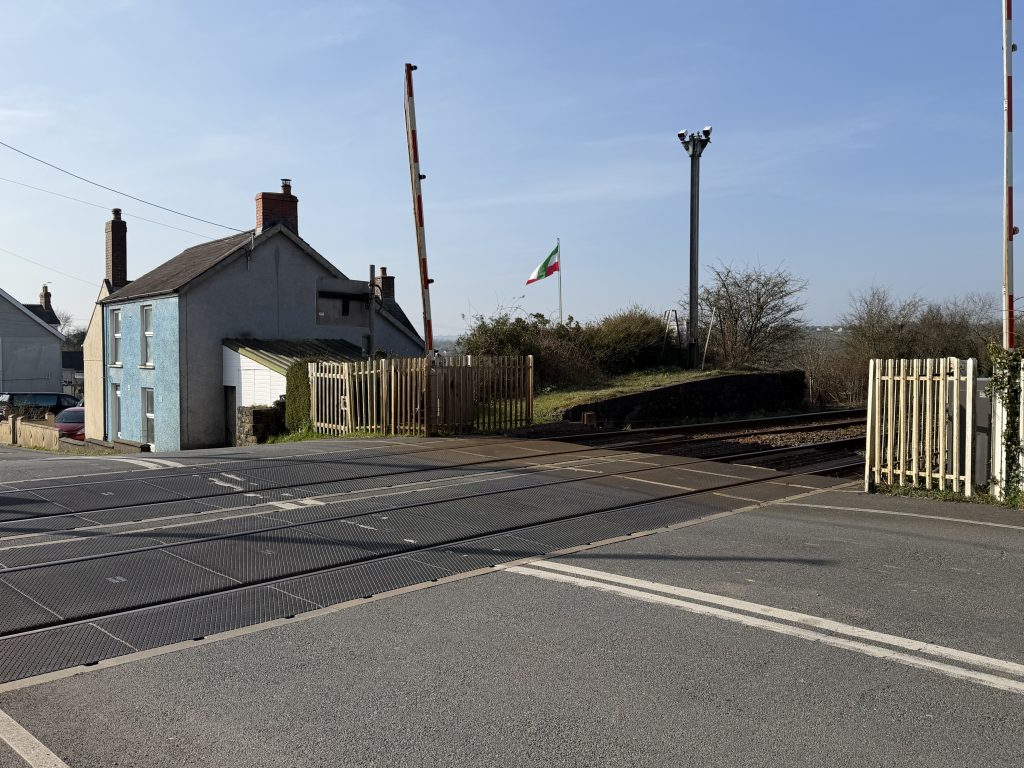
In 2020, the project secured funding through the UK Government’s New Stations Fund, with Carmarthenshire County Council leading initial development work. The announcement was widely welcomed as a significant step towards improving transport links in west Wales.
However, despite early progress including feasibility studies and design work, the scheme has yet to move into construction. No confirmed timetable for delivery has been published.

Carl Peters-Bond said: “People in Carmarthenshire were told in 2020 that St Clears station was coming back. Five years on, we have vision documents, glossy strategies and endless consultations, but not a single shovel in the ground. It’s simply not good enough.”
He contrasted the delay with major transport investment elsewhere, adding: “While hundreds of millions are being invested in Cardiff and the Valleys through the Metro, and billions have gone into HS2, still labelled as ‘England and Wales’ infrastructure, communities like ours are left waiting.
“Carmarthenshire deserves its fair share of investment, and St Clears station should be at the front of the queue.”
Supporters of the scheme say a reopened station could help reduce reliance on cars along the busy A40, while improving access to employment, education and healthcare for residents in surrounding rural areas. It is also seen as an opportunity to boost tourism by making west Wales more accessible by rail.

Carl added: “Transport for Wales talks about improving connectivity in West Wales, but plans do not get people to work, school or hospital. Trains do. It is time for delivery, not more documents.”
As part of his campaign, he has pledged to push for a clear timetable, hold decision-makers to account on delays, and press for greater investment in the county’s transport network.
He added: “Carmarthenshire has waited long enough. If elected, I will make sure St Clears station is not forgotten again. Our communities deserve action, not another decade of promises.”


SCHOOLS in Pembrokeshire have been recognised for their role in a major Welsh pilot scheme aimed at improving careers education, as a national rollout prepares to open later this year.
The Careers Wales Quality Award (CWQA), launched in September 2023, has seen 66 schools and education settings across Wales take part, including Ysgol Penrhyn Dewi and Pembrokeshire Learning Centre.
The scheme focuses on strengthening careers and work-related experiences (CWRE) for pupils aged three to sixteen, in line with the Curriculum for Wales.
Early feedback from pilot schools highlights a number of benefits, including stronger leadership and planning, improved engagement with parents and employers, and increased confidence among teachers delivering careers-related learning.
Schools also reported that the programme has helped ensure careers education remains a consistent priority across school life.

Gareth Williams, of Ysgol Penrhyn Dewi, said: “Being part of the pilot has made us realise we are doing more than we thought.
“It’s encouraged us to rethink things like parent evenings by inviting employers in, and it keeps careers high on the agenda in everything we do.”
The award is delivered in three stages—Leadership, Development and Impact—guiding schools from planning their approach to fully embedding careers education and demonstrating its impact on learners.
Careers Wales says the pilot has helped shape the scheme ahead of its wider launch, with participating schools working closely with curriculum coordinators to refine the framework.

The national rollout will introduce Bronze, Silver and Gold levels, allowing schools to progress at their own pace while recognising achievement.
Mark Owen, Head of Stakeholder Services at Careers Wales, said: “High-quality careers and work-related experiences are essential in helping learners understand their options and develop the confidence and skills they need for the future.
“The quality award provides a clear and supportive framework for schools to embed this work across the curriculum.”

Registration is now open for schools across Wales to join the programme from September 2026.
Further information is available via the Careers Wales website.

State-of-the-art 22-metre craft marks reset after £3.6m pilot boat controversy
THE PORT OF MILFORD HAVEN has taken delivery of a new 22-metre pilot vessel, marking a major investment in safety and operational capability on one of the UK’s busiest waterways.
The vessel, named Llanion, has arrived in Welsh waters following a successful delivery voyage from the Netherlands, where it was built by Next Generation Shipyards.
Designed specifically for pilotage operations, the new craft features a modern hull design, self-righting capability, and advanced safety systems, enabling it to operate in challenging conditions while supporting the safe movement of vessels across the Milford Haven Waterway.
Its arrival effectively brings to a close a long-running saga surrounding a previous generation of pilot boats built locally in Pembrokeshire at a reported cost of around £3.6 million. The Pembrokeshire Herald previously reported extensively on the issue, including a front-page story highlighting concerns about the vessels’ performance and suitability for operational use.
Those vessels were later withdrawn from frontline service following safety concerns raised by crews.
Since taking over as Chief Executive, Tom Sawyer has overseen a shift in direction at the Port, with a stronger emphasis on operational reliability, safety and long-term performance. The commissioning of Llanion is widely seen as part of that reset, addressing issues that had affected confidence in the pilot fleet.
Tom Sawyer said: “This project is a testament to collaboration and innovation. Working closely with our partners and our own technical teams, we now have a vessel that reflects the highest standards of design, safety and operational capability.
“Llanion will play a key role in supporting the safe and reliable movement of vessels on the Milford Haven Waterway for years to come.”
The new vessel is the result of a five-year collaboration between the Port of Milford Haven, naval architects BMT, Camarc Design and the Dutch shipyard, with Port teams closely involved throughout.

Dirk Keizer, Technical Director at Next Generation Shipyards, said the company was “extremely proud” to deliver the vessel, adding that it “excels in safety, performance and reliability.”
Ed Soothill, Technical Director at Camarc Design, said it was “wonderful to see Llanion arriving in Milford Haven,” while Steven Lee, Chief Naval Architect at BMT, described the vessel as “the Port’s next generation pilot boat.”
The Port of Milford Haven is the UK’s largest energy port and a key economic driver in Pembrokeshire, supporting thousands of jobs and handling a significant share of Britain’s oil and gas imports.
Photo caption:
New arrival: The Port of Milford Haven’s 22-metre pilot vessel Llanion (Pic: Port of Milford Haven).



Business43 minutes ago
New pilot vessel Llanion arrives at Milford Haven
State-of-the-art 22-metre craft marks reset after £3.6m pilot boat controversy THE PORT OF MILFORD HAVEN has taken delivery of a...


Business23 hours ago
Could Primark be coming to Haverfordwest? Major retailer in talks for former Wilko site
Council confirms advanced discussions as speculation grows over high street boost HAVERFORDWEST could soon see a major high street revival,...


Business23 hours ago
Rail investment ‘could unlock 40,000 jobs and £11bn for Wales’ says new report
RAILWAY stations across Wales could help unlock around 40,000 jobs and more than £11 billion for the economy by 2036,...


Local Government24 hours ago
Milford Haven set for £200m investment with schools, leisure centre and rail upgrade
Council outlines major plans for town with backing from Welsh Government MILFORD HAVEN is set for a major transformation with...


Community2 days ago
Broad Haven volunteers secure ‘national asset’ status for nature reserve
A SMALL stretch of woodland and former opencast coal mine has been transformed into a nationally recognised biodiversity site, in...


Entertainment3 days ago
Tenby steams up in spectacular style as crowds flock to festival
Colourful parade, towering creations and Victorian flair bring town centre to life TENBY was transformed into a vibrant Victorian fantasy...


Crime4 days ago
Publican jailed for six years for supplying cocaine and cannabis
Milford Haven man sentenced at Swansea Crown Court following drug dealing operation A MILFORD HAVEN publican has been jailed for...


Local Government4 days ago
Poverty summit highlights support efforts across Pembrokeshire
A SUMMIT bringing together key organisations from across Pembrokeshire has highlighted both the scale of local poverty and the work...


Education5 days ago
Milford Haven school plans unveiled but funding not yet secured
PLANS for a new £100 million school in Milford Haven have been unveiled, but the project has not yet secured...


News5 days ago
Council unveils plans for new state-of-the-art secondary school in Milford Haven
PEMBROKESHIRE COUNTY COUNCIL has revealed plans for a new state-of-the-art school in Milford Haven, promising modern, inspiring learning spaces for...
-

 News7 days ago
Emergency services flood Haverfordwest after reports of person in river
-

 Crime6 days ago
Mother given community order after admitting child cruelty offence
-

 Health5 days ago
NHS waiting list falls — but cancer delays and diagnostic backlog worsen
-
 News7 days ago
Senedd votes to ban Greyhound racing in Wales to protect animal welfare
-

 News7 days ago
Senedd vote to ban greyhound racing hailed as ‘landmark moment’ by charities
-

 News6 days ago
Reform secures first Pembrokeshire councillor in Hakin by-election win
-

 Crime6 days ago
Woman stole from pharmacy despite ban, court hears
-

 Crime5 days ago
Illegal workers found at Cardigan takeaway after immigration raid