


Community
Homelessness: Gap between perception and reality


ALMOST half of online adults aged 18+ in Wales (46 per cent) say they always, or almost always do nothing when they see someone in the street who is  homeless, compared to 54 per cent across the UK. More than a quarter of people in Wales say the main cause of homelessness is alcohol or drug addiction (30 per cent), followed by debt (20 per cent), according to new research commissioned by The Salvation Army.
The Salvation Army also carried out a survey of more than 300 residents of its centres (Lifehouses) for people experiencing homelessness, including Swan Lodge in Sunderland, and reveals a worrying gap between the reality of what it’s like to be homeless and the perception of the general public.
The Church and charity is warning that without greater education this gap will widen, making it harder for people who are experiencing homelessness to get their lives back on track which could risk increasing the cost to society in the future.
Major Howard Russell, Deputy Territorial Director of Homelessness Services at The Salvation Army, said: “At The Salvation Army we are working to end the cycle of homelessness and one of the key hurdles we face is around people’s attitudes as our research has revealed the general public believe alcohol and drugs are the root cause of homelessness when, in our experience, this isn’t the case. We believe educating the public on the reality of what causes homelessness is the way to overcome this.”
The Church and charity’s survey of its Lifehouses, reveals the main cause of homelessness is relationship breakdown (43 per cent), followed by a combination of issues (16 per cent), physical or mental health problems (13 per cent), job loss (11 per cent), then addiction (10 per cent), and finally debt (6 per cent).

Major Russell said: “While the general public appear to be aware that there are a variety of causes of homelessness, more than a quarter of people incorrectly perceive drug and alcohol addiction to be the main cause.
“Yes, alcohol and drugs may be a problem for many people experiencing homeless, this often comes as a result of homelessness and, as our survey of our Lifehouse residents shows, it is rarely the cause. Instead, it is relationship breakdown, something that can happen to anyone at any time.”
While revealing that 73 per cent of those in Wales say that at least some of the time they do nothing when they see someone who is experiencing homelessness, 41 per cent say they give cash at least sometimes, 26 per cent sometimes purchased something to eat or drink and 15 per cent say that they at least sometimes find out where the nearest homelessness service is and pass on the details to the person who was sleeping rough.
Major Russell continued: “We find it quite shocking that such a large proportion of the public polled would simply walk on by, doing nothing for a person sleeping rough.

“It isn’t an issue that can be ignored and we believe awareness needs to be raised. Our extensive experience has shown us that homelessness can affect anyone, and so it is surprising that the Ipsos MORI poll has revealed 36 per cent of people in Wales don’t think that they, or someone close to them could ever experience homelessness. At our Lifehouses you’ll find many people who previously worked in a range of professions and skilled jobs.”
The Church and charity’s survey of Lifehouses reported that 89 per cent of residents agreed that if there was one thing they wished they’d known before they experienced homelessness it was that it can happen to anyone.
The Salvation Army believe the Ipsos MORI research reveals a lack of understanding around who can be affected by homelessness as 21 per of people say it is not at all likely that someone with a job that requires a professional qualification could ever become homeless.

Interestingly the survey of Salvation Army Lifehouse residents shows that 72 per cent worked before they experienced homelessness. In addition, 65 per cent reported that employers treat them differently when they find out they’re homeless. For 70 per cent people in general treat them differently because they are experiencing homelessness.
Damon Short is a resident at Ty Gobaith Lifehouse in Cardiff. He lived on the streets for over 30 years after being in care, approved schools, hostels and jail.
He was approached by an outreach worker of the Bridge Programme at The Salvation Army and slowly began to rebuild his life. He is now a volunteer on the church and charity’s Bus Project for rough sleepers and credits The Salvation Army with helping turn his life around.
He said: “My early experiences in life made me institutionalised but I liked being on the streets because I was meeting new people and there was always something new to do etc. So my life (existence) was centred on drink and drugs resulting in me having no food – this was my situation for a long, long time.
“My Mother moved to Cardiff and I started to help her as she was alcohol and hash dependant. It made things easier for me to see her but to be honest this also made things harder for me as my health was getting worse daily.
“During one of my admissions to hospital for my drinking I was approached by the outreach worker of the Bridge Programme at The Salvation Army. A place was made available and even though I was unsure about what it was or what I could do there I accepted it. During the early days of being there a few of my friends passed away and I found the programme hard to say the least. I eventually got my detox date in the local hospital – this really scared me and I wondered what would be left in life or how I would feel without drink or drugs in my life.
“I completed my detox – I was chuffed, I’d actually done it. It felt all new and weird at first, I wasn’t too sure if I liked it or not. After a few weeks my Mother had become more and more withdrawn, her moods had changed which sadly resulted in her taking her own life. I was devastated! I attended the cremation but didn’t want to attend the wake as I knew it could start me back drinking and if I started drinking over this sadness I wouldn’t come out the other side whole.
“This actually made me stronger and gave me such determination to stay dry and clean. Initially I thought the Bridge Programme wasn’t what I wanted – how wrong was I! After a little time I started with help to deal with my feelings and thoughts, it was then that I started to live rather than exist!
The daily group sessions became exciting and I engaged fully in them, this boosted my confidence and self belief. I started to volunteer at a Peer Mentoring Group after passing the appropriate courses arranged by the Skills department. My courses have given me options to eventually achieve a NVQ via OCNs and Learn Direct.
“Recently I have regained contact with my children after seven years which is brilliant. I also volunteer on The Salvation Army’s Outreach Bus Project with the rough sleepers of Cardiff – I enjoy this immensely as I relate fully. It will only be a matter of time before I also start to assist at the local needle exchange project.
“All these placements and meetings are so worthwhile as now I’ve a purpose to get up in the mornings; my confidence and independence is such that I can’t wait for my own property to become available.
I would never have thought that I would ever be where I am today; it just proves how far I’ve come with the help and assistance of everyone who has invested their time and effort into my recovery. I am the man I am today because people believed in me and I started to believe in myself – I am now a happy, excited and purposeful person.”
The survey of Lifehouse residents reveals 68 per cent feel that people see their homelessness rather than them as a person.
The Ipsos MORI survey of online adults in the UK goes further in revealing the challenges faced by people once they have secured somewhere permanent to live and got their lives back on track, as 58 per cent agree that employers are less likely to give jobs to people who have previously experienced homelessness.
Major Russell concluded: “The MORI poll result appears to suggest that people believe once you’ve experienced homelessness employers will think twice about giving you a job. At The Salvation Army we never give up on anyone as we believe in helping individuals to reach their full potential, whatever that may be, and we would like to encourage people to put themselves in the shoes of a someone experiencing homelessness, as it is something that can happen to anyone, it’s not just alcoholics and drug addicts.”
The Salvation Army is an expert in running services for people experiencing homelessness and understands that a tailored and personal approach is needed when providing support. The Church and charity is keen to demonstrate that it’s not a simple case of providing accommodation as it employs a skilled workforce who are there at every step of the way to walk alongside residents and equip them with the skills and support they need to reach their full potential, whether that be employment, re-connecting with family or beating an addiction.
In total The Salvation Army have more than 80 homelessness services around the UK and the Republic of Ireland. It runs a number of courses and activities at all it’s Lifehouses which range from employment skills and cookery classes to how to keep their tenancy when they get somewhere to live, an important part of breaking the cycle of homelessness.
According to The Salvation Army’s survey, 76 per cent of residents take part in at least one activity on offer and 32 per cent do all the courses available to them, which the Church and charity believe shows how keen residents are to get their lives on track, if society will allow them the opportunity.
This year The Salvation Army is celebrating 150 years of transforming lives and it is still at the heart of every community today, supporting those in need.
If a member of the public sees someone rough sleeping The Salvation Army would like to suggest the public visit their local council’s website for 24 hour assistance on what they can do to help someone who is sleeping rough or experiencing homelessness.


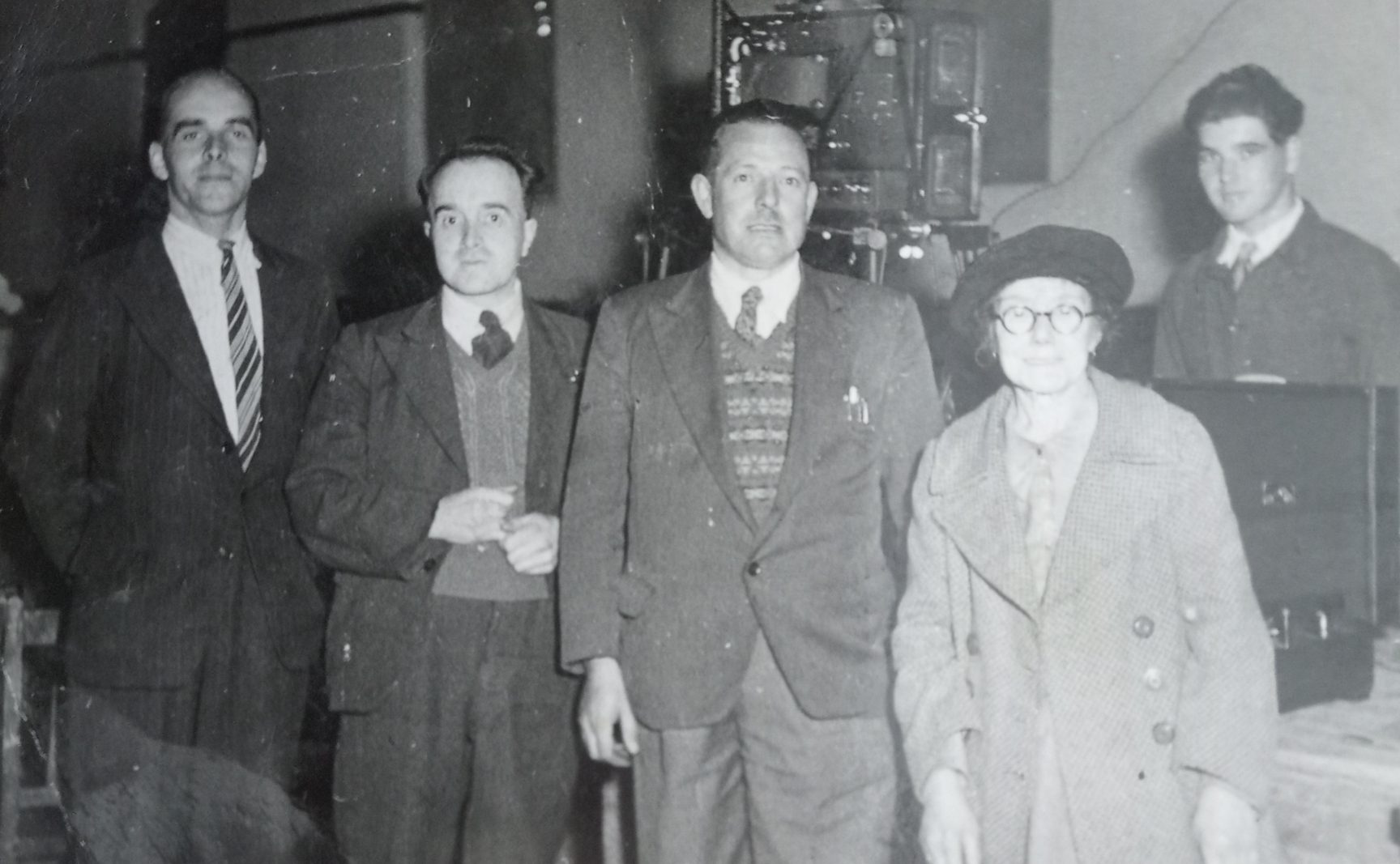
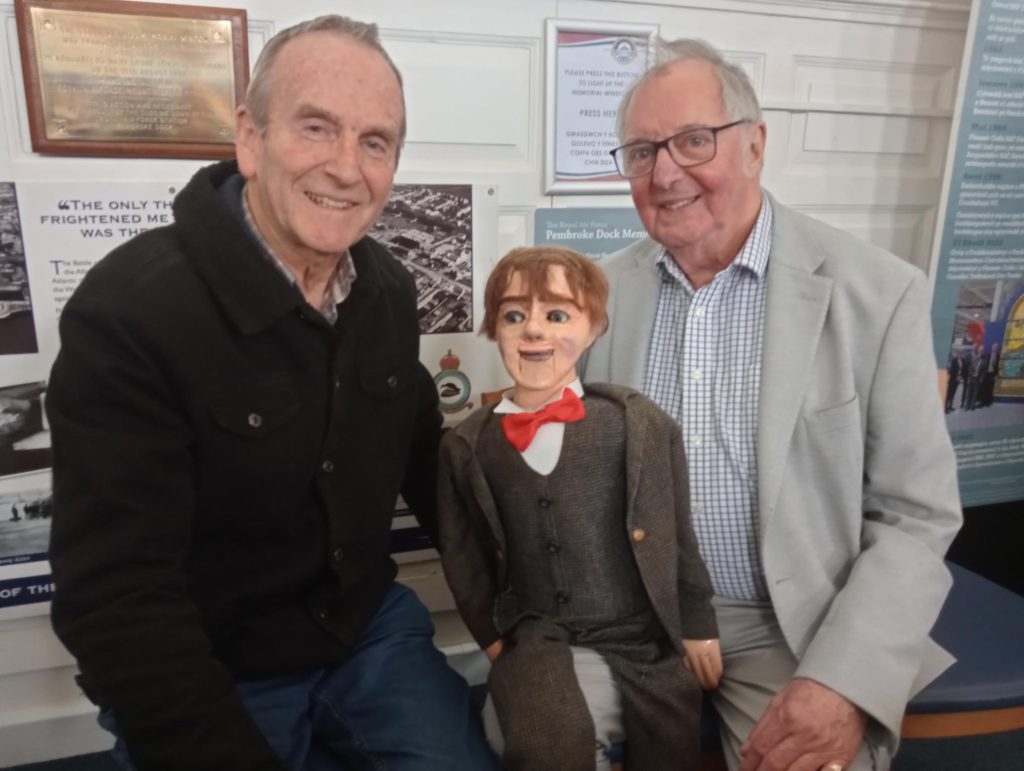
A PHOTOGRAPH has come to light of the first owner of ‘Charlie’, the 100-year-old ventriloquist’s doll who was a star turn when Pembroke Dock Heritage Centre opened for the new season last month.
On the opening day (Mar 30), Gerald Williams, a member of the Carew Cheriton Control Tower team, brought along a group photo which features both Charlie’s then owner, Ernie James, and Gerald’s father, Hubert.
It was the first time Paul Elliott, Charlie’s current ‘minder’, had seen a photo of Ernie, who was at one-time very well known as a local entertainer.
“This has made my day,” said Paul. “It is great to see a photo of Ernie, who originally acquired Charlie over 100 years ago.”
Gerald added: “Both Ernie and my father were involved at one time with a travelling cinema, visiting communities all over this area.

“Ernie had his own small bus company called Pioneer Buses. This is where dad first met Ernie during driver exchanges during the war. They also worked together for Silcox Bus Company at Pembroke Dock.”
Charlie currently sits in a neat glass case keeping a watchful eye over visitors and volunteers at the Heritage Centre.
While the photograph has solved one mystery, another remains. Ernie is believed to have had another ventriloquist’s doll, named Daisy May. Anyone with information on Daisy May is asked to contact the Heritage Centre on 01646 684220 or [email protected]
Pembrokeshire law firm confirms internal promotion after Lauren joined the business as a paralegal in 2024
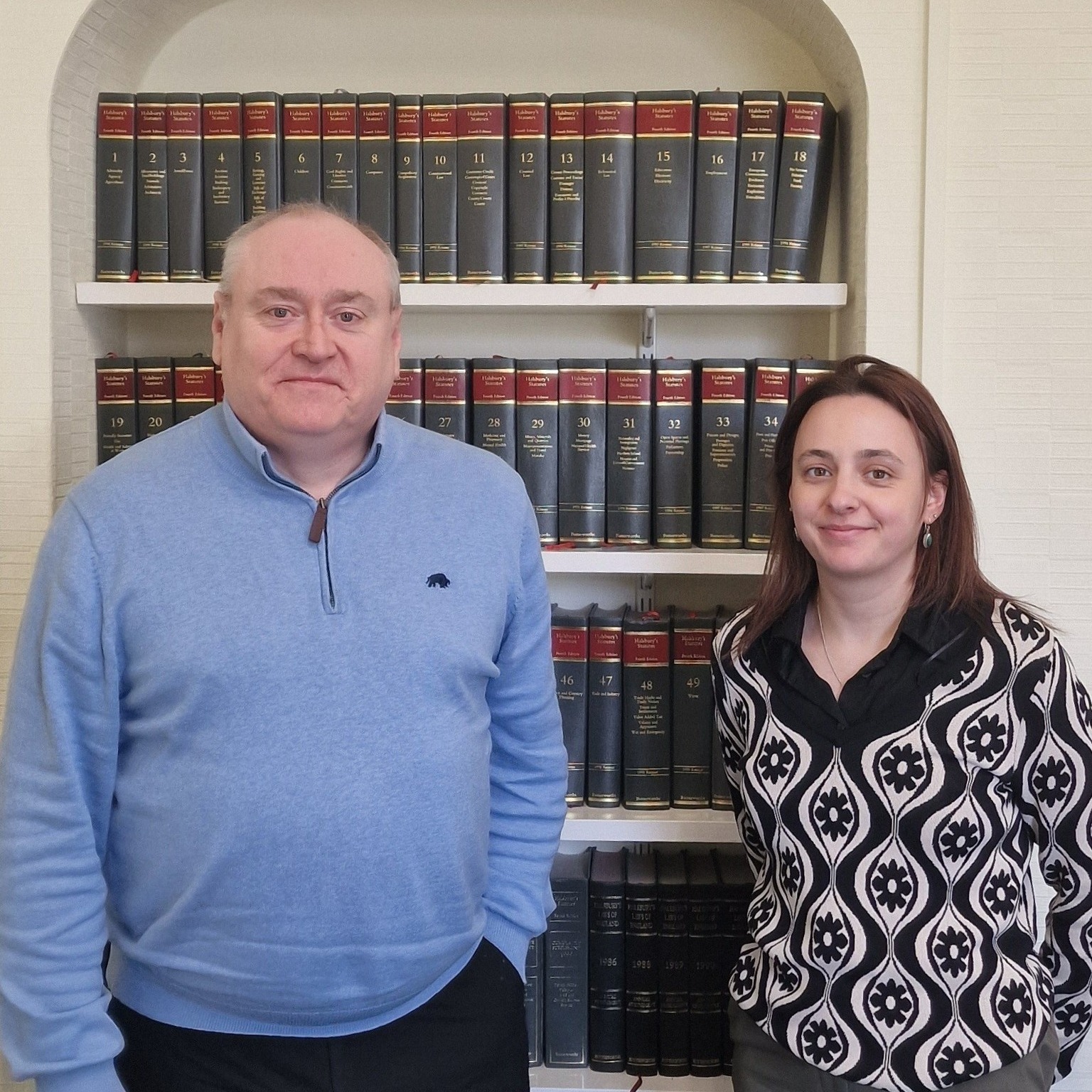
LAUREN CLEWES has been promoted to trainee solicitor at Eaton-Evans and Morris Solicitors.
Lauren joined the firm in 2024 as a paralegal, working first with Helen Hodges and later with Pauline Mainwaring. Over the coming months, she will work alongside the firm’s fee earners across all departments as part of her training.
Sean Dyer, one of the firm’s directors (pictured), offered his congratulations on her promotion.


COMEDIAN Elis James will take to the Pavilion stage at the National Eisteddfod for the first time this year, performing on Wednesday, August 5 as part of the festival programme. Entry to the gig is included in the Maes day ticket, and with strong roots in the area, his return promises an evening of laughter and a warm homecoming atmosphere.
Famous for making quick connections with people from across Wales on his podcast ‘Elis & John’ on BBC Sounds, Elis will no doubt receive a warm welcome at the National Eisteddfod, arguably one of the best places in the world to connect with fellow Welsh people. With his observational comedy, often inspired by his upbringing in west Wales, this is expected to be an evening full of humour, marking the halfway point of the Eisteddfod week.
Elis said: “I’m very excited. I’ve never done stand-up in the Pavilion before. Mam will be there, I’m sure other members of the family will be there too, but don’t worry, I’m one of those people who is funny under pressure!”
Betsan Moses, the Eisteddfod’s Chief Executive, added: “It’s a pleasure to welcome Elis back home to the Garreg Las area.
“As a Welsh comedy giant, we’re looking forward to a night of humour in his company, reflecting the true spirit of the Eisteddfod.”

Elis was born in Haverfordwest and raised in Carmarthen. He’s a comedian, podcast presenter, actor and broadcaster. Since 2014, he’s presented a radio show with his friend and fellow comedian, John Robins, originally on Radio X before moving to BBC 5 Live in 2019.
Among the UK’s most popular comedians, Elis toured Wales with his show Derwydd in 2024, recording a performance at Carmarthen’s Lyric Theatre. He has since returned to English‑language stand‑up after a ten‑year break.
Day Maes tickets, which include admission to the gig, are available on the Eisteddfod website.
Eisteddfod Genedlaethol y Garreg Las will be held in Llantwd, north Pembrokeshire between August 1 and August 8.




Charity4 hours ago
Greenacres warns it may have to shut doors to new animals over £24,000 vet bill
Pembrokeshire sanctuary says it is at breaking point and fears devastating consequences if urgent public appeal fails GREENACRES RESCUE has...


News1 day ago
Reform attacks Plaid on spending and immigration ahead of Senedd poll
Party claims Plaid’s plans would strain public finances and increase pressure on services, while rivals insist Wales needs a different...


News1 day ago
Emergency response after person enters water at Milford Haven marina
Casualty recovered as police, coastguard and lifeboat crews attend A MAJOR emergency response was launched at Milford Marina in Milford...


News2 days ago
Senedd election candidates confirmed as vote.wales goes live
Voters can now check who is standing in their constituency ahead of polling day on May 7 A TOTAL of...


Crime3 days ago
Police and partners launch summer crackdown after Tenby station stabbings
Extra patrols, more rail security and tougher action promised after violent disorder left four youths injured POLICE and partner agencies...


Crime3 days ago
Drug and weapon charges after Pembroke Dock arrest
Man remanded in custody following Diamond Street vehicle search A MAN has been remanded in custody after appearing at Swansea...

Crime3 days ago
Woman fights order taking four dogs from her
Swansea Crown Court hears appeal after long-running barking dispute in Trefin A PEMBROKESHIRE woman has told Swansea Crown Court that...


News3 days ago
Former county councillor Paul Dowson to stand in Ceredigion Penfro
Ex-Pembrokeshire member says he will offer voters a straight-talking independent alternative at the Senedd election FORMER Pembrokeshire county councillor Paul...


News4 days ago
Plaid Cymru sets out childcare, NHS and child poverty pledges in 2026 manifesto
Rhun ap Iorwerth’s party says plan is radical and fully costed as it bids to lead next Welsh government PLAID...


Community4 days ago
Police intervene after post raises fears of planned Pembroke Dock fight
Extra patrols launched after social media alert in aftermath of Tenby stabbings POLICE intervened after an online warning raised fears...
-
 Crime6 days ago
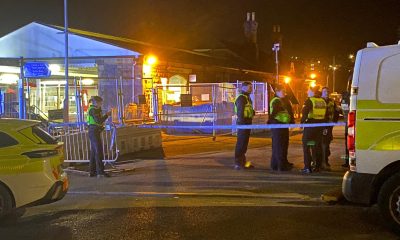
Four youths stabbed at Tenby railway station as two arrested
-

 Local Government6 days ago
Bridge works on Neyland-Burton road to continue into late April
-

 News6 days ago
Haverfordwest County AFC faces High Court winding-up threat from HMRC
-

 Entertainment5 days ago
Little Pigs at Home offers a peaceful sanctuary escape in Pembrokeshire
-

 Charity7 days ago
Angle RNLI answers string of call-outs across the Milford Haven Waterway
-
 Community6 days ago
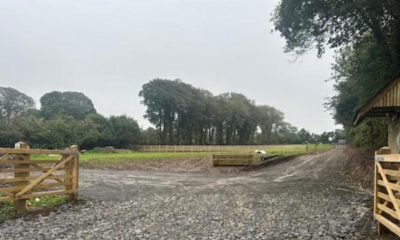
Cosheston gypsy traveller 60 foot shed plans refused
-

 Crime6 days ago
Questions raised as 81-year-old woman faces ‘failure to provide’ case
-

 Crime5 days ago
Henry Tufnell responds after four youths stabbed in Tenby