


News
The NHS is ‘worth fighting for’

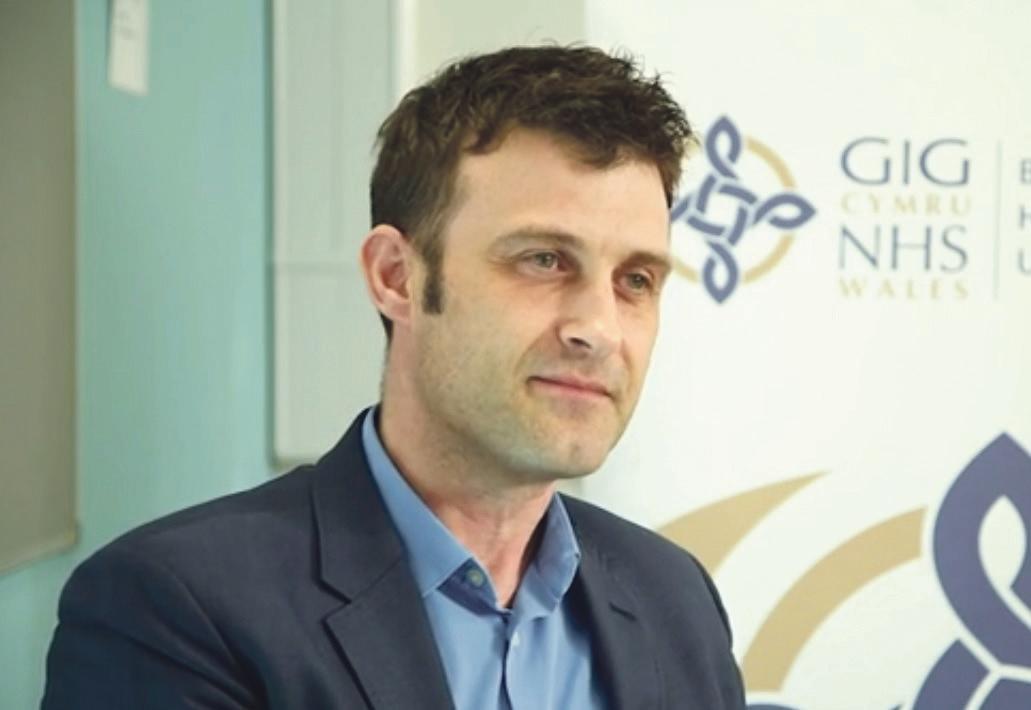

New Boss: Steve Moore, Chief Executive of Hywel Dda University Health Board
IN HIS first interview with a Pembrokeshire newspaper since taking up his post, Steve Moore, Chief Executive of Hywel Dda University Health Board, told the Pembrokeshire Herald that he wanted to involve pressure groups, clinicians and the public in the debate about what Withybush Hospital can do to support the local population and revealed what motivated him to return to the NHS as Chief Executive of the Local Health Board.
“I moved out of the NHS for a while to get a different perspective and refresh.” Steve told us. “While I was away from the NHS, I realised that it was in my blood and I enjoyed working within it. The NHS is an institution that I am passionate about: It is hugely important and faces big challenges. I think it is worth fighting for.”
Considering why he had elected to return to NHS management through Hywel Dda UHB, Steve expressed his desire that the Board provide an integrated service: “Looking at England, there are many people there who believe that an integrated model, where we have acute, community and primary care working together will solve a lot of problems. What I see in Hywel Dda is a lot of the building blocks are in place to enable that; in a very rural community, and I come from a rural background, I want to develop that model where we have the means at hand to do so. I’m five weeks in. I am still finding my way around. But I am really positive and excited about how we can move services on. That is why I am here.”
Asked whether he could draw a line under the past, move on and be categorical about the future of service provision, Mr Moore told us: “I’m hearing the concern. I have been to two public meetings over the last two weeks. It needs a line drawing under it. The clinical reasons underlying those decision have not changed. However, we do have the review going on, we need to acknowledge that we might not have got it entirely correct, right up front. We are keen to work with pressure groups, clinicians and the public to learn whether the transfers have happened in the way we planned them. I am sure there are things we can do to improve things for patients who have to move further for treatment than before; however, the clinical argument for changing services and transferring them remains the same. We need to move on, but we need to continue the discussion about what clinical models ought to look like. For me and the Board, having been very clear that each of our hospitals has a sustainable future, we no need to debate how those hospitals best serve the communities in which they sit.”
Steve was clear that he had not come across a situation where the Welsh language had discouraged recruitment, as claimed by the Welsh Deanery. Revealing that he was eager to learn the language, he went on to say: “We need to ensure that where patients’ first language is Welsh we can communicate effectively with them. I have not been here long, but I have not come across the Welsh language dissuading people from applying. There are far more significant things locally affecting recruitment that we need to deal with, such as setting out our positive vision for the future. I would rather get on with tackling those things.”

Responding to criticism by Simon Hart MP that the Board’s communication had been poor, the new CEO was clear: “We need to be clear about our overall aim, that patients can get prompt treatment. That might not always be in their local hospital. Clinical practice changes all the time. There is a danger in having a blueprint which needs constant amendment. There are some ‘red-line’ issues, such as the provision of 24/7 A&E, where we need to be open and transparent with the public about the issues we face regarding recruitment. The Board’s approach is how we build an ongoing relationship. We have had a couple of public meetings already and we have learned from those, so that we changed the format of the second meeting at Letterston to be less one of us telling than of us listening. We got it wrong, the public told us we had got it wrong, so we changed the format. We need to continue to flex and also to hear from people that we sometimes do not hear from. We have a strong desire to be out there talking, listening: we are facing big challenges and we need to be honest and open about that. We won’t find all the answers sitting around a board table, we need to communicate and the more we do that, the better it will be for the future of health services in our local area.”
Refusing to be drawn on past issues with communication between the Board and the public, Mr Moore was, however, very clear on his position and that of the Board generally: “The ethos we have is that it is not our health service, it belongs to the taxpayers. I can’t see a more important job for the Board than to engage with the public. We’re not going to solve the problems we face unless we have the public on board, both understanding the challenges and helping us deliver the solutions. You will see our clinicians out there more often: they are the experts and I think it is important the public know their viewpoint and their views. It is also important that clinicians get to hear the public’s point of view.”
Reflecting on the sometimes difficult relationship the Board has had with the media: “I’m looking forward to having a strong relationship with the press, who can help us reach members of the public we do not reach through our efforts alone. There needs to be a positive – and critical – relationship between the media and the Board. We need to celebrate the good news stories about the way our staff deliver services under great pressure and in the face of great challenges.”
Concluding he said: “I am genuinely positive for the future. You only have to visit our hospitals, to sit in a public meeting and feel the public’s passion. The NHS is a great institution. We will have to find new solutions, the world has changed since 1948. I am positive about that change and feel we have a strong platform to work from.”


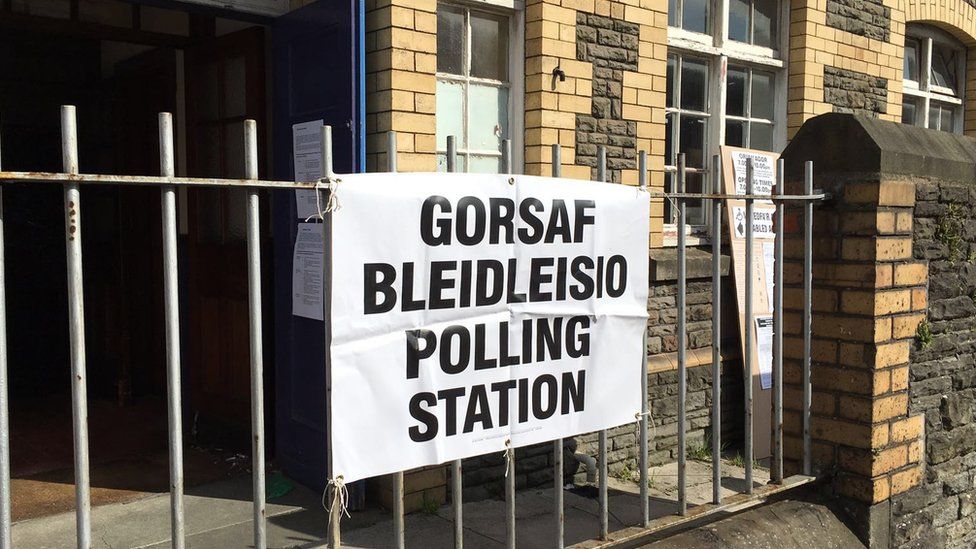
Voters can now check who is standing in their constituency ahead of polling day on May 7
A TOTAL of 675 candidates will contest the Senedd election on May 7, with voters across Wales now able to see exactly who is standing in their area through the newly launched vote.wales website.
The nomination period for candidates closed at 4:00pm on Thursday (Apr 9), and full details of all confirmed candidates are now available online.
At this year’s election, Wales has been divided into 16 constituencies, with each one electing six Members of the Senedd under a closed-list proportional voting system. Voters will receive one ballot paper and will be able to vote either for a political party or for an individual independent candidate.
Under the new system, the number of seats won in each constituency is intended to broadly reflect each party’s share of the vote. That means, for example, that a party receiving around half the vote in a constituency would be expected to win three of the six available seats.
Political parties were allowed to put forward up to eight candidates in each constituency, while individuals were also able to stand as independents.
In total, the 675 candidates standing for election are competing for 96 seats in the next Senedd. They represent 16 political parties, along with 30 independent candidates.
Voters can use the postcode search on vote.wales to find out who is standing in their constituency. The website also allows users to check where their polling station is, what accessibility features are available there, and which constituency they belong to.
People wanting to see who is standing in other parts of Wales can do so through the site’s “Browse by constituency” section.
Vote.wales is a new website created for this year’s Senedd election and is intended to give voters clear and reliable information before polling day. It is managed by the Electoral Management Board for Wales, which is part of the Democracy and Boundary Commission Cymru.

From Thursday, April 16, candidates’ leaflets will also be published on the site, allowing voters to see not only who is standing, but what they are standing for.
The website also includes information on how to vote, who is entitled to vote, and what powers and responsibilities the Senedd has.
Shereen Williams MBE OStJ, Chief Executive of the Democracy and Boundary Commission Cymru, said: “We created vote.wales to give people all the information they need before the Senedd election on May 7.

“Now that candidates have been confirmed across Wales, people can find out exactly who they can vote for with a simple postcode search.
“We’re grateful to all the Returning Officers and election staff across Wales who are working so hard to deliver this election. It’s thanks to their hard work that people can now go to vote.wales to see who is standing in their constituency.
“If you have any questions about this election, vote.wales is the place to go. Voting confidence starts here.”
Who is standing?
In the Ceredigion Penfro constituency, voters will be choosing from candidates representing the Welsh Conservatives, Gwlad, the Heritage Party, Plaid Cymru, Plaid Werdd Cymru, Reform UK, Welsh Labour and the Welsh Liberal Democrats, along with three independents.
For the Welsh Conservatives, the candidates are Paul Windsor Davies, Samuel Deri Kurtz, Claire Victoria George, Brian Andrew Murphy, Gill Evans and Claire Malaina Jones.
Gwlad has selected Gwyn Wigley Evans, while the Heritage Party candidate is Elizabeth Davies.
Plaid Cymru has put forward Elin Jones, Kerry Ferguson, Anna Nicholl, Cris Tomos, Colin Nosworthy, Clive Davies, Owain Jones and Matt Adams.
Plaid Werdd Cymru is standing Amy Nicholass, Tomass Jereminovics, James Henry Purchase, Morgan Hope Phillips, Rosie O’Toole and Kezia Autumn Hine.
Reform UK’s candidates are Susan Claire Archibald, Paul Marr, Michael Timothy Allen, Elisa Bessie Gonzalez Randall, Peter Martin John and Bernard Holton.
Welsh Labour has selected Eluned Morgan, Marc Tierney, Joshua Phillips, Margaret Greenaway, Tansaim Hussain-Gul, Luke Davies-Jones and Peter Huw Jenkins.
The Welsh Liberal Democrats are standing Sandra Louise Jervis, Alistair Ronald Cameron, Tom Hughes, Lee Dennis Thomas John Herring, Andrew Christopher Lye and Maggie Robinson.
The independent candidates in the constituency are Aaron Carey, George Alexander Chadzy and Paul Haywood Dowson.
Voters have until April 20 to register to take part in the election. Unlike some other polls, photo ID is not required to vote at Senedd elections.

Ben Delo says new overseas donation cap is designed to curb support for Nigel Farage’s party
CRYPTOCURRENCY billionaire Ben Delo says he is returning to Britain so he can continue donating millions of pounds to Reform UK, after Labour unveiled plans to cap political donations from Britons living overseas.
Mr Delo, 42, who is currently based in Hong Kong, has already given £4 million to Reform this year. But under new government proposals, overseas electors would be limited to donating £100,000 a year.
The businessman has accused Sir Keir Starmer’s government of trying to tilt the political playing field in Labour’s favour by making it harder for Reform to attract major backing from wealthy British supporters living abroad.
Writing in The Telegraph, Mr Delo said he would relocate to the UK in order to continue funding Nigel Farage’s party and help it build a serious war chest before the next general election.
Mr Delo is widely known as a co-founder of the cryptocurrency trading platform BitMEX, which helped make him one of Britain’s youngest self-made billionaires.

He has also spoken publicly about having Asperger’s syndrome, saying he finds much of modern politics difficult to interpret because of what he sees as evasive and unclear language. He contrasted that with Mr Farage’s more direct style of speaking, which he said he finds easier to understand.
Mr Delo said his financial support could help Reform expand its staffing, improve campaign preparation and spend more on events, advertising and organisation ahead of the next national vote.
He also suggested the new donation cap could be aimed at limiting support from other wealthy overseas backers, including businessman Christopher Harborne, who has also donated substantial sums to Reform.
Mr Delo argued that while Labour continues to benefit from large donations linked to the trade union movement, the new rules would make it harder for rival parties to compete on equal terms.
The government says the proposed changes are part of a wider effort to tighten electoral law and reduce the risk of foreign influence in British politics.
Mr Farage welcomed Mr Delo’s decision, saying the funding would help Reform continue developing as a party that is serious about government and capable of attracting the expertise needed to prepare for power.
Mr Delo said he hoped other wealthy expatriates who want to support political causes in Britain would also consider returning to the UK.

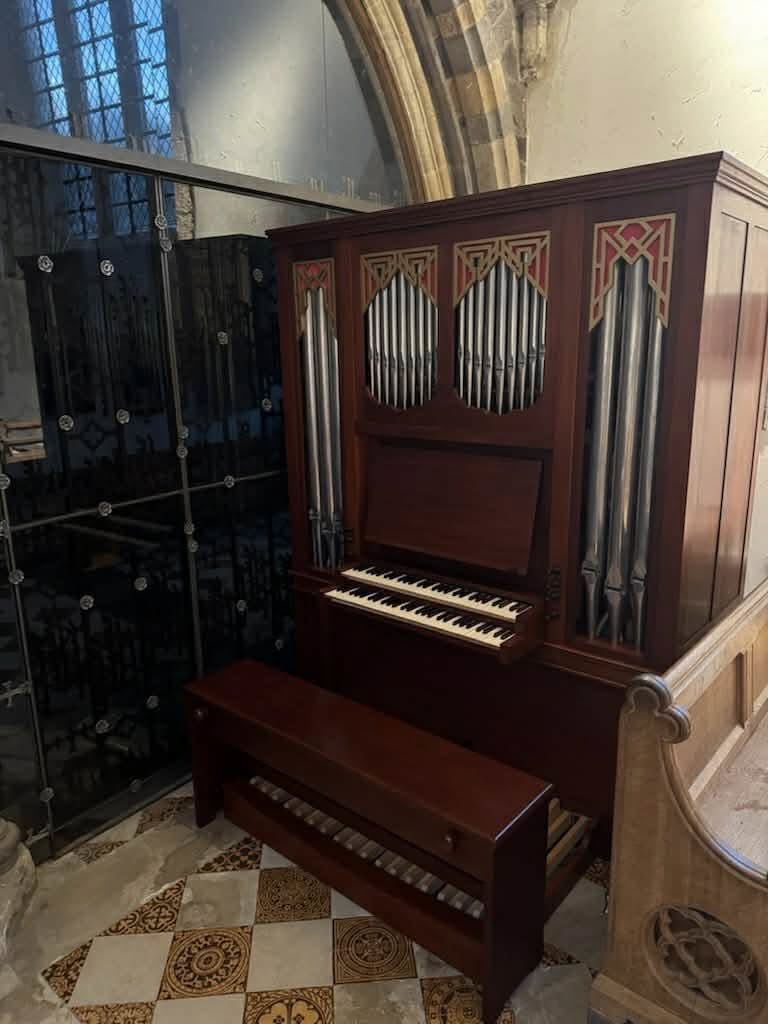
Instrument by Peter Collins now in place as cathedral prepares for tuning and inaugural recital
ST DAVIDS CATHEDRAL CHOIR has announced the installation of a new organ in the Lady Chapel at St Davids Cathedral.
The instrument, a Peter Collins EOS9 organ, has been installed by Gary Owens Organ Builders.
Sharing the news, the choir said it was delighted with the addition of the “beautiful” organ and thanked the builders for their “time, professionalism and energy” in completing the work.
The cathedral says the instrument will now be left to settle for a couple of weeks before receiving its first tuning.
Further details about the dedication of the organ and its inaugural recital are expected to be announced soon.
In the meantime, the organ is open for inspection, while the Lady Chapel is once again available for worship and private prayer.



News9 hours ago
Senedd election candidates confirmed as vote.wales goes live
Voters can now check who is standing in their constituency ahead of polling day on May 7 A TOTAL of...


Crime1 day ago
Police and partners launch summer crackdown after Tenby station stabbings
Extra patrols, more rail security and tougher action promised after violent disorder left four youths injured POLICE and partner agencies...

Crime1 day ago
Drug and weapon charges after Pembroke Dock arrest
Man remanded in custody following Diamond Street vehicle search A MAN has been remanded in custody after appearing at Swansea...

Crime1 day ago
Woman fights order taking four dogs from her
Swansea Crown Court hears appeal after long-running barking dispute in Trefin A PEMBROKESHIRE woman has told Swansea Crown Court that...

News1 day ago
Former county councillor Paul Dowson to stand in Ceredigion Penfro
Ex-Pembrokeshire member says he will offer voters a straight-talking independent alternative at the Senedd election FORMER Pembrokeshire county councillor Paul...

News2 days ago
Plaid Cymru sets out childcare, NHS and child poverty pledges in 2026 manifesto
Rhun ap Iorwerth’s party says plan is radical and fully costed as it bids to lead next Welsh government PLAID...


Community2 days ago
Police intervene after post raises fears of planned Pembroke Dock fight
Extra patrols launched after social media alert in aftermath of Tenby stabbings POLICE intervened after an online warning raised fears...
Crime2 days ago
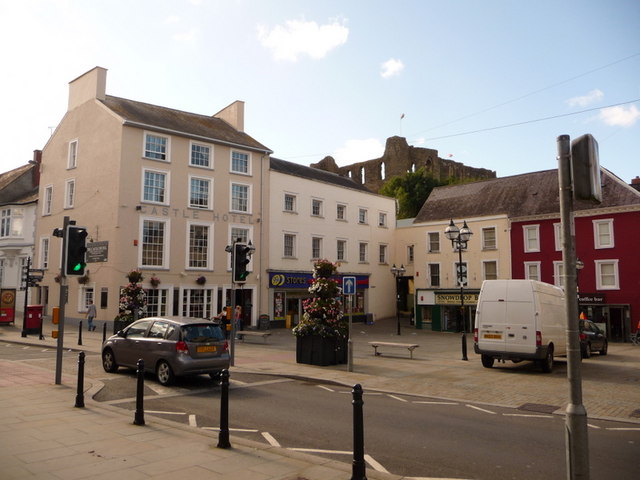
Man arrested after alleged child sexual assault in Haverfordwest
Police enquiries ongoing after incident in Castle Square A MAN has been arrested after an alleged sexual assault of a...

Crime4 days ago
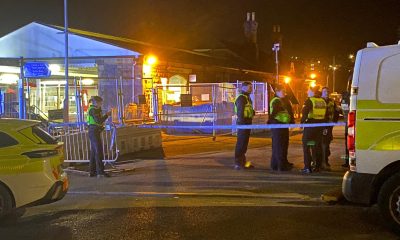
Four youths stabbed at Tenby railway station as two arrested
British Transport Police lead investigation after serious disorder involving group of youths FOUR youths suffered stab wounds during a major...

News4 days ago
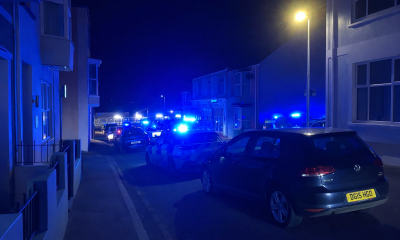
Major emergency response in Tenby after incident near train station
Witnesses report injuries as police and ambulance crews remain at scene on Warren Street POLICE and ambulance crews remain at...
-
Crime4 days ago
Four youths stabbed at Tenby railway station as two arrested
-
 News6 days ago
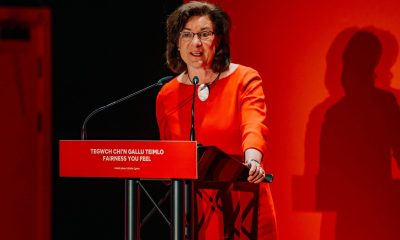
Eluned Morgan targets Haverfordwest as Welsh Labour fights to hold its ground
-
 Community6 days ago
Johnston FC pays tribute after sudden death of Rhyan Nolan, 27
-

 Local Government4 days ago
Bridge works on Neyland-Burton road to continue into late April
-

 News4 days ago
Haverfordwest County AFC faces High Court winding-up threat from HMRC
-

 Sport6 days ago
Haverfordwest County Under-13 girls shine at final FAW festival
-

 News6 days ago
Trail hunting consultation opens as debate grows in Pembrokeshire
-

 Entertainment3 days ago
Little Pigs at Home offers a peaceful sanctuary escape in Pembrokeshire
Flashbang
February 19, 2015 at 10:15 am
Sounds like a load of flannel. As for being motivated to return to the NHS my guess is he’s one of those on the merry go round of CEOs going from one health board to another cutting services and then moving on. Part of the bloated layer of bureaucrats sucking money out of clinical services and into paper pushing.
tomos
February 19, 2015 at 6:27 pm
Oh dear, we can say anything and everything – we\’ll judge by actions.I\’d like to ask IF he and his wife/family get private health insurance as part of his remuneration package ?