


News
Welsh Conservatives say Starmer resignation will not fix Labour’s failures


Darren Millar says Wales needs “tough decisions” as Labour prepares to choose a new Prime Minister
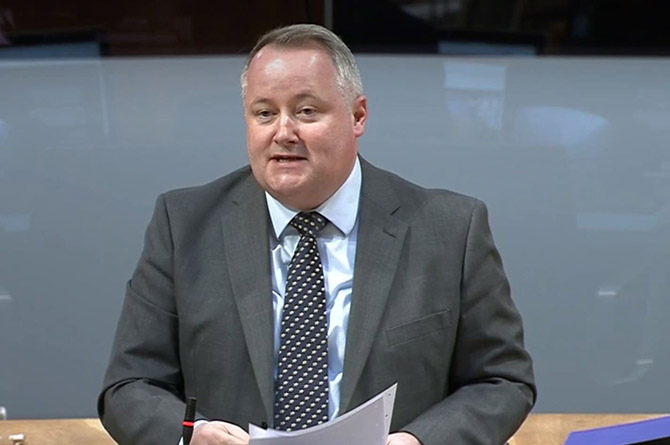
THE LEADER of the Welsh Conservatives has said Sir Keir Starmer’s resignation will not change the impact of Labour’s failures on Wales.
Darren Millar MS said replacing one Labour leader with another would not solve the problems facing families and businesses across the country.
His comments came after Starmer announced on Monday (Jun 22) that he would resign as Prime Minister and leader of the Labour Party.
Starmer will remain in office until Labour selects a successor, with Andy Burnham widely expected to enter the race.
The Welsh Conservatives said Wales was still facing the consequences of Labour decisions on the cost of living, energy, welfare and defence spending.

They said the focus should now be on “getting Britain working again” rather than simply changing the person leading the Labour Party.
Mr Millar said: “Sir Keir Starmer may be going, but Labour’s failures remain.
“The last thing Wales and the rest of the UK needs is another Labour leader who won’t stand up to Labour MPs on welfare, energy, defence spending and action on the cost of living.
“His decision is a reminder that Kemi Badenoch is the only leader of a political party in the UK with the backbone to make tough decisions and get Britain working again.”
The resignation has triggered a major political transition at Westminster.
Labour’s National Executive Committee is expected to open nominations for the party leadership on July 9, with the process due to be completed before Parliament returns from its summer break in September if a contest is needed.
For Wales, the change at No 10 comes at a time of growing political pressure over public services, household costs, economic growth and the future direction of the UK Government.

Welsh Labour figures are likely to face renewed scrutiny as opposition parties seek to link the party’s record in Westminster with its long period in power in Cardiff Bay.
The Conservatives are expected to argue that a change of Labour leader will not mean a change of policy unless the party changes direction.
Starmer said in his resignation speech that becoming Prime Minister had been the “proudest moment” of his life, but accepted that his party no longer believed he was best placed to lead it into the next general election.

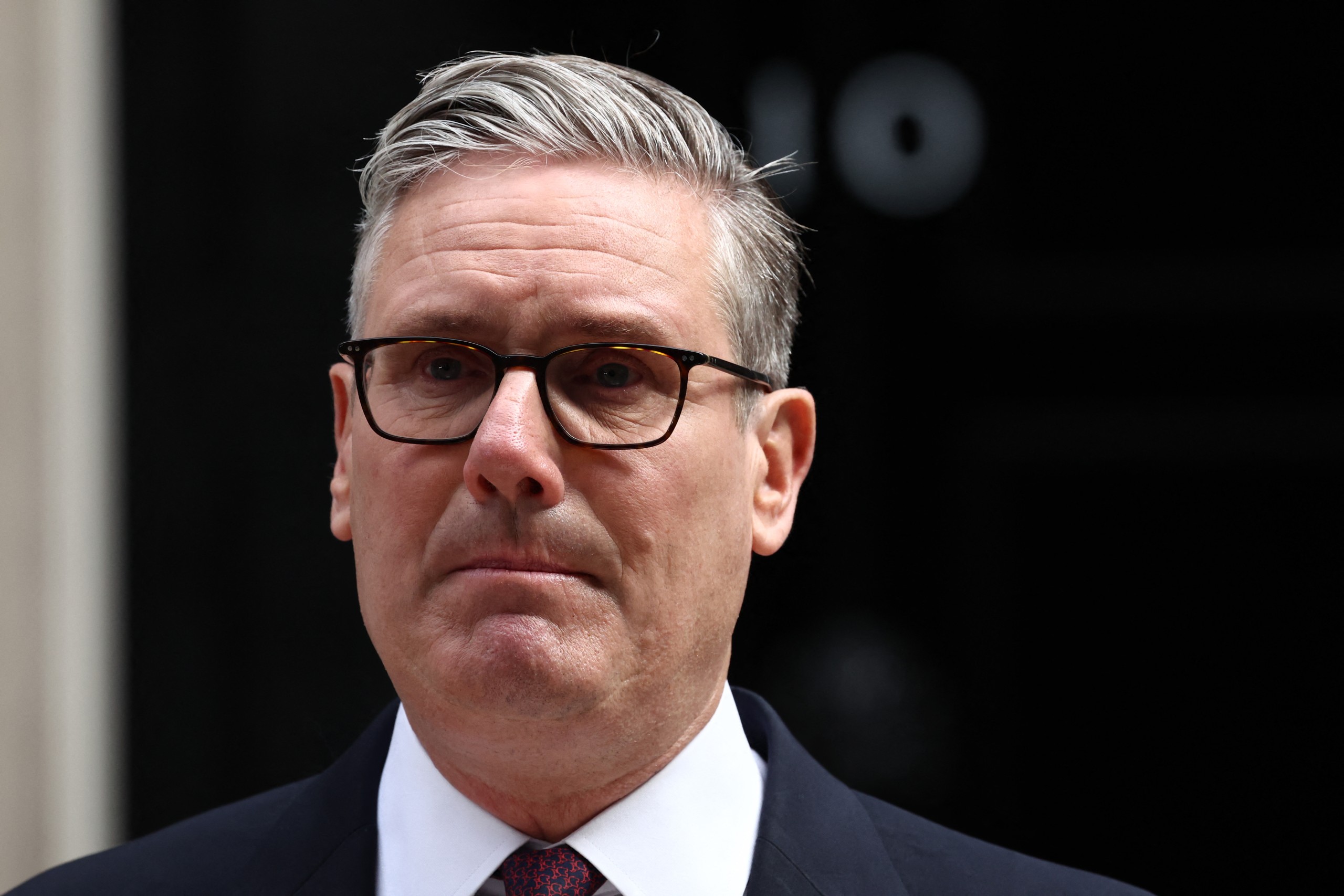
Prime Minister announces resignation after losing support within his own party as Andy Burnham emerges as overwhelming favourite to take over
KEIR STARMER has announced his resignation as Prime Minister and Labour leader, bringing a dramatic end to one of the most remarkable political journeys in modern British history.
Less than two years after leading Labour to a landslide general election victory, Starmer confirmed on Monday morning (Jun 22) that he would step aside after accepting that he no longer had the confidence of enough MPs to lead the party into the next election.
Speaking outside Downing Street, Starmer said becoming Prime Minister had been the “proudest moment” of his life.
But in a speech marked by dignity and emotion, he acknowledged that Labour MPs were increasingly questioning whether he remained the right person to lead the party.
“The question my party is asking is whether I am best placed to lead it into the next general election,” he said.
“I have heard the answer and I accept that answer with good grace.”
The announcement marks the end of a political era that saw Starmer take Labour from its worst election defeat in generations to government in just four years.
It also opens the door to a new chapter in British politics, with Andy Burnham now widely expected to become the country’s next Prime Minister.

A stunning political rise
When Starmer became Labour leader in 2020, few believed the party could recover quickly from the catastrophic defeat it suffered under Jeremy Corbyn in the 2019 general election.
Labour had lost traditional heartlands, suffered internal divisions and faced serious questions about its future direction.
Starmer’s first challenge was rebuilding credibility.
He spent years reshaping Labour’s image, tackling allegations of antisemitism, re-establishing relationships with business leaders and presenting the party as a serious alternative government.

Many Labour members disliked parts of that transformation, but it succeeded electorally.
By July 2024, Labour secured a landslide victory and Starmer entered Downing Street as Prime Minister.
The scale of that achievement was acknowledged even by many political opponents.
Only five Labour leaders have ever won a general election.
Starmer joined that exclusive club.

The beginning of the end
Despite Labour’s commanding parliamentary majority, difficulties emerged surprisingly quickly.
A sluggish economy, continuing cost-of-living pressures, controversy over spending decisions and growing voter frustration began to erode public support.
The government increasingly found itself squeezed politically.
On one side, Reform UK made substantial gains among voters who felt Labour was failing to tackle immigration and economic stagnation.
On the other, traditional Labour supporters complained the government lacked ambition and appeared disconnected from everyday concerns.
While ministers continued pointing to falling NHS waiting lists, economic stability and improved international relationships, many voters remained unconvinced.
Labour’s problems became impossible to ignore following a series of disappointing local election results earlier this year.
The scale of those losses triggered panic among MPs, councillors and party activists.
Private concerns quickly became public criticism.
Within weeks, speculation over Starmer’s future was dominating Westminster.
The Makerfield earthquake
The political turning point may ultimately prove to be the Makerfield by-election.
The contest was seen as a crucial test of Labour’s ability to hold support in areas under pressure from Reform UK.
Instead of becoming another setback, it delivered an unexpected triumph for Andy Burnham.
Burnham’s victory transformed the political landscape almost overnight.
The former cabinet minister and Greater Manchester Mayor suddenly appeared to many Labour MPs as the obvious alternative leader.
Unlike many Westminster politicians, Burnham had spent nearly a decade governing outside London.
Supporters argued he understood communities beyond the capital and possessed a stronger connection with voters who had drifted away from Labour.
The by-election result accelerated discussions that had already begun within Labour about the party’s future direction.
Within days, Burnham’s supporters were openly discussing a leadership challenge.
What happens now?
Despite announcing his resignation, Starmer remains Prime Minister.
There will be no immediate change of government.
Instead, Labour’s National Executive Committee will oversee the process of selecting a new leader.
Nominations are expected to open on July 9.
The process is scheduled to conclude by the start of Parliament’s summer recess on July 16.
If multiple candidates secure sufficient nominations, a leadership contest will take place over the summer.
Labour expects a new leader to be in place before Parliament returns on September 1.
However, events may move much faster.
If Burnham runs unopposed, he could effectively become Labour leader shortly after nominations close.
That would allow a transition of power within weeks rather than months.
Importantly, there is no constitutional requirement for a general election.
The Labour Party still commands a majority in the House of Commons.
Under Britain’s parliamentary system, the governing party is entitled to choose a new leader who then becomes Prime Minister.
Why Reform wants an election
Not everyone agrees.
Reform UK leader Nigel Farage immediately called for a general election.
Farage argues that voters elected Starmer and should therefore be given another opportunity to decide who governs the country.
Reform believes it can capitalise on growing public dissatisfaction and make further gains.
The Conservatives have taken a different view.
While critical of Labour’s performance, they have not demanded an immediate election.
Liberal Democrat leader Ed Davey also stopped short of supporting Farage’s call, although he warned that voters are increasingly frustrated by the revolving door of Prime Ministers.
Since 2016, Britain has seen six Prime Ministers and now appears set for a seventh.
Burnham’s path to power
Burnham enters the contest as overwhelming favourite.
His credentials are substantial.
He served in several senior cabinet roles under Labour governments, including Health Secretary and Culture Secretary.
After losing two previous Labour leadership contests, he reinvented himself as Greater Manchester’s Metro Mayor.
In that role, he became one of the country’s most recognisable regional politicians.
His outspoken defence of northern communities during the Covid pandemic significantly increased his profile.
Supporters describe him as pragmatic, approachable and capable of reconnecting Labour with working-class voters.
Critics argue that translating regional success into national government presents a very different challenge.
Nevertheless, Burnham’s position strengthened dramatically when former Health Secretary Wes Streeting announced he would not stand against him.
Streeting’s endorsement is significant because he had previously been regarded as one of the most likely challengers.
By stepping aside, he has removed what many viewed as the most serious obstacle to Burnham’s path to No 10.
The markets are watching
Financial markets reacted cautiously to the news.
The pound weakened slightly against the dollar while government borrowing costs edged upwards.
Although the movements were relatively modest, investors are attempting to assess what a Burnham government might mean economically.
Burnham has often argued for stronger regional investment, greater devolution and more active government intervention to stimulate growth.
Supporters believe this could help rebalance the British economy.
Critics worry it may ultimately lead to higher public spending and increased borrowing.
For now, markets appear willing to wait for more detail before reaching conclusions.
The Welsh dimension
The resignation also has important implications for Wales.
Labour has faced increasing pressure in Welsh politics, with support coming under challenge from both Plaid Cymru and Reform UK.
Recent political developments have demonstrated growing voter volatility.
Whoever succeeds Starmer will inherit difficult questions about public services, economic growth, devolution and regional inequality.
Burnham’s emphasis on local decision-making and regional development may find a receptive audience in Wales.
His experience as Mayor of Greater Manchester gives him a perspective that differs from many Westminster politicians.
Welsh Labour figures will be watching closely to see whether a Burnham leadership offers an opportunity to rebuild support ahead of future elections.
A personal goodbye
Perhaps the most memorable moment of Starmer’s resignation speech came at the end.
After discussing politics, government and party leadership, he turned to his family.
Fighting back emotion, he said he would now focus on being the best husband possible to his wife Victoria and the best father he could be to his children.
He described them as his “pride and joy”.
Moments later he embraced his wife outside Number 10 before returning inside.
For a politician often criticised as reserved and cautious, it was a rare glimpse of the personal sacrifices that accompany life at the very top of government.
The verdict of history
How history judges Keir Starmer remains uncertain.
His supporters will point to a remarkable achievement in rebuilding Labour, winning a landslide election and restoring the party to government.
His critics will argue that he failed to convert that electoral success into lasting political support.
Both views contain elements of truth.
What cannot be disputed is the speed of his rise and fall.
Few politicians have travelled from opposition leader to Prime Minister and then to resignation in such a short period of time.
As Labour prepares to choose its next leader, Starmer leaves office with achievements, disappointments and unfinished business.
His departure closes one chapter in Labour’s history.
The next chapter, barring an extraordinary surprise, appears likely to be written by Andy Burnham.

SCHOOL leaders have accused the Welsh Government of missing a major opportunity to support children with additional learning needs after ministers declined to ring-fence more than £500 million for ALN provision.
NAHT Cymru said more than 5,000 letters were sent to ministers in less than a week urging them to protect funding linked to increased Special Educational Needs and Disabilities spending in England.
The union said the money amounts to £322 million in 2026-27 and a further £197 million recurrently from 2028-29.
However, the Welsh Government has not agreed to allocate the full amount specifically to ALN, instead choosing to distribute resources across a range of priorities in its supplementary budget.
Funding pressure
NAHT Cymru, which represents school leaders across Wales, said the decision would disappoint schools already struggling with rising demand for support.
Laura Doel, National Secretary of NAHT Cymru, said: “We recognise the very real challenges facing Welsh Government and the difficult decisions ministers must make when allocating funding across public services.
“However, school leaders across Wales will be extremely disappointed that this funding has not been directed specifically to Additional Learning Needs provision, particularly given the scale of demand and the pressures currently facing schools and local authorities.
“The response over the past week has been remarkable. More than 5,000 people took the time to write directly to ministers to highlight the importance of this investment.”
The union said demand for ALN support had increased significantly in recent years, with costs more than doubling over the last decade.
It warned that without further investment, schools could face further pressure on staffing, including teachers and teaching assistants who deliver support to pupils.
Welsh Government position
The issue centres on consequential funding received by Wales following spending decisions in England.
While NAHT Cymru argues the money arose from SEND spending and should therefore be used for ALN in Wales, Welsh ministers are not required to spend Barnett consequential funding in the same policy area.

The union had called for the full funding to be allocated to ALN, passed to local authorities and schools, and ring-fenced so it could not be diverted to other areas.
Those calls have not been met.
Ms Doel added: “If education is a key priority for this government, it needs to demonstrate it through action not just warm words.”

VISITORS to Welsh beaches have been warned not to touch unusual blue sea creatures which have washed ashore along parts of the coastline.
Hundreds of velella velella, commonly known as by-the-wind sailors, have been reported on beaches in Anglesey, Gwynedd and Tenby.
The small, bright blue marine creatures are free-floating hydrozoans and are related to Portuguese man o’ war, sea anemones and corals.
They get their name from a small sail-like structure on their body, which catches the wind and carries them across the surface of the sea.
One was spotted on Tenby South Beach on Tuesday (Jun 16), where beachgoer Maxine Allinson described it as “fantastic” and “like a crystal”.
Marine experts say the creatures are often seen after changes in currents or stormy weather, which can push large numbers ashore at the same time.
Although they are much smaller and less dangerous than Portuguese man o’ war, they do have stinging cells.
Their sting is usually mild, but people are being advised not to pick them up, especially as contact with the face, lips or sensitive skin could cause pain or tingling.
Experts also warn that the stinging cells can remain active even after the creatures appear to be dead on the beach.
The advice is to admire them from a safe distance and leave them where they are.
Caption: Maxine Allinson spotted a velella velella on Tenby South beach Tuesday


News13 minutes ago
How Labour’s landslide victory unravelled in just two years
Prime Minister announces resignation after losing support within his own party as Andy Burnham emerges as overwhelming favourite to take...


News13 hours ago
Long Course Weekend set to bring thousands to Pembrokeshire
Three days of swimming, cycling and running will once again transform Tenby into one of the UK’s biggest endurance sporting...


Community19 hours ago
The gentle giant behind the tattoos
Pembrokeshire security worker Josh Davies praised for professionalism, kindness and proving first impressions can be wrong JOSH Davies is hard...


Charity2 days ago
Toy Story fans fill charity toy box at Haverfordwest cinema
Donations pour in for SNAP Specialist Play as families embrace Toy Story 5 launch A TOY STORY-themed charity appeal at...


Community2 days ago
Lord Rhys emerges from the mist in St Davids
Giant puppet begins historic journey marking 850 years since the first Eisteddfod MIST swirled around St Davids Cathedral on Friday...


News3 days ago
Tragic tribute paid to Haverfordwest man after A4075 collision
FAMILY REMEMBERS “KIND AND LOVING” CALLUM HANSON THE FAMILY of a 22-year-old man from Haverfordwest who died following a road...

News4 days ago
Motorcyclist, 22, dies in A4075 crash in Pembrokeshire
A 22-year-old woman remains in hospital after two-vehicle collision A MOTORCYCLIST has died following a serious two-vehicle crash on the...


Community4 days ago
Why police will be visiting every home in Pembrokeshire
New operation aims to knock on more than 257,000 doors across Dyfed-Powys over the next three years DYFED-POWYS POLICE has...


Crime4 days ago
Prisons at breaking point: MPs warn Wales is paying the price of a failing system
Frozen healthcare budgets, overcrowded jails, homelessness on release and mounting pressure on staff are undermining rehabilitation across Wales, according to...


News5 days ago
Brexit at 10: How Britain was sold a dream that cost us dearly
A decade after the referendum, the promised benefits remain hard to find while the economic costs are increasingly difficult to...
-

 Crime4 days ago
Milford Haven man jailed for breaching domestic violence protection order
-

 Local Government6 days ago
Security privately arranged by Mayor at Beating of the Bounds
-

 News4 days ago
Crash on Freeman’s Way causes school-run chaos across Haverfordwest
-

 Crime6 days ago
Man wanted by court after failing to attend hearing over alleged shop thefts
-
 Crime6 days ago
Man banned from roads after drink-driving offence
-

 Crime6 days ago
Man jailed after admitting strangulation and assaults
-

 Crime6 days ago
Drug trafficker must repay £33,000 after court rules he made nearly £500,000
-

 Crime6 days ago
Man sentenced over stalking campaign and lock knife offence