


News
Badger, Arwyn Williams, and the art of the possible

 POLITICS, in a quote often attributed to R.A. Butler but originating with Otto von Bismarck, is said to be the art of possible. Not the desirable; not the moral; not the good; but the possible. Von Bismarck did not mean that politicians should operate in a principle-free zone. He meant that a politician’s freedom for manoeuver is necessarily constrained by events over which they have no control. Upon events over which control can be exercised, politicians should – it follows — seek to prosecute the opportunities open to them to influence events and practice their art in the space given to them by opportunity. in such a way, politics is a matter of choice not one of compulsion. Badger has listened carefully to the achievements of the IPPG as recounted by members of the IPPG’s own Cabinet. The core message they send out is — where it is capable of interpretation into an intelligible form —”You can trust us to correct the errors of the past because we’re pretty sure we now know where we went wrong”.
Huw George, the IPPG’s very own Vicar of Bray, tells us that people want decent roads, the rubbish collected and good schools for their children. The IPPG has slashed the highways budget for anything that did not appear in one of their own cabinet members’ campaign literature or election videos: halved bin collections, so that families are compelled to store rotting garbage that attracts vermin on their own property for up to a fortnight; and closed good schools based on sham consultations and a bogus prospectus of improvement that has mortgaged all of our futures. Anyone with a half a brain —overqualified for the IPPG, then —knows the Cabinet’s collective tears of sorrow are those of a crocodile, readers. All the while, Jamie has done the sad yet patronising voice in Council meetings, mixed with shrewish recrimination when caught out by inconvenient truths.
He and all the IPPG, they are all very sad that these cuts are necessary. These are austere times and we must all tighten our belts. Or, as unsubstantiated rumour has it, tighten the seatbelts in Bryn’s Council-funded taxi – a Porsche Panamera SE Hybrid: yours, readers, for just f90K. Yes: readers, see the sad long face that Jamie pulls when he is communicating unwelcome news. Jamie does not like making cuts, he simply cannot see the possibility of an alternative to cuts. He cannot make — or refuses to see – the connection between deep and deeper service cutbacks and continued clinging to the tattered banner of the lowest Council Tax in Wales. Now: there are those who believe that their money is better in their own pocket than in the pocket of a central treasury providing public services Those people, who travel powered only by fairy dust and their imaginations, do not use the commonplace roads and transport infrastructure like ordinary mortals.
Possessed of superhuman resistance to sickness and the thousand shocks the mortal flesh is heir to, they don’t need doctors, nurses, hospitals or medicines. Indeed, they do not require bin men to collect their rubbish; they shall transport it to the local tip themselves, hanging their reeking black bin bags from the handles of their sedan chairs, as their servants propel them to the municipal amenity of their choice. When it comes to public spending, others believe that their champagne tastes should be indulged on a beer income. Public services cost money. if you want better ones, you have to pay more them in tax. This is the dreadful truth that governments have tried to hide for the last 35 years or so.
Trying to impose market discipline on the public sector is code for bouncing up the salaries of those at the top who have never exposed themselves to the risks of working in the private sector, while slashing the wages of those at the bottom of the pile. Similarly, the idea that increasing the private wealth of the few at the top leads to benefits trickling down to poorer members of society, was rightly described as “voodoo economics”. Reality shows that the gap between rich and poor has grown while services to act as a safety net for the less well-off have been pared not to the bone but to the marrow.

Between these two polar opposite views, our politicians — local and national — dangle on the hooks of their own ambition. Some politicians become seized by the fear of failure — whether real or perceived — and so sit on the fence doing nothing. To paraphrase Lloyd George’s lethal observation, they sit on the fence so long that the iron enters their soul. Too frightened by the spectre of making the wrong choice and becoming unpopular, they do the worst of all things and make no choices. Some confuse carping and picking holes in others’ efforts from the side lines with doing active good. Possessed of a firm belief in their own supreme and sole wisdom to pronounce upon matters of public discourse, they have the luxury of being a prophet, crying in the wilderness without actually having to come up with a solution to the faults they uncover in others. Yet others look for guidance from those who are more permanent than here today gone tomorrow elected representatives. These are politicians who become prisoners of bureaucracy. They are not so much house-trained as broken to the wheel by officers and civil servants who never have to worry about the shabby business of being elected. Politicians seldom break promises.
They surround pledges with the type of words that make any commitment conditional. They say one thing, the electorate hears another. Tony Blair was the master of the vapid and aspirational turn of phrase. Realising that promises were hostages to a fortune that he could not predict, Tony Blair used words with about as much sincerity as those in a greetings card sent to a much loathed wealthy relative. There was the sound of meaning but no substance. Politicians carefully avoid using verbs. Verbs, as Badger learned in school, “verbs are doing words”. We will have none of this doing things thing! We will plough the sands with rhetoric and slogans. Badger invites his readers to look at poor Clegg. He and his party were able to make all sorts of promises because they thought they would never, ever actually have to deliver their particular brand of pie in the sky. In power, the best they can say about their “achievements” is that without them the Conservatives would have been even worse. if being a member of a government that has systematically victimised, harassed and impoverished the poorest and most vulnerable is something that Nick Clegg is proud of, Badger despairs. To their eternal credit the one thing the IPPG can never be collectively accused of is breaking promises to their voters. IPPO councillors do not believe in promises. In fact, IPPO councillors say they do not believe in politics. IPPG councillors are so able to believe in three impossible things before breakfast that they do not believe the !PPG even exists. On 8 May, there will be a meeting of the Full Council. That meeting will be invited to consider a motion of no confidence in Rob Lewis, currently the Council’s Deputy Leader. Unfortunately for his !PPG comrades, ClIr Lewis is not only proof that the IPPG exists, but that it is a political
party in all but name. ClIr Lewis is living evidence of a cynical, careerist deception practised by cynical, careerist politicians. But, Badger can tell his readers, the motion of no confidence might not be heard. It could be booted back to the Council’s Cabinet for consideration by the Chairman of the Council (and !PPG member in good standing) Arwynailliams. Yes readers, would not believe it possible. An !PPG appointee can decline to hear a no confidence vote in the !PPG’s own Deputy Leader, Rob Lewis, a man who broke the code of conduct for members and was handed a suspension as a result, and remit the motion of no confidence in the IPPG’s “Election Co-ordinator” for consideration by the PPG Cabinet. Conflict of interest detector at the ready and pinging wildly, Badger cannot believe that such a step could be considered either practical or plausible. Badger noticed in the Herald a couple of weeks ago that a question could validly be posed as to whether those for whom Rob Lewis prepared literature have an interest in avoiding too deep an examination of their Deputy Leader’s scandalous conduct. Badger notes that Arwyn does not have to boot the motion on Rob Lewis to the long grass on the IPPG lawn for three months. The motion of no confidence in the representative from Martletwy could be heard by the meeting on May 8.1f Arwyn lets it be debated. Yes readers, Arwyn could seize the opportunity offered to him and demonstrate that the art of possible is not necessarily art for art’s sake. He has the opportunity to show, for a change for a member of the IPPG, just because something can be done does not mean it should be done. Think of Dr Pepper, Arwyn, what’s the worst that could happen?

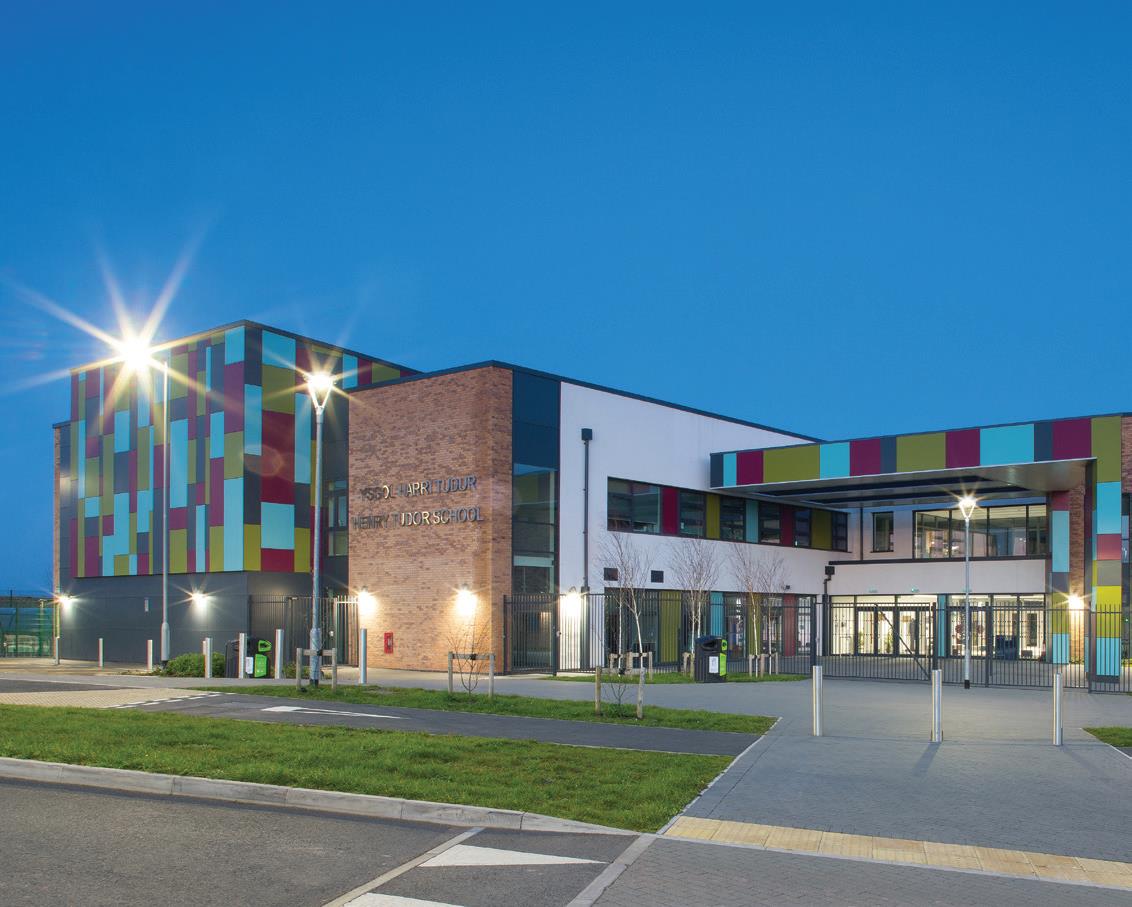
School says religious item worn by pupil is secured, symbolic and non-functional
YSGOL HENRY TUDOR has moved to reassure parents after confirming that a pupil is wearing a ceremonial kirpan as part of their Sikh faith.
The development comes after around a dozen parents with children at the school contacted The Herald expressing concern about the situation. The Herald has contacted the local authority for comment.
In a letter sent to parents on Wednesday (Mar 25), the school explained that a Sikh family had recently joined the school community, and that the pupil is an Amritdhari Sikh — meaning they are required to wear certain articles of faith.
One of these is the kirpan, a small ceremonial blade which holds deep religious significance within Sikhism.
The school stressed that in this case the kirpan is “small, sheathed and secured,” and cannot be unsheathed. It added that the item is worn purely as a symbol of faith and “not as a functional item.”

Reassurance over safety
The letter made clear that appropriate steps have been taken to ensure the situation is managed safely and in line with safeguarding responsibilities and UK law.
School leaders said they remain committed to respecting the religious beliefs of all pupils while maintaining a safe environment, adding that the matter will continue to be monitored “sensitively and appropriately.”
In some settings, schools may agree adjustments to how a kirpan is worn — such as ensuring it is very small, secured, or sealed — so that religious requirements are respected while maintaining safety.
Understanding the kirpan
The kirpan is one of the five articles of faith — known as the Five Ks — observed by initiated Sikhs. It symbolises a duty to stand up against injustice and to protect others.

Under UK law, Sikhs are permitted to carry a kirpan for religious reasons. In schools, these are typically very small, kept in a sheath, and often secured so they cannot be drawn.
Across the UK, many schools have policies in place to accommodate the wearing of the kirpan while ensuring appropriate safeguards are followed.
Promoting inclusion
The school’s letter reflects a wider approach across education settings in Wales and the UK, where inclusivity and respect for different faiths are balanced with clear safety measures.

No incidents relating to the matter have been reported.
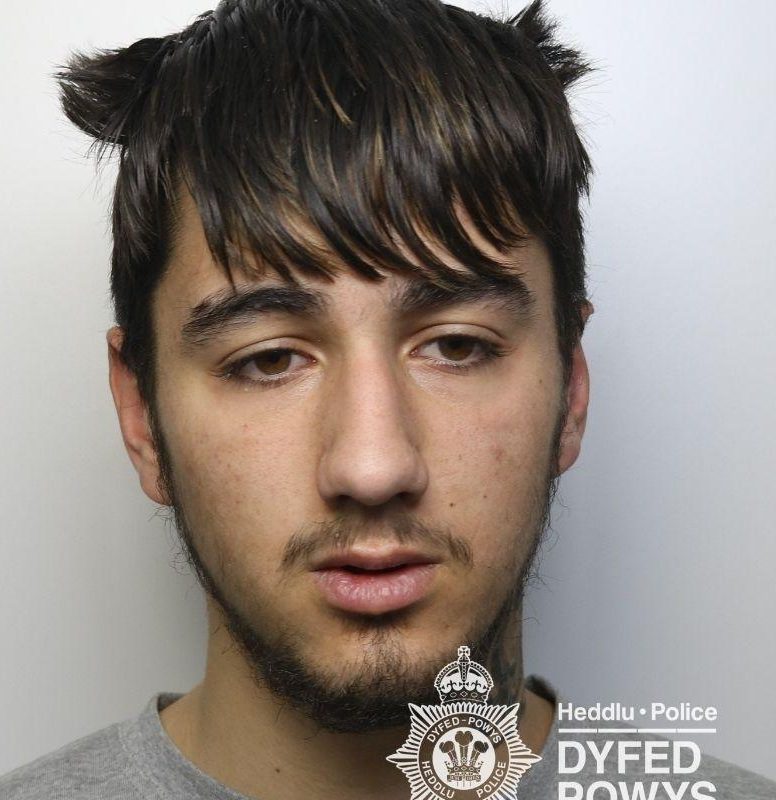
Fire set in shared home left sleeping residents at risk and caused £130,000 damage
A TEENAGER who started a fire in his bedroom while other residents slept has been jailed for four years.
Jack Gornall, aged 18, of no fixed abode, was sentenced at Swansea Crown Court after admitting a series of offences including arson, threats with a knife, assault, and sending malicious communications.
The court heard that in the early hours of Sunday (Nov 17), Gornall deliberately started a fire inside his room at a shared property on Mansel Street, Carmarthen.
He then barricaded the door before climbing out of a first-floor window, leaving others inside the building at risk.
One resident was asleep at the time and had to be rescued by police. Two officers were later treated for smoke inhalation after tackling the incident before firefighters brought the blaze under control.

The fire caused extensive damage to the property, estimated at around £130,000.
Prosecutor Dean Pulling told the court that Gornall had earlier gone out to buy cigarettes and a lighter, and had carried out internet searches relating to accelerants in the days leading up to the fire.
The court also heard details of other offences.
In October 2024, Gornall repeatedly contacted his sister after being blocked, including calling her child’s phone. When she answered, he became abusive and threatened to report her to social services.
On another occasion in January 2025, he approached a car in Llandysul and produced a kitchen knife, waving it at occupants through an open window. The driver sped away and alerted police.
He also admitted stealing alcohol from a supermarket in Carmarthen, during which he became aggressive and assaulted a member of staff.
Gornall pleaded guilty to all offences at an early stage.

Judge Catherine Richards sentenced him to four years’ detention in a Young Offender Institution.
Climate
Port Talbot confirmed as ‘cornerstone’ of wind industry — questions remain for Milford Haven
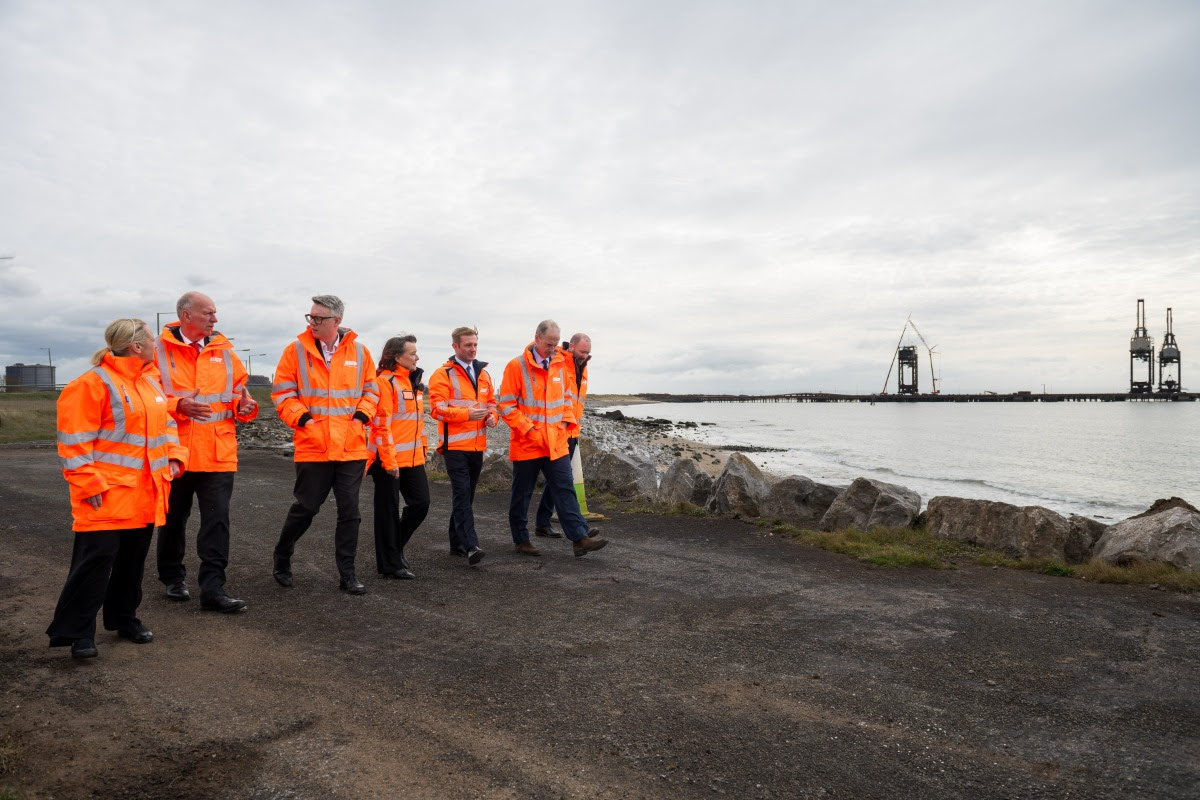
New government-backed deal with ABP reinforces Port Talbot’s central role in Celtic Sea wind plans
PORT TALBOT has been firmly established as the “cornerstone” of the UK’s floating offshore wind ambitions in the Celtic Sea, following a major agreement between the UK Government and Associated British Ports.
The deal confirms government support for the development of large-scale port infrastructure at Port Talbot, enabling manufacturing, assembly and deployment of floating wind turbines for gigawatt-scale projects.
The announcement strengthens Port Talbot’s position as the primary industrial hub for the emerging sector.
Henrik L. Pedersen, Chief Executive of Associated British Ports, said the development would “establish the port as a cornerstone of the Celtic Sea floating offshore wind industry.”
Clear role for Port Talbot
The agreement, subject to final regulatory approval, will support the delivery of major offshore wind projects awarded through the latest Celtic Sea leasing round.
Government ministers visiting the site described the development as a key step in building the UK’s clean energy future.
Energy Secretary Ed Miliband said the project would help Wales “storm ahead in floating offshore wind,” supporting thousands of jobs and driving economic growth.
Secretary of State for Wales Jo Stevens added that the investment would “further cement Port Talbot as a hub of the industries of the future.”
Milford Haven still waiting for detail
The latest announcement comes just days after questions were raised about Milford Haven’s role within the wider Celtic Freeport.
While Port Talbot’s position as a manufacturing and assembly hub is now clearly defined, there has still been no detailed breakdown of what activity will be based in Pembrokeshire.
Industry figures continue to point to Milford Haven’s strengths in operations, maintenance, logistics and servicing of offshore wind projects.
However, no formal commitments have yet been made.
Industry backing grows
Developers involved in Celtic Sea wind projects welcomed the progress at Port Talbot, describing it as essential infrastructure for delivering future schemes.
Ocean Winds said strengthening port infrastructure was “essential” to ensuring regional ports can support the rollout of offshore wind.
The Crown Estate also described the move as a key step towards unlocking the economic potential of the Celtic Sea, which could create thousands of jobs across Wales and beyond.
Growing pressure for answers
With Port Talbot now firmly positioned at the centre of construction and deployment, attention is likely to turn to how other ports—including Milford Haven—fit into the wider strategy.
For Pembrokeshire, the question remains unchanged:
As billions of pounds flow into the Celtic Sea over the coming decade, will Milford Haven secure a defined share of that investment—or continue to wait for clarity?
Pictured above:
From left to right: Cabinet Secretary for Economy, Energy and Planning, Rebecca Evans; David Rees MS for Aberavon; Minister for Energy Consumers, Martin McCluskey; Secretary of State Jo Stevens; Ashley Curnow, Divisional Port Manager (ABP); Julian Walker, Chief Commercial Officer and Regional Director (ABP), Mike Goddard, Head of Programme, Future Port Talbot (ABP)



Crime5 hours ago
Teen jailed after starting fire while others slept
Fire set in shared home left sleeping residents at risk and caused £130,000 damage A TEENAGER who started a fire...

Health10 hours ago
GP crisis driving NHS pressure in Wales, Senedd report warns
Falling GP numbers and funding gaps blamed for worsening hospital delays THE NHS crisis highlighted earlier this week is being...

News1 day ago
Reform reveals west Wales candidates for Senedd battle
Monkton councillor tops Pembrokeshire list as party confirms Carmarthenshire names and includes Haverfordwest councillor in unwinnable Swansea spot REFORM UK...

Health1 day ago
Clash over Withybush Hospital services as Paul Davies challenges First Minister
A HEATED exchange in the Senedd has laid bare growing tensions over the future of hospital services in west Wales....

Crime2 days ago
Police stop car in Pennar as three arrested in drugs investigation
Suspected drug driver report leads to major police response and multiple arrests DRAMATIC scenes were reported in Pennar on Monday...

Business2 days ago
New pilot vessel Llanion arrives at Milford Haven
State-of-the-art 22-metre craft marks reset after £3.6m pilot boat controversy THE PORT OF MILFORD HAVEN has taken delivery of a...


Community3 days ago
Sycamore Gap legacy tree to take root in Pembrokeshire landscapes
A SAPLING grown from the famous Sycamore Gap tree is set to become part of Wales’ protected landscapes — with...

Business3 days ago
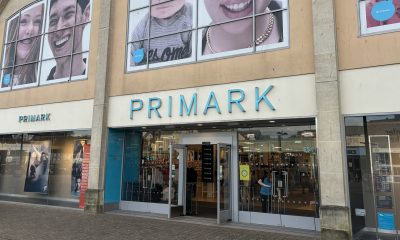
Could Primark be coming to Haverfordwest? Major retailer in talks for former Wilko site
Council confirms advanced discussions as speculation grows over high street boost HAVERFORDWEST could soon see a major high street revival,...


Business3 days ago
Rail investment ‘could unlock 40,000 jobs and £11bn for Wales’ says new report
RAILWAY stations across Wales could help unlock around 40,000 jobs and more than £11 billion for the economy by 2036,...


Local Government3 days ago
Milford Haven set for £200m investment with schools, leisure centre and rail upgrade
Council outlines major plans for town with backing from Welsh Government MILFORD HAVEN is set for a major transformation with...
-
 Crime6 days ago
Pembroke man remanded in custody over knife threat, assault and damage allegations
-

 Crime6 days ago
Broad Haven man remanded in custody over sexual harm prevention order breach
-
 Crime6 days ago
Publican jailed for six years for supplying cocaine and cannabis
-
 Business7 days ago
Plans to rebuild arson hit building at farm with one of largest sheep flocks in Wales
-
Business3 days ago
Could Primark be coming to Haverfordwest? Major retailer in talks for former Wilko site
-

 News6 days ago
Pembrokeshire’s Muslims gather to celebrate Eid al-Fitr as Ramadan ends
-

 Crime6 days ago
Carmarthen man denies coercive control allegations
-
 Business7 days ago
Rosemarket Dawn Till Dusk golf club 18-hole plans lodged