


Politics
HS2 funding – will Wales get a share?


Carwyn Jones: Wales will receive HS2 consequentials
PLAID CYMRU has accused the Welsh Government of ‘doing nothing’ for three years to secure a share of funding for Wales from the HS2 rail project. However, the Welsh Government has claimed that this is ‘nonsense’ and that Wales will receive hundreds of millions of pounds as a direct result of HS2 spending. Plaid Cymru’s Westminster Treasury spokesman Jonathan Edwards wrote to the first ministers of Wales, Scotland and Northern Ireland asking them to consider opposing the project if the devolved nations did not receive financial compensation. In his letter of response on June 2, First Minister Carwyn Jones said the Welsh Government had “made representations to the UK Treasury previously about High Speed Rail funding.”
The First Minister concluded that his government would ‘continue to press Wales’ case on this issue of High Speed Rail… aiming to ensure that all parts of the UK receive full consequentials arising from decisions about High Speed Rail.” However, Mr Edwards claims that, following a series of Parliamentary questions and an FoI request, it has been revealed that the Welsh Government has made no formal representations to any UK Government Minister or Department on the matter in the last three years.
In response to one question, asked in Parliament in October, Robert Goodwill MP said that ‘Ministers have not received representations from the Welsh Government regarding HS2 and Barnett consequentials.’ Following a written question to the Chancellor of the Exchequer in which Mr Edwards asked what representations had been received from the Welsh Government concerning Barnett consequential from HS2, he received the reply that ‘Treasury Ministers are in regular contact with Welsh Government Ministers on a variety of matters.’
Jonathan Edwards said: “In the Assembly chamber, on television interviews and in newspaper articles Labour elected members and spokespeople from Wales are misleading the public on their support for our nation getting a fair share of this enormous rail investment project in England.
“It’s bad enough that Labour MPs from Wales supported the project despite being fully aware that it will suck hundreds of millions of pounds out of the Welsh economy each and every year. Now, however, the First Minister and his party have been exposed as having done nothing to back up their rhetoric. Indeed, I would say that the First Minister, including in his letter to me, has tried to pull the wool over our eyes.
“With every week that passes more and more people recognise that there will be a huge injustice unless Wales has full fairness from HS2. It was growing public pressure that saw the Labour Party u-turn in the first place. But just like so many other occasions, the Welsh Government will play to the gallery but never follow through with actions. “The reality is that the Labour party supports HS2 and the Welsh branch office will always put the interests of the Labour party before the interests of Wales.”
In Parliament this week the Secretary of State for Transport said Wales would benefit from the high speed rail project, but avoided answering the direct question from Mr Edwards who wanted to know why Wales was being unfairly treated in relation to HS2 expenditure. Mr Edwards asked the Transport Secretary: “Given that, unlike Network Rail, HS2 Ltd is not devolved to any part of the United Kingdom, will the Secretary of State explain why the statement of funding policy for the devolved institutions, which was published along with last week’s comprehensive spending review, provides for a 100% Barnett consequential from HS2 to Scotland and Northern Ireland, and one of 0% to Wales?”
The Transport Secretary said “I believe that Wales will benefit from what I have announced today, because it will be very important to the north Wales economy.” Speaking after his question, Mr Edwards said: “The way HS2 has been handled stinks to high heaven. An independent report says the Welsh economy will lose over £200million a year yet Labour and Tory politicians are blissfully content to see a generation’s worth of transport investment swallowed up, with our nation paying for transport improvements in English cities, and then have the audacity to tell us we should be grateful.
“As has been shown, the First Minister, his government and Labour party in Wales have done nothing more to secure funds from HS2 than issue a press release over three years ago. “The people of Wales deserve a government that will always act in the Welsh national interest as opposed to the interests of their London bosses.”
However, a spokesman for First Minister Carwyn Jones rejected these claims: “Plaid Cymru have fallen asleep on this issue – they are way behind the curve,” he claimed. “Their propensity for getting things wrong on funding just shows they can’t be trusted with the Welsh economy. “These particular claims are, again, nonsense. “Welsh Ministers have made representations to the UK Government to ensure Wales gets its fair share of additional funding as a result of HS2.
“As a result, Wales will receive a Barnett consequential of more than £755m over the next five years because of increased UK Department for Transport budgets, a consequence of the investment being made in HS2. “However, we have long been of the view that the Barnett Formula itself does Wales no favours and have repeatedly called for fair funding. “We welcome the UK Government’s commitment to a ‘funding floor’ to deliver fair funding for Wales as part of the Spending Review, and await the details.”

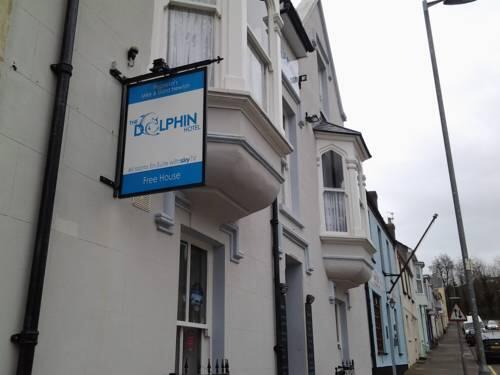
A PEMBROKE DOCK restaurant owner has said she is “devastated” after being forced to close her business on Christmas Day following a projected business rates increase of more than £23,000.
Randalls Restaurant, which operates from The Dolphin Hotel in Pembroke Dock, has been run by Natalie Newton and her family since 1999. Ms Newton took over the business in 2018 after her parents retired, overseeing a major transformation from a traditional pub and bed and breakfast into a hotel and restaurant.

For the past seven years, she and her fiancée, chef Ben Randall, have worked to build the restaurant’s reputation, offering breakfasts, lunches and evening meals using locally sourced produce where possible, as well as hosting special events including Christmas parties, buffets, afternoon teas and themed dining nights.
However, Ms Newton said she was left with no option but to close the restaurant after discovering that its business rates are expected to rise from around £10,000 to £33,000 from next year.
She said: “It’s a great shame. My father is absolutely devastated – this was his legacy. I took it over and built a really successful restaurant, and now it feels like it’s been taken away.”

Ms Newton said she checked her projected rates bill using the Government’s online calculator and was shocked to see that it had more than trebled. With quieter trading months expected early in the year, she said the increase was simply not sustainable.
“January, February and March are quieter months,” she said. “From April I’d need to find an extra £2,750 every month. Even if I managed it, I’d be working for nothing, and I’m worried I wouldn’t be able to pay my bills and would end up in the red.”
She added: “I’ve made the decision to close straight after Christmas Day. It’s drastic, but I have to keep my head above water and protect everything my parents worked for.”
Ms Newton said the decision had not only affected her family but also the restaurant’s eleven members of staff.

“I’ve invested everything back into this business,” she said. “Every penny the restaurant has made has gone straight back into it. I’ve worked every day, nights and weekends, and I haven’t had Christmas at home for seven years.
“For the last six months I’d look around the restaurant when it was busy and think how lucky we were. People were happy, good food was going out. Now it feels like it’s all been snatched away.”
The Herald has reported extensively on growing concern among Pembrokeshire businesses over sharp increases in business rates following updated valuations, with several town centre traders warning that rising fixed costs are pushing otherwise viable businesses to the brink.

Ms Newton said she intends to focus on running the hotel after Christmas but will miss the restaurant and its customers.
“I’m going to miss everyone,” she said. “I’ve loved building relationships with customers over the years. I just want to thank everyone who believed in Ben and me and supported us.”
Business rates in Wales are due to be updated from April 1, 2026, to reflect current property values. The Welsh Government has said that while many businesses will see their bills fall, others will face increases.
It has announced that any business facing an increase of more than £300 will have the rise phased in over two years rather than being applied in full immediately.
Cabinet Secretary for Finance and Welsh Language Mark Drakeford said previously: “We know businesses have faced significant economic challenges in recent years. This support package will help them manage the transition to updated rates bills while we deliver on our commitment to a fairer rates system.”


A CONSULTATION on proposed changes for a north Pembrokeshire school, which attracted a near-400-strong petition in opposition to the council, has been launched.
At its May meeting, Pembrokeshire County Council considered a report of the School Modernisation Working Group which outlined the findings of a review of education provision in the Preseli area.
“In particular, the review considered the extent of surplus school places in the area, set against a significant decline in the pupil population,” the council in its consultation on proposals for discontinuation of Cilgerran Church in Wales Voluntary Controlled School has said.
A later July meeting of the council, following May’s agreed consultation with St David’s Diocese, backed a general consultation to discontinue Cilgerran Church in Wales Voluntary Controlled School, and to establish it as a 3-11 community school.
The consultation was launched on December 16 and runs to January 30.
Hundreds have opposed the proposed changes, with a petition, on the council’s own website opposing the changes recently closed after gaining 391 signatures.
Any petition of between 100 and 499 signatures triggers a debate at one of the council’s Overview and Scrutiny Committees, and any over 500 a debate at full council, meaning this petition will be heard by committee members at a later date.
The proposals for Cilgerran are part of a wide range of potential education changes in the county.
Two petitions, opposing the potential closures of Manorbier and Ysgol Clydau schools, were recently heard at full council and a further petition opposing the potential closure of Stepaside School has recently been launched.
The Cilgerran e-petition, created by Louise Williams, raised concerns including the school could become part of a federation, a loss of permanent head teacher on site, a shared head teacher would have to oversee several schools, loss of funding control and the ability to maintain the school’s current healthy and stable funding, and a loss of commitment to the church, in turn could impact on the school’s and pupils values, beliefs and cultural beliefs.
It said: “Ysgol Cilgerran VC school has strong links with the Church community in Cilgerran and we believe this will have a negative impact on the children who attend the school, the community of Cilgerran and the links between the two.
“We are proud of our school ethos and values which are strengthened by our links with the church. The school has close and strong relationships with our Church in Wales federation governors one of which is also our safeguarding governor.

“Our Church Federation governors work closely with the school and are regular visitors to the school and the children. They provide vital support and guidance to the school and have a positive impact on the Children’s education. We believe these links will be weakened by this proposal to remove our VC status and we believe this is an un-necessary action.”


“HARROWING” levels of distress have become the norm for unpaid carers in Wales, a committee has heard, with charities warning of a support system “set up to fail”.
Kate Cubbage, director of Carers Trust Wales, told the Senedd’s health scrutiny committee: “There are too many carers who are reaching crisis point without any support.”
Ms Cubbage explained that most councils are supporting fewer than 500 carers, warning: “There are really, really high levels of unmet need within our communities.”
She told Senedd Members that staff are receiving trauma training to support their mental health due to the levels of distress they are seeing among carers.
Ms Cubbage pointed to a University of Birmingham study which found an increased suicide risk among unpaid carers akin to that of veterans who have seen active service.
“One in eight carers has made a plan to end their own life,” she said, calling for carers to be specifically considered in the Welsh Government’s suicide prevention strategy.
“One in ten has made an attempt… at a time when the average local authority has support plans for less than 0.5% of the caring population.”
Warning of deepening poverty in Wales, the witness expressed concerns about a 31% poverty rate among carers – “far higher” than the 22% in the wider population.
Ms Cubbage added that young carers miss more than six full school weeks each year, compared with pupils without caring responsibilities who miss nearer two weeks.

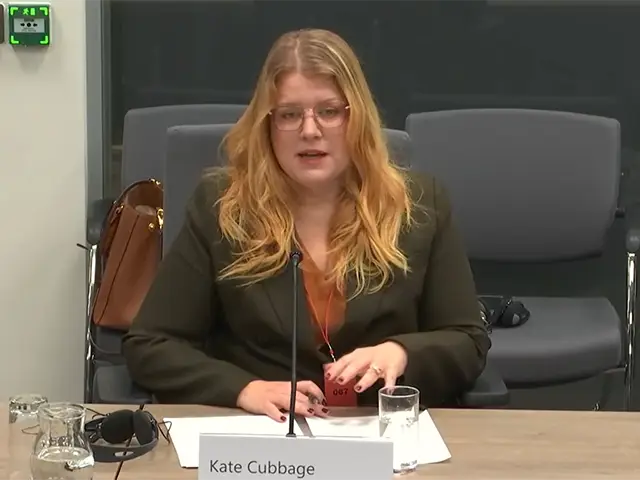
She told the health committee: “It’s no wonder young carers are achieving less at school. They are less likely to go on into further and higher education.
“And if they do make it to university, they’re less likely than their peers to actually graduate.”
Reflecting on a personal note, Ms Cubbage, a parent carer, said her autistic son has accessed services from ophthalmology to audiology over the past 16 years.

“I have never once been signposted to anything that would suggest that I am an unpaid carer or that I can access support… That kind of lived experience is really important.”
Rob Simkins, head of policy at Carers Wales, added: “Things are getting worse: anecdotally, we see that through our services but also that’s what the research tells us.”
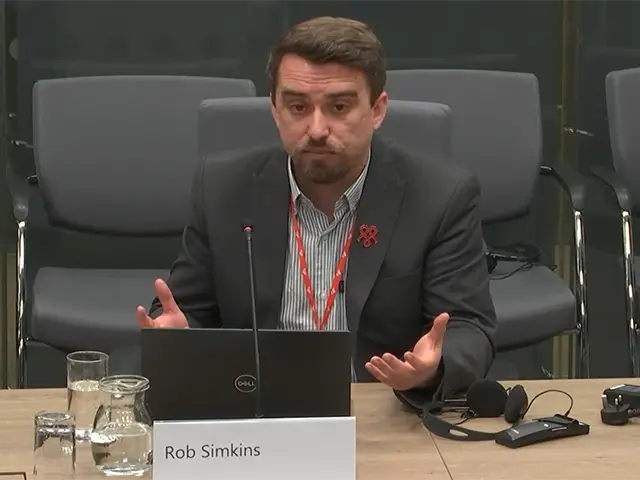
He pointed to a Carers Wales survey which has shown a “shocking” 53% increase in the number of carers cutting back on food and heating.
Giving evidence on Wednesday December 17, Mr Simkins warned of a 39% increase in the number of carers reporting “bad” or “very bad” mental health since 2023.
“All the evidence that we’re collecting shows that this is going in one direction,” he told the committee, adding: “And that’s the wrong direction. It’s a bleak context.”
Mr Simkins said census data shows about 310,000 unpaid carers in Wales but research indicates the number could be nearer 500,000 – roughly 15% of the population.
He cautioned that charities across the country, including Carers Wales, are seeing real-terms cuts in funding from the Welsh Government every single year.
Mr Simkins warned of a “shocking” lack of data and a system “set up to fail” more than a decade on from the then-Assembly passing the Social Services and Wellbeing (Wales) Act.
Warning some councils cannot quantify how many carers’ assessments they could carry out over 12 months, he asked: “How on earth are you meant to collect data from unpaid carers and plan services if you can’t even figure out how many you can assess?”
Asked about carers’ assessments, he highlighted a lack of capacity within councils as he warned a “pitifully low number of carers go on to get any support at all”.
Greg Thomas, chief executive of Neath Port Talbot Carers Centre, told Senedd Members the voluntary sector is being increasingly asked to plug gaps without necessary funding.
He warned the jam is having to be spread “ever-more thinly”, creating a tension between reaching as many people as possible and not wanting to compromise quality of support.
“We’re not quite saying ‘no’ to people,” he said. “But we’re having to say a qualified ‘yes’ about what we’re able to offer… We’re massively overstretched, massively oversubscribed.”
Mr Thomas told the committee the carers’ centre has the required reach and expertise, concluding: “It’s almost give us the tools and we can do the job.”
If you have been affected by anything in this story, the Samaritans can be contacted for free, 24/7, on 116 123, or by email at [email protected].



Cowboy builders jailed after years of bullying and fraud against homeowners
A FATHER and son who preyed on homeowners across south and west Wales — many of them elderly or in...


Crowds line streets as tractor run hailed a festive success
CROWDS lined streets and pavements across Pembrokeshire on Saturday evening (Dec 20) as Clarbeston Road AFC’s illuminated Christmas tractor run...


Ex-Gwent police officer now living in Pembrokeshire cleared of corruption
A FORMER police officer from Pembrokeshire has been found not guilty of corruption following a trial at Cardiff Crown Court....

Pembroke Dock restaurant to close on Christmas Day after £23,000 rates rise
A PEMBROKE DOCK restaurant owner has said she is “devastated” after being forced to close her business on Christmas Day...

Milford Haven man denies child sex charges as trial date set
A MAN originally from Milford Haven has pleaded not guilty to a series of sexual offences involving a child after...


Bail revoked for teenager charged with rape following Sands Nightclub allegation
A TEENAGER charged with rape following an alleged incident at a Saundersfoot nightclub has been remanded into custody after bail...
Former police officer accused of making sexual remarks to women while on duty
Court hears allegations of inappropriate behaviour during official police visits A FORMER police officer has appeared in court accused of...


Community gathers to remember Corrina Baker
Lanterns and balloons released in emotional acts of remembrance FAMILY, friends and members of the local community came together to...


Teenager charged following rape allegation at Saundersfoot nightclub
Incident reported at Sands Nightclub in early hours of Sunday DYFED-POWYS POLICE is investigating an allegation of rape following an...


Milford Haven man jailed after drunken attack on partner and police officers
A MILFORD HAVEN man who launched a violent drunken assault on his partner before attacking two police officers has been...
-
Crime4 days ago
Milford Haven man jailed after drunken attack on partner and police officers
-

 News6 days ago
Dyfed-Powys Police launch major investigation after triple fatal crash
-
Crime3 days ago
Teenager charged following rape allegation at Saundersfoot nightclub
-
Crime4 days ago
Man charged with months of coercive control and assaults
-
 Crime5 days ago
Man sent to Crown Court over historic indecent assault allegations
-

 Crime5 days ago
Milford Haven man admits multiple offences after A477 incident
-

 Crime7 days ago
Trefin dog case ends in forfeiture order after protection notice breach
-

 Crime4 days ago
Woman ‘terrified in own home’ after ex breaches court order