


News
Eglwyswrw: The Pembrokeshire village where it rained for 75 days

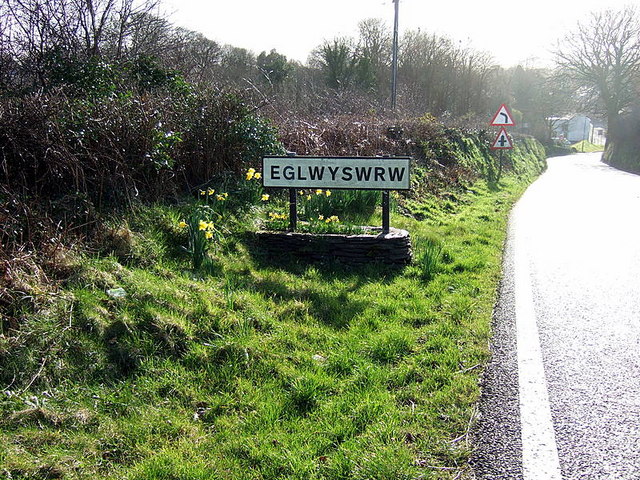
 A SMALL village in Pembrokeshire is said to have suffered the longest spell of consecutive days of rain in Britain for over 92 years.
The 700 residence living in Eglwyswrw have experienced 75 consecutive days of rainfall which is showing now signs of easing up.
Waterlogged residents say the epic rainfall this winter has been of “biblical proportions”.
Eglwyswrw is still short of the British record set between August 12 and November 8 1923 when Eallabus, Argyllshire, Scotland, had 89 successive days of rain fall. A met Office meteorologist said: “The figures for Whitechurch are almost record-breaking and they can’t be sniffed at. But that sequence could be broken next week because we are expecting some drier days.
Howard Lewis, 73, who runs Dyfedrainfall Shire Horse Farm in the village, said: “It’s making people miserable, all we are getting is grey skies and rain.”

“We’ve had some bad years but I can’t remember it raining every day for so long.”
“Every time you go out the front door it’s raining – it’s raining now.”
Locals said a rainbow could be seen from the village on Friday as a brief spell of sunshine gave a slight break from the rain, but still failed to leave the residents with a smile as the downpour continued through Friday night into Saturday.
Farmer and county councillor John Davies has brought his sheep in from the hillsides because they have developed wool rot because of the ceaseless rain.

John aged 52 said: “It’s poured down for almost 80 days and nights so by that reckoning we would need two arks.
“It is grinding people down both physically and psychologically.
“Our sheep are pretty hardy animals but even they are looking down in the mouth. Their fleeces are not getting the chance to dry out because of the endless rain.

 “It’s not stopped since October – I’ve never seen the ground as saturated as it is now.”
Farmers have been forced to let their crops rot in the ground because fields are too waterlogged to save them, the only fortunate thing residents can be thankful for is that their village lies 423-feet above sea level and is never subject to overflow floods.
One local business is potentially profiting from the record rainfall by supplying water tanks to villagers, they claim homes in Eglwyswrw can use rainwater to meet more than 50% of their household requirements.
While the bad weather persists villagers don’t even have anywhere to drown their sorrows as both local pubs – The Serjeant’s Inn and The Butchers have both closed.
Friday recorded almost 10mm of rain fall in just 24 hours, with more overnight and stronger downpours on Saturday.
The Pembrokeshire coast line is the first point that rain bearing clouds often meet land which is a large reason why the county is often subject to heavy rainfall. The figures produced by the Whitechurch weather station show that this weather is comparable with the most extreme rainfall we’ve had so far this winter.



TRIBUTES have been paid to Johnny Morris, a much-loved Fishguard photographer who has died at the age of 91.
For decades, Johnny was a familiar figure across north Pembrokeshire, capturing community life through his camera lens for the local press, as well as for countless local groups, charities and organisations.
He was widely regarded as the go-to photographer for Fishguard and the surrounding area, with an extensive archive of images documenting local people, events and history over many years.
As well as his photography, Johnny was known for his love of gardening, his knowledge of local history and his gift for telling stories. Friends said he was often happiest in his garden, where he won several local trophies for his growing skills.
Johnny died peacefully on Sunday, March 22, at Park House Court in Tenby. He was predeceased by his wife Irene. He is survived by his daughter Joy, son-in-law Dilwyn, and his brother Derek.

Former Western Telegraph reporter Anwen Baldwin paid tribute, describing him as a lovely man and a great photographer.
She said: “He knew so much about the local area, its people, events and history.
“He had a great sense of humour and I loved hearing his stories about Fishguard past and present, although not all of them were for publication.
“He had a huge archive of pictures documenting the area over the years, and if I ever needed an image for a story, he would have it, no matter how obscure the request.

“He took me under his wing when I first started as the Western Telegraph’s north Pembrokeshire reporter and became a good friend who I always looked forward to catching up with.
“He will be greatly missed by the local community and the many reporters and editors who were always pleased to see a picture from Johnny Morris on their pages.”

Fishguard RNLI said Johnny had played an important role in recording the life of the station over many years. In a mark of respect, the flag at the lifeboat station has been lowered to half-mast.

A spokesperson said: “It is with great sadness that we learn of the passing of local photographer and supporter of Fishguard RNLI, Johnny Morris.
“As the station’s photographer Johnny documented a vast array of station life, from crew photos and station fundraising events, to the arrival of our current D-Class inshore lifeboat, as well as countless other community events.
“As a mark of respect, the flag over the station will continue to be flown at half-mast.”
Fishguard and District Round Table also paid tribute, describing Johnny as a local photography legend and a strong supporter of community events and charities.
The group said he had always been on hand to record important milestones in the town.
Long-standing member Gwil Evans added: “He had a brilliant knack of being able to make even the worst of us look like a million bucks.”
Johnny’s funeral will take place on Friday, April 10, at 11:30am at the Chapel of Rest, Feidr Castell, Fishguard, followed by interment at Hermon Cemetery.
Family flowers only are requested. Donations in lieu of flowers may be made payable to Fishguard Lifeboat, care of Paul Jenkins & Sons Funeral Directors, Feidr Castell, Fishguard.

Chairman says issue has been dealt with, but winding-up notice is still listed ahead of High Court hearing
HAVERFORDWEST County AFC is facing serious questions after an HM Revenue and Customs winding-up petition against the company behind the club remained live on The London Gazette website despite the chairman insisting the matter has already been dealt with.
The petition against Haverfordwest County A.F.C. Ltd was presented on February 23 and is listed to be heard at the High Court in London on Wednesday, April 15 at 10:30am. The public notice states that HMRC is seeking to wind up the company, registered at Bridge Meadow Stadium, Bridge Meadow Lane, Haverfordwest, claiming to be a creditor.

Any person intending to support or oppose the petition must give notice by 4:00pm on April 14. At the time of publication, the notice remained publicly visible and there was nothing on the Gazette entry to show that it had been withdrawn, dismissed or otherwise disposed of.
After being contacted by The Herald, chairman Rob Edwards said the case was “a non-story” and claimed it related to “a VAT offset against PAYE that wasn’t recorded”. He said the issue had been rectified “some time ago”, that the club had no debt to HMRC, and that HMRC had already provided a petition to withdraw to the court.
However, HMRC did not confirm that when approached by The Herald. Instead, a spokesperson gave only a general statement, saying: “We take a supportive approach to dealing with customers who have tax debts and only file winding-up petitions once we’ve exhausted all other options, in order to protect taxpayers’ money.”
That leaves an obvious gap between the chairman’s account and the public record. If Edwards is right, the matter may already be in the process of being withdrawn. But until the court or Gazette record is updated, the petition remains live in public and continues to list a High Court hearing next week.
Even if the matter is ultimately withdrawn, the fact it progressed to the stage of a published HMRC winding-up petition is likely to raise concern among supporters, sponsors and creditors. A petition of this kind is a serious insolvency step, not a routine administrative query. If it were to proceed and succeed, the company could face compulsory liquidation.
The issue is especially striking because the club has recently spoken publicly about growth, investment and longer-term ambition. In January, Haverfordwest said it was in the latter stages of an exclusivity agreement relating to significant investment from a US-based fund. Earlier statements had also referred to outside backing, ambitions to move towards full-time football, and a wider business vision around the club.
Those statements painted a picture of momentum and expansion. The emergence of a live HMRC petition, whatever the eventual explanation, is therefore bound to prompt scrutiny of the club’s financial management and internal controls.

Questions are also likely to be asked about Rob Edwards’ wider business interests beyond west Wales. Recent coverage has linked him and Morley Sports Management to ventures in the United States, underlining the scale of the broader commercial ambition surrounding Haverfordwest’s rise.
For supporters, sponsors, staff and creditors, the immediate question is whether the matter will be formally withdrawn or whether the public court record will remain unchanged until the hearing date. Until that becomes clear, one of Welsh football’s most talked-about recent success stories is facing a deeply serious test off the pitch.

THE SYSTEM supporting children and young people with Additional Learning Needs in Wales is facing serious pressures that could threaten its long-term sustainability, according to a new report from Audit Wales.
Published on Tuesday (Apr 7), the report examines support for children and young people with Additional Learning Needs, or ALN, in the context of changes introduced under the Additional Learning Needs and Education Tribunal (Wales) Act 2018.
Audit Wales said public bodies do not have a full understanding of demand, workforce capacity, skills, costs or outcomes, leaving them without the information needed for effective planning, budgeting and value-for-money assessments.
The report raises concerns about whether the current system is performing well enough to help learners achieve their full potential.
In 2024-25, 48,257 learners aged from nought to 25 were recorded as having ALN or Special Educational Needs. However, Audit Wales said that figure is incomplete and does not capture the full picture across all settings.

Available data shows the number of school learners recorded as having ALN or SEN fell by 58 per cent between 2018-19 and 2024-25, although the reasons for that drop are disputed. Over the same period, the number of school learners receiving statutory support through a statement of SEN, or now an Individual Development Plan, increased by 164 per cent.
The report says spending on supporting learners with ALN has also risen significantly, adding pressure to already stretched public budgets. While Audit Wales said it could not put an exact figure on total spending, identifiable annual costs are approaching £1 billion, with the true figure likely to be higher.
Councils’ budgeted expenditure on ALN or SEN rose by 34 per cent in real terms between 2018-19 and 2025-26.
Audit Wales said its conclusions were based on evidence showing that the system lacks good enough data to understand growing demand and complexity, while patchy workforce information makes it harder to assess staffing capacity and skills gaps. It also found that public bodies do not have a strong enough understanding of costs, raising concerns about financial sustainability.
The report adds that although the goals of the ALN system are clear, there is only limited evidence on whether it is delivering strong outcomes for learners, and that the system remains adversarial despite some signs of improvement.
Its recommendations are aimed mainly at the Welsh Government, particularly in its national leadership role, although Audit Wales said successful implementation would require action from a wide range of public bodies.
Auditor General Adrian Crompton said: “Children and young people with Additional Learning Needs include some of the most vulnerable people in society.
“There has been a significant amount of work involved in efforts to reform the system for the better over recent years. However, the system remains under strain and there is still a lot more that can be done to ensure it does as well as it can for our children and young people, both now and for future generations.”
The 2018 Act introduced a new system designed to create a more integrated, collaborative and person-centred approach to supporting learners with ALN. It extended statutory provision to learners aged nought to 25 and replaced the previous separate systems for under-16s with SEN and post-16 learners with learning difficulties or disabilities.
A major part of the reform was the introduction of Individual Development Plans, which replaced both non-statutory SEN support and statutory statements of SEN. Under the new system, every learner with ALN is entitled to an IDP.
Audit Wales stressed that the figure of 48,257 learners does not include all settings for learners aged nought to 25, including further education, meaning the overall scale of need may be higher than official data suggests.
For more information, contact Rhian Jones at Audit Wales on 02920 320 575 or by email at [email protected]
.



News52 minutes ago
Haverfordwest County AFC faces High Court winding-up threat from HMRC
Chairman says issue has been dealt with, but winding-up notice is still listed ahead of High Court hearing HAVERFORDWEST County...


Local Government1 hour ago
Food hygiene checks have not been carried out in parts of a Welsh county since 2019
FOOD hygiene checks have not been carried out in parts of a Welsh county since 2019 due an inspection backlog,...


Local Government2 hours ago
Bridge works on Neyland-Burton road to continue into late April
Council says safety repairs remain on programme but traffic lights will stay in place as major bridge scheme moves into...

Charity21 hours ago
Angle RNLI answers string of call-outs across the Milford Haven Waterway
Volunteer crew launched for searches, police incidents, a medical evacuation and a grounded yacht during a busy spell from mid-February...


Charity23 hours ago
St Davids RNLI launches on Easter Monday after drifting kayak spotted off Solva
Missing vessel recovered near shore after coastguard confirms it had been reported lost days earlier ST DAVIDS RNLI launched on...


News1 day ago
Diesel nears £2 a litre in Pembrokeshire as drivers scramble for cheaper fuel
Johnston forecourt hits 194.9p while wide price gaps and rush to fill up pile pressure on motorists across the county...


News2 days ago
St Davids Cathedral marked Easter Sunday with full day of worship
FROM dawn vigil to choral evensong, the cathedral welcomed worshippers for one of the most important days in the Christian...


Crime2 days ago
Neyland man spared immediate jail over aggravated vehicle taking
Defendant given a suspended prison sentence after magistrates heard the offence was serious enough to cross the custody threshold KRISTIAN...


Health3 days ago
Crumbling NHS faces £1bn repairs bill in Wales
Senedd election promises collide with the harsh reality of ageing hospitals, fire safety concerns and a maintenance crisis stretching across...


News3 days ago
Emergency services respond to incident in Haverfordwest town centre
EMERGENCY SERVICES were called to an incident in Haverfordwest town centre on Saturday morning (Apr 4), with police and ambulance...
-

 News4 days ago
Accommodation providers in Wales will be required to register under new law
-

 Business7 days ago
Fishguard to Wexford rail tunnel plan backed by Elon Musk firm
-

 Entertainment5 days ago
From Milford Haven to the world: The story of The Evolution Experience
-

 Entertainment5 days ago
BBC unveils major new Welsh dramas with Tenby set for prime-time spotlight
-

 Crime7 days ago
Driver trapped after crash while nearly four times over drink-drive limit
-
 Business7 days ago
Refusal over Pembrokeshire shepherd hut let goes to appeal
-

 Business5 days ago
Fire damaged Newgale Duke of Edinburgh Inn plans refused
-

 Crime7 days ago
Teen was left terrified after assault at holiday park, court hears