


Politics
Kinnock ‘should apologise’ for Powell comments

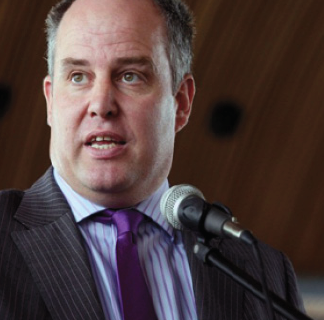

Andrew RT Davies: Criticised Lord Kinnock’s ‘arrogance towards dissenting views’
THE LEADER of the Welsh Conservatives has called upon the man who last led Labour in 1992 to apologise for ‘appalling’ comments about Eurosceptics.
Andrew RT Davies was referring to comments made by Neil Kinnock, in which he claimed that the former Labour leader likened the ‘isolationist’ approach adopted by some Conservatives to ‘Enoch Powell winning the argument from the grave.’
Mr Kinnock was talking to the BBC about his own change of heart on the European Union – having gone from supporting the ‘no’ campaign 40 years ago to serving as vice President of the European Commission. He added that this did not apply to all Conservatives ‘far from it, but there is an activist element, a zealous element and ideological element almost that’s pulled that party in the other direction.”
The reference was to Enoch Powell, the former Conservative Shadow Defence Secretary who was sacked by Ted Heath in 1968 following his infamous ‘rivers of blood’ speech.
Mr Davies said that there should be “a sensible, balanced and rational” debate over Britain’s membership of the European Union – at the appropriate time.

However, he warned that scaremongering on either side would not only undermine the campaign – it risked further overshadowing the Assembly elections in May.
Mr Davies, said: “Lord Kinnock should apologise for these appalling comments; it’s this kind of arrogance towards dissenting views which has placed our future in the EU in the balance.
“To equate moderate Euroscepticism with the offensive views of Enoch Powell is yet more evidence of the Labour Party’s scaremongering on the issue of our EU membership.
“It’s also incredibly rich for Labour politicians to bemoan what they see as extremist views, particularly when their Leader has expressed public sympathy for the IRA, and freely admits that he wants to hand the Falkland Islands to Argentina.

“Across Wales, the public’s appetite for a referendum on the EU is clear, but the debate should be sensible, balanced, and based on a rational case for leaving or staying.
“Not only do Lord Kinnock’s views unfairly stigmatise ordinary hardworking people, they undermine the very campaign he is supporting.
“Welsh Conservatives respect that a range of opinions on EU membership exist across our country.

“Recent polling showed 42 % in favour of leaving the EU, and 40 % in favour of remaining a member – so, at the right time, this is a discussion people want to have.
“Whilst, in the short-term, nothing should deflect from the upcoming Assembly election, I welcome that, thanks to the Conservative Party, people across Wales will now get to have that debate and make an informed, free choice.”
In the interview, Lord Kinnock said: “On the Right, of course, there are different factors at work. Basically, what we’ve got is an isolationist tendency which has become more substantial, and in a sense, Enoch Powell from his grave has been winning the argument.”
Last November, an aide to Conservative Shadow Economy Minister Will Graham, Daniel Mason, wrote: ‘Enoch Powell gave a speech “rivers of blood”… worth reading today… “Blood on the streets” the ranting of a mad racist or a visionary?’ shortly after the Paris attacks. He was given a written warning by Mr Graham.



CHILDREN are spending more time in digital worlds than the real one, the Senedd has heard, with excessive screen use shaping behaviour and health in ways society cannot ignore.
Labour’s John Griffiths expressed concerns about the impact of smartphones and online gaming on young people amid an “epidemic of screen use” in Wales.
Mr Griffiths titled the debate “Locked in, Bruh!” – “the state of playing a video game while oblivious to anything else” – on the suggestion of Tom, a teenager from Newport.
He raised research from the Centre for Social Justice, a thinktank, which estimates that up to 814,000 UK children aged three to five are already engaging with social media.
The Newport East Senedd Member told the chamber two-thirds of primary school pupils in Wales have their own smartphone by the age of 11.
Mr Griffiths said boys spend two hours more a day on online gaming while girls spend more time on social media and “reel scrolling” which has been linked to damaging self-esteem.
He told Senedd Members: “Boys are becoming more short-tempered and violent when exposed to violent video games and there is, rightly, much concern that children in more deprived families are particularly vulnerable.”
Mr Griffiths, who was first elected in 1999 and will stand down in 2026, said children aged five to 16 spend at least six hours a day looking at a screen. He added that for children, aged 11 to 14, that figure rises to nine hours a day.
He pointed to research showing more than 70% of young people in the UK do not undertake an hour of physical activity a day yet have at least six hours to spend looking at a screen.

He said: “Children are sat inside with a screen at the end of their nose and are not spending time outside enjoying their local communities or playing and interacting with friends.”
Mr Griffiths warned of increasing levels of obesity and rising numbers of young people reporting vision problems, with one in three children globally now short-sighted.
He told the Senedd: “As for the mental health and wider social impacts, anxiety and depression are increasingly linked to excessive screen use as is sleep disruption – with social media interfering with rest and emotional development.”

He raised a New Zealand study of more than 6,000 children that found a correlation between excessive screen time and below-average performance in literacy and numeracy. He warned children have increasingly shortened attention spans and an inability to concentrate.
Mr Griffiths shared the case of his constituent, Danielle, who said her son becomes more aggressive and snappier after a significant time gaming. Lucy, another constituent, explained how her children find the endless reels on social media addictive.
“Once they start scrolling, it’s hard to break that cycle,” the Senedd Member said. “And when she and her husband take the devices away, it often results in tantrums and tears.”
Mr Griffiths raised the example of countries such as Australia, France and Italy which have introduced strict age checks and bans on social media for under 16s.
He acknowledged such a policy would need to come from the UK Government because powers over internet services are not devolved. But he said Wales has the authority to introduce measures through education policy on, for example, smartphones in schools.
The Tories’ Sam Rowlands warned algorithms are having a “sickening” effect on teenagers who are eight times more likely to act on self-harm urges when exposed to such content. “TikTok users with eating disorders receive over 4,000% more toxic content,” he warned.
Responding to Wednesday’s (December 17) debate, Jane Hutt recognised how so-called doom scrolling can have a detrimental impact on young people.
Wales’ social justice secretary said: “We are living through profound change. Childhood today is shaped by technology in ways that were unimaginable a generation ago… For many young people, screens, smartphones and online gaming are part of everyday life.”


PLANS to make Wales the best place in the UK for British Sign Language (BSL) users moved a significant step closer to becoming law with the Senedd’s unanimous support.
If ultimately passed, the BSL bill – introduced by the Conservatives’ Mark Isherwood – would end Wales’ status as the only UK nation without specific sign language protections.
Leading a debate on Wednesday December 17, Mr Isherwood said the Senedd supporting the bill’s general principles was a “huge step ahead” for the “vital” legislation.
Mr Isherwood, a disability rights campaigner for decades, explained his backbench bill would introduce legal requirements to promote and facilitate the use of BSL in Wales.
He said the bill, if passed, would be the most progressive piece of BSL legislation anywhere in the UK, recognising BSL is a language in its own right, not a communication support need.
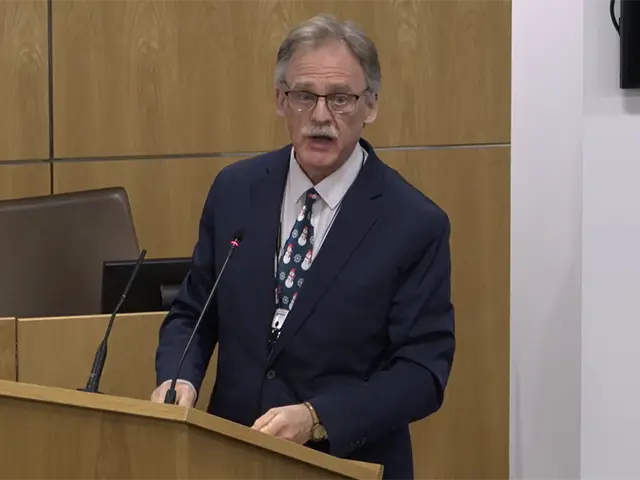
He highlighted that the bill would establish a BSL adviser role, the first statutory post of its kind in the UK, describing its importance as something that “cannot be overstated”.
Mr Isherwood, who chairs cross-party groups on disability and deaf issues, told the Senedd: “This isn’t just my bill. This is the bill of the BSL community. Let’s make this happen together and be proud of it together on behalf of deaf people across Wales.”
Jenny Rathbone, the Labour chair of the Senedd’s equality committee, was convinced of the “overdue” need for legislation to give more standing to British Sign Language.
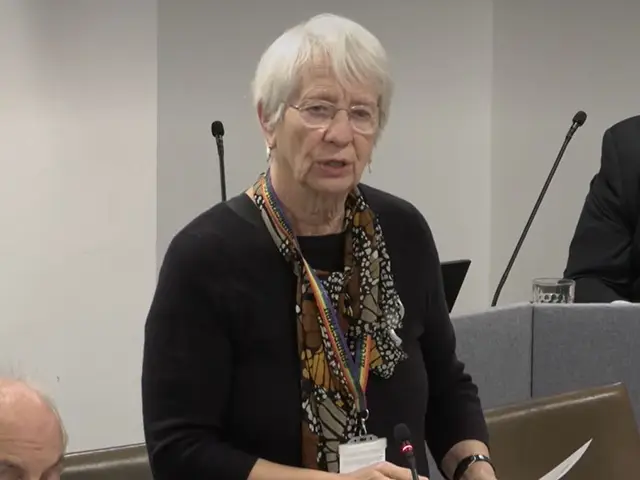
Ms Rathbone said the committee heard the biggest barrier “by some margin” was the availability of interpreters and the sustainability of the workforce.

She quoted a signer who told the committee: “The bill would make us feel respected and valued. But without proper funding, planning and deaf-led leadership, it won’t go far enough.”
Sioned Williams, Plaid Cymru’s shadow social justice secretary, told Senedd members: “Language is a part of our identity, our culture and our personal dignity.
“When someone cannot use their language, they are excluded from education, health care, employment and public life – and that is not acceptable in today’s Wales.”

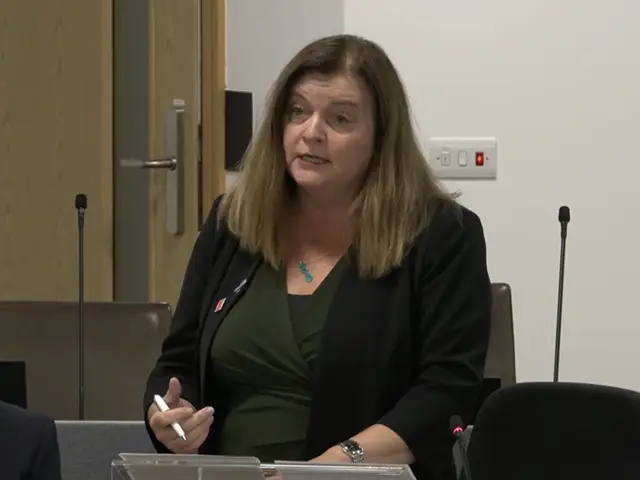
Ms Williams warned that if the legislation fails to deliver real change, the deaf community would be left “angry, disappointed and very, very disheartened”.
She expressed concern that the bill does not legally require the BSL adviser to be a deaf person, arguing it is “not appropriate, possible or efficient” for non-signers to lead the way.
Mr Isherwood defended the decision not to require that the adviser must be deaf, warning a successful legal challenge to a single such provision could cause the entire bill to fail.
Welsh Liberal Democrat leader Jane Dodds warned of an immediate workforce crisis, with only 54 registered sign language interpreters in Wales as of July.
With many now approaching the end of their working lives, she said: “We cannot – we must not – allow this bill to fail because we didn’t have the foresight to address this crisis now.”
Support for the bill stretched across the political spectrum, with Reform UK’s Laura Anne Jones similarly welcoming the “long-overdue” and “vital” legislation.
Jane Hutt, Wales’ social justice secretary, confirmed the Welsh Government’s financial backing, committing £214,300 for the bill’s first year of implementation in 2026/27.
If it clears the final hurdles, Mr Isherwood’s proposal will be the first backbench bill to enter the statute book in about a decade following the Nurse Staffing Levels (Wales) Act 2016.
NEARLY four in ten disabled children in Wales “never or hardly ever” play outside due to a “heartbreaking” lack of accessible parks, politicians have warned.
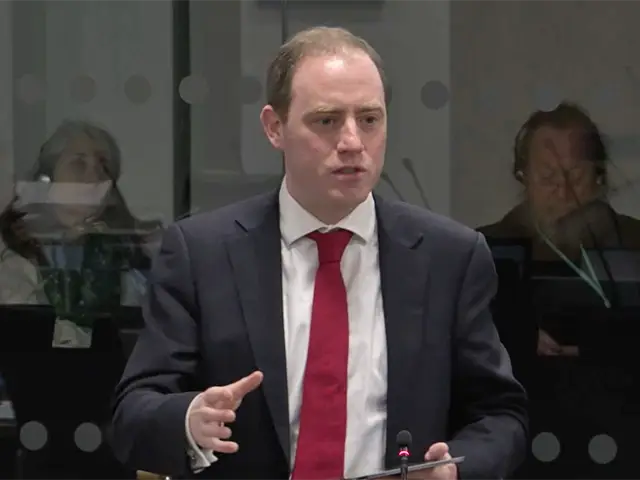
Rhys ab Owen, an independent, described the situation as “disgraceful” as he cited a Play Wales report showing 37% of disabled children are effectively shut out of playgrounds.
Leading a debate in the Senedd on Wednesday December 17, he read the testimony of a ten-year-old boy from Blaenau Gwent who said: “Nowhere disabled friendly – parks haven’t got disabled friendly equipment, so I can’t play.”
Mr ab Owen warned: “There shouldn’t be any discrimination… disabled children do face much greater problems in terms of park maintenance, and with accessibility and inclusion.”
He shared the experience of a 13-year-old girl from Newport who told researchers: “There’s nowhere I can play or hang out safely by myself as I use a frame to help me walk.”
The former barrister warned budget cuts were leading to a managed decline in standards, quoting a 13-year-old from Caerphilly who said: “Due to anti-social behaviour our equipment gets broken, burnt and vandalised and is then not replaced.”
The Conservatives’ Natasha Asghar was stunned by the scale of the crisis and revealed that only 11% of playgrounds in Wales are rated “green”, meaning they are fully accessible. By contrast, almost half are rated “red” for poor accessibility.
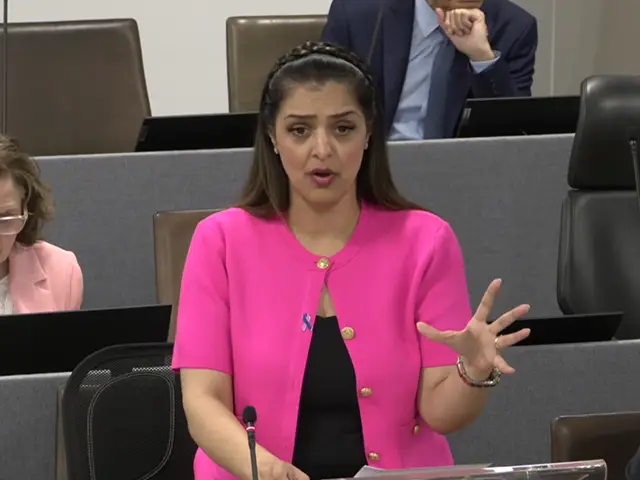
Listing the barriers families face, Ms Asghar highlighted that 30% of sites lack accessible paths and nearly one in five have gates too narrow for wheelchairs. “Those are just two of the barriers preventing disabled children from accessing play,” she said.
Jane Dodds, the leader of the Liberal Democrats in Wales, argued the shocking statistics should be a wake-up call for Senedd politicians.
“To hear that 37% of disabled children in Wales say they never or hardly ever play outside should be a figure to stop us all in our tracks,” she said.
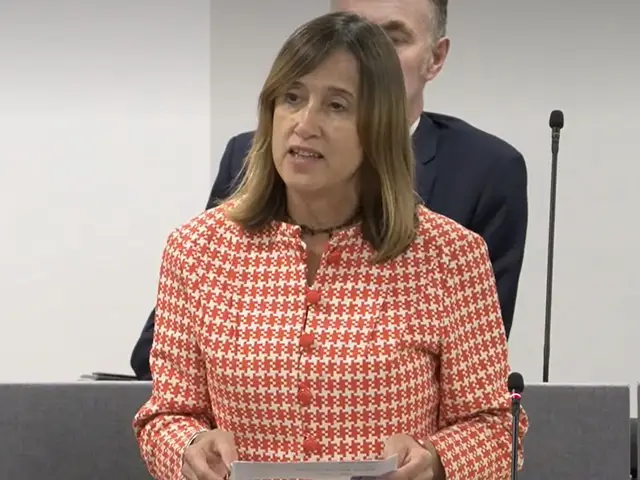
Meanwhile, Mike Hedges pointed out that Wales became the first country in the world to put a duty on councils to secure “sufficient play opportunities” for children in 2010.
And Julie Morgan, a fellow Labour backbencher, celebrated Cardiff becoming the UK’s first Unicef-accredited child-friendly city in 2023.
Dawn Bowden, the minister for children, pointed to £5m to improve playgrounds this year but she too was “disappointed” by play satisfaction figures falling from 84% to 71% since 2019.

She said the Welsh Government has provided a “toolkit” to Wales’ 22 councils, “ensuring a holistic outcome-focused approach” to inclusive and accessible play.
The cross-party motion, which called for play to be protected from cuts – as well as improved access for disabled children – was agreed unanimously but does not bind ministers.



Former police officer accused of making sexual remarks to women while on duty
Court hears allegations of inappropriate behaviour during official police visits A FORMER police officer has appeared in court accused of...


Community gathers to remember Corrina Baker
Lanterns and balloons released in emotional acts of remembrance FAMILY, friends and members of the local community came together to...

Teenager charged following rape allegation at Saundersfoot nightclub
Incident reported at Sands Nightclub in early hours of Sunday DYFED-POWYS POLICE is investigating an allegation of rape following an...

Milford Haven man jailed after drunken attack on partner and police officers
A MILFORD HAVEN man who launched a violent drunken assault on his partner before attacking two police officers has been...


Court hears historic child sex abuse claim emerged after ‘tarot reading’
Judge reminds jurors there is no standard timeframe for victims to come forward as trial reaches final stage A JURY...


Rape allegation investigated at Saundersfoot nightclub
Police appeal for witnesses after incident reported in early hours of Sunday DYFED-POWYS POLICE are investigating an allegation of rape...

Milford ground worker denies historic child sex abuse charges at Crown Court
Accused tells jury claims did not happen as trial hears evidence about alcohol use and alleged controlling behaviour A MAN...

Three inmates deny murder of Lola James killer at Wakefield prison
THREE prisoners have denied murdering child killer Kyle Bevan, who was found dead in his cell at HMP Wakefield. Bevan,...


Dyfed-Powys Police reassure communities after Bondi Beach mass shooting
Officers monitor local tensions following terror attack on Jewish event in Sydney DYFED-POWYS POLICE have issued reassurances to communities across...


Search under way in Pembroke Dock for missing man Lee
Coastguard, RNLI and rescue helicopter launched as fears grow he entered the water A MAJOR search and rescue operation is...
-
Crime24 hours ago
Milford Haven man jailed after drunken attack on partner and police officers
-
 News4 days ago
Dyfed-Powys Police launch major investigation after triple fatal crash
-
Crime22 hours ago
Teenager charged following rape allegation at Saundersfoot nightclub
-
Crime3 days ago
Man sent to Crown Court over historic indecent assault allegations
-
 Crime2 days ago
Man charged with months of coercive control and assaults
-
Crime5 days ago
Man spared jail after baseball bat incident in Milford Haven
-
 Crime3 days ago
Milford Haven man admits multiple offences after A477 incident
-

 Crime2 days ago
Woman ‘terrified in own home’ after ex breaches court order