


News
AM welcomes rare disease victory

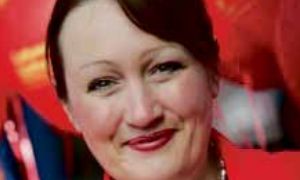
 REBECCA EVANS AM, Assembly Member for Mid and West Wales, has welcomed the launch of the UK’s first strategy to help build understanding of rare diseases and boost research to find and deliver more effective treatment, support and therapies – and hailed the promise of a Wales delivery plan as a victory for rare disease campaigners in Wales.
In 2009, a Council of the European Union recommendation on action in the field of rare diseases was adopted unanimously by all Member States of the European Union, including the UK – representing a major milestone in the field of rare diseases.
The move finally recognised that rare diseases are a health priority, and acknowledged that cooperation and coordination across Member States in rare diseases was not only logical and meaningful in terms of using available resources in the best way, but would also have an enormous impact on quality of life and survival for millions of people all over Europe.
Key to the EU recommendation was that each Member State should have a plan or strategy in place by the end of 2013 to facilitate research and to improve access to care, treatment and support for patients affected by rare diseases.
Mrs Evans, who has long championed rare diseases in the National Assembly for Wales, said:

“This is excellent news for people affected by rare diseases.
“Rare diseases are not rare. There are over 6,000 known rare diseases, and a rare disease is defined as any condition affecting fewer than 5 in 10,000 of the general population.
“Rare diseases will affect 1 in 17 people at some point in their lives that’s 175,000 people in Wales.
“People affected by rare diseases can face common problems including access to a timely diagnosis, misdiagnosis, lack of access to information, poor coordination of care, problematic transition from children’s to adult services, poor access to treatment, lack of research, and inequality of provision.”

Key elements of the UK strategy include:
• A clear personal care plan for every patient that brings together health and care services, with more support for them and their families
• Support for specialised clinical centres to offer the best care and support

• Better education and training for health and social care professionals to help ensure earlier diagnosis and access to treatment
• Promoting the UK as a world leader in research and development to improve the understanding and treatment of rare diseases
Mrs Evans is a member of the Assembly’s Health and Social Care Committee and Co-Chair of the Cross Party Group on Disability. She has previously tabled and led a debate on rare diseases at the Senedd.
During the debate, Mrs Evans highlighted the different directions being taken by the Welsh and English health services and argued that it was essential that the rare disease plan delivers for people living with rare conditions and their families in Wales.
She used the debate to call on the Welsh Government to commit to ensuring the development and implementation of a Wales-specific plan for rare diseases in Wales to provide the framework for delivery of a UK strategy.
During the debate, Mrs Evans said that a “commitment to a delivery plan would represent the single most significant step since devolution towards improving support and outcomes for people with rare diseases in Wales. If the Minister takes away only one thing from this debate, I hope it would be that.”
Today, Mrs Evans said: “I am delighted that the Welsh Government has listened to my call. The Health Minister, Mark Drakeford, has just announced that the Welsh Government is working with the NHS and the voluntary sector to develop a specific Wales implementation plan. I look forward to it being delivered early next year.”
Alastair Kent OBE, Chair of Rare Disease UK, which was part of the stakeholder forum that helped shaped the strategy, said:
“Patients and families affected by life limiting rare diseases have often struggled to get a diagnosis and to access services that meet their needs. While the NHS has demonstrated that it is capable of delivering a world class service, the experience of patients has been that this is by no means a universal experience.
“With the development of the UK Strategy for Rare Diseases patients and families can have a clear expectation of what to expect from the NHS, wherever they live in the UK. For the first time the four nations of the UK have come together to recognise and respond to the needs of rare disease patients systematically, structurally and in accordance with the founding principle of the NHS that treatment should be a response to need.
“Turning the UK Strategy’s aims into practical benefits for patients will require hard work and detailed planning. Now, at least, patients can have a clear expectation of what the NHS aspires to provide for them, wherever they live in the UK. This is a huge step forward, and the publication of the Strategy will give hope and comfort to the 3.5 million people affected by rare diseases across the UK.


Steffan Rhodri and Mark Lewis Jones lead major Welsh production as cameras roll in the famous seaside town
TENBY is preparing for a spell in the television spotlight after filming got under way on a major new BBC crime drama set in the heart of the resort town.
Old Town Murders, a new six-part series for BBC One, BBC iPlayer and BBC Cymru Wales, stars Steffan Rhodri and Mark Lewis Jones as two detectives drawn together by personal loss and a string of suspicious deaths in a seemingly idyllic seaside community. The production is being made by Quay Street Productions and is being filmed in Tenby, Cardiff and along the South Wales coastline.
For Pembrokeshire, the announcement is more than just another television commission. It places one of Wales’ best-known coastal towns at the centre of a prime-time BBC drama and offers the kind of exposure that local tourism figures, businesses and residents will immediately recognise.
Tenby’s harbour, narrow streets and postcard setting have long made it one of the country’s most recognisable destinations. Now they are set to become the backdrop to murder, mystery and dark humour for audiences across the UK and beyond.
The series pairs two of Wales’ most recognisable acting talents. Rhodri remains best known to many viewers as Dave Coaches from Gavin and Stacey, while Mark Lewis Jones has built a formidable screen career through roles in productions including The Crown, Keeping Faith and Baby Reindeer.
In Old Town Murders they play DS Sion Dearden and DI Glyn Walsh, two detectives who find themselves thrown together while investigating a series of unusual killings in a close-knit seaside town.
Among the cases promised in the series are the mysterious death of a university professor, the poisoning of a head teacher during a wild swim, and a fatal mix-up linked to a triathlon.
The tone, however, is not being pitched as relentlessly bleak. Instead, the show is being described as witty, twisty and full of warmth, with friendship, second chances and reinvention forming the emotional core of the story.
That may prove to be one of the drama’s biggest strengths. Crime series have become one of television’s most dependable genres, but Old Town Murders appears to be aiming for something slightly different — a coastal whodunnit with a strong Welsh identity, recognisable locations and a central partnership built as much on character as on corpses.

The creative team behind it is also distinctly Welsh. The series has been created and written by Matthew Barry, whose recent credits include Men Up and The Guest. Barry has said he wrote the roles specifically for Rhodri and Lewis Jones after working with them before, suggesting the chemistry between the two leads will be central to the series’ success.
Supporting cast members include James Bamford, Bethan Mary-James, Catherine Ayers and Julie Graham, adding further weight to a production that is already shaping up as one of the BBC’s most notable new Welsh commissions.
There is also an economic angle. The production has support from Creative Wales, meaning the series is not only showcasing West Wales on screen but contributing to the wider Welsh creative economy through jobs and production spend.

No transmission date has yet been announced, but with filming now under way, excitement is likely to build as more residents spot cameras, cast and crew around the town.
For local people, that is part of the appeal. This is not a drama merely inspired by the Welsh coast. It is being made in Wales, by Welsh talent, with Tenby right at the centre of it.
For Pembrokeshire audiences, that alone makes Old Town Murders one to watch.
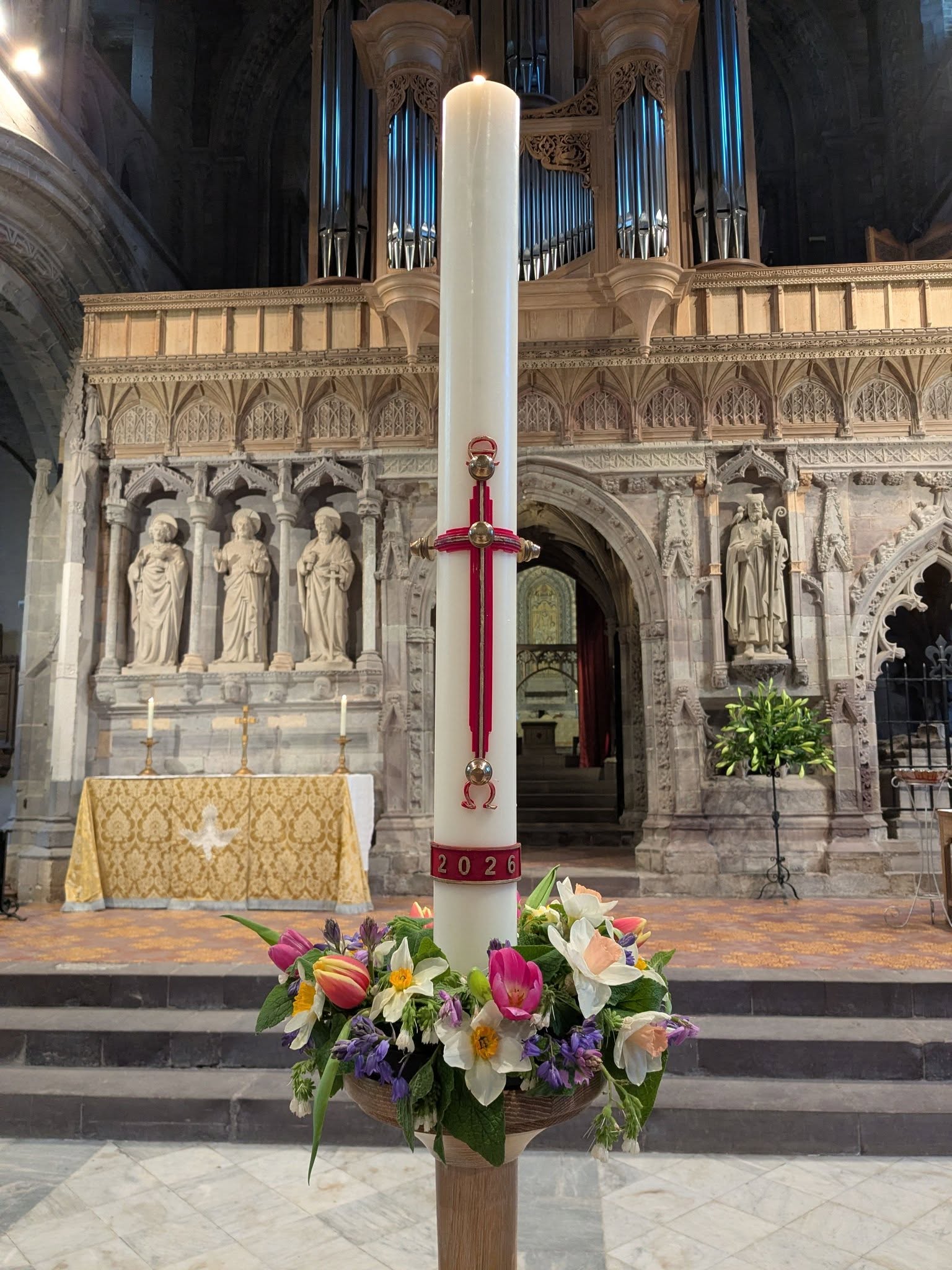
FROM dawn vigil to choral evensong, the cathedral welcomed worshippers for one of the most important days in the Christian calendar
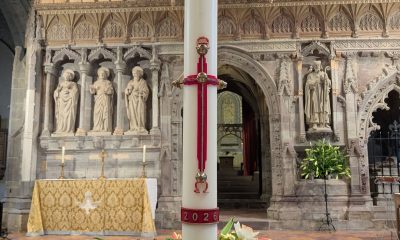
ST DAVIDS Cathedral marked Easter Sunday (Apr 5) with a full programme of worship, music and celebration.
The day began at 6:00am with the Easter Vigil at the West Front and Nave, sung by the Vicars Choral and Choral Scholars. The service included the lighting of the Easter candle, readings and the first Eucharist of Easter morning.

Worship continued later in the morning with Holy Eucharist at the High Altar at 8:00am, followed by Cymun y Plwyf in the Lady Chapel at 9:30am.
The main Easter Day service took place at 11:00am in the Nave with a Choral Eucharist sung by the Cathedral Choir. The service featured Easter hymns and music, with the Bishop presiding and preaching.
The cathedral’s Easter Sunday celebrations concluded at 4:00pm with Choral Evensong in the Nave, again sung by the Cathedral Choir.
The programme formed part of St Davids Cathedral’s observance of Holy Week and the First Week of Easter, with worshippers and visitors gathering for one of the most significant days in the Church calendar.
Community rallies around grieving family as club honours much-loved player at weekend fixture
JOHNSTON FC paid an emotional tribute at the weekend to Rhyan Nolan after his sudden death at the age of 27.
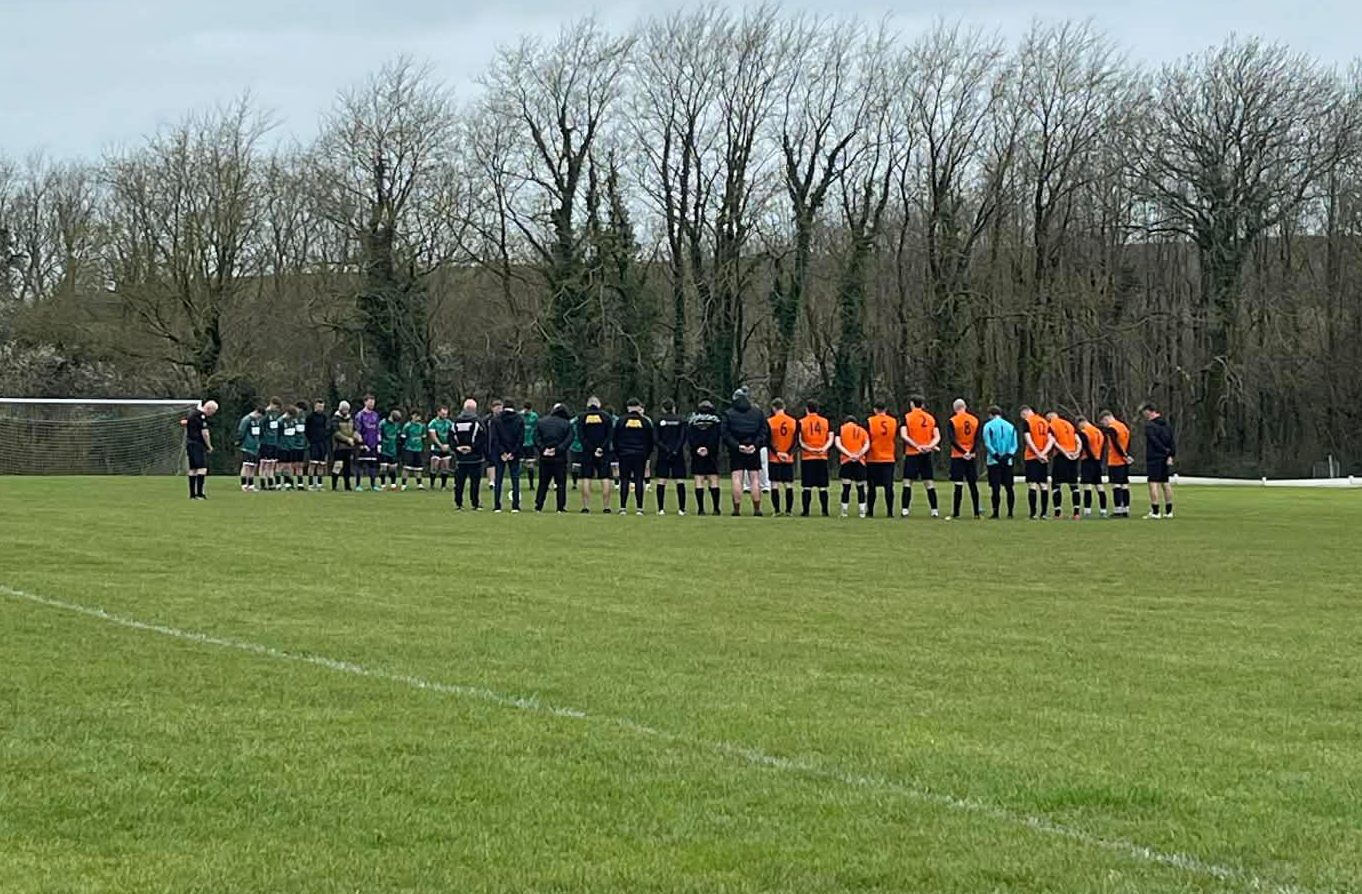
The club marked the occasion with a flawlessly observed minute’s silence before kick-off, as both teams, officials and supporters came together in his memory.
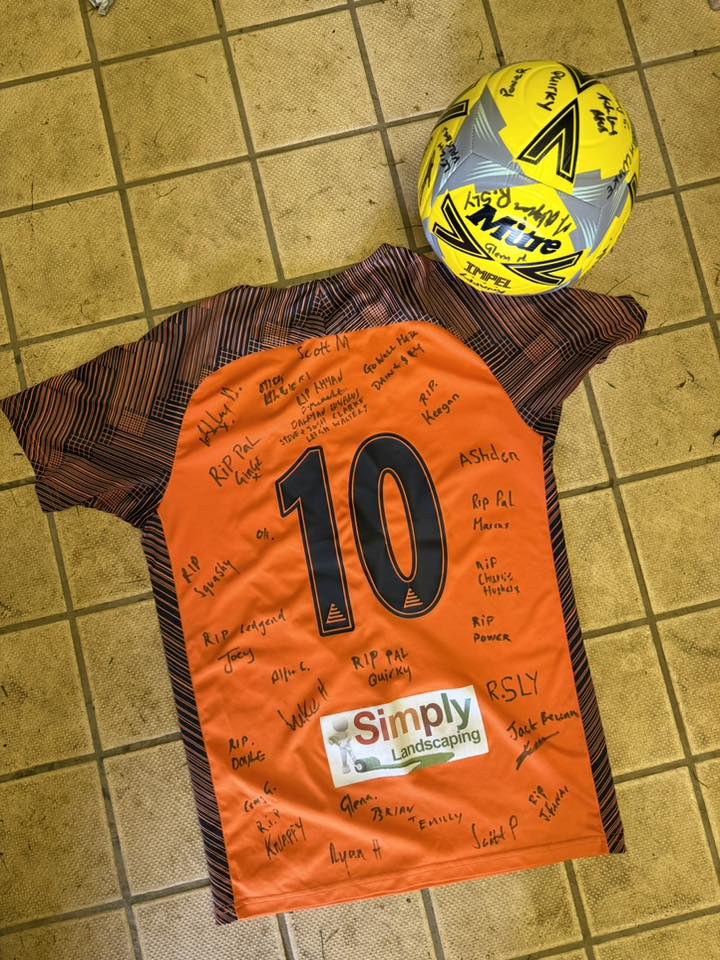
A signed match ball and Rhyan’s much-worn number ten shirt, covered in messages from team-mates and friends, were also prepared to be handed to his family, who were present for the tribute.
The death of Rhyan has sent shockwaves through the local community, with many gathering around his loved ones in the days since the devastating news emerged.
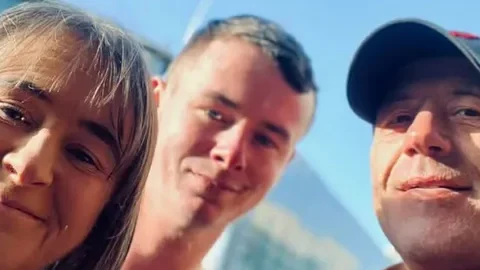
A fundraiser set up on GoFundMe says his family received the heartbreaking news on Monday that they had lost their “precious, loving son and brother” suddenly at such a young age.

The appeal names his close family as Nichola, Shamus, Brandon, Callum and Lilly, and says relatives are hoping to ease the financial burden while giving Rhyan the send-off he deserves.
It states: “Rhyan deserves a celebration of his short life.”
Johnston FC said it had been a difficult week for all those who knew and loved him, but said it had also been heartwarming to see such an outpouring of love at the match.
The club thanked everyone who helped make the tribute possible, along with those who had sent messages of support and donated towards helping the family.

Photographs shared after the game showed the scale of the moment, with both sides lined up in silence and the orange number ten shirt left covered in handwritten tributes.
For many in attendance, it was a powerful and deeply personal farewell to a young man clearly held in enormous affection.
A GoFundMe appeal has now been launched to support the Nolan family.



News8 hours ago
St Davids Cathedral marked Easter Sunday with full day of worship
FROM dawn vigil to choral evensong, the cathedral welcomed worshippers for one of the most important days in the Christian...


Crime9 hours ago
Neyland man spared immediate jail over aggravated vehicle taking
Defendant given a suspended prison sentence after magistrates heard the offence was serious enough to cross the custody threshold KRISTIAN...


Health1 day ago
Crumbling NHS faces £1bn repairs bill in Wales
Senedd election promises collide with the harsh reality of ageing hospitals, fire safety concerns and a maintenance crisis stretching across...


News1 day ago
Emergency services respond to incident in Haverfordwest town centre
EMERGENCY SERVICES were called to an incident in Haverfordwest town centre on Saturday morning (Apr 4), with police and ambulance...
News1 day ago
Teenager intervenes after bridge incident
A TEENAGER was left shaken after stepping in to help a young woman in distress on Clay Lanes bridge in...


Crime3 days ago
Driver spared jail after crash killed young couple
A PEMBROKE DOCK driver who caused the deaths of a young couple in a road crash has been given a...


Entertainment3 days ago
BBC unveils major new Welsh dramas with Tenby set for prime-time spotlight
New crime series Old Town Murders and supernatural thriller The Witch Farm will both be filmed and set in Wales...


Health4 days ago
No jobs for new paramedics in Wales as graduates told to apply for technician roles
Students trained at public expense urged to take lower-grade jobs as anger grows over NHS workforce planning NEWLY qualified paramedics...


News4 days ago
Health minister refuses to act on Withybush despite 15,000-signature petition
Senedd pressure grows as Welsh Government declines to intervene over surgery fears THE WELSH GOVERNMENT has refused to step in...


Business5 days ago
Fishguard to Wexford rail tunnel plan backed by Elon Musk firm
Six-hour London to Dublin service proposed in £32bn project ahead of Senedd election PLANS for a rail tunnel linking west...
-

 News2 days ago
Accommodation providers in Wales will be required to register under new law
-
Business5 days ago
Fishguard to Wexford rail tunnel plan backed by Elon Musk firm
-

 Entertainment3 days ago
From Milford Haven to the world: The story of The Evolution Experience
-
Entertainment3 days ago
BBC unveils major new Welsh dramas with Tenby set for prime-time spotlight
-

 Charity6 days ago
RSPCA calls for stronger animal welfare measures as Welsh Labour launches manifesto
-
 Tourism7 days ago
Moving to Australia from the UK: What you need to Kknow
-
 Community7 days ago
Pembrokeshire school allows Sikh pupil to wear Kirpan
-

 News6 days ago
Labour promises 48-hour GP access as manifesto faces questions over delivery