


News
Toilets ‘top of the pile’

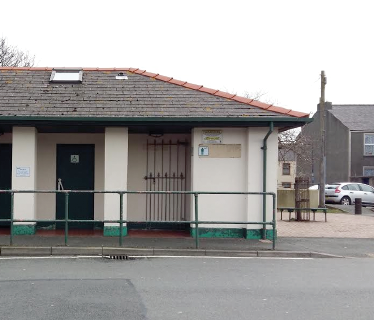

New Charge: A charging system has now been installed in the ASDA car park in Pembroke Dock
PUBLIC toilet provider DANFO has received praise for the work it has carried out in Pembrokeshire in 2015.
The Council’s Environment Overview and Scrutiny Committee met on Tuesday, (Mar 15), to hear a presentation from DANFO.
DANFO highlighted that charging systems were being installed in Narberth, Tenby South Beach, Pembroke Dock and Broad Haven to go with the other four that had already had charging systems put in place.
They also highlighted a number of cases of vandalism in toilets in Felindre and in Castle Lake, Haverfordwest, which was the subject of fire damage in January 2016.
Pictures were shown of the damage at both sites alongside what they looked like after DANFO had finished repairs.

Nine members of staff were also employed DANFO, of which none of them had been in previous employment.
Jon Mills, Operations Manager at DANFO, said: “By December 2015, DANFO had received £40,000 worth of contributions towards the running costs of public toilets in the county and this was through introducing charging mechanisms.
“We’ve had significant investment in refurbishing a number of facilities across the county and employed additional local people to our full time staff cleaning service. Through those people we have delivered an award winning service.
“We’ve also spent approximately £50,000 just through our trade and maintenance of all the toilets and over 1000 maintenance repairs were carried out in 2015.

“There was a provision within the tender contract to install charging mechanisms to generate income. The income generation goes to the operational costs of the service and invested back into local public toilet provision.
“You’ll notice that there are four more sites listed, two of them are being installed today (Mar 15) so Narberth and Tenby South Beach are being installed. Broad Haven and Pembroke Dock were installed last Tuesday so we will have eight sites now collecting income.
“All the efforts put in by the team over 2015 has led us to achieving something that we are very proud of which was the External Cleaning Contractor of the year for 2015 across Wales and the UK. That’s for the work we are doing here down in west Wales. All the toilets are inspected by an independent inspector from the Loo of the year organisation.

“Pembrokeshire’s toilets achieved the platinum award. Pembrokeshire’s toilets became top of the Premier League in 2015 as compiled by the Loo of the year Awards so we are top of the pile at the moment.”
Cllr David Howlett congratulated DANFO on their award and asked whether or not there had been any success in finding the people that had committed the acts of vandalism.
Jon stated that no one had been caught for the damage caused to the toilets in Felindre but that people had been caught for the damage caused the toilets in Haverfordwest.
Richard Brown, Head of Environment & Civil Contingencies at the council, told councillors of the jobs that the cleaners have to go through with some experiencing excrement in handdryers.
He added: “There’s a tender price so we pay DANFO every month so we’ve got a fixed price and when they submitted their price to us it was based upon the assumption that £45,000 would be generated so their price was x-minus £45,000 so anything above that then comes to the council.
“The charging has been well received and I think we have had 120,000 visits in two months. The income generation has exceeded expectations but we actually have a problem now where there is no incentive for DANFO to invest in any further charging. “We didn’t really know from the outset how many people would take to charging.” DANFO Operations Manager Andrew Mcilduff added that he was delighted with how things had turned out and also said that Keswick was watching what had been done in Pembrokeshire and added that they wanted exactly the same as what had been installed in Tenby. Cllr Jonathan Preston said that DANFO’s involvement was a success story and asked if they had considered alternative methods of payment such as a contactless card. It was agreed there may be some benefits to that but that there would be more costs involved.


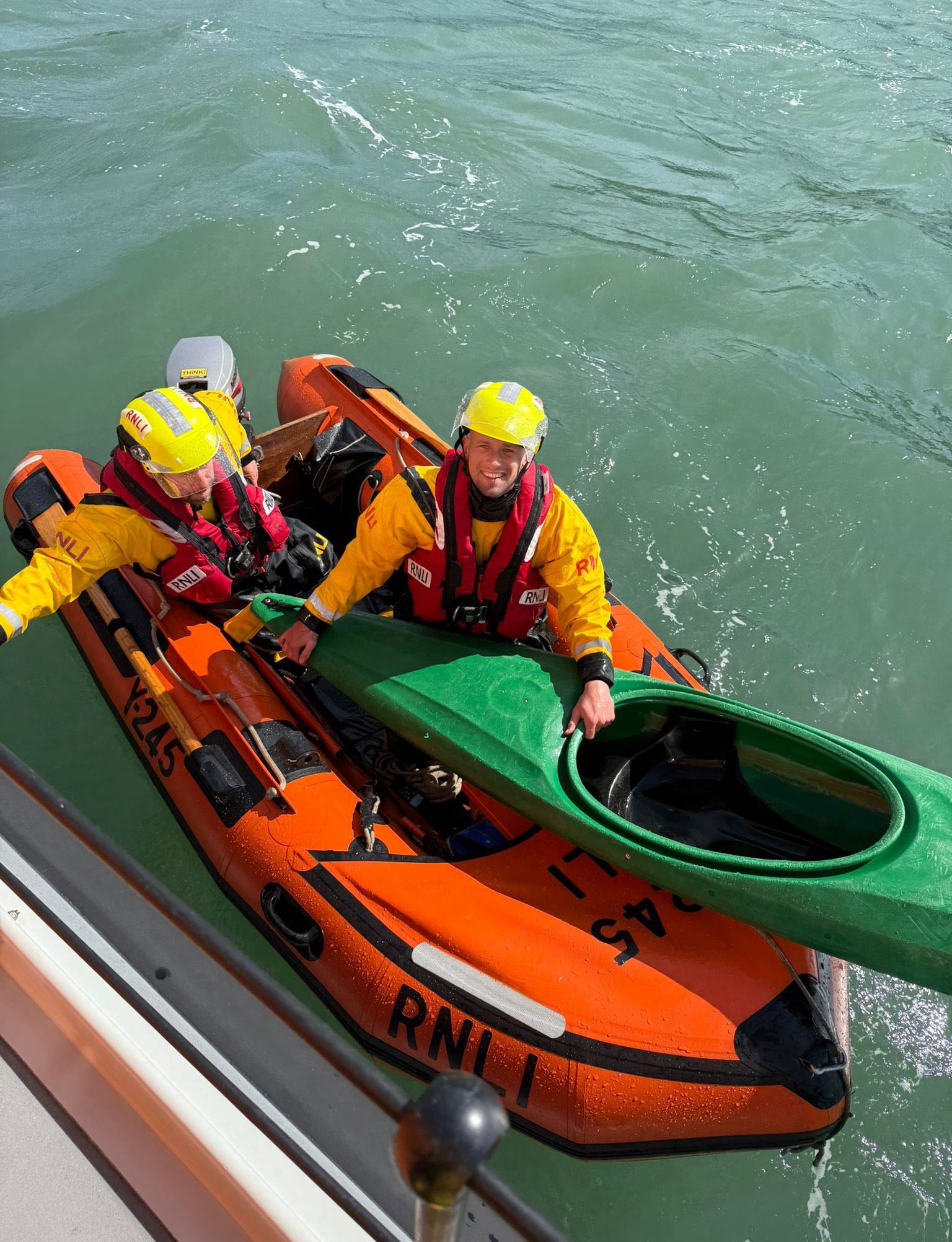
Missing vessel recovered near shore after coastguard confirms it had been reported lost days earlier
ST DAVIDS RNLI launched on Easter Monday after an upturned kayak was spotted drifting east of Solva Harbour.
The all-weather lifeboat, Norah Wortley, was requested to launch at 11:04am on Monday (Apr 6) after the vessel was seen floating in the water.
Heading into a strong south-easterly wind, the Tamar-class lifeboat made directly for Aber-west. Members of HM Coastguard St Davids Cliff Rescue Team assisted from the clifftop, helping to guide the volunteer crew to the kayak.

As the vessel was lying close to the shore, the lifeboat’s daughter boat was launched to recover it and bring it aboard the Norah Wortley.
Photographs of the kayak were then sent to HM Coastguard in Milford Haven, which confirmed it had been reported missing from Porthclais several days earlier.

That meant there was no need for a shoreline search for the owner.
The kayak was taken to Solva Harbour, where it was handed over to HM Coastguard and secured on the quay wall. The lifeboat returned to station at about 12:30pm.
St Davids RNLI Coxswain Will Chant said: “The timely reporting of a missing kayak by the owner potentially saved an unnecessary search operation. Thank you to members of St Davids Coastguard team for their assistance during this shout.”
Picture caption:

Easter Monday shout: St Davids RNLI recovers a drifting kayak off Solva after it was reported missing days earlier (Pics: RNLI)
New analysis links worsening disruption to heavier rainfall and repeated trouble spots on the network
RAIL passengers in Wales are facing growing delays and cancellations as flooding increasingly hits the network, according to new analysis based on Network Rail data.
Figures obtained through the Freedom of Information Act suggest flood-related disruption affecting services in Wales has risen by around 256 per cent compared with the mid-2010s.
Between 2022 and 23 December 2025, services affecting passengers in Wales generated an average of around 2,366 passenger delay minutes a year due to flooding. That compares with an average of 664 a year between 2014 and 2017.
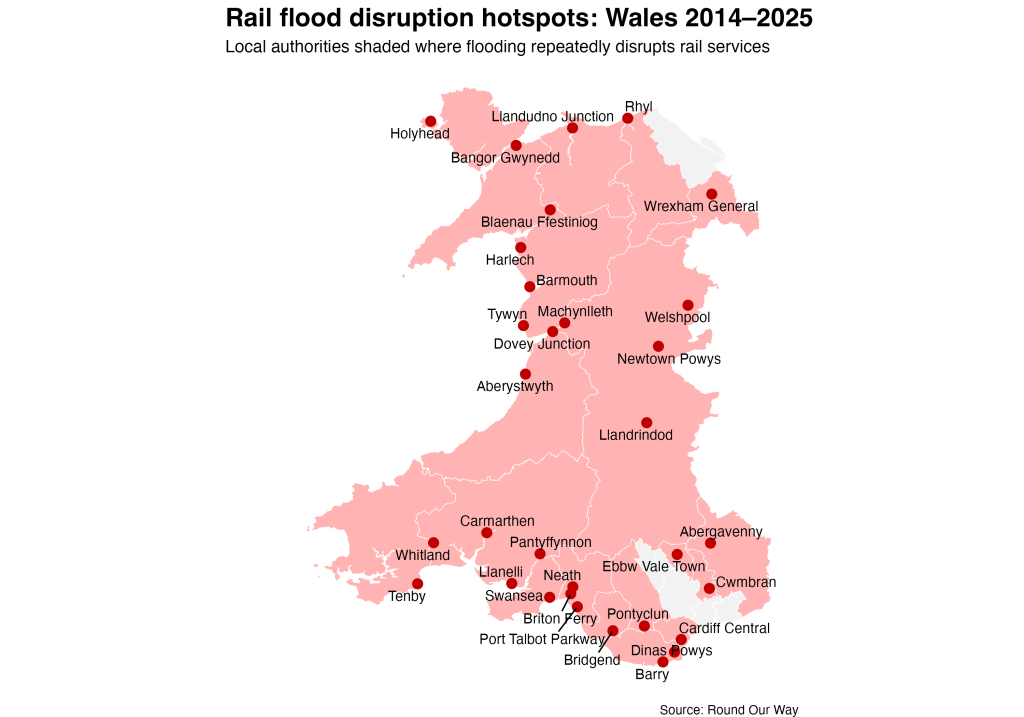
The analysis, carried out by climate not-for-profit Round Our Way, says train operators serving towns and cities across Wales, including Great Western Railway, CrossCountry, Transport for Wales and Avanti West Coast, have all been affected.
The worst disruption has been concentrated around a number of repeat trouble spots on the rail network, including Machynlleth, Cardiff Central, Bridgend, Bangor and Pontyclun, where flooding has repeatedly interrupted services.
Round Our Way said its analysis of Network Rail cancellation data suggests flood-related disruption is placing increasing strain on the rail network as periods of extreme rainfall become more common.
The group said the figures show not only more major disruption events, but also a worsening day-to-day baseline, with even quieter periods now causing more passenger delay than in previous years.
Gemma Plumb, a meteorologist at Weather Change, said: “It’s clear that train users are seeing more and more disruption to their journeys as a result of heavy rain and flooding, which is hugely frustrating for people who rely on the train network to get around.
“We know that climate change is leading to more extreme weather, including more intense rainfall. This is because a warmer atmosphere can hold more moisture, so when it rains, it rains more.”
Sofie Jenkinson, co-director at Round Our Way, said the rail network appeared to be under “persistent weather stress” as climate change began to have more regular effects.
She said: “This causes significantly more delays to train passengers. But it is also a problem for rail operators, particularly the large inter-city train operators running services into regions of the country that are worst hit by flooding, like the South West, Scotland and Wales.
“The significant rise in delays shows the increased impact of extreme weather caused by climate change, raising concerns about safety beneath the surface of our creaking rail infrastructure for passengers and operators alike.”

Round Our Way said Britain was not adequately prepared for the effects of climate change on everyday infrastructure and called for long-term investment to make the rail network more resilient.
The group pointed to wider warnings from climate experts that rising global temperatures are likely to increase the intensity of rainfall, putting more pressure on ageing transport systems.
Network Rail data used in the study covers the period from 1 April 2014 to 23 December 2025 and relates to incidents classed as flood-related disruption.
A train is recorded as cancelled if it fails to stop at one or more planned stations. Full cancellations are classed as trains that completed less than half of their intended journey, while part cancellations are those that ran at least half, but not the full route, or missed one or more planned stops.
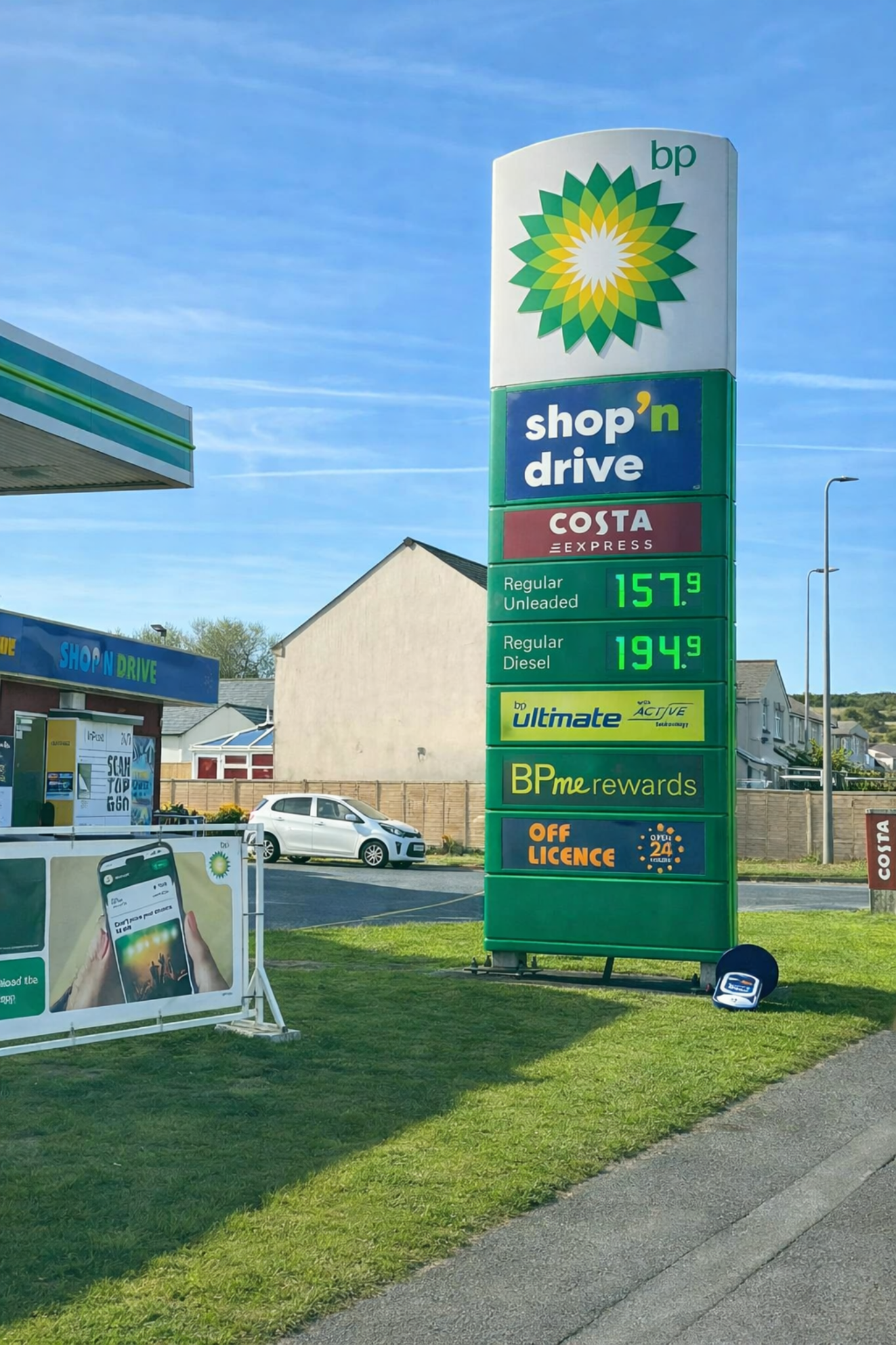
Johnston forecourt hits 194.9p while wide price gaps and rush to fill up pile pressure on motorists across the county
DIESEL prices in Pembrokeshire are edging dangerously close to £2 a litre, with the BP forecourt in Johnston on the A4076 displaying 194.9p per litre.
The latest surge has sparked a rush at some filling stations across the county, as motorists hunt for pumps that have not yet caught up with the steep increases. The Herald understands some forecourts have temporarily run dry as drivers fill up early to avoid paying even more, rather than because of any wider supply issue. That picture fits with national comments from the AA, which said it had seen no evidence of widespread shortages or any increase in breakdowns caused by vehicles running out of fuel.
Pictures sent to The Herald show just how sharply prices now vary across Pembrokeshire.
At Johnston, diesel was 194.9p per litre and petrol 157.9p. At Robeston Wathen, diesel was 187.9p and petrol 155.9p. At Square and Compass, diesel was 183.7p and unleaded 151.7p. In Milford Haven, the Gulf station on North Road was displaying diesel at 179.7p and petrol at 148.7p, while Tesco Milford Haven showed diesel at 181.9p and unleaded at 149.9p. In St Davids, Ocean Haze was also showing diesel at 187.9p, with petrol at 155.9p.
Based on those prices, there is a 15.2p-per-litre gap between the highest and lowest diesel prices pictured — a difference of more than £9 on a 60-litre fill.
The local spike reflects a sharp rise across the UK. RAC data showed average petrol prices reached 152.01p a litre on March 30 — the highest level in 28 months — while diesel climbed to 181.2p, its highest point since December 2022. The RAC said that, compared with the start of the Iran conflict, it was costing £10.55 more to fill a typical family petrol car and £21.35 more for a comparable diesel vehicle.
RAC head of policy Simon Williams said the “financial strain” on motorists “continues to build”, while RAC Foundation director Steve Gooding warned prices at the pumps appeared to be on a “one way trajectory”.
The AA’s latest weekly update, based on government data, put average UK petrol at 148.78p a litre and diesel at 176.42p, up from 144.16p and 166.88p the previous week.
The pressure is being felt well beyond private motorists. In West Wales, the wider rural economy is especially exposed because so many people rely on vehicles for work, deliveries and day-to-day life.
The Farmers’ Union of Wales said rising fuel and heating oil prices were placing “additional pressure on rural communities” and increasing the risk of theft. In a March statement, the union said red diesel had risen from about 67p a litre in February to around 109p in mid-March, while heating oil had in many cases more than doubled from around 60p to about £1.30 a litre. It also noted that 74 per cent of homes in Ceredigion are off the gas grid, leaving many households particularly vulnerable to sudden price shocks.
The haulage sector has also warned of the knock-on effect. Swansea Bay News reported that Llanelli-based Owens Group said soaring diesel costs had added around £64,000 a week to its fuel bill. Founder Huw Owen said: “We felt it as a company straight away. With a fleet our size, we burn a tanker of fuel a day. We used to order fuel a week or even a fortnight in advance — now we’re negotiating prices day by day.”
The same report quoted Road Haulage Association representative Geraint Davies warning that higher transport costs would feed through into prices more widely because “everything we buy is moved by road at some point.”

For households, tradespeople, delivery drivers and rural businesses in Pembrokeshire, the latest rise is another heavy blow. In a county where so many people depend on their vehicles every day, sharp increases at the pumps are felt quickly and widely.
One thing is clear: drivers are shopping around harder than ever, and when prices are moving this fast, delaying a fill-up by even a day can come at a cost.
Photo caption:
Johnston prices: Diesel reached 194.9p per litre at the BP forecourt on the A4076 (Pic: Herald)



Charity6 minutes ago
St Davids RNLI launches on Easter Monday after drifting kayak spotted off Solva
Missing vessel recovered near shore after coastguard confirms it had been reported lost days earlier ST DAVIDS RNLI launched on...

News3 hours ago
Diesel nears £2 a litre in Pembrokeshire as drivers scramble for cheaper fuel
Johnston forecourt hits 194.9p while wide price gaps and rush to fill up pile pressure on motorists across the county...


News23 hours ago
St Davids Cathedral marked Easter Sunday with full day of worship
FROM dawn vigil to choral evensong, the cathedral welcomed worshippers for one of the most important days in the Christian...


Crime1 day ago
Neyland man spared immediate jail over aggravated vehicle taking
Defendant given a suspended prison sentence after magistrates heard the offence was serious enough to cross the custody threshold KRISTIAN...


Health2 days ago
Crumbling NHS faces £1bn repairs bill in Wales
Senedd election promises collide with the harsh reality of ageing hospitals, fire safety concerns and a maintenance crisis stretching across...

News2 days ago
Emergency services respond to incident in Haverfordwest town centre
EMERGENCY SERVICES were called to an incident in Haverfordwest town centre on Saturday morning (Apr 4), with police and ambulance...

News2 days ago
Teenager intervenes after bridge incident
A TEENAGER was left shaken after stepping in to help a young woman in distress on Clay Lanes bridge in...


Crime4 days ago
Driver spared jail after crash killed young couple
A PEMBROKE DOCK driver who caused the deaths of a young couple in a road crash has been given a...

Entertainment4 days ago
BBC unveils major new Welsh dramas with Tenby set for prime-time spotlight
New crime series Old Town Murders and supernatural thriller The Witch Farm will both be filmed and set in Wales...


Health4 days ago
No jobs for new paramedics in Wales as graduates told to apply for technician roles
Students trained at public expense urged to take lower-grade jobs as anger grows over NHS workforce planning NEWLY qualified paramedics...
-

 News3 days ago
Accommodation providers in Wales will be required to register under new law
-
 Business6 days ago
Fishguard to Wexford rail tunnel plan backed by Elon Musk firm
-

 Entertainment4 days ago
From Milford Haven to the world: The story of The Evolution Experience
-
Entertainment4 days ago
BBC unveils major new Welsh dramas with Tenby set for prime-time spotlight
-

 Charity7 days ago
RSPCA calls for stronger animal welfare measures as Welsh Labour launches manifesto
-

 News7 days ago
Labour promises 48-hour GP access as manifesto faces questions over delivery
-

 Crime6 days ago
Driver trapped after crash while nearly four times over drink-drive limit
-
 Business6 days ago
Refusal over Pembrokeshire shepherd hut let goes to appeal
(regular toilet user)
April 11, 2016 at 3:27 pm
I wish the Herald reporter had been at Pembroke Dock Town Council’s meeting last Thursday and a totally different picture of public toilets would have emerged. The reporter would have seen Cllr Jane Phillips deplore the state of the toilets in Pembroke Dock which have not improved one bit since the 20 p charge was introduced.
She went on to say the Tenby toilets were indeed good, but by comparison Pembroke Dock’s were terrible – tiles missing and broken everywhere and black mould a feature of the decoration. She recalled how a Pembroke Town Councillor had used two 20p coins and still could’n t get in and had to dash home.
I’m not criticising the cleaners – how much can they do if the place is crumbling – it’s just that they need some money spent on them.
As for the Loo of the year awards – what a load of crap if they got that with a Loo in this state!
Come on Danfo do the decent thing and stop charging until the Pembroke Dock loos are fit for purpose.
Dave Nall
August 28, 2016 at 3:32 pm
The problem is that it is not just 20p, it is 20p over and over again, unless you and your family have bladders of steel. I have an illness which causes me to use toilets more frequently than most. During my stay in the area this year I avoided Tenby in favour of Sandersfoot where the loos are free. Walt Disney claimed he built his business on clean free toilets.
Ultimately, the ‘pay to pee’ loos will be paid for at the cost of other businesses in the areas that myself and others will avoid. Despite the ‘spin’ we are fed in the press, this is another case where private enterprise has taken over a once free and appreciated public service for profit.
Incidentally, I witnesses a man in Pembroke Dock put his 20p in the machine, but it would not let him in. So they don’t even work properly.
Poor show all round.