


Farming
FUW welcomes WG Brexit paper



Brexit needs a framework for Wales: Glyn Roberts, FUW
THE FARMERS’ UNION OF WALES has welcomed the white paper on Brexit launched by Welsh Government First Minister Carwyn Jones and the leader of Plaid Cymru Leanne Wood.
The joint Welsh Brexit plan calls for continued participation in the Single Market, as well as a ‘balanced approach’ to immigration, linking migration to jobs.
First Minister Carwyn Jones stated that the paper ‘balances the message which the Welsh people gave us’ of the Brexit vote ‘with the economic reality that makes participation in the Single Market so important for the future prosperity of Wales, and indeed the UK as a whole’.
FUW President Glyn Roberts responded to the plans, saying: “I welcome the stance taken by Welsh Government in their Brexit white paper, which acknowledges that ‘continued participation in the Single Market to support the future prosperity of Wales’ is essential.
“The livestock producers which make up the vast majority of Welsh farmers are particularly reliant on exports to the continent, and the FUW has made it clear since the referendum that full and unfettered access is essential to Wales.

“Around 30% of Welsh lambs were exported to continental Europe, and the complexity of pan-EU food supply chains means there are acute threats for other sectors.”
The Brexit white paper also call on the UK Government to make good on promises that Wales would not lose funding as a result of Brexit, as well as calling for recognition that there needs to be a ‘fundamentally different’ relationship between the devolved governments and the UK Government.
The FUW has continually stressed that a transition period of at least 10 years is necessary in order to phase in and allow the industry to adjust to new agricultural policies post-Brexit and, in addition, has argued that agricultural support following our exit from the European Union should be maintained at levels which at least reflect those levels which would have been in place should the UK have voted to remain in the EU.
Furthermore, recognising the different role the Welsh and devolved administrations have to play has been welcomed recently by the FUW.

Speaking about the role the Welsh Government should play in negotiating our exit from the EU, Mr Roberts said: “Devolution should be respected within an overarching UK support framework in the context of making our withdrawal from the European Union and, as such, we welcomed Theresa May’s commitment to work with the devolved administrations and her recognition that Wales is different to the rest of the UK. That call has today been mirrored by Welsh Government and we will continue to work with them to develop a framework that takes Wales’ unique position into account.”
A third of Wales’ population live in rural areas where farming and businesses which rely on agriculture play an important role in local economies; in sparsely populated areas, where centres of population have less than 2,000 people, around 10% of workers are employed in agriculture. That equivalent to 14% of those employed outside the public sector.
“Taking these figures into consideration, the FUW has highlighted for many years the wider role agriculture plays in terms of supporting Wales’ rural and wider economy and that’s why we are stressing the fact that agriculture needs to be allowed to adjust to new policies post-Brexit and that support is maintained in line with other EU countries.

“The chances of a bad trade deal or no deal at all increase the faster the UK Government proceeds, which is why the FUW has consistently called for a lengthy transition period. Otherwise we risk being like lemmings rushing towards a cliff edge.”



WELSH LABOUR has challenged Plaid Cymru over fears that badger culling could return as part of the new Welsh Government’s approach to bovine TB.
Interim Welsh Labour leader Ken Skates questioned First Minister Rhun ap Iorwerth in the Senedd today, Tuesday (Jun 9), after Plaid Cymru’s manifesto pledged a “new approach” to managing bovine TB which recognises wildlife as a source of infection and allows “scientifically validated control methods”.
Labour says the wording has raised concerns among animal welfare campaigners that badger culling could be reconsidered in Wales.
During First Minister’s Questions, Mr Skates asked: “What is Plaid Cymru’s preferred method of killing badgers? Is it to shoot badgers? To poison badgers? Perhaps bludgeon them, or gas them?
“Would you want the badgers shot or poisoned or do you have another method in mind?”
The First Minister did not rule out badger culling in his response, according to Welsh Labour.
However, Plaid Cymru has not explicitly said it will reintroduce badger culling. Its manifesto refers to “scientifically validated control methods”, wording which could cover a range of approaches unless ministers provide further clarification.
The issue remains highly sensitive in rural Wales. Farmers and farming unions have long argued that wildlife transmission must be addressed as part of any serious bovine TB strategy, while animal welfare campaigners strongly oppose any return to culling.
Labour said the previous Welsh Government rejected badger culling following research which it said showed the practice was cruel and ineffective in tackling the spread of bovine TB.
Mr Skates said: “I was appalled that the First Minister dismissed concerns raised about animal welfare today as ‘not a serious question’.
“Plaid Cymru’s approach to the outdated and cruel practice of culling badgers sets a dangerous precedent around how they will approach animal welfare. Which animal rights are they prepared to roll back on?
“Welsh Labour will continue to hold the government to account to ensure the progress made on a safer, kinder Wales for animals is not undone.”

Welsh Labour also pointed to its record on animal welfare, including bans on greyhound racing, snares and glue traps.
The Herald has asked Plaid Cymru and the Welsh Government to clarify whether badger culling is being considered.

PEMBROKESHIRE farmers and land managers are being encouraged to apply for the latest round of Ffermio Bro support, with the next Expression of Interest window now open.
The scheme supports practical, farmer-led projects within the Pembrokeshire Coast National Park, helping to improve nature, water quality, habitat links, traditional boundaries, wildfire resilience and the wider farmed landscape.
The programme has already supported a range of projects across Pembrokeshire, including habitat restoration, watercourse fencing, traditional boundary restoration, firebreak creation and woodland connectivity work.
FARMERS SUPPORTED
During its first year, Ffermio Bro supported 37 farms and land managers across the National Park, with projects covering just under 3,000 hectares.
The work included more than four kilometres of hedgerow creation and restoration, over 800 metres of watercourse improvement and protection works, and around 27 hectares of woodland support and management.
A number of collaborative projects have also focused on improving biodiversity and ecosystem resilience across the National Park.
Arwel Evans, Conservation Farm Liaison Officer with the Pembrokeshire Coast National Park Authority, said: “The first year of Ffermio Bro has shown what can be achieved when farmers and land managers are supported to deliver practical conservation work on the ground.
“We’ve worked with farms across the National Park on projects ranging from habitat restoration and water quality improvements to traditional boundary work and wildfire resilience.
“Looking ahead to the next two years, we’re particularly keen to support projects that improve water quality and river resilience across catchments such as the Eastern and Western Cleddau, Nyfer and Gwaun.
“That includes practical measures such as riparian fencing, buffer strips, healthier soils and habitat management that help keep rivers clean and resilient for the future.”
FARM-LED PROJECTS
Gareth Waters, Ffermio Bro Advisor, added: “One of the strengths of the scheme is that projects are designed around individual farms and local priorities.
“We’re keen to support practical projects that deliver long-term benefits for both farming businesses and the landscape, and we’d encourage interested farmers to contact us before the deadline.”

The current application window for Ffermio Bro: Farming within the Pembrokeshire Coast National Park will remain open until Monday, June 22.
Further information on the scheme, eligibility and how to submit an Expression of Interest can be found at www.pembrokeshirecoast.wales/ffermio-bro.
Caption: Farmers and land managers within the Pembrokeshire Coast National Park are invited to apply for the latest round of Ffermio Bro landscape and conservation funding.
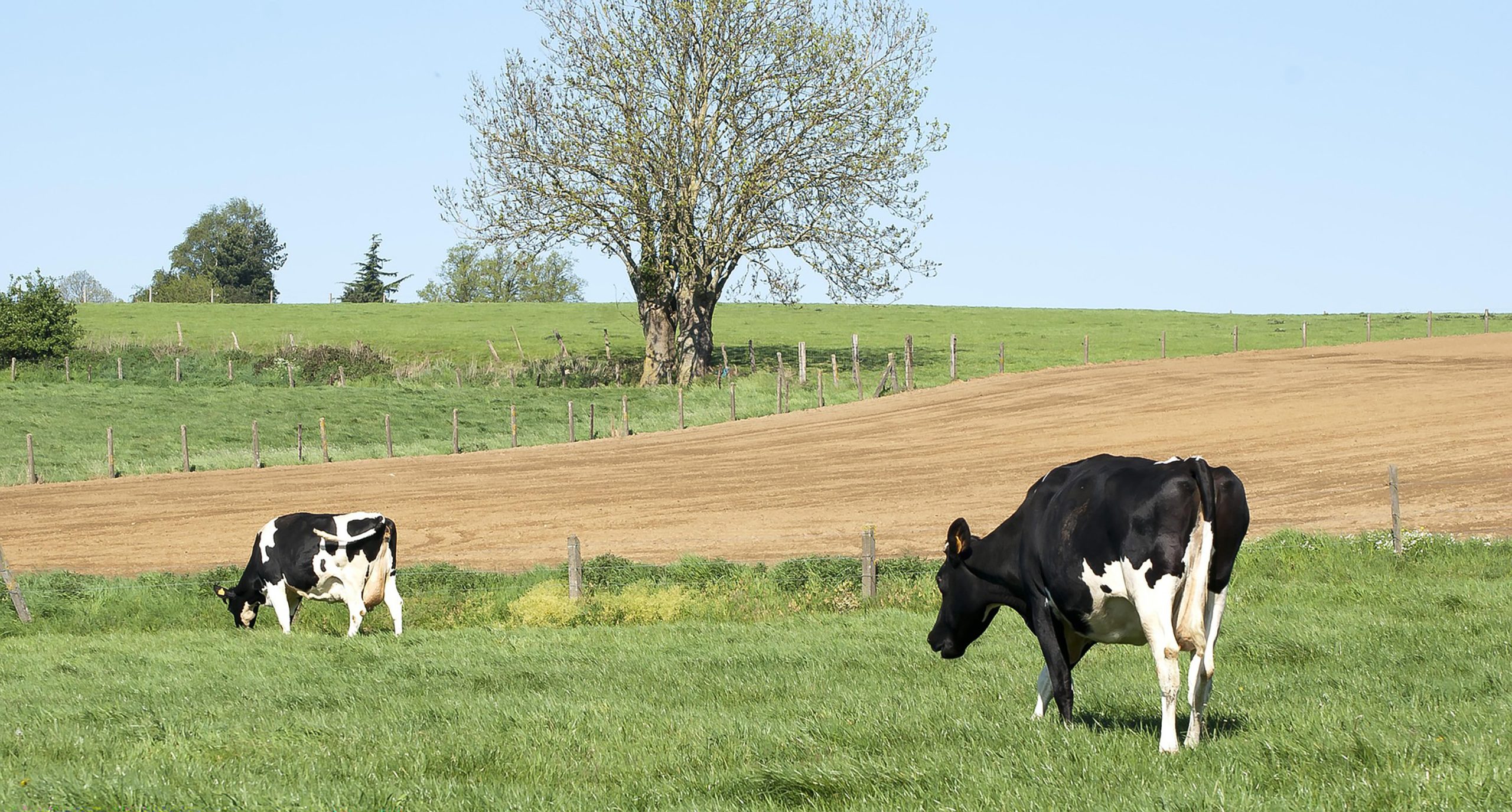
FARMERS are being warned that high summer temperatures could have long-lasting effects on autumn-born calves.
Animal health specialists say heat stress in pregnant cows can lead to weaker immunity, poorer growth rates and a higher risk of disease in calves after birth.
Nia Williams, Technical Livestock Manager at Nettex, said farmers may not immediately link hot weather now with calf performance several months later, but the impact during pregnancy can be significant.
She said: “Cows calving this autumn are at greater risk of producing calves with impaired immunity, which can increase susceptibility to diseases such as scours during the first weeks of life.”
Colostrum critical
Heat stress can reduce feed intake, alter metabolic function and suppress immunity in cows. It can also affect mammary gland development during the dry period, potentially impacting milk production in the next lactation and calf performance after birth.
Ms Williams said: “Calves born to heat-stressed cows are often lighter at birth and can show reduced growth rates both before and after weaning. That makes colostrum management absolutely critical.”
Farmers are being advised to ensure calves receive colostrum quickly after birth and to monitor passive transfer levels during the first week of life.
A blood test between one and seven days of age can help assess how well antibodies from colostrum have been absorbed into the calf’s bloodstream.
Ms Williams said this can help identify calves at greater risk of health problems, while also giving farmers a useful measure of how well colostrum management is working across the herd.
Support after birth
Calves that struggle to suckle or appear weak in the first few days may need extra nutritional support.
Ms Williams said energy-boosting supplements can be used alongside colostrum to help encourage feeding and support early vitality.
Electrolytes can also play an important role in helping calves recover from scours, which may be caused by pathogens including Cryptosporidium, E. coli, Salmonella and Rotavirus.

The warning is not limited to calves. Freshly calved cows can also struggle with reduced appetite, dehydration and electrolyte loss, particularly during hot weather.
Ms Williams said: “Water intake often declines before and during calving, increasing the risk of dehydration. During calving, cows can lose close to 60 litres of water through blood and uterine fluids, along with significant electrolyte losses.”
She warned that water alone may not be enough to restore electrolyte balance and normal cellular function after calving.
Farmers are being urged to support cows immediately after calving with energy, calcium, vitamins and electrolytes to aid recovery, encourage intake and support overall health and milk production during this critical period.
The warning comes as farmers prepare for the autumn calving season following periods of high summer temperatures.



News18 hours ago
First Minister challenged over jobs for student nurses
REFORM WALES has accused the First Minister of failing to guarantee jobs for student nurses in Wales, despite continuing pressure...


Crime20 hours ago
Knife blankets call as school staff face rising violence fears
GMB says protective equipment should be considered where risk assessments show staff could face blades SCHOOL staff should be given...


News21 hours ago
Claire Archibald secures review of Milford Haven train times
RURAL TRANSPORT CONCERNS RAISED WITH TFW CLAIRE ARCHIBALD MS has secured a review of train times between Milford Haven and...


Crime21 hours ago
PCC review calls for stronger youth crime prevention work
REPORT MAKES 13 RECOMMENDATIONS A REVIEW into crime and anti-social behaviour services for young adults has called for stronger prevention...

Crime24 hours ago
Families condemn failed appeal by paddleboard boss jailed over Haverfordwest tragedy
RELATIVES SAY LATEST COURT BID HAS REOPENED PAIN AFTER FOUR DEATHS ON WESTERN CLEDDAU THE FAMILIES of victims of the...


Community2 days ago
Forgotten wartime archive found in Pembroke Dock attic after 80 years
Remarkable family collection reveals story of father and son who served through two world wars A REMARKABLE untouched family archive...


Crime2 days ago
Milford Haven woman left with facial fractures after drunken attack
A WOMAN in her late fifties suffered facial fractures after being repeatedly punched through the window of her car during...


Crime2 days ago
Sex offender in senior role at Tenby family hotel
CREST HOTEL GROUP says it is investigating safeguarding concerns after staff at the Imperial Hotel in Tenby raised alarm over...


Sport2 days ago
Runners tackle new route in Ras Y Castell 10k
MORE than 90 runners took to the streets and paths around Cardigan on Friday evening (June 5) for the annual...

Business3 days ago
Turkish Kitchen reaches Welsh restaurant award semi-finals
Haverfordwest café praised as small independent business flies flag for Pembrokeshire A HAVERFORDWEST café has been named as a semi-finalist...
-
Crime5 days ago
Paddleboard company owner loses bid to cut sentence over Haverfordwest tragedy
-

 Crime4 days ago
Milford Haven man admits harassment and assault
-

 Crime7 days ago
Milford Haven man bit neighbour’s neck near cashpoint
-

 News4 days ago
Community appeal for privacy after serious emergency in Pendine
-

 Crime7 days ago
Pembroke Dock driver avoided jail after drug-drive crash
-

 Crime7 days ago
Dinas Cross man jailed over shop thefts
-
Crime2 days ago
Sex offender in senior role at Tenby family hotel
-
Community2 days ago
Forgotten wartime archive found in Pembroke Dock attic after 80 years