


News
Bluestone appoints two high-profile non-executive directors


BLUESTONE NATIONAL PARK RESORT has recruited two high-profile non-executive directors comprising a former Trinity Mirror executive who joins the business as chair and a former senior executive with Microsoft.
Blanche Sainsbury is a former senior executive with Trinity Mirror who also worked at newspaper groups Northcliffe and Local World before being appointed commercial director of Local World in November 2013. She continued to hold the same role for Trinity Mirror, following the takeover of Local Word in 2015.
Sainsbury will replace Andrew Probert, the former finance director of insurer Admiral, as chair. Probert will continue in the position of non-executive director.
Nick Barley’s executive career has spanned 35 years and included CEO, CMO and COO positions at Microsoft, Oracle, Hewlett Packard and Computer Associates. He is also the founder of consulting organisation, outcomes, non-executive chairman of eCommerce specialist Netalogue and he holds non-executive director positions at Coachwise and Physical Activity.
Bluestone, which already employs 700 staff, has strengthened its board of directors to help drive a period of growth. It sought directors with specialist experience able to guide it and offer insights on strategic development.

The new recruits will join an existing board comprising: chief executive William McNamara; commercial and operations director Pamela McNamara; finance director Neil Evans; and director of HR Debbie Rainbow.
William McNamara, chief executive of Bluestone, said: “We are delighted to announce the appointment of two non-executive directors to the Bluestone board of directors.
“Both Blanche and Nick join the business with a depth of experience which we look forward to them applying to Bluestone in order to support our ongoing business development.
“I would like to thank Andrew for his support and input during the last four years as chairman and look forward to working with both Nick and Blanche in the exciting years ahead.

“Staff will have an opportunity to meet Blanche and Nick over the course of the next few weeks and we are sure they will join us in welcoming them into the business and look forward to working with them both.”
Andrew Probert added: “I’m very pleased to welcome Blanche and Nick as the new non-executive directors of the company, and to be handing over the chairmanship of the board to Blanche.
“Both, I am sure, will bring a fresh impetus to the next stage of Bluestone’s development with their complimentary skills and their real enthusiasm for the business. My time as chairman has seen the park flourish, with the completion of the lodge building programme and visitor numbers rising to 150,000 per year, all through the hard and dedicated work of the executive management and staff. This has been achieved while establishing a stable and profitable financial base, which will enable even greater things to come.”

Jason Llewellyn, director of Corporate Banking at Barclays, said: “We welcome the appointment of Blanche and Nick to the team. By really understanding the business and the industry sector, Barclays is delighted to be able to continue to support Bluestone.
“Over the past three years Bluestone has made great progress, investing in additional accommodation in the Park and demonstrating a strong track record of cash generation and profitability.
“We are delighted to continue to play a role in helping the management team realise their ambitions and look forward to the next phase of the business’s development.”












A COMMUNITY donation will help spruce up a popular summer book trailer at Stackpole Quay after members of the Pembrokeshire National Trust Association handed over more than one thousand pounds to support the project.
The Pembrokeshire National Trust Association presented a cheque for £1,095 to the National Trust at Stackpole Quay this weekend.
The cheque was formally given to Rhian Sula, General Manager for the charity’s Pembrokeshire and Carmarthen Bay portfolio, by association chairman Jane Mason during a National Trust information coffee morning at the Stackpole Centre.
The money will be used to refurbish the well-known second-hand book trailer which operates at the quay during the summer months. The trailer allows visitors to pick up a holiday read while making a donation, with proceeds supporting local conservation and access projects.
Last year alone, the trailer raised more than £1,500.

Jane Mason said the association had originally funded the purchase of the trailer several years ago and wanted to build on its success.
“Our new donation from members’ support will improve the trailer with updated imagery and design,” she said. “This will help the National Trust present a more professional, welcoming and brand-aligned offer, and potentially grow donation income.”
The Pembrokeshire National Trust Association runs a programme of talks, visits and guided walks in support of local Trust properties. Membership of the National Trust is not required to join the association. Annual membership costs £5 for individuals and £8 for couples.
At its AGM in November, the group announced £3,000 in additional donations for local projects, including replacement willow hurdles at Tudor Merchants House, footpath improvements at Little Milford, and a new bench, tree planting and path works at Southwood.

With the latest contribution towards the book trailer, the association’s donations for the current financial year now exceed £4,000.
Photo caption:
Jane Mason presents a cheque for £1,095 to Rhian Sula at Stackpole Centre (Pic: supplied).



A HAVERFORDWEST man has admitted stalking a woman by sending repeated unwanted emails, putting up posters and contacting third parties about her.
Michael Lockheart, aged 80, of Daisy Lane, appeared before Haverfordwest Magistrates’ Court on Monday (Feb 9) for sentencing, having previously pleaded guilty to stalking.
The court heard that between July 27 and September 10 last year, Lockheart pursued a course of conduct which amounted to the stalking and harassment against a female.
His behaviour included sending numerous unwanted emails after being told to stop contact, distributing defamatory posters in public places, and sending malicious correspondence to her GP and the local authority.
Lockheart admitted the offence, contrary to Section 2A of the Protection from Harassment Act 1997.
Sentencing was adjourned to allow a pre-sentence report to be prepared.
He was granted conditional bail with strict restrictions. He must not contact the complainant directly or indirectly, including through third parties or social media, and must not enter any address where she lives.
Lockheart is due back before magistrates for sentence at 10:00am on Monday, March 9.

A TEMPLETON pensioner has appeared before magistrates again after admitting repeatedly using the phone network to cause distress and inconvenience.
Ann Gateley, aged 79, of Chapel Hill Lane, appeared at Haverfordwest Magistrates’ Court on Monday (Feb 9) for sentencing, having already pleaded guilty to a communications offence.
The court heard that between November 24 and November 26 last year, at Templeton near Narberth, Gateley persistently made use of a public electronic communications network for the purpose of causing annoyance, inconvenience or needless anxiety to another person.
She admitted the offence, contrary to Section 127 of the Communications Act 2003.
Magistrates adjourned sentencing to a later date and granted conditional bail.
As part of her bail conditions, Gateley must not contact 999 unless there is a genuine emergency.
Gateley is well known to the courts and has appeared on numerous occasions over recent years for similar communications-related matters.
She will return to the magistrates’ court at 10:00am on Tuesday, February 17 for sentencing.



Business11 hours ago
Computer Solutions Wales under fire from customers
Claims of unreturned devices, unpaid refunds and small claims court cases as company blames landlord dispute CUSTOMERS across west Wales...


News11 hours ago
Starmer under fire as aides quit and Scottish Labour leader calls on him to resign
Two senior Downing Street exits in 24 hours as Anas Sarwar breaks ranks, but ministers insist the Prime Minister is...


News13 hours ago
Fresh concerns over £60m A40 scheme after resurfacing works just months after opening
QUESTIONS are being asked about the condition of the newly-opened A40 Llanddewi Velfrey to Redstone Cross carriageway after sections of...


Charity20 hours ago
RSPCA looks back at the Sea Empress oil tanker disaster 30 years on
Charity reflects on one of the biggest environmental disasters to hit UK IN just a few days time it will...


Crime2 days ago
Pembroke Dock man admits threatening to hack woman’s head off with sword
Court imposes strict bail conditions and bans contact with named individuals ahead of sentencing A PEMBROKE DOCK man has admitted...


Crime2 days ago
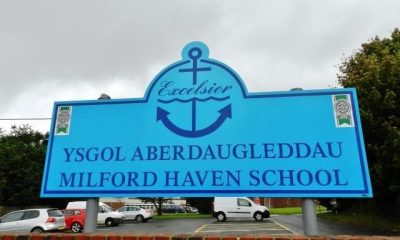
Teenager remanded after teacher injured in knife incident at Milford Haven school
Fifteen-year-old charged with Section 18 grievous bodily harm and possession of a bladed article appears before Swansea magistrates A FIFTEEN-YEAR-OLD...

Crime3 days ago
Police confirm teacher was stabbed at school as teenager appears in court
15-year-old charged with Section 18 GBH with intent and possession of a bladed article on education premises POLICE have confirmed...


Crime3 days ago
Man arrested for murder following death of pensioner in Pembroke Dock
Officers called to Hawkstone Road property as investigation continues and residents urged to come forward DYFED-POWYS POLICE officers have launched...


Crime3 days ago
Teacher discharged as Milford School to reopen Monday after serious assault
Deputy head praises ‘calm and professional’ staff and pupils during lockdown A TEACHER injured in a serious incident at Milford...


Crime4 days ago
Teacher discharged as police step back from Milford Haven school after assault
Teenager remains in custody as school closes and patrols increased to reassure community POLICE have confirmed they are no longer...
-

 Health4 days ago
Health board targets rise in steroid and gym drug use across west Wales
-

 Crime5 days ago
Sex offender jailed after living off grid in Pembrokeshire and refusing to register
-

 News7 days ago
Princess of Wales visits historic Pembrokeshire woollen mill
-

 Crime4 days ago
Teacher injured and teenager arrested for attempted murder at Milford Haven School
-

 Crime6 days ago
Hakin man’s appeal delayed again as Crown Court seeks guidance on insurance law
-

 Crime6 days ago
Johnston man remanded in custody over knife and assault charges
-
Business11 hours ago
Computer Solutions Wales under fire from customers
-

 Business3 days ago
Six-figure negligence victory leaves retired builder trapped in divorce limbo