


Politics
Councils’ budgets ‘war of attrition’


THE LOCAL GOVERNMENT settlement announced by Welsh Government continues an eight-year run of real term reductions to local government funding.
That’s according to the Welsh Local Government Association (WLGA) in response to Tuesday’s (Oct 10) announcement of the provisional budget for local government by Finance Secretary Mark Drakeford.
The Welsh Government claims the Budget will ‘protect key services’, as they continue to squeeze councils into devoting an ever-larger slice of an ever-diminishing budget to its core priorities.
‘COUNCILS PROTECTED FROM WORST OF CUTS’
While the Welsh Government claims that no council will have to cut more than 1% off its budget next year and 1.5% off the budget for 2019/20, when other costs are factored in all councils will be faced with a further significant cut above and beyond the headline claims. And taking Welsh government grants out of the final settlement suggests that cuts will be deeper still.

Announcing the provisional settlement, Mark Drakeford said: “Last year I told local authorities to prepare for the tougher times and harder choices that lay ahead as the flawed and failed policy of austerity continues to hit Wales hard.
“My priority, using a formula we have agreed with local government, is to try and protect councils from the worst of the cuts.
“Next year’s settlement might be difficult. We have done all we can to make it manageable. Councils must now use this time to plan ahead and ensure that funding goes to the services and people who need it the most.”
‘SERVICES HAVE BEEN PUMMELLED’
Professor Drakeford’s words got a stony welcome from the WLGA.
A statement from the body said: “In the context of ongoing and prolonged austerity, councils will view this as a very difficult and challenging settlement for supporting vital services that contribute to the education, health and well- being of our communities.
“Leaders across Wales have pushed for parity of funding and particularly sought new investment in a range of services, such as economic development, environmental health and transport, which have been pummelled by cuts.

“The headline reduction of 0.5% fails to recognise the full story; with service pressures that amount to £212m in 2018-19 alone, the sector will have to look for savings of nearly 4.5% of net budgets in the next financial year. This comes on top of cuts of over £1bn that have been made to date and 25,000 job losses across the sector. While the reduction is within the range predicted by the WLGA, local government is still bearing the heaviest burden of austerity.”
‘POSITION IS UNSUSTAINABLE’
Commenting on the draft settlement, Councillor Debbie Wilcox (Newport), WLGA Leader said: “The problem for local government is that we are now in a ‘war of attrition’. Services are wearing down to the point of collapse and the public are rightly growing frustrated in terms of paying council tax and yet seeing key community functions cut or closed.
“The whole position is unsustainable. Local authorities cannot go on to be expected to make the harshest of cuts whilst continuing to provide the same breadth and level of service; in short, something has got to give. “
‘WORKFORCE DESERVES A PAY RISE’
Councillor Emlyn Dole (Carmarthenshire), WLGA Plaid Cymru Group Leader said: “Welsh councils will still face severe financial pressures estimated to be over £200m for the next financial year alone due to demographic factors and workforce related pressures.
“I would urge the UK Government to use its Budget announcement in November to fully fund any relaxation of the pay cap. Every 1% increase in pay costs the public sector around £100m, and £35m of that is attributable to councils.
“Our workforce deserves a pay rise. In this context, local government funding must be more flexible and the transfer of nearly £100m of grants into the settlement is a positive step. I would urge Ministers to think about the other funding flexibilities for the other £700m in grants which put an additional administrative burden on the public services.”
UNDERFUNDED AND UNSUSTAINABLE
Councillor Hugh Evans OBE (Denbighshire), WLGA Independent Group Leader said: “The funding formula delivers a range of increases and decreases across the 22 local authorities. We need to make sure that the system takes account of the additional needs of providing services in communities with diverse needs and especially the additional costs of providing services in rural communities which are dramatically underfunded.”
Councillor Peter Fox OBE (Monmouthshire), WLGA Conservative Group Leader said: “Social services and education should be funded on equal terms with health, which means providing the £160m that both services need to stand still next year. There are also a range of preventative services within councils that will not survive unless the Welsh Government has a long hard look at the way it allocates money across the totality of public services. Ring-fencing small sums in the settlement for those services is like robbing Peter to pay Paul, as other services suffer.”
‘SERIOUS CASH INJECTION REQUIRED’
UNISON has also criticised the Welsh government’s budget for local authority spending as wholly inadequate. The trade union has warned thousands of jobs will be lost and local public services will be reduced or disappear completely because councils are under severe financial pressure.
UNISON also blasted Welsh Government’s failure to fund the implement of the Foundation Living Wage to lift thousands of council workers out of in-work poverty, something it says could have been achieved with a relatively modest injection of cash.
Dominic MacAskill, UNISON head of local government said: “Today’s news is grim indeed. People can’t understand why their library opening hours will have to be reduced or their youth club shut down in the name of austerity. Communities need quality local services otherwise they cease to be healthy and liveable places but councils are struggling to provide these and more – parks and leisure services, food hygiene and environment health services, on the meagre budgets Welsh Government has today granted.
“Savage spending cuts might be directed by Westminster Conservatives but the Welsh Government must see the lack of new money for local authorities in the announcement today will mean thousands more council jobs are lost and services at smaller councils might collapse altogether. Our warning couldn’t be starker: without a serious injection of cash, some councils will become unsustainable.”
Mr MacAskill added: “Public service workers will be incredibly frustrated their concerns are not being listened to. Welsh government has missed an opportunity to lift thousands of hard working council staff out of in-work poverty by failing to fund the Foundation Living Wage for all local government employees. They agreed this was necessary in the NHS and the Civil Service, why can’t they do it for all public service workers?”


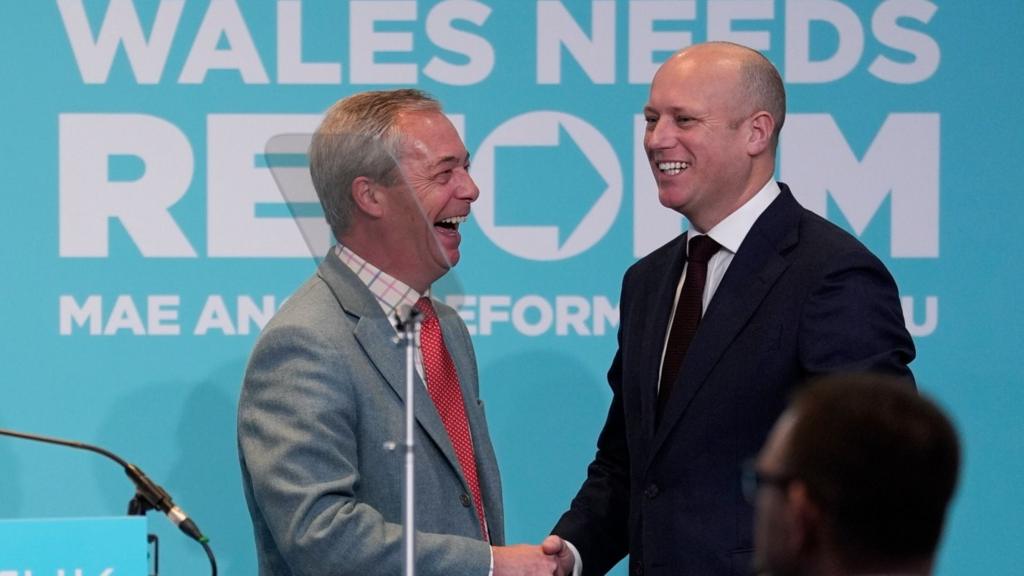
Former Conservative council leader tasked with building support ahead of Senedd elections
DAN THOMAS has been appointed as the new Welsh leader of Reform UK, in a move the party says will strengthen its organisation ahead of next year’s Senedd elections.
Thomas, a former Conservative council leader, will head Reform’s campaign across Wales as the party attempts to convert growing polling support into seats at devolved level for the first time.
The appointment marks Reform’s most significant step yet in formalising its Welsh structure, with the party seeking to present itself as a credible alternative to Labour, the Conservatives and Plaid Cymru.
Party sources say his brief is straightforward: build candidates, grow membership and turn dissatisfaction with mainstream politics into votes.
Shift from the Conservatives
Thomas’s move follows a broader trend of defections from the Conservative Party to Reform UK, both in Wales and across the UK.
In recent weeks, former Conservative Senedd member James Evans also switched allegiance, signalling unrest within Tory ranks and giving Reform higher-profile figures to front its Welsh campaign.
Reform has increasingly targeted voters frustrated with NHS waiting lists, cost-of-living pressures and rural economic concerns, arguing that the established parties have failed to deliver meaningful change.
Supporters say Thomas brings experience of local government leadership and campaigning, which they believe will help professionalise the party’s operations in Wales.
Critics hit out
However, opponents have been quick to criticise the appointment.

Plaid Cymru leader Rhun ap Iorwerth described Thomas as effectively “Farage’s deputy”, claiming his role would be focused more on advancing the ambitions of Nigel Farage than developing policies tailored to Wales.
Plaid figures argue Reform is largely made up of former Conservatives and lacks detailed plans on devolved issues such as health, education and local government funding.
They have also pointed to the party’s past controversies, including the conviction of former Wales figure Nathan Gill, though Reform says it is now under new leadership and direction.

Election battle ahead
Recent polling suggests Reform could play a significant role in shaping the next Senedd, with support rising in parts of south and west Wales where voters have traditionally backed Labour or the Conservatives.
If those numbers translate into seats, Reform could disrupt the balance of power in Cardiff Bay and complicate coalition maths after the election.
For Thomas, the challenge will be turning protest votes into an organised ground campaign capable of winning constituencies under Wales’s proportional system.
Whether Reform’s momentum continues — or stalls under scrutiny — is likely to become clearer as candidates are selected and manifestos published in the months ahead.
Reform UK has said more details about its Welsh policy platform will be announced later this year.
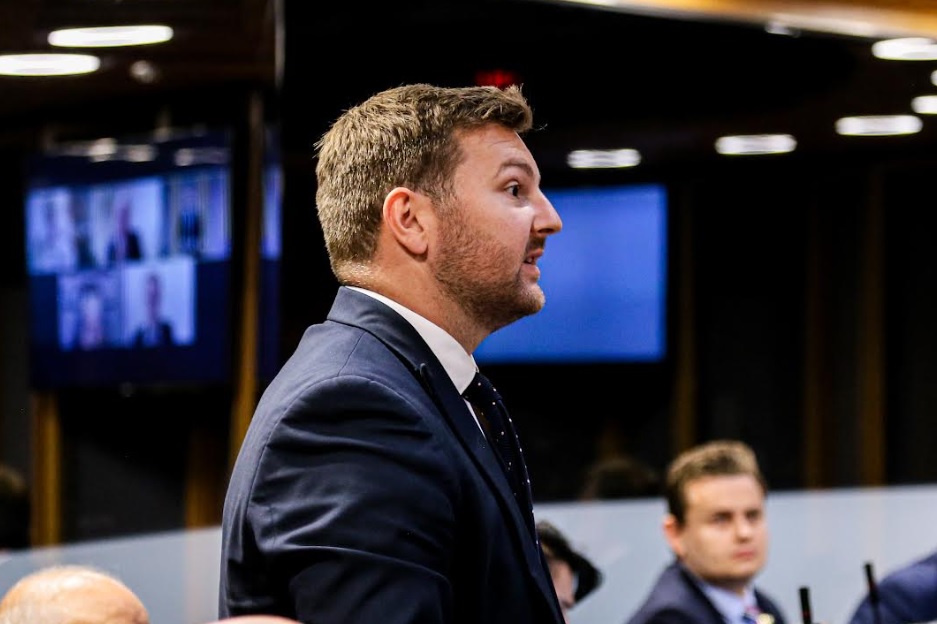
Opposition motion follows Epstein-linked document disclosures
A SENEDD Member has called on Labour MPs to support a Conservative Opposition Day Motion demanding the release of papers linked to Peter Mandelson’s appointment as the UK Ambassador to the United States.
Samuel Kurtz said the motion follows the publication of new files and photographs involving Lord Mandelson, which were released as part of a United States investigation into the disgraced and convicted child sex offender Jeffrey Epstein.
Speaking out, Mr Kurtz said that during Prime Minister’s Questions, the Prime Minister admitted he was aware of Peter Mandelson’s ongoing relationship with Epstein at the time of his appointment.
“That means the Prime Minister knowingly appointed Peter Mandelson to one of the most important diplomatic roles in government despite his links to Epstein,” he said. “This raises serious questions about the Prime Minister’s judgement.”
Mr Kurtz went on to accuse the Prime Minister of attempting to prevent transparency over the appointment process.
“Now, instead of being open and transparent, the Prime Minister is attempting to block the release of documents relating to Mandelson’s appointment in order to protect his own position,” he said.
He warned that Labour MPs who oppose the motion would share responsibility for withholding information, adding: “If Labour MPs support blocking the release of these papers, they will be complicit in covering up the process and judgement that led the Prime Minister to appoint Peter Mandelson as Ambassador, despite his friendship with Jeffrey Epstein.”
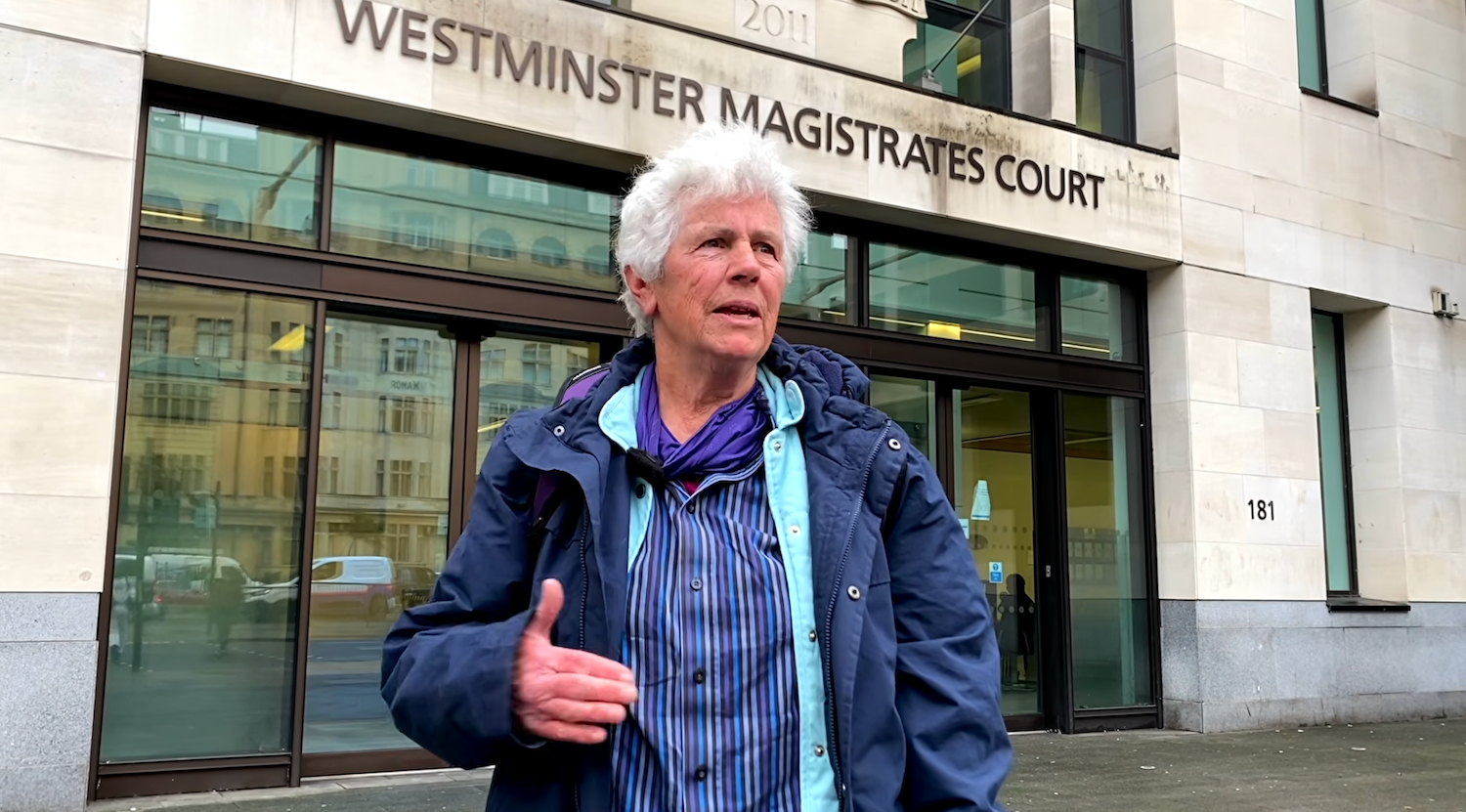
Concerns raised over use of terrorism laws against silent sign-holders as Welsh activist among those ejected from London hearings
A WELSH peace campaigner was among several protesters removed from court by security staff this week as plea hearings continued for people charged under terrorism legislation for holding pro-Palestine signs.
Angie Zelter, aged 74, from Knucklas, appeared at Westminster Magistrates’ Court in London on Monday as part of mass proceedings linked to the Government’s ban on Palestine Action.
Campaigners say hundreds of people across the UK – including some in Wales – have been charged under Section 13 of the Terrorism Act 2000 after quietly holding handwritten signs reading: “I oppose genocide. I support Palestine Action.”

Zelter, a long-time anti-war activist and founder of Trident Ploughshares, attempted to read a prepared statement criticising the prosecutions before being escorted from the courtroom, according to supporters.
She told the court she did not accept being labelled a terrorist for what she described as peaceful protest and opposition to the war in Gaza.

Outside the building, fellow campaigners said she had sought to argue that international law and freedom of expression should protect non-violent dissent.
Also removed from the hearing was Tim Crosland, co-founder of Defend Our Juries, who said he had tried to raise legal objections to the charges before being asked to leave.
Arrests nationwide
Organisers of the “Lift The Ban” campaign claim nearly 3,000 people have been arrested across Britain since late 2025 for taking part in silent vigils, with several hundred now facing prosecution. The offences carry a maximum sentence of six months in prison.
The group argues the legislation is being used to criminalise peaceful protest. It is calling on the Government to lift the ban on Palestine Action and to change its stance on military cooperation with Israel.

However, ministers have defended the proscription, saying the organisation has been linked to criminal damage and disruption at sites connected to defence manufacturing.
Welsh perspective
While most hearings are taking place in London, campaigners say demonstrators in Wales have also taken part in sign-holding protests.
Civil liberties advocates have warned that applying terrorism laws to non-violent protest risks setting a troubling precedent.

For many in mid Wales, the sight of a pensioner from rural Powys being removed from a courtroom has sharpened debate over where the line lies between legitimate protest and criminality.
Further hearings are scheduled in the coming weeks, with more defendants from across the UK expected to appear.



international news2 hours ago
Pembrokeshire women conquer Atlantic in epic 3,000-mile row
PEMBROKESHIRE’S all-female rowing crew Merched y Mor have completed one of the hardest endurance challenges on the planet after crossing...


Crime17 hours ago
Sex offender jailed after living off grid in Pembrokeshire and refusing to register
Man walked into police station after months avoiding authorities A CONVICTED sex offender who told police he intended to live...

Crime24 hours ago
More rape and sexual assault survivors to get right to challenge dropped cases
New review scheme to be rolled out across CPS Cymru-Wales following successful pilot SURVIVORS of rape and serious sexual assault...

Crime2 days ago
Man spared jail after admitting child abuse image offences
Police seized devices after intelligence linked Pembrokeshire address to illegal cloud storage accounts A 23-YEAR-OLD Pembrokeshire man has avoided immediate...


Community2 days ago
Cleddau at heart of major water reforms as ministers promise ‘fundamental reset’
New regulation plan aims to tackle pollution, sewage spills and ageing infrastructure COMMUNITIES along the River Cleddau could see tighter...


Crime2 days ago
Man caught in hotel sting after trying to meet girl, 13
Laugharne defendant confronted by paedophile hunters at St Clears Travelodge before suspended jail term at Swansea Crown Court A LAUGHARNE...


News2 days ago
Princess of Wales visits historic Pembrokeshire woollen mill
Catherine the Princess of Wales visited Melin Tregwynt, a historic family-owned woollen mill, today, highlighting the enduring traditions and skills...


Crime3 days ago
Arrest made after Carmarthen park stabbing investigation
Police thank community and media following public appeal to trace suspect AN ARREST has been made following last week’s stabbing...


Crime3 days ago
Search continues for attempted murder suspect after Carmarthen park stabbing
Police expand searches across riverbank and woodland as public urged to come forward with information DYFED-POWYS POLICE say their search for...


Community3 days ago
Flood alert issued for Pembrokeshire coast this evening
Pembrokeshire residents are being urged to prepare for possible flooding along the coastline between St Dogmaels, Cardigan and Amroth, after...
-
 Health7 days ago
Consultation reveals lack of public trust in health board
-
Crime17 hours ago
Sex offender jailed after living off grid in Pembrokeshire and refusing to register
-
News2 days ago
Princess of Wales visits historic Pembrokeshire woollen mill
-
 Crime6 days ago
Pembroke man accused of child sex offences sent to Swansea Crown Court
-

 Health4 days ago
Doctor struck off after sexual misconduct findings at Withybush Hospital
-
 Crime2 days ago
Hakin man’s appeal delayed again as Crown Court seeks guidance on insurance law
-
 Community6 days ago
50s women threaten legal action over pension compensation refusal
-
 Business7 days ago
Eight-year prison sentence after vehicle stop uncovers drugs worth over £150,000