


Politics
Impact of Brexit on Wales discussed


PARLIAMENTARY questions last Thursday (Oct 26) were not easy for Secretary of State for Exiting the EU David Davis.
Nailed to the spot about pronouncements he had made to a committee of MPs the previous day which had rapidly been contradicted by the Prime Minister, he managed to combine apparent certainty that there was no tension between his position and government policy (whatever that turns out to be) with an unwillingness to acknowledge that anyone could conceivably be concerned about Parliamentary sovereignty being bypassed by the refusal to give it a vote on Brexit’s terms.
For those who backed Brexit on the principle that parliamentary sovereignty and the ability of the House of Commons to make and scrutinise legislation was of paramount importance, it was uncomfortable listening.
Bluster and bloody-mindedness, it is rapidly turning out, are no substitute for the ability to master a brief, understand it, express it, and stick to it.
In fact, the position was rendered even worse by statements made by the Ministers of State in Mr Davis’ own department the previous day that they had not even bothered to read, let alone understand, briefing papers prepared for them by their own civil servants on the potential impact of leaving the EU. You might suppose that ignorance is bliss and, if it is, the Minister wished to share its blessings widely by refusing others the opportunity to examine that of which they remain willfully – and, no doubt ecstatically, ignorant.

After being offered sympathy by Labour’s shadow Brexit minister Sir Kier Starmer for the difficulties in which he found himself, Mr Davis was successively hit by a series of exasperated questions – some from his own colleagues – to which he offered increasingly snappy and impatient answers.
Plaid Cymru’s Jonathan Edwards, who has the misfortune of seeming to be more familiar with Mr Davis’ brief than Mr Davis does himself and doomed to try to educate pork as a result, attempted to get a straight answer on whether or not the UK Government would seek endorsements for the Brexit deal – if any – from devolved administrations.
Jonathan Edwards reminded MPs that national and regional Parliaments within EU member states will all be consulted on the final withdrawal deal and that six months have been allocated for that process.
Mr Edwards asked Brexit Secretary David Davis that ‘in order to ensure that the future relationship works for every part of the British state’ did he agree that ‘the formal endorsement of the National Assembly for Wales, the Scottish Parliament and the Northern Ireland Assembly should be sought before any final deal is reached—or is it going to be a case of “Westminster knows best”?’
In response, Mr Davis again failed to guarantee Wales a voice in the deal, stating ‘this is a treaty for the United Kingdom’.
Bearing in mind the continued absence of any commitment to discuss with ministers within the devolved administration on any substantive points, it seems that the UK Government is increasingly determined to go its own way and drag the other nations of the UK along behind it.
Speaking after Mr Davis’ shambolic and ill-tempered performance, Jonathan Edwards said: “As I and my Plaid Cymru colleagues have said before: the British Government is using the Brexit process as a means of re-centralising power in Westminster, rolling back the progress we have made towards self-government in order to reinstate Westminster-rule.

“In his answer to me this week the Brexit Secretary once again fails to guarantee our democratically elected representatives in the Welsh Parliament a formal role in influencing the deal with the European Union. This is particularly concerning when we consider the profound economic differences between Wales and England.
“The position of the British Government is even more insulting when we consider that devolved governments within the other EU member states will have an opportunity to influence and effectively veto the deal. The British government needs to say why it refuses to afford the same right to the devolved governments here.”
However, on Monday (Oct 30) the UK Government made an effort to – at least partly – assuage those concerns.
First Minister Carwyn Jones met with Theresa May in Downing Street in an attempt to at least break down the conflict between the Senedd and Westminster on how a way forward might be found in relation to what Mr Jones had previously described as ‘a constitutional crisis’.
Speaking to BBC Wales after the meeting, Mr Jones said: “Progress is now being made in making sure there is agreement as to the way forward, not imposition. But that progress needs to continue. We’re not in a position yet to support the bill.
“The bill needs to change so the warm words that we hear are reflected on the face of the bill, and that means making sure that powers meant to come to Wales do come to Wales.”
Secretary of State for Wales Alun Cairns said: “I’m optimistic that the Welsh government will be able to respond to the new powers that they’ll get, but also that we’ll have a common framework around the UK that will work for business and for stakeholders and for investors.”
A No 10 spokesperson said Mrs May and Mr Jones ‘spoke about constructive dialogue at the recent Joint Ministerial Committee and the progress made on working together to establish principles on common frameworks’.


Opposition motion follows Epstein-linked document disclosures
A SENEDD Member has called on Labour MPs to support a Conservative Opposition Day Motion demanding the release of papers linked to Peter Mandelson’s appointment as the UK Ambassador to the United States.
Samuel Kurtz said the motion follows the publication of new files and photographs involving Lord Mandelson, which were released as part of a United States investigation into the disgraced and convicted child sex offender Jeffrey Epstein.
Speaking out, Mr Kurtz said that during Prime Minister’s Questions, the Prime Minister admitted he was aware of Peter Mandelson’s ongoing relationship with Epstein at the time of his appointment.
“That means the Prime Minister knowingly appointed Peter Mandelson to one of the most important diplomatic roles in government despite his links to Epstein,” he said. “This raises serious questions about the Prime Minister’s judgement.”
Mr Kurtz went on to accuse the Prime Minister of attempting to prevent transparency over the appointment process.
“Now, instead of being open and transparent, the Prime Minister is attempting to block the release of documents relating to Mandelson’s appointment in order to protect his own position,” he said.
He warned that Labour MPs who oppose the motion would share responsibility for withholding information, adding: “If Labour MPs support blocking the release of these papers, they will be complicit in covering up the process and judgement that led the Prime Minister to appoint Peter Mandelson as Ambassador, despite his friendship with Jeffrey Epstein.”

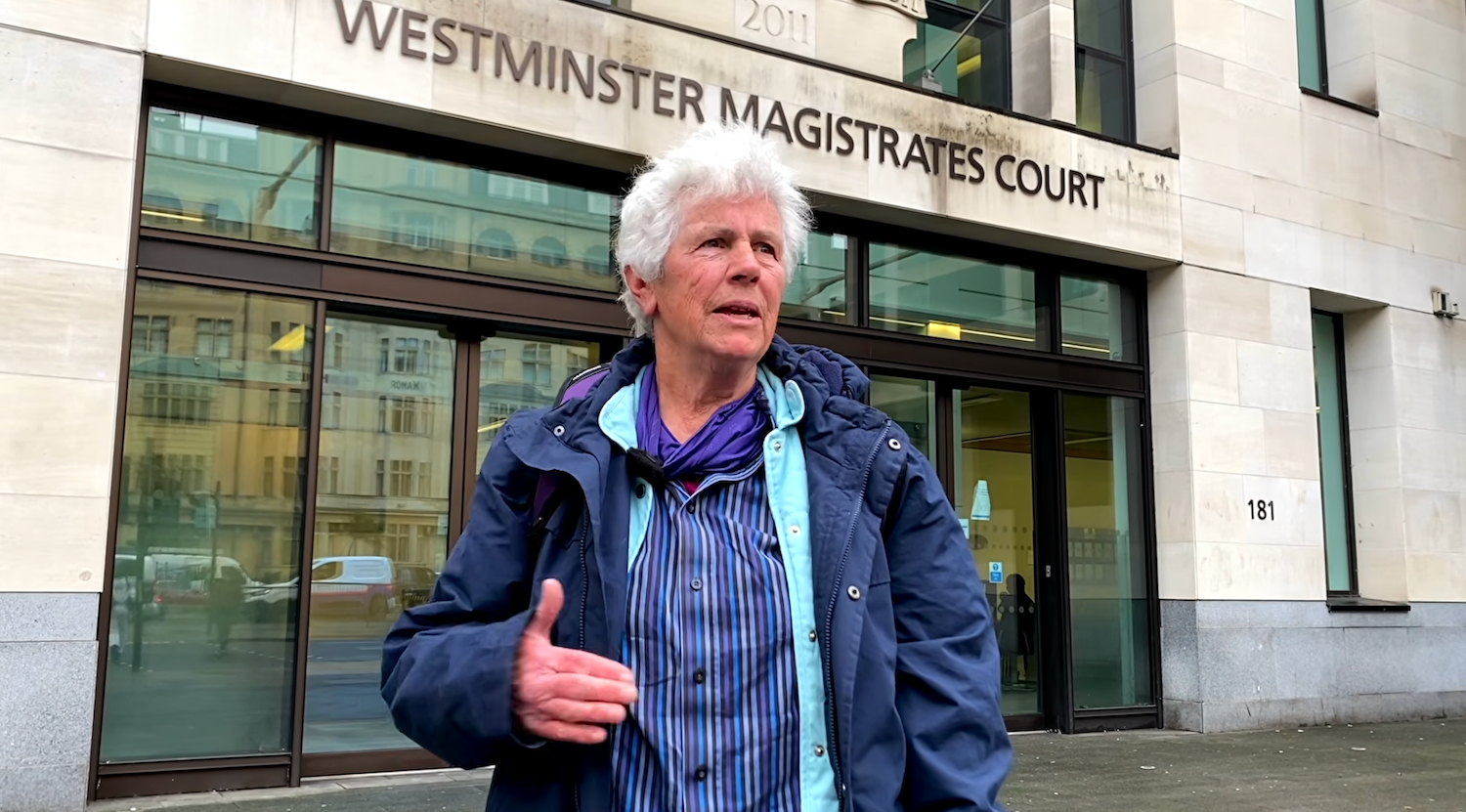
Concerns raised over use of terrorism laws against silent sign-holders as Welsh activist among those ejected from London hearings
A WELSH peace campaigner was among several protesters removed from court by security staff this week as plea hearings continued for people charged under terrorism legislation for holding pro-Palestine signs.
Angie Zelter, aged 74, from Knucklas, appeared at Westminster Magistrates’ Court in London on Monday as part of mass proceedings linked to the Government’s ban on Palestine Action.
Campaigners say hundreds of people across the UK – including some in Wales – have been charged under Section 13 of the Terrorism Act 2000 after quietly holding handwritten signs reading: “I oppose genocide. I support Palestine Action.”

Zelter, a long-time anti-war activist and founder of Trident Ploughshares, attempted to read a prepared statement criticising the prosecutions before being escorted from the courtroom, according to supporters.
She told the court she did not accept being labelled a terrorist for what she described as peaceful protest and opposition to the war in Gaza.
Outside the building, fellow campaigners said she had sought to argue that international law and freedom of expression should protect non-violent dissent.
Also removed from the hearing was Tim Crosland, co-founder of Defend Our Juries, who said he had tried to raise legal objections to the charges before being asked to leave.
Arrests nationwide
Organisers of the “Lift The Ban” campaign claim nearly 3,000 people have been arrested across Britain since late 2025 for taking part in silent vigils, with several hundred now facing prosecution. The offences carry a maximum sentence of six months in prison.
The group argues the legislation is being used to criminalise peaceful protest. It is calling on the Government to lift the ban on Palestine Action and to change its stance on military cooperation with Israel.

However, ministers have defended the proscription, saying the organisation has been linked to criminal damage and disruption at sites connected to defence manufacturing.
Welsh perspective
While most hearings are taking place in London, campaigners say demonstrators in Wales have also taken part in sign-holding protests.
Civil liberties advocates have warned that applying terrorism laws to non-violent protest risks setting a troubling precedent.
For many in mid Wales, the sight of a pensioner from rural Powys being removed from a courtroom has sharpened debate over where the line lies between legitimate protest and criminality.
Further hearings are scheduled in the coming weeks, with more defendants from across the UK expected to appear.
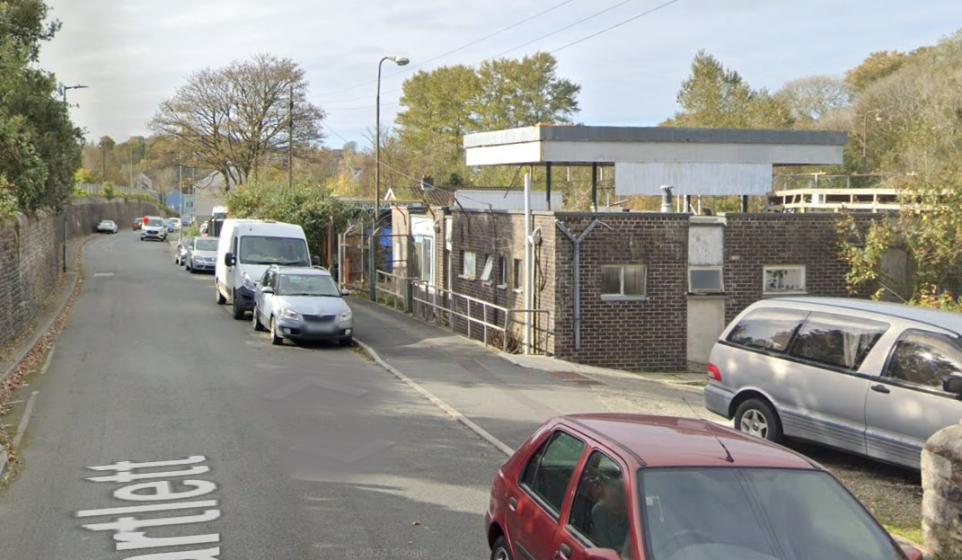
A CALL for the retrospective conversion of office space previously connected to a Pembrokeshire car hire business to a chocolate factory, a beauty salon and a laundrette has been submitted to county planners
In an application to Pembrokeshire County Council, Mr M Williams, through agent Preseli Planning Ltd, sought retrospective permission for the subdivision of an office on land off Scotchwell Cottage, Cartlett, Haverfordwest into three units forming a chocolate manufacturing, a beauty salon, and a launderette, along with associated works.
A supporting statement said planning history at the site saw a 2018 application for the refurbishment of an existing office building and a change of use from oil depot offices to a hire car office and car/van storage yard, approved back in 2019.
For the chocolate manufacturing by ‘Pembrokeshire Chocolate company,’ as part of the latest scheme it said: “The operation comprises of manufacturing of handmade bespoke flavoured chocolate bars. Historically there was an element of counter sales but this has now ceased. The business sales comprise of online orders and the delivery of produce to local stockist. There are no counter sales from the premises.”
It said the beauty salon “offers treatments, nail services and hairdressing,” operating “on an appointment only basis, with the hairdresser element also offering a mobile service”. It said the third unit of the building functions as a commercial laundrette and ironing services known as ‘West Coast Laundry,’ which “predominantly provides services to holiday cottages, hotels and care homes”.
The statement added: “Beyond the unchanged access the site has parking provision for at least 12 vehicles and a turning area. The building now forms three units which employ two persons per unit. The 12 parking spaces, therefore, provide sufficient provision for staff.
“In terms of visiting members of the public the beauty salon operates on an appointment only basis and based on its small scale can only accommodate two customers at any one time. Therefore, ample parking provision exists to visitors.
“With regard to the chocolate manufacturing and commercial laundrette service these enterprises do not attract visitors but do attract the dropping off laundry and delivery of associated inputs. Drop off and collections associated with the laundry services tend to fall in line with holiday accommodation changeover days, for example Tuesday drop off and collections on the Thursday.
“With regard to the chocolate manufacturing ingredients are delivered by couriers and movements associated with this is also estimated at 10 vehicular movements per week.”

The application will be considered by county planners at a later date.



Crime45 minutes ago
Sex offender jailed after living off grid in Pembrokeshire and refusing to register
Man walked into police station after months avoiding authorities A CONVICTED sex offender who told police he intended to live...


Crime7 hours ago
More rape and sexual assault survivors to get right to challenge dropped cases
New review scheme to be rolled out across CPS Cymru-Wales following successful pilot SURVIVORS of rape and serious sexual assault...

Crime1 day ago
Man spared jail after admitting child abuse image offences
Police seized devices after intelligence linked Pembrokeshire address to illegal cloud storage accounts A 23-YEAR-OLD Pembrokeshire man has avoided immediate...


Community1 day ago
Cleddau at heart of major water reforms as ministers promise ‘fundamental reset’
New regulation plan aims to tackle pollution, sewage spills and ageing infrastructure COMMUNITIES along the River Cleddau could see tighter...


Crime1 day ago
Man caught in hotel sting after trying to meet girl, 13
Laugharne defendant confronted by paedophile hunters at St Clears Travelodge before suspended jail term at Swansea Crown Court A LAUGHARNE...


News1 day ago
Princess of Wales visits historic Pembrokeshire woollen mill
Catherine the Princess of Wales visited Melin Tregwynt, a historic family-owned woollen mill, today, highlighting the enduring traditions and skills...


Crime2 days ago
Arrest made after Carmarthen park stabbing investigation
Police thank community and media following public appeal to trace suspect AN ARREST has been made following last week’s stabbing...


Crime2 days ago
Search continues for attempted murder suspect after Carmarthen park stabbing
Police expand searches across riverbank and woodland as public urged to come forward with information DYFED-POWYS POLICE say their search for...


Community2 days ago
Flood alert issued for Pembrokeshire coast this evening
Pembrokeshire residents are being urged to prepare for possible flooding along the coastline between St Dogmaels, Cardigan and Amroth, after...


News2 days ago
Tributes paid to Pembroke Dock Councillor and former Mayor Pamela George
It is with great sadness that the Pembroke Dock community mourns the passing of Councillor Pamela George. Pamela, affectionately known...
-

 Health6 days ago
Consultation reveals lack of public trust in health board
-
News1 day ago
Princess of Wales visits historic Pembrokeshire woollen mill
-

 Crime5 days ago
Pembroke man accused of child sex offences sent to Swansea Crown Court
-

 Community7 days ago
Campaign to ‘save’ River Cleddau hits over 2,200 signatures
-

 Health3 days ago
Doctor struck off after sexual misconduct findings at Withybush Hospital
-

 Health7 days ago
Ambulance called after ‘drop of mouthwash’ swallowed as 999 abuse highlighted
-

 News7 days ago
Welsh Conservatives push for reversal of 20mph limit and major road spending
-
 Crime5 days ago
Manhunt intensifies after woman seriously injured in Carmarthen park stabbing