


News
New band are the ‘oldest swingers in town’


 THE Starlite Swing Band is the hottest ‘new’ band on the county’s music scene – and the five members of the band have a staggering combined age of 390 years!
The band boasts a total of 304 years in the entertainment business and they rehearse at the Milford Haven British Legion Club every Tuesday morning. They have already played at a couple of small venues and they specialise in the Big Band Sound, with numbers like “S’wonderful”, “Aint she sweet” and “Bye bye blackbird”.
Dennis Wheeler will celebrate his 88th birthday later this month and is the band’s trumpeter. He says he has been blowing his own trumpet for the last 80 years. He started playing with the Salvation Army at the age of seven and went on to run his own 19-piece dance orchestra in Lincoln. After retiring in Pembrokeshire, Dennis was enticed to take up the baton again to direct the Fishguard and Goodwick Brass Band.
Denis Wheeler (no relation) is the band’s 73-year-old alto/baritone sax player and was formerly head of the music department at Greenhill School, Tenby. Now living in Martletwy, Denis can still be seen at a few local jazz venues, including the Jefferston Arms.
Billy Jenkins is their 73-year-old accomplished keyboard player. Virtually self-taught, Billy has a wonderful ear for music, which is just as well as he doesn’t read a note. Billy has been on the local scene since the late 50s when he was with the Rebels. He later joined Don Wade and the Wayfarers and still goes out with this partner as “Jock-a-Billy”.

Eighty-seven-year-old Nick Carter is the bass player, who came to the county with the Fleet Air Arm and was stationed at Brawdy. Nick had the dubious pleasure of playing “slap bass” with a few of the dance bands at various venues. He also played tenor or bass horn with the Milford Haven Town Band and bass guitar with rehearsal band Opus 18. Having had his guitar stolen a number of years ago, Nick made one out of an old scaffolding plank and no-one has ever tried to steal it!
Finally the ‘youngster’ of the band is Roger Arnold, coming in at a sprightly 69 years. Another non-reader of music, Roger has been playing locally for almost 58 years, starting in school with Billy Bleep and the Satelites, and eventually graduating to Don Wade and the Wayfarers, the City Gents Six and 25 years with the well remembered Knight & Daye.
Roger says: “It’s wonderful to have something to look forward to again, but it would be much nicer to play in front of an audience again, that’s what we’re all best at.”
The Starlite Swing Band is ready and willing to appear at any function, whether it be an afternoon tea dance, birthday party of swing-era themed night.

For details call Roger Arnold on 01646 698003.



A MAN has been sentenced to life imprisonment after admitting the murder of his estranged wife in Cardiff.
Appearing at Cardiff Crown Court today (Feb 20), Thisara Weragalage, aged 38, of Pentwyn, was given a life sentence with a minimum term of 23 years and nine months for the murder of Nirodha Niwunhella.
Weragalage had initially pleaded not guilty but later changed his plea, admitting the offence before the court on January 16, 2025.
The family of 32-year-old Niwunhellage Dona Nirodha Kalapni Niwunhella, known as Nirodha, paid tribute following her death, describing her as “a cherished daughter, family member and dear friend to many”.
They said: “We remember Nirodha as a cherished daughter, family member and dear friend to many. Nirodha will be forever remembered with peace, love and gratitude.
“She touched many lives with her kindness and warmth and her memory will continue to inspire us. Though her life ended too soon, the love she shared will always remain with us.
“Rest in peace angel.”
In a victim personal statement read to the court, her father said: “My only daughter was Nirodha Kalpani Niwunhella. She was a happy, mischievous, playful girl who captivated everyone’s hearts as a child. She loved her mother and father dearly and was a very good friend to her friends. She was a sweet girl who also loved animals.”
He added: “I am 64 years old and my wife is also 64 years old. The pain and anguish we felt when we were informed on August 21 that our daughter had been murdered cannot be described in words. After the brutal murder of our only daughter, all our hopes were ruined. Her loss is an unbearable mental burden for the family.
“We faced a lot of problems because this crime took place abroad. We were further affected by communication difficulties and economic hardships. We were further hurt and mentally distressed after it was confirmed that this crime was committed by our daughter’s husband. We still cannot understand how he could have committed this heinous crime, as we loved him also as much as we loved our daughter.”
Emergency services were called to South Morgan Place in the Riverside area of Cardiff at 7.37am on August 21, following reports of a seriously injured woman. Officers located a broken knife blade and handle nearby, and a post-mortem examination later revealed Nirodha had been stabbed at least twenty times.
Police officers who arrived first at the scene began immediate first aid, followed shortly afterwards by paramedics. Despite their efforts, she was pronounced dead at the scene.

Witnesses reported seeing a man — later identified as Weragalage — fleeing in a Ford Fiesta. Fast-track CCTV enquiries confirmed the vehicle was registered to him.
Less than an hour later, officers received a welfare-related call via the ambulance service concerning an incident on Seawall Road. Attending officers identified the man as matching the description circulated in connection with Nirodha’s death. A search of the nearby area located the Ford Fiesta, which contained blood inside, and Weragalage was arrested on suspicion of murder.
Senior investigating officer Detective Inspector Graham Williams said: “Nirodha was beloved by her family and friends, and her life was ended by her jealous and cowardly former partner.
“Nirodha was in the process of separating from Weragalage, who could not accept that she no longer wanted to be in a relationship with him. He brought knives to the area which he said were to intimidate her and then went on to murder her.
“I’m pleased he owned up to his cowardly actions and spared Nirodha’s loved ones from enduring a trial. While no sentence can compensate for this loss of life, I hope the end of criminal proceedings helps bring them some peace.
“This sentencing is the result of countless hours of work from teams across the force, and I’d like to thank everyone involved for their time and efforts to secure this outcome. I’d also like to thank those from the community who supported our investigation throughout.
“We will not stand for violence in any form, including violence against women and girls, and we will do everything in our power to hold those responsible to account.”

Schools and social care receive extra funding in 2026–27 spending plans
PEMBROKESHIRE COUNTY COUNCIL has approved its budget for the 2026–27 financial year, confirming another increase in council tax alongside additional investment in key services.
The budget was agreed on Friday (Feb 20) and includes an extra £4.7 million for schools and £5.9 million for Social Care, reflecting continuing demand pressures in both sectors.
Funding has also been allocated to a range of frontline services, including highways, road maintenance and the upkeep of council buildings, as the authority seeks to maintain service levels despite ongoing financial pressures.
As part of the plans, council tax will increase by £1.46 per week for a Band D property. Council leaders say the rise is necessary to help meet growing costs, particularly in social care, staffing and inflation-related pressures affecting local authorities across Wales.
The council says the budget aims to protect essential services while keeping the increase as low as possible, although it acknowledged the impact any rise will have on residents already facing cost-of-living pressures.

Further details of spending allocations and any savings measures are expected to be published in the council’s full budget documents.

A BRAND new family musical from the creators of There Was An Old Lady Who Swallowed A Fly is set to delight Pembrokeshire audiences when it arrives at the Torch Theatre this spring.
A Big Egg, part of the popular Story Time series, is based on the picture book by Steven Lee and brings the story to life through a magical mix of live action, animation and puppetry. Packed with songs, laughter and audience participation, the production promises fun for all ages.
The story follows Jack and his little sister Molly, who are fascinated by the wonder of eggs. But just how big can an egg get — and what surprises might be hidden inside? Audiences are invited to join them on a joyful adventure described as a “feast of fun” and a cracking good time for everyone aged two to 102.
The show has received enthusiastic reviews from audiences across the UK. Family Matters said: “The children were absolutely gripped throughout,” while one audience member at London’s Lyric Hammersmith commented: “We loved it, the children loved it, everyone loved it.”
The performance takes place at the Torch Theatre on Wednesday, April 8 at 2:00pm.
Tickets are priced at £10, with concessions available at £8. For more information or to book, visit www.torchtheatre.co.uk or contact the Box Office on (01646) 695267.



News32 minutes ago
Council tax to rise again as Pembrokeshire sets new budget
Schools and social care receive extra funding in 2026–27 spending plans PEMBROKESHIRE COUNTY COUNCIL has approved its budget for the...

Health58 minutes ago
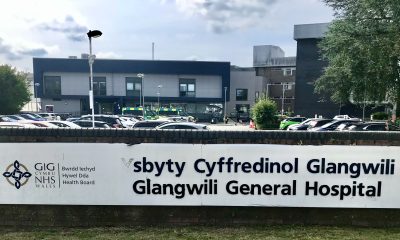
Stroke patients to be transferred to Carmarthen under new health plan
Withybush to provide initial treatment before specialist care elsewhere PEMBROKESHIRE patients who suffer a stroke are set to be transferred...

Health20 hours ago
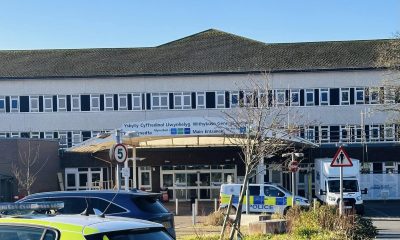
Health board confirms major hospital changes across west Wales
Emergency surgery centralised as Withybush role shifts toward planned care MAJOR changes to hospital services across west Wales have been...

Health23 hours ago
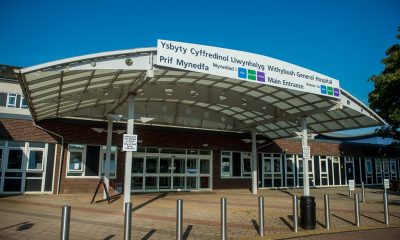
Withybush loses emergency surgery in shock health board decision
Paul Davies vows Senedd fight as fears grow over travel times and patient safety PEMBROKESHIRE patients will be forced to...


Business1 day ago
Mounting complaints: More Computer Solutions Wales customers claim losses
Business owner issues legal threats and IPSO complaint to this newspaper while refusing to answer detailed questions about customers who...


Local Government1 day ago
Milford Haven Hakin by-election candidates confirmed
THE LIST of candidates standing in the upcoming Pembrokeshire County Council by-election for the Milford Haven: Hakin ward has been...


Crime3 days ago
Telecom vandal admits causing £33,000 damage to Pembroke Dock network
Fibre cables cut in early-morning incident that triggered major service disruption A PEMBROKE DOCK man has admitted causing more than...


Community3 days ago
Smiles all round for Pancake Day celebrations in Tenby
TENBY was filled with laughter, cheers and the smell of freshly cooked pancakes on Tuesday (Feb 17) as the town’s...


Crime3 days ago
Man charged with GBH with intent following incident involving ‘Pembrokeshire Patriot’
Defendant remanded in custody as case linked to police raids on Friday A MAN has been charged with causing grievous...


Business4 days ago
Svitzer crews at Milford Haven vote for industrial action in pay dispute
Union ballot raises concerns over potential disruption at key UK energy port SVITZER crews working in the Port of Milford...
-
Health20 hours ago
Health board confirms major hospital changes across west Wales
-
Health23 hours ago
Withybush loses emergency surgery in shock health board decision
-

 Health22 hours ago
Health board: Changes will bring “resilience and sustainability” to West Wales services
-

 Business3 days ago
MS’s host business advice surgery following demand from Business Rates Online Forum
-
 Crime7 days ago
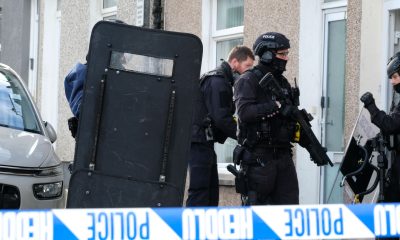
Four arrested in armed police operation across Pembroke Dock
-
Community4 days ago
Hywel Dda hospital services decisions will be made next week
-

 Education7 days ago
School in special measures after inspectors raise safeguarding and leadership concerns
-
 Community6 days ago
Second Milford Haven webcam launched after 1.3m views and US TV feature