


News
The Future for Pembrokeshire


 THE PEMBROKESHIRE Alliance wants to see the County retain its independence and we strongly oppose the proposed merger with Ceredigion or the re-creation of Dyfed as outlined in the recent Williams report.
This was one of the key reasons we formed the Pembrokeshire Alliance. The county needs an organisation to fight for Pembrokeshire and protect its right to govern its own affairs. After scandal after scandal, Pembrokeshire Council is, however, not doing itself any favours.
The IPG group has no manifesto, no policies – except keeping Council tax low – combined with a total disregard for public opinion. They are secretive, defensive and arrogant and have brought this proud county into disrepute by their actions. The IPG, although controlling the council only amount to 33 residents, and we do not think they reflect what this County could achieve with the right attitudes and policies. Pembrokeshire can and will do better once they are removed from office.
The reasons why we oppose the suggested re-organisation are:
1) The financial cost of merging would be substantial with no improvement in services. The Williams commission suggested that the cost of re-organisation in Wales would cost a minimum of £100 million. We think the figure could and would be much higher but the cost to Pembrokeshire would be at least £5 million on their figures. In fact we believe services could actually decline.

2) The Local Health Board is an example of how services now cost much more, with more highly paid managers but a severe decline in local services, with seemingly more to come. In addition local accountability has been reduced. Can you imagine the senior salaries that could be involved?
3) The cost to every Council tax payer in Pembrokeshire would be substantial. Depending on which model is used council tax could rise by at least 16% but quite possibly by 25%. For the average Council tax payer that would be over £450 extra per year.
4) We are in favour of local democracy and accountability and we do not want to see centralisation. We do not think that someone living in Ammanford or Borth has any concept about what is required in Pembrokeshire. Dyfed was a disaster so why does the Welsh Government seemingly want to return to this failed model of local government?
5) When Dyfed was originally formed Pembrokeshire had two District councils with responsibility for some key areas. This option is not available under the current proposals: that means that we will have less local accountability than we did under the original failed model.We are in favour of joint working arrangements which can reduce costs and we will support any opportunities that arise. We think the recent problems at Pembrokeshire County Council which have been caused by poor governance are likely to be used by those that want to see a return of Dyfed. That is why it is so important that we reclaim our Council from the totally inept IPG administration.

If Dyfed did return the politics would be extremely complicated. Plaid Cymru would almost certainly be the largest party but they would be well short of a majority. Labour and many shades of Independents would be the second largest groupings, followed by the Liberal Democrats and then the Tories. One dreads to think of the horse trading and deals that would be done to secure power. It is perfectly possible that a ruling administration could contain nobody from Pembrokeshire. If it was a merger with Ceredigion then the politics again would be complicated. Independents would be the biggest grouping but the language and cultures are very different between Borth and Amroth. Labour has only 1 councillor in Ceredigion and the Tories none, so Plaid would be the largest political party with a significant number of Liberal The Future for Pembrokeshire
If it was a merger with Ceredigion then the politics again would be complicated. Independents would be the biggest grouping but the language and cultures are very different between Borth and Amroth. Labour has only 1 councillor in Ceredigion and the Tories none, so Plaid would be the largest political party with a significant number of Liberal Democrats all from Ceredigion. No political party would be in a position to run an administration.
If this did come about the Pembrokeshire Alliance would seek to work with other like-minded groups in Ceredigion and/or Carmarthenshire well before elections took place.

But do not be in any doubt: we are completely opposed to a forced merger of Pembrokeshire and we will fight to retain our independence.



16-month sentence suspended as court imposes sex offender registration and ten-year prevention order
MAN in his sixties has been handed a suspended prison sentence after being convicted of sexually assaulting a teenage girl.
Huw Bridges, aged 65, of Haven Drive, Hakin, appeared at Swansea Crown Court today (Friday, Feb 20) for sentencing following a trial last month.
Bridges had denied two counts of sexual assault but was found guilty by a jury after around two-and-a-half hours of deliberations.
He was sentenced to sixteen months’ imprisonment, suspended for two years. The court also imposed 180 hours of unpaid work and a rehabilitation activity requirement of 25 days.
Bridges was ordered to sign the sex offenders’ register for ten years and made subject to a Sexual Harm Prevention Order lasting ten years.

The offences related to incidents involving a teenage girl who was aged 16 at the time.
During the trial, prosecutor Hannah George told the jury that one incident took place on June 2, 2024, when the complainant was taken by Bridges on his motorbike to a secluded area near Carew Castle.
The pair went for a walk, during which Bridges kissed the teenager despite her trying to move away and telling him she felt uncomfortable. He then went on to touch her breasts and vagina over her clothing.
The jury was told the teenager reported the incident to her parents almost immediately after returning home. At that point she also disclosed an earlier allegation dating from between October 2020 and October 2021, in which Bridges was accused of touching her vagina over her clothing on another occasion.
“The prosecution’s case is that the defendant had a sexual interest in teenage girls,” Ms George told the jury.
Bridges was arrested on June 14, 2024, and later interviewed by police. In a prepared statement he denied sexually assaulting the complainant.
He accepted there had been physical contact but claimed he had only put his arm around the teenager and “pecked her on the cheek” in an attempt to comfort her, insisting the gesture was not sexual in nature.

After the jury returned guilty verdicts on both counts, Judge Geraint Walters adjourned the case for a pre-sentence report before imposing sentence today.


THE NATIONAL EISTEDDFOD is inviting nominations for some of the festival’s most prestigious honours. Nominations are open until 1 April for the Sir TH Parry-Williams Medal, the R Alun Medal and the Science and Technology Medal.
A fund was established in 1975 to commemorate Syr TH Parry Williams’ contribution to Eisteddfod activities. This year marks fifty years since the medal was first presented to honour individuals who have carried out outstanding work in their community. This year’s award is given by Menter Iaith Sir Benfro for voluntary work to support young people in Wales.
Encouraging people to nominate outstanding individuals who have contributed to their community, Betsan Moses, the Eisteddfod’s Chief Executive, said: “The closing date for some of our most prestigious awards is fast approaching. I know that there are many in Wales who fully deserve the honour.
“This year is an important one as we celebrate fifty years since the Syr TH Parry-Williams Medal was awarded for the first time, in memory of someone who did so much during his life for the language, our culture and the Eisteddfod. We’re grateful to Menter Iaith Sir Benfro for donating the medal this year and encourage people to nominate.”
The R Alun Medal was first awarded last year at the Wrexham Eisteddfod in memory of the late R Alun Evans who was a key figure in developing the festival. The medal is presented to a person who has made a real contribution to supporting, sustaining and enriching the culture of their local area. The 2026 medal will be presented in memory of Martyn and Meryl Lloyd.
The Science and Technology Medal is given in memory of Dr Glyn O Phillips for the first time this year, he was the first winner of the medal and a pioneer in his field. For over twenty years, the medal has recognised the contribution of individuals who have made an impression in the field of science and technology through the medium of Welsh.
The Eisteddfod hopes that nominations will come from across Wales again this year to celebrate those people who have made a real difference in their communities and had an impact in their fields.

A RARE Welsh habitat that once covered much of Britain’s west coast is set to make a comeback in Pembrokeshire, as work begins to restore temperate rainforest at a wildlife site in North Pembrokeshire.
The project is taking place at Trellwyn Fach, a 146-acre reserve managed by The Wildlife Trust of South and West Wales, as part of a UK-wide rainforest recovery programme led by The Wildlife Trusts in partnership with Aviva. Temperate rainforests — characterised by moss-covered trees, lichens and humid conditions — now cover less than one per cent of the UK.
The long-term initiative aims to restore and reconnect remaining fragments of rainforest habitat across the British Isles over the next 100 years.
Adam Dawson, Senior Conservation Officer with The Wildlife Trust of South and West Wales, said early work on the site may appear disruptive but would quickly settle.
“During the initial site preparation and planting it can look a bit messy with diggers and vehicles on site, but after a few months the peace will return and over the years a wonderful moss-felted forest will emerge, just like it had always been there,” he said.

First trees planted
The first trees have now been planted at Trellwyn Fach, marking the start of efforts to restore broadleaved woodland across around two-thirds of the site.
By the spring, approximately 50,000 native trees are expected to be planted. The aim is to create a nationally important habitat linking existing woodland in the Gwaun Valley, forming a larger and more connected landscape for wildlife.
Heavy machinery is currently on site constructing a new access track, which will allow visitors to explore the reserve once it opens to the public later this year. The Trust also plans a programme of community events linked to woodland restoration.
Research partnership
Part of the site is being used for research in partnership with Bangor University, focusing on how to accelerate rainforest regeneration, particularly in areas dominated by bracken.

Scientists are also studying how much carbon temperate rainforest can store, both in soils and tree canopies, to better understand its potential contribution to climate change mitigation.
Environmental benefits
Once established, the restored woodland is expected to capture significant amounts of carbon, help regulate water flow in local catchments — reducing both flood and drought risk — and provide habitat for a wide range of species, including the elusive pine marten.
Mr Dawson added: “Now we’ve started, it’s exciting to imagine what Trellwyn Fach will look like in ten, fifty and one hundred years’ time, as a rainforest thriving with life for people and wildlife to benefit from.”
The project has been made possible through a £38 million donation from Aviva to The Wildlife Trusts to support rainforest recovery across the UK.
The Wildlife Trust of South and West Wales is the largest wildlife conservation charity operating exclusively in South and West Wales, working to protect habitats and help people better understand and enjoy the natural environment.


News2 hours ago
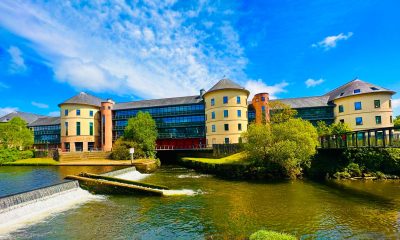
Council tax to rise again as Pembrokeshire sets new budget
Schools and social care receive extra funding in 2026–27 spending plans PEMBROKESHIRE COUNTY COUNCIL has approved its budget for the...

Health3 hours ago
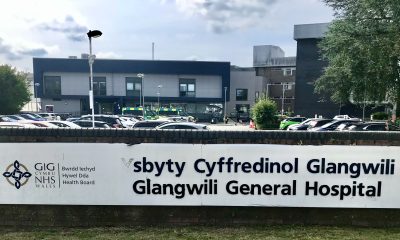
Stroke patients to be transferred to Carmarthen under new health plan
Withybush to provide initial treatment before specialist care elsewhere PEMBROKESHIRE patients who suffer a stroke are set to be transferred...

Health22 hours ago
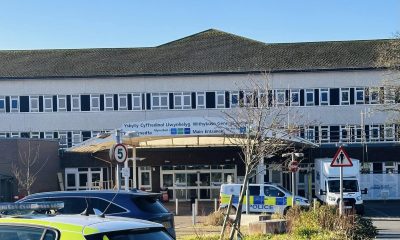
Health board confirms major hospital changes across west Wales
Emergency surgery centralised as Withybush role shifts toward planned care MAJOR changes to hospital services across west Wales have been...

Health1 day ago
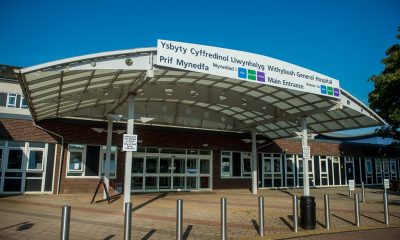
Withybush loses emergency surgery in shock health board decision
Paul Davies vows Senedd fight as fears grow over travel times and patient safety PEMBROKESHIRE patients will be forced to...

Business1 day ago
Mounting complaints: More Computer Solutions Wales customers claim losses
Business owner issues legal threats and IPSO complaint to this newspaper while refusing to answer detailed questions about customers who...


Local Government1 day ago
Milford Haven Hakin by-election candidates confirmed
THE LIST of candidates standing in the upcoming Pembrokeshire County Council by-election for the Milford Haven: Hakin ward has been...

Crime3 days ago
Telecom vandal admits causing £33,000 damage to Pembroke Dock network
Fibre cables cut in early-morning incident that triggered major service disruption A PEMBROKE DOCK man has admitted causing more than...

Community3 days ago
Smiles all round for Pancake Day celebrations in Tenby
TENBY was filled with laughter, cheers and the smell of freshly cooked pancakes on Tuesday (Feb 17) as the town’s...


Crime3 days ago
Man charged with GBH with intent following incident involving ‘Pembrokeshire Patriot’
Defendant remanded in custody as case linked to police raids on Friday A MAN has been charged with causing grievous...


Business4 days ago
Svitzer crews at Milford Haven vote for industrial action in pay dispute
Union ballot raises concerns over potential disruption at key UK energy port SVITZER crews working in the Port of Milford...
-
Health22 hours ago
Health board confirms major hospital changes across west Wales
-
Health1 day ago
Withybush loses emergency surgery in shock health board decision
-
 Health24 hours ago
Health board: Changes will bring “resilience and sustainability” to West Wales services
-
 Business3 days ago
MS’s host business advice surgery following demand from Business Rates Online Forum
-
 Crime7 days ago
Four arrested in armed police operation across Pembroke Dock
-
Community4 days ago
Hywel Dda hospital services decisions will be made next week
-
 Community6 days ago
Second Milford Haven webcam launched after 1.3m views and US TV feature
-

 News7 days ago
Climber dies and two injured in St Govan’s Head fall