


News
Tenby: Five Arches car park set to become permanent

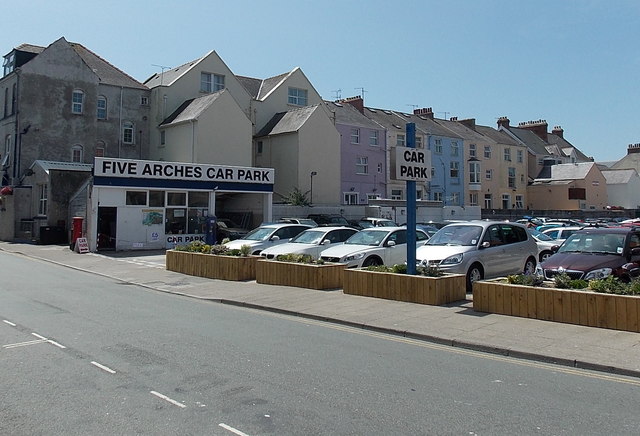
THE FIVE ARCHES car park in Tenby is set to become permanent after members of the Pembrokeshire Coast National Park were minded to approve an application.
The Park’s Development Management Committee met today (Mar 14) to discuss the car park becoming permanent but were faced with a recommendation of refusal from officers.
Officers were of the opinion that the town already has sufficient car parking spaces and a park and ride service.
However, members of the committee felt that the car park could only be of ‘benefit’ to the town describing the ‘huge amount of support’ for it from the public.
The application, submitted by Five Arches Car Park Ltd, will now be subject to a cooling off period and will come back to the next meeting of the Committee for final determination.

Since the garage on the site closed down, temporary car parking orders have been in place from 2011, and the application would also bring an uplift to the state of the car park and new pay machines.
Speaking in support of the application, Tenby Town Council Clerk Andrew Davies told the committee: “This car park is a valuable asset to the town and has had no adverse impact. We agree with reducing the traffic in the centre of Tenby and this car park is an asset towards achieving that goal as it is within easy walking distance of the Town centre.
“Since initial temporary consent was given for the car park, residents parking permits have increased. This car park is located close to the centre and a number of hotels and they welcome its availability.
“The additional car park has eased congestion and the Town Council believes it would be better to utilise and upgrade this rather than allow it to be left vacant.”

The agent for the application, Mr Giles Birt added: “I am very familiar with the parking issues and this is why we want to invest in this site and it would benefit from resurfacing. There have been no instances of the car park causing congestion and revenue has increased year on year.
“Tenby is one of the most visited towns and the use of this car park has proved its need. The site has significantly improved traffic management and it supports all employment sites in the town. It has also been used for the Ironman event and mobile banks.”
Cllr Phil Baker said: “There is a great amount of on-street parking and this car park is used extremely well. I would hate to see the site surrounded by boarding whilst we wait for a client for the site to be found and many people still use their cars to get in to the town.”

Tenby Cllr Mike Williams added that the car park had been an ‘outstanding success’ over the last six years saying: “There is a huge amount of support for this, people park in the car park with easy access to the town and this can only be for the benefit of Tenby.”
Mr Ted Sangster called for a bit of common sense, stating that if it was refused the site would be empty for a certain amount of time until a buyer was found for it.
Mrs Julie James considered whether or not another temporary parking arrangement could be made to allow for the site to be included in the new Local Development Plan is brought out but members were told that would not be ready until late 2019.
Cllr Mike Evans added: “This area has been a game changer for hard working people, this car park has transformed businesses with parking on the doorstep. There has been an uplift in Tenby and its people.
“This site also protects employment and it has been used for car parking for many more years. The Park and ride is being undermined; that runs for seven hours a day from 11am to 6pm, Tenby is open for more than seven hours a day. Traffic congestion has been improved in the area and it is also vital to events.
“The need has been demonstrated, Tenby needs visitors and this is aiding this. I propose that we pass this and allow the owners of the site to invest in it.”
When it was put to the vote, thirteen voted in favour of approval, with two voting against and one abstention.



Page disappears hours after offensive post sparks outrage across Pembrokeshire
A FACEBOOK page that presented itself as a local news outlet but repeatedly targeted The Pembrokeshire Herald and its editor has disappeared following a wave of public criticism from residents and charity workers.
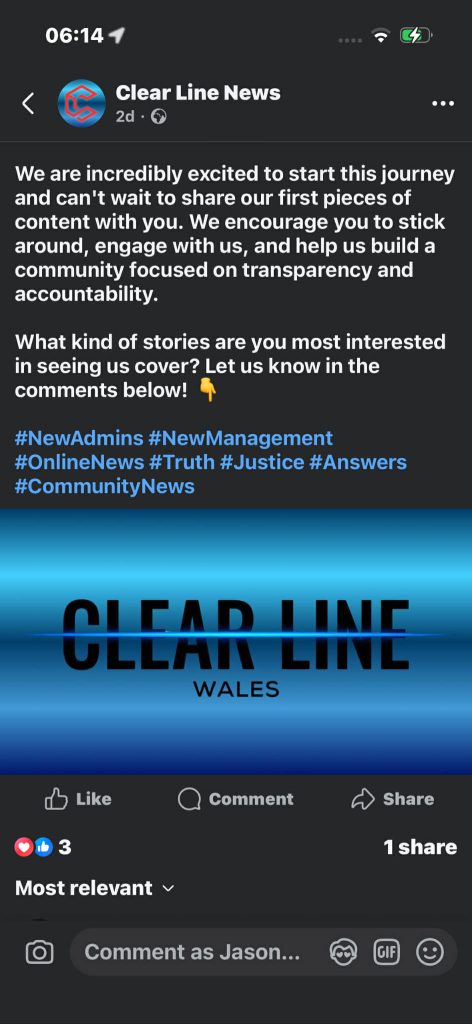
The page, operating most recently under the name Clear Line News, published a lengthy post on Sunday (Feb 9) describing Pembrokeshire in highly offensive terms and mocking community groups, volunteers and local reporting.
Within hours, the post triggered widespread condemnation online.
By the end of the day, users reported the page had changed its name to “The Devil’s Feed” before becoming unavailable altogether.
Criticism arose after Marty Jones, PR manager for Sandy Bear Children’s Bereavement Charity, shared a screenshot of the post on his personal Facebook page and questioned its tone.
Dozens of residents replied, describing the language as “vile”, “nasty” and “beyond comprehension”.
Several said they had been blocked by the page after challenging it.
Others expressed particular anger at comments they said were directed towards a bereaved mother connected to a local fundraiser.
One commenter wrote: “How they can speak to a bereaved mother that way is beyond my comprehension.”

Name change and closure
As criticism mounted, users reported the page had been renamed before disappearing completely.
By Monday morning, it could no longer be accessed.
Earlier identity
The page’s history has also drawn scrutiny.

Before operating as Clear Line News, the account previously used the name “Dyfed-Powys Neighbourhood Watch”, presenting itself in a way that some residents believed suggested an official or community safety organisation.

A company using a similar name — GWARCHOD Y GYMDOGAETH DYFED-POWYS NEIGHBOURHOOD WATCH LIMITED — was incorporated on Nov 4, 2024, according to Companies House records.
The filing listed the director as Ajay Owen, recorded as “Lord Ajay Owen”, with a correspondence address in Llanfyrnach.
The company’s stated activities included public relations, communications and public order and safety functions.
Companies House records show the company was dissolved on Feb 18, 2025.
During the period when the page appeared to carry Neighbourhood Watch-style branding, it accumulated more than 1,000 followers, including engagement from public bodies such as Mid and West Wales Fire and Rescue Service.
After several rebrands, the page later emerged as Clear Line News in late 2025, adopting the look of a local news site.
Much of its content, however, focused on opinion pieces and attacks on local institutions and individuals.
Distancing statement
Following Sunday’s controversy, Mr Owen posted a statement saying he previously owned the page but no longer controlled it and had requested its removal.
Shortly afterwards, the account disappeared.
He told The Herald in December that he had sold the page for £10 within days of relaunching it under the new name. The purported new owner could not be contacted and no independent details confirming the transfer were provided.
Community response
While Pembrokeshire residents accept robust debate and scrutiny, many said they rejected what they saw as inflammatory or abusive social media content masquerading as journalism.
One resident wrote: “We should be grateful for where we live and try to make it better, not tear it down.”
Whether the page returns under another name remains unclear.
For now, it appears a site that set out to criticise the community ended up undone by that same community’s response.
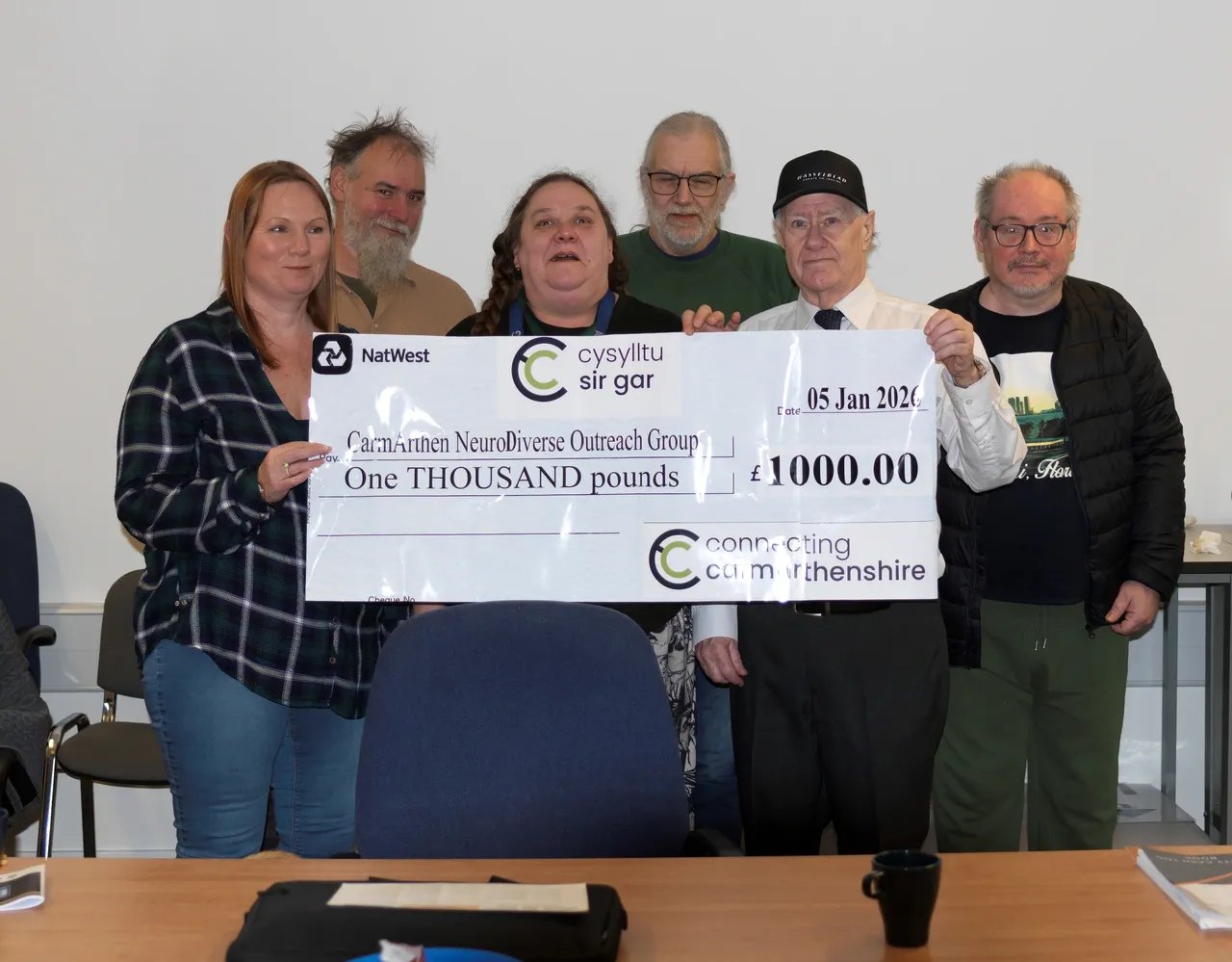
A £1,000 grant from Nacro is set to strengthen grassroots support for neurodivergent children, young people and adults across Carmarthenshire.
CANDO (Carmarthen Aberystwyth Neurodiverse Outreach Group) has secured the funding through the Connecting Carmarthenshire Preventative Service, enabling the volunteer-led organisation to expand its practical, person-centred work with local families.
Operating under the message “We see your future whatever the past”, CANDO supports people who often struggle to access the right help, feel heard, or find stability in everyday life. The new funding will increase capacity, provide resources for inclusive sessions, and improve access to early support for those who might otherwise slip through the net.

The group works closely with individuals and families to reduce barriers and build confidence — whether through education guidance, wellbeing support, advocacy, or help navigating local services. Leaders say the grant will allow them to respond more quickly to growing demand and keep sessions welcoming, accessible and consistent.
A CANDO spokesperson said: “This grant is amazing news for our community. Neurodivergent people can face extra pressures — from isolation and anxiety to difficulties being understood in education and services. This support will help us reach more people, provide practical help, and keep showing up for those who need someone on their side.”
Nacro’s wider mission mirrors that approach. The charity works across education, housing, justice, health and wellbeing, providing tailored support to help people build independence and move forward. Alongside frontline services, it also campaigns to remove systemic barriers and give disadvantaged people a stronger voice.
For CANDO, that bigger picture is felt locally. Families often face complicated pathways, long waits and fragmented services, and need clear guidance and community-based help that understands neurodiversity. By intervening early — before challenges escalate — the group believes it can improve mental health, education outcomes and overall wellbeing.
The £1,000 grant will fund additional outreach, materials and practical resources, helping more people feel safer, more confident and better equipped to move forward.
CANDO added: “We’re proud to work alongside Nacro’s vision of a society where everyone has the chance to succeed. This funding will do real good — right here in Carmarthen and beyond — and we’re grateful for the belief it shows in our community.”


A GROUP of students from Haverfordwest High School have been recognised on the national stage after winning a prestigious award at the Wales final of the The King’s Trust and TK Maxx Awards.
The students scooped the JD Foundation Community Impact Award during a ceremony held on Monday, January 19, at voco St Davids Cardiff, celebrating their efforts to transform a vandalised and neglected subway into a bright, welcoming mural for the community.
The project was delivered through the Achieve programme run locally by Pembrokeshire Youth Service, giving pupils a more hands-on, practical approach to learning outside the traditional classroom.
Reclaiming a neglected space
The group identified the graffiti-covered underpass, used daily on their walk to school, as somewhere that left a poor impression of the town.
Ffion, one of the students, said: “The subway was really unwelcoming and gave people a negative impression of the town. We wanted to reclaim the space and turn it into something positive.”
Working together, the pupils applied for funding, secured sponsorship from local businesses and organised school fundraising events. They also partnered with local artist Lloyd Griffiths to design and paint a colourful mural celebrating wellbeing, identity and pride in Haverfordwest.
The artwork even features their daily emotional “check-in” system – a tool they used throughout the programme to support each other’s mental health.
Building confidence and skills
Many of the young people involved had faced barriers in mainstream education, including social and emotional challenges or caring responsibilities at home. Several were at risk of leaving school with few qualifications.
Through the Achieve programme, they say they found a more supportive environment where they could develop confidence and practical skills.
Lateesha said: “We were really pushed outside of our comfort zone throughout the project, which helped us discover confidence in ourselves and just how much we’re capable of.”
The students developed teamwork, communication, fundraising and public speaking skills while delivering a lasting improvement to their neighbourhood.
Ffion added: “This project is our legacy. We’ve created something lasting that represents who we are and where we come from. It’s amazing what a cup of tea and a conversation can result in.”
Recognition on the national stage
Aaron Probert, JD Foundation Manager, presented the award on the night.
He said: “It is an honour to present this very special group of young people with the Community Impact Award. The way you have worked together to benefit your community is truly inspiring and the impact you have had is clear to see.”
The win now puts the Haverfordwest students in the running for a national King’s Trust Award, with finalists invited to a celebration event in May at London’s Royal Albert Hall.
The King’s Trust supports young people aged eleven to thirty with skills, training and opportunities, with three in four participants moving into work, education or training.
For these Pembrokeshire pupils, their award-winning mural is already proof of what can happen when young people are given the chance – and the support – to make a difference close to home.



News5 hours ago
Man to return to court over alleged harbour collision
Three charges relate to navigation of vessel in Milford Haven A NEWPORT man is due to return to court later...


Business1 day ago
Computer Solutions Wales under fire from customers
Claims of unreturned devices, unpaid refunds and small claims court cases as company blames landlord dispute CUSTOMERS across west Wales...


News1 day ago
Starmer under fire as aides quit and Scottish Labour leader calls on him to resign
Two senior Downing Street exits in 24 hours as Anas Sarwar breaks ranks, but ministers insist the Prime Minister is...


News1 day ago
Fresh concerns over £60m A40 scheme after resurfacing works just months after opening
QUESTIONS are being asked about the condition of the newly-opened A40 Llanddewi Velfrey to Redstone Cross carriageway after sections of...

Charity2 days ago
RSPCA looks back at the Sea Empress oil tanker disaster 30 years on
Charity reflects on one of the biggest environmental disasters to hit UK IN just a few days time it will...


Crime3 days ago
Pembroke Dock man admits threatening to hack woman’s head off with sword
Court imposes strict bail conditions and bans contact with named individuals ahead of sentencing A PEMBROKE DOCK man has admitted...


Crime3 days ago
Teenager remanded after teacher injured in knife incident at Milford Haven school
Fifteen-year-old charged with Section 18 grievous bodily harm and possession of a bladed article appears before Swansea magistrates A FIFTEEN-YEAR-OLD...
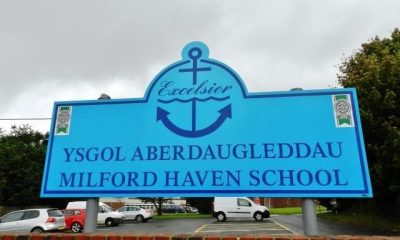

Crime3 days ago
Police confirm teacher was stabbed at school as teenager appears in court
15-year-old charged with Section 18 GBH with intent and possession of a bladed article on education premises POLICE have confirmed...


Crime4 days ago
Man arrested for murder following death of pensioner in Pembroke Dock
Officers called to Hawkstone Road property as investigation continues and residents urged to come forward DYFED-POWYS POLICE officers have launched...
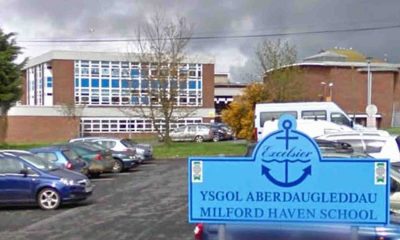

Crime4 days ago
Teacher discharged as Milford School to reopen Monday after serious assault
Deputy head praises ‘calm and professional’ staff and pupils during lockdown A TEACHER injured in a serious incident at Milford...
-
 Health5 days ago
Health board targets rise in steroid and gym drug use across west Wales
-

 Crime6 days ago
Sex offender jailed after living off grid in Pembrokeshire and refusing to register
-
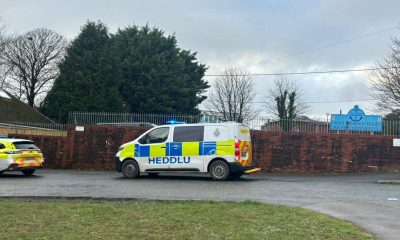
 Crime5 days ago
Teacher injured and teenager arrested for attempted murder at Milford Haven School
-
Business1 day ago
Computer Solutions Wales under fire from customers
-
 Business4 days ago
Six-figure negligence victory leaves retired builder trapped in divorce limbo
-

 Crime6 days ago
Johnston man remanded in custody over knife and assault charges
-

 News5 days ago
Reform appoints Dan Thomas to lead party in Wales
-

 Crime6 days ago
Provisional licence holder admits drink-driving through town centre