


News
Top judge says Pembrokeshire businessman’s will was ‘a mistake’


AN ELDERLY Pembrokeshire woman who was left nothing in her millionaire partner’s will has been saved from poverty by a senior judge.
Joan Thompson, 79, lived as man and wife with Amroth landowner, Wynford Hodge, for 42 years before his death, aged 94, in 2017.
Mr Hodge, who owned Parsonage Farm and Caravan Park, along with land and other properties, was worth over £1.5 million when he died.
But he left Mrs Thompson without a penny, instead bequeathing everything to two of his tenants who had been kind to him in his final years.
In a letter attached to his will, Mr Hodge was adamant that he did not want Joan or her four children to inherit any of his fortune.

Describing Joan as “financially comfortable”, he said she had “her own finances” and would have no need of his money.
But Judge Milwyn Jarman said that was a “mistake” and Mrs Thompson had in fact been left with only modest savings of about £2,500.
Reluctantly living on benefits in a nursing home, she wanted to return to the family estate where she had friends on the caravan park.
Now, in an extremely rare decision, Judge Jarman has ruled that Mr Hodge failed to match up to his responsibilities to his long-term partner.

And he effectively re-wrote the wealthy businessman’s will by awarding Mrs Thompson a cottage on the estate worth £225,000.
She will also receive almost £190,000 in cash to pay for the cottage’s refurbishment and to provide her with reasonable financial support.
Mr Hodge, who suffered from prostate cancer, made more than 10 wills before his death, the High Court in Cardiff heard.

In hospital shortly before he died, he told Mrs Thompson “not to worry as she would be well looked after”, said the judge.
But, in the last will he signed in December 2016, Mr Hodge left everything he had to tenants, Karla Evans and Agon Berisha.
Working as subsistence market gardeners and on the caravan park, the kindly couple became instant millionaires on Mr Hodge’s death.
Parents of two young children, they rented a house called Penffordd, in Narbeth, from Mr Hodge, doing unpaid errands for him and helping him with his shopping.
But, when asked, Ms Evans said she didn’t want to be a millionaire and would be happy with an annual holiday and enough money to bring up her kids.
Judge Jarman said that, even after his ruling, the couple would receive “by far the major part” of Mr Hodge’s seven-figure estate.
But the landowner’s belief that Mrs Thompson would need no financial support after his death was simply a “mistake”, he said.
She and her son, Dean, then a young boy, moved into a caravan at Parsonage Farm in the 1970s and into the farmhouse with Mr Hodge soon afterwards.
She worked on the farm and on the caravan site without pay and helped care for Mr Hodge’s mother, said the judge.
They were together for over 40 years and, after Mr Hodge’s health began to fail, she acted as his main carer.
Mrs Thompson had a serious stroke about 12 years ago and has suffered heart attacks since then, the court heard.
And, since her husband’s death, her only income has been benefits of little more than £1,000 per month.
Mrs Thompson, who gave evidence from a wheelchair, said she was determined to leave the nursing home and return to the family estate.
Granting her wish, Judge Jarman said that, by disinheriting her, Mr Hodge had failed to meet the “obligations and responsibilities” he owed her.
He ordered that a property called Elidyr Cottage should be transferred to her, where she can be looked after by Dean and his wife.
Mrs Thompson will also receive almost £30,000 from Mr Hodge’s estate, to pay for the cottage’s refurbishment, and £160,000 to cover future expenses.













COMMUNITIES across Wales are being promised a stake in what ministers describe as the largest public investment in locally owned energy projects in British history, with up to £1 billion earmarked for solar panels, battery storage and small-scale renewable schemes.
The funding, announced this week by Great British Energy and the UK Government, forms part of a new “Local Power Plan” aimed at helping councils, schools, clubs and community groups generate and sell their own electricity.
Ministers say the approach will cut bills, create income streams and keep profits local rather than flowing to major energy companies.

However, while the headline figure is eye-catching, details about how much money will reach Wales — and how quickly — remain limited.
Welsh projects already backed
The government says nearly £9.5 million has already been allocated to projects in Wales over the past year, delivered with the Welsh Government.

Examples include rooftop solar on schools in Wrexham and Newport, and a new installation at Big Pit National Coal Museum in Pontypool, which is estimated to save more than £280,000 in energy costs over its lifetime.
A further scheme at a highways depot in Neath is projected to save the local authority around £910,000.
Energy Secretary Ed Miliband said the plan would “transfer wealth and power back to communities”, while Wales Secretary Jo Stevens described it as a way for towns and villages to “take charge of their own energy supplies”.
Big ambition — but funding spread thin
Despite the rhetoric, the £1bn pot is UK-wide and expected to support more than 1,000 projects across England, Scotland, Wales and Northern Ireland.
If split evenly, that would average around £1m per scheme — though ministers say grants and loans will vary and some funding will be reserved for advice and capability building rather than construction.
Community energy groups have long argued that red tape, grid connections and upfront costs are bigger barriers than ambition.
There are also questions over whether smaller volunteer-led organisations will have the technical expertise to compete for funds against better-resourced councils and developers.

Industry bodies broadly welcomed the move but stopped short of calling it transformational without clearer timelines.
What it could mean locally
If delivered effectively, the model could allow:
• village halls and sports clubs to reduce running costs
• schools to generate income from spare electricity
• councils to cut energy bills on public buildings
• residents to buy shares in local renewables
Supporters say that keeps money circulating in the local economy rather than leaving the area.
The announcement follows other energy developments affecting Wales, including backing for offshore wind in the Celtic Sea such as the Erebus Floating Offshore Wind Farm off Pembrokeshire.
Waiting for the detail
For now, communities are being invited to register interest via Great British Energy, with grant schemes expected to launch later this year.
Whether the plan proves to be a genuine shift in ownership or simply another competitive funding round will depend on how accessible the money is — and how much of it ultimately reaches places like Pembrokeshire rather than being absorbed at national level.
Local groups considering bids will be watching closely.

A COMMUNITY donation will help spruce up a popular summer book trailer at Stackpole Quay after members of the Pembrokeshire National Trust Association handed over more than one thousand pounds to support the project.
The Pembrokeshire National Trust Association presented a cheque for £1,095 to the National Trust at Stackpole Quay this weekend.
The cheque was formally given to Rhian Sula, General Manager for the charity’s Pembrokeshire and Carmarthen Bay portfolio, by association chairman Jane Mason during a National Trust information coffee morning at the Stackpole Centre.
The money will be used to refurbish the well-known second-hand book trailer which operates at the quay during the summer months. The trailer allows visitors to pick up a holiday read while making a donation, with proceeds supporting local conservation and access projects.
Last year alone, the trailer raised more than £1,500.
Jane Mason said the association had originally funded the purchase of the trailer several years ago and wanted to build on its success.
“Our new donation from members’ support will improve the trailer with updated imagery and design,” she said. “This will help the National Trust present a more professional, welcoming and brand-aligned offer, and potentially grow donation income.”
The Pembrokeshire National Trust Association runs a programme of talks, visits and guided walks in support of local Trust properties. Membership of the National Trust is not required to join the association. Annual membership costs £5 for individuals and £8 for couples.
At its AGM in November, the group announced £3,000 in additional donations for local projects, including replacement willow hurdles at Tudor Merchants House, footpath improvements at Little Milford, and a new bench, tree planting and path works at Southwood.
With the latest contribution towards the book trailer, the association’s donations for the current financial year now exceed £4,000.
Photo caption:
Jane Mason presents a cheque for £1,095 to Rhian Sula at Stackpole Centre (Pic: supplied).


A HAVERFORDWEST man has admitted stalking a woman by sending repeated unwanted emails, putting up posters and contacting third parties about her.
Michael Lockheart, aged 80, of Daisy Lane, appeared before Haverfordwest Magistrates’ Court on Monday (Feb 9) for sentencing, having previously pleaded guilty to stalking.
The court heard that between July 27 and September 10 last year, Lockheart pursued a course of conduct which amounted to the stalking and harassment against a female.
His behaviour included sending numerous unwanted emails after being told to stop contact, distributing defamatory posters in public places, and sending malicious correspondence to her GP and the local authority.
Lockheart admitted the offence, contrary to Section 2A of the Protection from Harassment Act 1997.
Sentencing was adjourned to allow a pre-sentence report to be prepared.
He was granted conditional bail with strict restrictions. He must not contact the complainant directly or indirectly, including through third parties or social media, and must not enter any address where she lives.
Lockheart is due back before magistrates for sentence at 10:00am on Monday, March 9.



Business20 hours ago
Computer Solutions Wales under fire from customers
Claims of unreturned devices, unpaid refunds and small claims court cases as company blames landlord dispute CUSTOMERS across west Wales...


News21 hours ago
Starmer under fire as aides quit and Scottish Labour leader calls on him to resign
Two senior Downing Street exits in 24 hours as Anas Sarwar breaks ranks, but ministers insist the Prime Minister is...


News22 hours ago
Fresh concerns over £60m A40 scheme after resurfacing works just months after opening
QUESTIONS are being asked about the condition of the newly-opened A40 Llanddewi Velfrey to Redstone Cross carriageway after sections of...


Charity1 day ago
RSPCA looks back at the Sea Empress oil tanker disaster 30 years on
Charity reflects on one of the biggest environmental disasters to hit UK IN just a few days time it will...


Crime2 days ago
Pembroke Dock man admits threatening to hack woman’s head off with sword
Court imposes strict bail conditions and bans contact with named individuals ahead of sentencing A PEMBROKE DOCK man has admitted...


Crime3 days ago
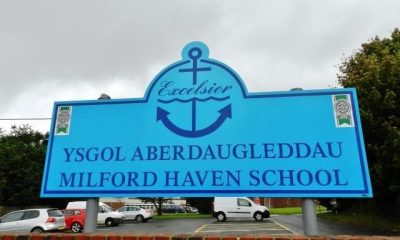
Teenager remanded after teacher injured in knife incident at Milford Haven school
Fifteen-year-old charged with Section 18 grievous bodily harm and possession of a bladed article appears before Swansea magistrates A FIFTEEN-YEAR-OLD...

Crime3 days ago
Police confirm teacher was stabbed at school as teenager appears in court
15-year-old charged with Section 18 GBH with intent and possession of a bladed article on education premises POLICE have confirmed...


Crime4 days ago
Man arrested for murder following death of pensioner in Pembroke Dock
Officers called to Hawkstone Road property as investigation continues and residents urged to come forward DYFED-POWYS POLICE officers have launched...


Crime4 days ago
Teacher discharged as Milford School to reopen Monday after serious assault
Deputy head praises ‘calm and professional’ staff and pupils during lockdown A TEACHER injured in a serious incident at Milford...


Crime5 days ago
Teacher discharged as police step back from Milford Haven school after assault
Teenager remains in custody as school closes and patrols increased to reassure community POLICE have confirmed they are no longer...
-

 Health5 days ago
Health board targets rise in steroid and gym drug use across west Wales
-

 Crime6 days ago
Sex offender jailed after living off grid in Pembrokeshire and refusing to register
-

 News7 days ago
Princess of Wales visits historic Pembrokeshire woollen mill
-

 Crime5 days ago
Teacher injured and teenager arrested for attempted murder at Milford Haven School
-

 Crime7 days ago
Hakin man’s appeal delayed again as Crown Court seeks guidance on insurance law
-
Business20 hours ago
Computer Solutions Wales under fire from customers
-

 Business4 days ago
Six-figure negligence victory leaves retired builder trapped in divorce limbo
-

 Crime6 days ago
Johnston man remanded in custody over knife and assault charges