


News
Reprogrammed virus offers hope as cancer treatment


A CANCER treatment that can completely destroy cancer cells without affecting healthy cells could soon be a possibility, thanks to research led by Cardiff University.
The team of researchers has successfully ‘trained’ a respiratory virus to recognise ovarian cancer and completely destroy it without infecting other cells. The reprogrammed virus could also be used to treat other cancers such as breast, pancreatic, lung and oral.
Dr Alan Parker from Cardiff University’s School of Medicine said: “Reprogrammed viruses are already being used in gene therapy procedures to treat a range of diseases, demonstrating they can be trained from being life-threatening into potentially lifesaving agents.
“In cancer treatment, up until now, reprogrammed viruses have not been able to selectively recognise only the cancer cells and would also infect healthy cells, resulting in unwanted side effects.
“We’ve taken a common, well-studied virus and completely redesigned it so that it can no longer attach to non-cancerous cells but instead seeks out a specific marker protein called αvβ6 integrin, which is unique to certain cancer cells, allowing it to invade them.

“In this case we introduced the reprogrammed virus to ovarian cancer which it successfully identified and destroyed.
“This is an exciting advance, offering real potential for patients with a variety of cancers.”
Once the virus enters the cancer cell it uses the cell’s machinery to replicate, producing many thousands of copies of itself, prior to bursting the cell and thereby destroying it in the process. The newly released viral copies can then bind and infect neighbouring cancer cells and repeat the same cycle, eventually removing the tumour mass altogether.
The virus also activates the body’s natural immune system, helping it to recognise and destroy the malignant cells.

The reprogrammed virus is from a group of respiratory viruses called adenoviruses. The advantage of using these viruses is that they are relatively easy to manipulate and have already been safely used in cancer treatment.
The technique used to reprogramme the virus to identify the protein common to ovarian, breast, pancreatic, lung and oral cancers could also be used to manipulate it so that it would recognise proteins common to other groups of cancers.
Additional refinement to the viral DNA could also allow the virus to produce anticancer drugs, such as antibodies, during the process of infecting cancer cells. This effectively turns the cancer into a factory producing drugs that will cause its own destruction.

The research was carried out in a laboratory, using mice with ovarian cancer, and has not yet reached clinical trials. The next step is to test the technique with other cancers, with a view to starting clinical trials in five years’ time.
Dr Catherine Pickworth from Cancer Research UK said: “It’s encouraging to see that this virus, which has been modified to recognise markers on cancer cells, has the ability to infect and kill ovarian cancer cells in the lab. Viruses are nature’s nanotechnology and harnessing their ability to hijack cells is an area of growing interest in cancer research.
“The next step will be more research to see if this could be a safe and effective strategy to use in people.”
The team includes researchers from Cardiff University; the Mayo Clinic in Rochester, USA; Glasgow University; the South West Wales Cancer Institute; and Velindre Cancer Centre.
The research was funded by Cancer Research UK, Tenovus Cancer Care and Cancer Research Wales.
The paper ‘Ad5NULL-A20 – a tropism-modified, αvβ6 integrin-selective oncolytic adenovirus for epithelial ovarian cancer therapies’ is published in Clinical Cancer Research.


A NEW alliance bringing together community groups, trade unions, faith leaders and campaigners from across west Wales is set to launch in Haverfordwest next month.
The West Wales branch of the Together Alliance will officially begin with a public meeting at 7:00pm on Wednesday (Mar 18) at Haverfordwest Mosque, Cherry Grove.
Organisers say the event will unite local politicians, farmers, artists, anti-racist organisations and faith groups in response to what they describe as growing “voices of division” in national and local politics.
In a statement, the alliance said: “Those who preach division are becoming more confident. Their false promises seize on very real economic problems and scapegoat migrants, Muslims and refugees.
“But we can change things together. The voices of unity can grow stronger. Strength lies in solidarity and working together for hope, not despair.”

The group aims to build cooperation between communities and challenge racism and extremism through grassroots organising. It says hundreds of organisations and individuals nationwide have already signed up.
The Haverfordwest launch forms part of a wider mobilisation ahead of a major national demonstration planned for London on March 28.
Several high-profile supporters have also backed the campaign, including comedian and campaigner Lenny Henry, who said: “We stand for love over hate, hope over fear and unity over division. We’re coming together against racism.”
Singer Paloma Faith added: “There is no world that I want to live in where discrimination is acceptable for anything.”
Organisers say anyone interested in promoting inclusion, equality and community solidarity is welcome to attend.

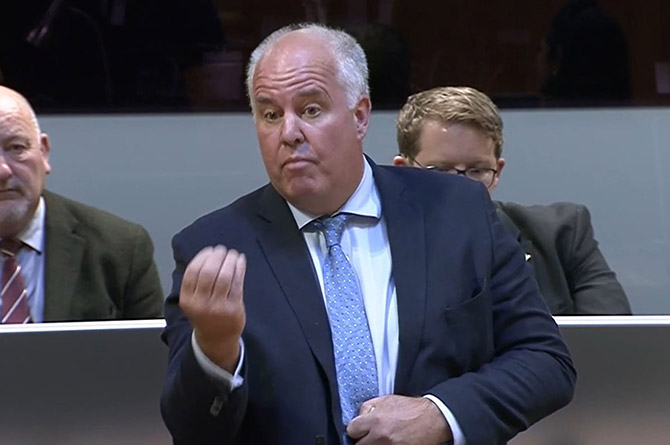
Davies attacks ‘Nation of Sanctuary’ policy after asylum seeker jailed for child rape
A SENIOR Welsh Conservative has called for the Welsh Government’s “Nation of Sanctuary” policy to be scrapped after an Afghan asylum seeker was convicted of abducting and raping a 12-year-old girl.
Andrew RT Davies, leader of the Welsh Conservatives in the Senedd, said the case highlighted what he described as the “dangers” of the current approach to asylum and migration in Wales.
Ahmad Mulakhil, who arrived in the UK by small boat from France in March 2025, was convicted of the attack just four months later.
The case, reported nationally this week, has prompted renewed political debate over the Welsh Government’s stance on supporting asylum seekers and refugees.
Mr Davies said: “This appalling case demonstrates the dangers of importing violent criminals into Britain.
“Plaid Cymru and Labour’s decision to make Wales a Nation of Sanctuary for asylum seekers is a pull factor, encouraging more people to enter our country illegally.
“I reiterate my calls for this dangerous policy to be scrapped.”
The comments directly target the Welsh Government’s “Nation of Sanctuary” plan, launched in 2019, which aims to make Wales a welcoming place for refugees and people seeking asylum, with support for housing, education and integration.
The Welsh Government has previously defended the policy, saying it reflects “Welsh values of compassion and fairness,” and stressing that responsibility for border security lies with the UK Government.
Meanwhile, the UK Government has introduced tougher measures aimed at reducing small-boat crossings and speeding up removals of those with no right to remain.
The latest case is likely to intensify scrutiny of how asylum accommodation and safeguarding are managed across Wales.
For many residents, the debate now centres on how to balance humanitarian support with public safety and confidence in the system.

As Mr Davies’ intervention shows, the political argument over Wales’s role as a “Nation of Sanctuary” is far from over.
Meanwhile the official figures show that asylum seekers commit less crime than the general population.

DECISIONS on the future of nine frontline hospital services across west Wales will be made later this month when Hywel Dda University Health Board holds a special two-day Board meeting.
The Extraordinary Board will meet on Wednesday (Feb 18) and Thursday (Feb 19) to determine the next steps for critical care, dermatology, emergency general surgery, endoscopy, ophthalmology, orthopaedics, stroke, radiology and urology services.
Health chiefs say the proposed changes are aimed at tackling staffing shortages, improving clinical standards and cutting waiting times for diagnosis and treatment.
More than 4,000 people responded to a public consultation on the plans. Feedback was gathered through questionnaires, public meetings, staff sessions and discussions with stakeholder groups.
An independent consultation report compiled by Opinion Research Services will form part of the evidence considered by Board members. It will sit alongside updated data on workforce pressures, estate condition, clinical standards and how services link together across hospitals.
All documents to be considered by the Board have now been published online ahead of the meeting.
Alternative ideas assessed
During the consultation, communities also submitted 190 alternative proposals.
Each idea was tested against “hurdle criteria” to check whether it was safe, practical and capable of delivery before being taken forward.
Of those, 22 met the criteria and have been developed into full options. These will be considered alongside the Health Board’s original proposals.

Board members will assess whether each option is clinically sustainable, deliverable, accessible to patients, aligned with the Health Board’s long-term strategy and financially viable. They will also decide whether further engagement or evidence is needed before any final changes are introduced.
Some changes, if approved, could be phased in over time.
Dr Neil Wooding, Chair of the Health Board, said: “At our meeting next week, the Board will carefully consider the consultation feedback alongside the latest clinical evidence, workforce insights, updated impact assessments and the alternative options that were put forward during the consultation.

“Our responsibility is to consider the full range of evidence and ensure we make decisions that ensure that our services are sustainable for the future. No decisions have been made ahead of the Board. We are committed to a thorough and transparent process, ensuring each option and alternative options are considered in the round, and focused on improving services for the people who rely on them.”



Crime5 hours ago
Publican admits supplying cocaine and cannabis at Crown Court
Admits cocaine and cannabis supply but denies intent and cash allegations A MILFORD HAVEN pub landlord has admitted supplying cocaine...


Local Government6 hours ago
Plaid win in Fishguard North East by-election
PLAID CYMRU has taken the Fishguard North East seat on Pembrokeshire County Council following this week’s by-election. Billy Shaw was...


News1 day ago
Man to return to court over alleged harbour collision
Three charges relate to navigation of vessel in Milford Haven A NEWPORT man is due to return to court later...


Business2 days ago
Computer Solutions Wales under fire from customers
Claims of unreturned devices, unpaid refunds and small claims court cases as company blames landlord dispute CUSTOMERS across west Wales...


News2 days ago
Starmer under fire as aides quit and Scottish Labour leader calls on him to resign
Two senior Downing Street exits in 24 hours as Anas Sarwar breaks ranks, but ministers insist the Prime Minister is...


News2 days ago
Fresh concerns over £60m A40 scheme after resurfacing works just months after opening
QUESTIONS are being asked about the condition of the newly-opened A40 Llanddewi Velfrey to Redstone Cross carriageway after sections of...

Charity2 days ago
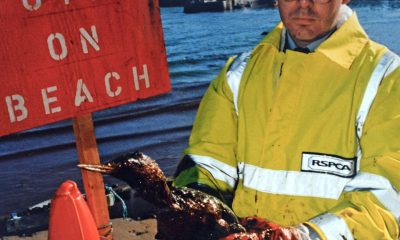
RSPCA looks back at the Sea Empress oil tanker disaster 30 years on
Charity reflects on one of the biggest environmental disasters to hit UK IN just a few days time it will...


Crime4 days ago
Pembroke Dock man admits threatening to hack woman’s head off with sword
Court imposes strict bail conditions and bans contact with named individuals ahead of sentencing A PEMBROKE DOCK man has admitted...


Crime4 days ago
Teenager remanded after teacher injured in knife incident at Milford Haven school
Fifteen-year-old charged with Section 18 grievous bodily harm and possession of a bladed article appears before Swansea magistrates A FIFTEEN-YEAR-OLD...


Crime4 days ago
Police confirm teacher was stabbed at school as teenager appears in court
15-year-old charged with Section 18 GBH with intent and possession of a bladed article on education premises POLICE have confirmed...
-

 Health6 days ago
Health board targets rise in steroid and gym drug use across west Wales
-

 Crime7 days ago
Sex offender jailed after living off grid in Pembrokeshire and refusing to register
-

 Crime6 days ago
Teacher injured and teenager arrested for attempted murder at Milford Haven School
-
Business2 days ago
Computer Solutions Wales under fire from customers
-

 Business5 days ago
Six-figure negligence victory leaves retired builder trapped in divorce limbo
-

 News6 days ago
Reform appoints Dan Thomas to lead party in Wales
-

 News6 days ago
Another Senedd member defects to Reform as Lib Dem MP hits out
-

 Sport6 days ago
Wales name squad for Six Nations opener against England