


Health
Research solves pancreatic cancer mystery

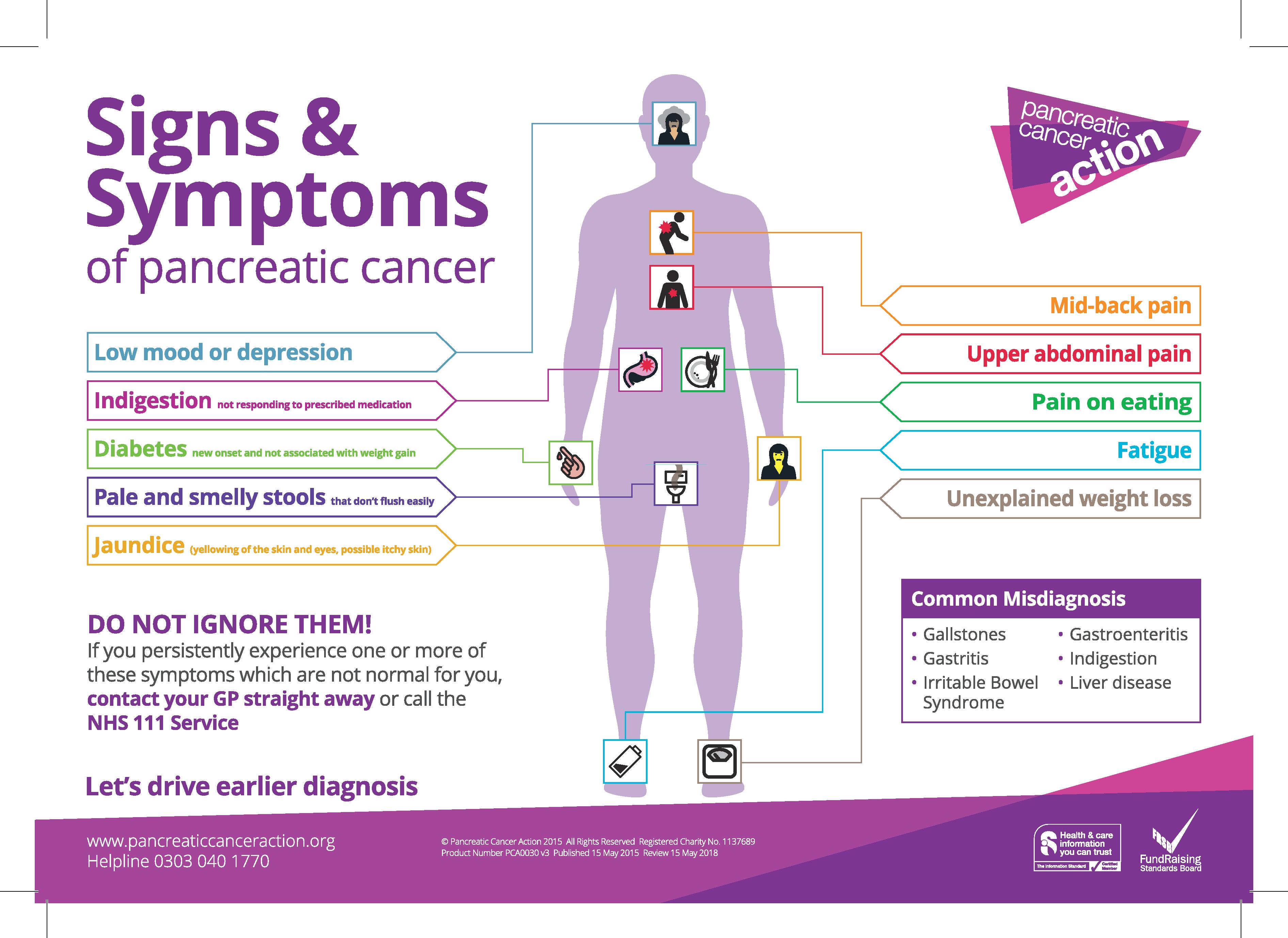
A NEW technique to study tissue samples in 3D has revealed that pancreatic cancers can start and grow in two distinct ways, solving a decades-old mystery of how tumours form.
The new method could help researchers to get more information from tissue biopsies and may lead to improved treatments for pancreatic cancers. The technique was developed by scientists at the Francis Crick Institute, and their results are published in Nature. The work was supported by the European Research Council and core funding from the MRC (one of the Crick’s founding partners).
The pancreas is a crucial organ that sits behind our stomach and plays a key role in digestion. It relies on a network of ducts linking it to other digestive organs, and the most common pancreatic cancers are found in the ducts. However, until now it has only been possible to see 2D slices of these ductal cancers, which contained an unexplained variety of abnormal shapes.
“To investigate the origins of pancreatic cancer, we spent six years developing a new method to analyse cancer biopsies in three dimensions,” explains Dr Hendrik Messal from the Francis Crick Institute, co-lead author of the research paper. “This technique revealed that cancers develop in the duct walls and either grow inwards or outwards depending on the size of the duct. This explains the mysterious shape differences that we’ve been seeing in 2D slices for decades.”
By analysing developing cancers in 3D, the team defined two distinct types of cancer formation: ‘endophytic’ tumours which grow inwards and ‘exophytic’ tumours which grow outwards. To find out what makes cancer cells grow in a particular way, they analysed detailed 3D images and worked with biophysicists at the Crick who created sophisticated computer models.

“We made a simulation of the ducts, describing individual cell geometry to understand tissue shape,” explains biophysicist Dr Silvanus Alt, co-lead author of the paper. “The model and experimental results both confirmed that cancer grew outwards when the diameter of the duct was less than approximately 20 micrometres, around a fiftieth of a millimetre.”
The work was made possible by an interdisciplinary collaboration between two research groups at the Crick, led by Dr Axel Behrens and Dr Guillaume Salbreux. Axel’s group works on stem cells and pancreatic cancer, while Guillaume focuses on using physics to understand biological processes.
“I think we first started discussing this when we bumped into each other in the bike shed,” says Axel. “It’s amazing what can come out of a chance encounter, we now have a patented technique to see the three-dimensional shapes of cancers and a biophysical understanding of the emergence of tumours. Now that we know pancreatic cancer can develop in these two different ways, we can start looking at whether one is likely to be more aggressive or spread in a different way. Many years from now, this could lead to improved diagnostic or treatment options.”
The team also applied the technique to other organs and found that cancers in the airways of the lungs and ducts in the liver behave in the same way. This shows that the mechanism the teams discovered is not specific to the pancreas and also applies to other cancers.

“Both the data and our models indicate that the two different mechanisms of tumour growth are purely down to the innate physics of the system,” explains Dr Guillaume Salbreux. “Like most cancers, ductal pancreatic cancer starts with a single defective cell that starts dividing. We found that very quickly, when there are only a few cells, the tumour has already started to grow either inwards or outwards depending on duct diameter. Defining this fundamental process will help us to better understand how cancer grows in many places across the body.”
Dr Mariana Delfino-Machin, Programme Manager for Cancer at the MRC, said: “Pancreatic cancer remains a very difficult disease to treat but understanding that it can grow in different ways will inform the development of more accurate treatments in the future.
“These findings came about thanks to researchers working in very different fields coming together to successfully tackle the same problem.”




A HEATED exchange in the Senedd has laid bare growing tensions over the future of hospital services in west Wales.
During the final First Minister’s Questions session, Paul Davies MS challenged First Minister Eluned Morgan to intervene and stop Hywel Dda University Health Board from removing services from local hospitals.
Mr Davies told the Senedd: “Residents across west Wales are understandably upset and angry at these decisions to strip services from their local hospitals.
“They want the Welsh Government to stand up for them and stop the health board from removing those vital services.”
He said he had repeatedly called on ministers to act, adding: “I have asked you time and time again to work with me and stand up for the people of west Wales… will you now intervene and stop the health board removing services from west Wales, yes or no?”

First Minister rejects intervention
In response, the First Minister acknowledged public concern but refused to commit to direct intervention.
Eluned Morgan said: “I recognise that communities are very upset about the situation. I understand that people are committed to their local services.
“These services are deeply valued and they’ve got to remain safe. They’ve got to be sustainable. They’ve got to be deliverable.”
She stressed that decisions must be based on clinical advice, adding: “This has got to be a decision that is clinically led and really thinks about the objectives that it’s trying to achieve to get people better.”

Accusations of ‘spin’
The First Minister also accused Mr Davies of misrepresenting proposals around Withybush Hospital.
She said: “What about the spin that you put up… to say that emergency departments in Withybush were actually going to close?”
She pointed to planned improvements, including expanded orthopaedics, increased cancer care, seven-day diagnostics, and enhanced same-day emergency care.

“You fail to mention this every time you talk, Paul,” she added.
Ms Morgan then challenged the Conservative MS directly, asking: “Do you agree that we should have a brand new hospital in west Wales? Yes or no?”
Key election issue
The exchange underlines how healthcare in west Wales — and particularly the future of services at Withybush Hospital — is becoming a key battleground ahead of the upcoming Senedd election.
Concerns over service changes, travel times, and hospital capacity have been repeatedly raised by campaigners and politicians across the region.

NEARLY 1,000 deaths in Wales have been linked to long waits in accident and emergency departments, according to new data.
Figures published by the Royal College of Emergency Medicine (RCEM) estimate that 965 deaths in 2025 were associated with patients waiting 12 hours or more for care. That equates to around 18 deaths a week and marks an increase of 29 compared to 2024.
The RCEM has described the situation as a “tragedy” that should send shockwaves through the political system.
Dr Rob Perry, Vice President of RCEM in Wales, said his thoughts were with the families affected.
He said: “My heart goes out to the loved ones of anyone who died following long waits in emergency departments.
“These are often some of the most vulnerable patients — those who are seriously ill or injured and in need of urgent admission. They should be receiving timely care, but too often they are left waiting the longest.”
Dr Perry said the figures point to a wider failure across the healthcare system, highlighting a lack of hospital beds and what is known as “exit block” — where patients cannot be discharged due to delays elsewhere in the system.
He said improving patient flow through hospitals, rather than diverting people away from emergency departments, is key to tackling long waits.
With Senedd elections approaching, the RCEM is urging political parties to prioritise increasing hospital capacity and addressing overcrowding in emergency departments.

A Welsh Government spokesperson said too many people are still waiting too long for emergency care.
They said: “Long stays in emergency departments are distressing for patients and their families and can lead to poorer outcomes, particularly for older people and those with complex needs.
“We have made clear that health boards must improve patient flow, eliminate 12-hour waits and end care being delivered in temporary spaces.
“We are working with the NHS, local authorities and partners to reduce pressures by expanding community-based care and increasing social care capacity.
“We remain committed to improving outcomes for people who need emergency treatment.”
Sandy Harding, Associate Director of Nursing, Policy and Professional Practice, Royal College of Nursing Wales said: “These findings are deeply disturbing and reflect our members’ experience in our 2025 report On the frontline of the UK’s corridor care crisis.
“Every day, our members are witnessing the consequences of a system under extreme and sustained pressure, where patients are waiting far too long in environments that are not fit for safe, dignified care.
“Corridor care has become an all-too-common reality in our hospitals, with patients being treated in inappropriate spaces without the privacy, monitoring, or resources they need. This is not what patients deserve, and it is not what nursing staff are trained to deliver.
“Behind the figures are real people – patients whose conditions can deteriorate rapidly while waiting and nursing staff who are doing everything they can in increasingly difficult circumstances. The emotional and professional toll on the workforce cannot be overstated.
“We urgently need action to address the root causes of these delays, including improving patient flow, increasing capacity and investing in both health and social care services. Without meaningful intervention, we risk normalising a level of care that falls far below acceptable standards.
“Our Election Manifesto is clear that the next Welsh government must eradicate corridor care as a matter of urgency, and we expect that in the first 50 days of being in office that they:
- commit to publish Corridor Care data by Health Board monthly
- direct NHS Wales to pause the reduction in hospital beds and commission two national reviews, to examine A&E and hospital bed capacity at different levels of patient dependency
- establish care delivered to a patient in a chair for more than 24 hours as a “never event”.”
- Welsh Liberal Democrat Leader Jane Dodds MS said: “These figures are a national scandal. Nearly a thousand people dying after waiting over 12 hours in A&E reflects a system that is fundamentally broken and causing avoidable deaths.
- “For too long, the focus has been on the front door of hospitals, when the real crisis is at the back door. Patients cannot be discharged because social care is overstretched, beds remain blocked, and A&E departments become dangerously overcrowded.
- “The Welsh Liberal Democrats have been the only political party focusing on fixing social care. We secured an extra £30 million for social care last year, and in Powys, that investment has already helped cut delayed discharges by a third. But this is only a drop in the ocean; we need to go much further and faster.
- “If we are serious about ending these avoidable deaths, the next Welsh Government must properly fund social care and take a whole-system approach to fixing patient flow and funding social care properly will be a red line in any negotiations we hold with other parties.”

Campaigner and Senedd Member urge residents to respond as consultation deadline approaches
FRESH calls have been made to block the proposed expansion of Withyhedge Landfill, with residents warning that allowing further waste operations would be “outrageous” given the site’s recent track record.
Natural Resources Wales (NRW) is currently consulting on a permit variation application submitted by Resources Management UK Ltd (RML), which operates the Pembrokeshire site.
The consultation, which could allow the site to accept additional waste including up to 50,000 tonnes of “waste soils” per year, will remain open until Thursday (Mar 26).
The Herald has previously reported on ongoing issues at Withyhedge, including complaints of strong odours, gas emissions and concerns about potential health impacts in nearby communities.
In a formal objection submitted to NRW, long-time campaigner Colin Barnett said the regulator should not consider expanding the site while problems persist.
He said: “The public have had enough of ineffective regulation of Withyhedge Landfill by NRW’s hands-off minimal inspection process.
“We don’t want to breathe toxic gases from this landfill. We don’t want to be woken up in the night by poisonous gases trapped in our house and we don’t want to step out into our gardens to be chased inside from the insidious stink still being emitted from the pit of corruption.”
The objection raises concerns about the operator’s compliance record, claiming the site has been among the worst-performing permitted installations in Wales in recent years, with further issues identified following its reopening in 2025.
It also points to reported hydrogen sulphide emissions, which residents say have at times exceeded recognised odour guidelines and caused distress to those living nearby.
Barnett added: “RML, the waste company, will say they spent £10 million on resolving this problem. We would advise them to ask for their money back as we still get horrendous spikes of gas drifting into our communities.”
The proposed variation would also include revised restoration levels and changes to monitoring of groundwater, surface water and leachate.
However, objectors argue that the term “waste soils” is too vague and could include contaminated materials. Particular concern has also been raised about the site’s existing licence to accept asbestos and the potential risks of handling multiple hazardous waste streams.
Barnett said: “Of specific public concern is their request to tip asbestos on this site. Beggars belief.”
The objection also questions whether the permit process is being advanced ahead of any decision by Pembrokeshire County Council on increasing the site’s capacity.
Concerns have further been raised about what has been described as a “daisy chain” of companies linked to the site’s ownership, which objectors claim allows waste to be transported with limited oversight.
Barnett said: “The documents identify our concern with the ‘daisy chain’ of companies owned by David Neal that allow him to transport waste into our county with minimal inspection.”
Preseli Pembrokeshire MS Paul Davies has also urged residents to take part in the consultation, warning that local voices must be heard before any decision is made.
Mr Davies said: “This consultation is an important opportunity for residents to make their views known about the future of the Withyhedge landfill site.
“There have been ongoing concerns about the site’s environmental performance and its impact on local communities, and it’s vital that Natural Resources Wales hears directly from the people who live in the area.
“I have made clear to the Welsh Government that I believe the site should be looking towards closure rather than expansion, and that Pembrokeshire must not become a dumping ground for waste.
“I would strongly encourage residents to take part in the consultation and submit their views before the deadline.”
NRW’s consultation process is ongoing, and no final decision has yet been made.
The proposed changes are likely to intensify an already heated debate around Withyhedge, which has become one of the most contentious environmental issues in Pembrokeshire in recent years.



Health2 hours ago
Clash over Withybush Hospital services as Paul Davies challenges First Minister
A HEATED exchange in the Senedd has laid bare growing tensions over the future of hospital services in west Wales....


Crime20 hours ago
Police stop car in Pennar as three arrested in drugs investigation
Suspected drug driver report leads to major police response and multiple arrests DRAMATIC scenes were reported in Pennar on Monday...


Business1 day ago
New pilot vessel Llanion arrives at Milford Haven
State-of-the-art 22-metre craft marks reset after £3.6m pilot boat controversy THE PORT OF MILFORD HAVEN has taken delivery of a...


Business2 days ago
Could Primark be coming to Haverfordwest? Major retailer in talks for former Wilko site
Council confirms advanced discussions as speculation grows over high street boost HAVERFORDWEST could soon see a major high street revival,...


Business2 days ago
Rail investment ‘could unlock 40,000 jobs and £11bn for Wales’ says new report
RAILWAY stations across Wales could help unlock around 40,000 jobs and more than £11 billion for the economy by 2036,...


Local Government2 days ago
Milford Haven set for £200m investment with schools, leisure centre and rail upgrade
Council outlines major plans for town with backing from Welsh Government MILFORD HAVEN is set for a major transformation with...


Community3 days ago
Broad Haven volunteers secure ‘national asset’ status for nature reserve
A SMALL stretch of woodland and former opencast coal mine has been transformed into a nationally recognised biodiversity site, in...


Entertainment4 days ago
Tenby steams up in spectacular style as crowds flock to festival
Colourful parade, towering creations and Victorian flair bring town centre to life TENBY was transformed into a vibrant Victorian fantasy...

Crime5 days ago
Publican jailed for six years for supplying cocaine and cannabis
Milford Haven man sentenced at Swansea Crown Court following drug dealing operation A MILFORD HAVEN publican has been jailed for...

Local Government5 days ago
Poverty summit highlights support efforts across Pembrokeshire
A SUMMIT bringing together key organisations from across Pembrokeshire has highlighted both the scale of local poverty and the work...
-

 Crime7 days ago
Mother given community order after admitting child cruelty offence
-

 Health6 days ago
NHS waiting list falls — but cancer delays and diagnostic backlog worsen
-

 Crime7 days ago
Woman stole from pharmacy despite ban, court hears
-

 Crime6 days ago
Illegal workers found at Cardigan takeaway after immigration raid
-

 Crime5 days ago
Pembroke man remanded in custody over knife threat, assault and damage allegations
-

 Crime5 days ago
Broad Haven man remanded in custody over sexual harm prevention order breach
-

 Crime7 days ago
Man pleads guilty in illegal ‘smokies’ food safety case
-

 News6 days ago
Council unveils plans for new state-of-the-art secondary school in Milford Haven