


News
Hundreds in Pembrokeshire affected by Thomas Cook collapse


OVER 100 people from Pembrokeshire have been adversely affected by the collapse of Britain’s oldest travel firm.
Founded in Market Harborough in 1841 by businessman Thomas Cook, the company organised railway outings for members of the local temperance movement. 178 years later, it had grown to a huge global travel group, with annual sales of £9bn, 19 million customers a year and 22,000 staff operating in 16 countries.
But all that came to an end on Monday (Sept 23), the Civil Aviation Authority announced that Thomas Cook was to cease trading.
Brian Hancock, who works in advertising sales at this newspaper, and his partner Emily were due to fly out today for a holiday of a lifetime in Mexico, but they arrived at the airport just hours after their tour operator was put into administration.
Brett Beasley and Julie Cassley from Milford Haven were due to fly to Benidorm on Saturday, September 28, for 10 nights flying from Luton. They paid over £2000 for their first time abroad.
Brett said he ‘feels let down’ by the customer service and ‘should have prepared customers for the outcome’.

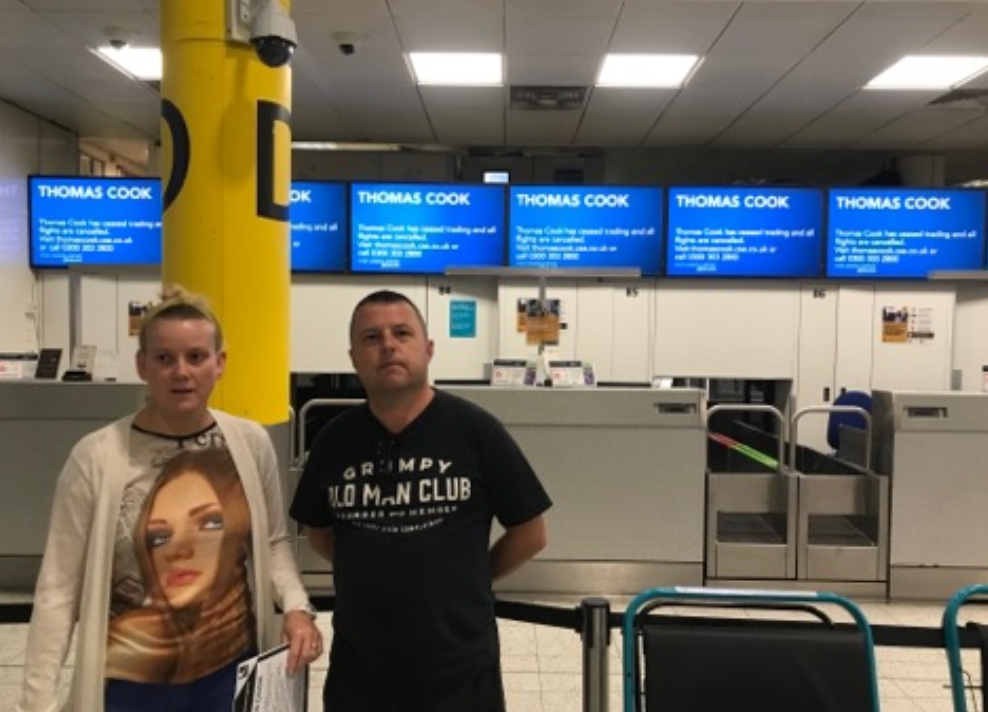
Brian and Emily Hancock from Johnston have had their two week Mexico holiday cancelled as they arrived to check in
Sian James was due to fly on Thursday (Sept 26) the flight has been cancelled. She also told me that travel agencies have been pushing their prices up. She was due to go to Lara beach in
Antalya Turkey for eight nights with her partner and three children. She said she is “gutted”.
Sian told The Herald: “Lucky my boss is understanding, and we can go a bit later. Also, lucky my partner is off until October 30. We have a few commitments we will have to sacrifice by changing dates”
Gemma Richards is with her boyfriend in Greece, she has been told to pay £165 per night to stay in a hotel “fuming I came here to have a relax after stressful time to be made more stressed and poorly.”

Lisa Fee said: “We were due to fly to Turkey on Thursday. Trying to book another holiday today so we can still go.”
Laura Bowditch said that she had a holiday booked for May next year. She said: “Feel sorry for all the staff that have lost their jobs, but this was my dream holiday. God knows how long
it will take to get a refund to book another one”
Rebecca Singh said: “My childminder went abroad with them, due back tomorrow morning. Have already informed my workplace that I might not be back in work Wednesday if she isn’t home, without her, there’s no one for my son so I can’t work. It’s a shame these people lost their jobs especially the length this company has been going for over 100 years.”

Jennie Blair said: “I’m actually in Turkey due to fly back to Cardiff today. We must vacate our room at 12pm and still don’t have a flight confirmation to get home. We have been advised not to go to the airport until a flight is confirmed but that then leaves us with no room.”
The modern Thomas Cook was in stark contrast to what the company used to be. The firm’s fate was sealed by a number of factors including financial, social and even meteorological issues.
As well as weather issues – a super hot summer meaning people were more likely to have a staycation – and stiff competition from online travel agents and low-cost airlines, there were other disruptive factors, including political unrest around the world and many holidaymakers had become used to putting together their own holidays and not using travel agents’ package deals.
In May, Thomas Cook reported a £1.5bn loss for the first half of its financial year, with £1.1bn of the loss caused by the decision to write down the value of My Travel, the business it merged with in 2007.
It is believed that Brexit was also a key factor in the disruptions with customer bookings as they awaited the fate of their country’s travel policies.
The airline company was then forced to be put up for sale in the hope that they could attain some much-needed funds to keep the company afloat. Surprisingly, the airline company had seemed to have acquired a deal with Chinese company Fosun but the creditor banks issued a last-minute demand that the company find an extra £200m which proved too costly in the end to find a solution for Thomas Cook.
The Government was asked for a bailout of £250m, which was denied. Transport Secretary Grant Shapps said this on the Today programme: “I fear it would have kept them afloat for a very short period of time and then we would have been back in the position of needing to repatriate people in any case. The company’s large debts and High Street-focused business made it a poor candidate for survival”
The UK Civil Aviation Authority (CAA) said the company had “ceased trading with immediate effect” and it has also triggered the biggest ever peacetime repatriation, aimed at bringing more than 150,000 British holidaymakers’ home.
The tour operator’s failure puts 22,000 jobs at risk worldwide, including 9,000 in the UK and about 10 from Pembrokeshire.
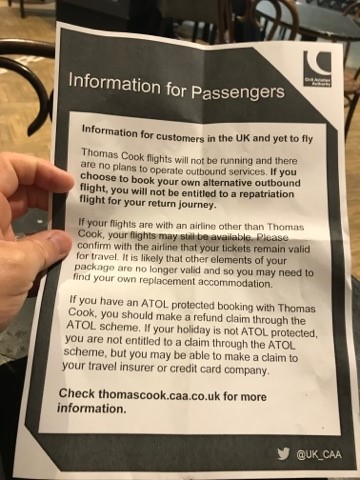
Passengers arriving at airports for flights were given this handout









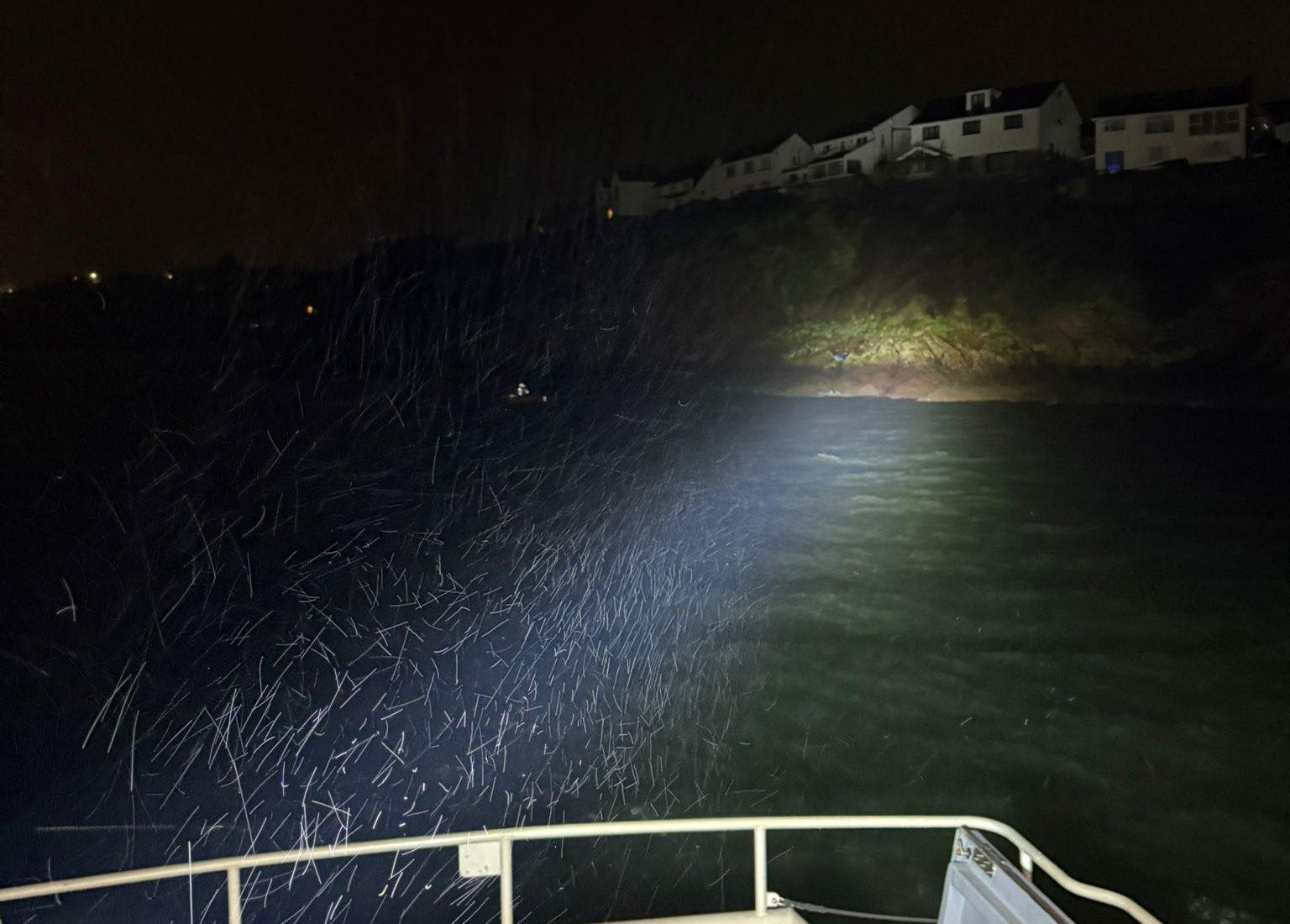
Teenagers rescued from rocks as late-night tide trap sparks call-out
ANGLE lifeboat crew have responded to two emergency shouts this week, including a late-night rescue of three teenagers cut off by the tide.
Volunteers from RNLI Angle Lifeboat Station were first tasked at 6:23pm on Tuesday (Feb 10) to assist in the search for a missing surfer at Broughton Bay, on the Gower.
With Burry Port Lifeboat Station inshore lifeboats also responding and other all-weather lifeboats in the area unavailable, Angle’s crew began mustering for immediate launch.
However, the shout was cancelled before the lifeboat launched after the surfer was located safe and well.
Just two days earlier, at 11:24pm on Monday (Feb 8), the crew had launched to reports of three teenagers stranded between Hakin Point and Conduit Beach after becoming cut off by the incoming tide.

The lifeboat quickly located the group on rocks made slippery and hazardous by heavy rain. Unable to climb to safety, the teenagers were stranded as the tide rose around them.
The crew deployed the station’s inflatable Y-boat, allowing rescuers to reach the casualties and transfer them safely back to the all-weather lifeboat.
They were then brought a short distance into the marina and handed into the care of family members, alongside HM Coastguard Dale Coastguard Rescue Team and police.
With no further assistance required, the crew stood down and the lifeboat was refuelled and made ready for service again by 1:00am.
RNLI volunteers are reminding the public to check tide times and sea conditions before heading onto the coast, particularly during the winter months when weather and visibility can deteriorate quickly.

A SPECIAL afternoon celebrating Wales’ rich tradition of hymn singing and sacred music will take place at Canolfan Bethlehem on Sunday (Feb 15) at 3:00pm.
Organisers say the event, titled Caniadaeth y Cysegr, will honour a musical heritage that has shaped Welsh life for generations. Hymn singing has long echoed beyond chapels and churches, heard on rugby terraces, at community gatherings and in village halls – a living tradition woven into the fabric of Welsh identity.
Central to that tradition is the Cymanfa Ganu, the much-loved hymn festival which has played a vital role across Wales, particularly in north Pembrokeshire. While attendance has declined in recent decades, supporters say the spirit of congregational singing remains strong and deserves renewed celebration.
The afternoon will feature a talk by broadcaster and academic Ceri Wyn Richards, who will explore the poets, composers and musicians from Pembrokeshire whose work has made a lasting contribution to Welsh hymnody and sacred song.
During her distinguished career in television and radio, Richards produced Caniadaeth y Cysegr, the BBC’s longest-running religious programme, first aired in 1942 and widely regarded as the forerunner to Songs of Praise. Before retiring, she undertook an ambitious nationwide project to record every hymn in the Welsh hymn book with chapels, choirs and musicians throughout the country.
The event will also explore the strong links between hymn writing and places such as St Davids and Blaenwern, while reflecting on the legacy of influential figures including W. Rhys Nicholas, Waldo Williams and Eirwyn George. Organisers will also highlight the surprising connections between traditional hymn tunes and modern popular music.
A simultaneous translation service will be available, and the event is open to all.
Organisers added: “Everyone is welcome to join us for an afternoon of song, history and community as we celebrate one of Wales’ most treasured cultural traditions.”

Youth-led ‘Think Outside the Block’ toolkit rolled out to secondary schools across Pembrokeshire
A wNEW mental health and wellbeing resource designed by young people for young people has been launched in Pembrokeshire to mark Children’s Mental Health Week.
The county’s Children and Young People’s Rights Office (CYPRO) has unveiled Think Outside the Block – an interactive booklet and game aimed at helping pupils better understand emotional health and feel more confident talking about it.
The resource, launched this week (Feb 9–15), encourages open discussion, challenges common misconceptions and builds awareness around issues including anxiety, self-esteem, neurodiversity and general wellbeing.
Importantly, the project has been created by members of the Pembrokeshire Youth Assembly, working alongside CYPRO and the Primary Mental Health and School In-Reach teams.
The idea grew out of the county-wide “What Matters to You?” consultation, where young people identified mental health and emotional wellbeing as one of their top concerns. Participants said terms linked to mental health and neurodiversity are often used without clear understanding, which can create confusion and stigma.
Think Outside the Block aims to tackle that by using accessible language and interactive activities to help children explore key topics and develop the vocabulary they need to speak openly about how they feel.
Over the coming days, CYPRO will distribute the resource to secondary schools across the county. Staff will be able to use it in classrooms, youth settings and dedicated wellbeing sessions.
A spokesperson for CYPRO said: “This project has been led by young people, for young people. Their voices and experiences have shaped every part of this resource.
“We are delighted to share it with schools across the county and support meaningful conversations about mental health, emotional health and wellbeing.”

The Youth Assembly continues to play a central role in representing the views of young people locally, with this latest initiative described as a strong example of co-production in action..
Picture: Members of the Youth Assembly launch the Think Outside the Block resource (Pic: Supplied).



Crime2 hours ago
Pendine man jailed for abducting and drugging teenage girl
Offender had 1,101 unlawful images of children stored on his devices, including 122 Category A images – the most serious...


Crime1 day ago
Publican admits supplying cocaine and cannabis at Crown Court
Admits cocaine and cannabis supply but denies intent and cash allegations A MILFORD HAVEN pub landlord has admitted supplying cocaine...


Local Government1 day ago
Plaid win in Fishguard North East by-election
PLAID CYMRU has taken the Fishguard North East seat on Pembrokeshire County Council following this week’s by-election. Billy Shaw was...


News2 days ago
Man to return to court over alleged harbour collision
Three charges relate to navigation of vessel in Milford Haven A NEWPORT man is due to return to court later...


Business3 days ago
Computer Solutions Wales under fire from customers
Claims of unreturned devices, unpaid refunds and small claims court cases as company blames landlord dispute CUSTOMERS across west Wales...


News3 days ago
Starmer under fire as aides quit and Scottish Labour leader calls on him to resign
Two senior Downing Street exits in 24 hours as Anas Sarwar breaks ranks, but ministers insist the Prime Minister is...


News3 days ago
Fresh concerns over £60m A40 scheme after resurfacing works just months after opening
QUESTIONS are being asked about the condition of the newly-opened A40 Llanddewi Velfrey to Redstone Cross carriageway after sections of...

Charity3 days ago
RSPCA looks back at the Sea Empress oil tanker disaster 30 years on
Charity reflects on one of the biggest environmental disasters to hit UK IN just a few days time it will...


Crime5 days ago
Pembroke Dock man admits threatening to hack woman’s head off with sword
Court imposes strict bail conditions and bans contact with named individuals ahead of sentencing A PEMBROKE DOCK man has admitted...


Crime5 days ago
Teenager remanded after teacher injured in knife incident at Milford Haven school
Fifteen-year-old charged with Section 18 grievous bodily harm and possession of a bladed article appears before Swansea magistrates A FIFTEEN-YEAR-OLD...
-

 Health7 days ago
Health board targets rise in steroid and gym drug use across west Wales
-

 Health23 hours ago
Health Board to decide future of nine key services at two-day meeting
-

 Crime7 days ago
Teacher injured and teenager arrested for attempted murder at Milford Haven School
-
Business3 days ago
Computer Solutions Wales under fire from customers
-

 Business6 days ago
Six-figure negligence victory leaves retired builder trapped in divorce limbo
-

 Business5 days ago
Minimum alcohol price to rise by 30 per cent as retailers warn of border impact
-

 News7 days ago
Another Senedd member defects to Reform as Lib Dem MP hits out
-

 Crime7 days ago
Teacher assaulted by pupil with weapon at Milford Haven school