


News
Jury out in chip shop murder trial

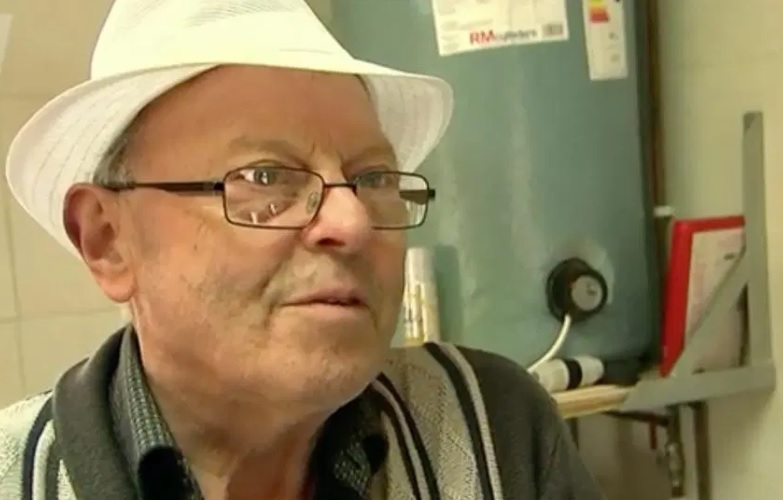
THE JURY has retired to consider its verdict regarding the trial of a man who is charged with murdering his wife with a chip shop fryer.
Geoffrey Bran, aged 70 from Hermon in Carmarthenshire, is accused of murdering his wife Mavis on October 23 last year, and is alleged to have thrown scalding hot oil over her from a deep fat fryer, which gave her widespread burns and lead to her death later in hospital.
He had also burnt his own hand when he tried to help her remove her jumper, which was saturated in the boiling hot oil, by trying to pull it over her head.
Earlier this week, Bran gave evidence to the court in his own defence. He told the court that there would be arguments about nothing after his wife would drink alcohol and have ‘spells of paranoia moments’ in the day, but claimed he had never hit his wife during a confrontation. He said that Mavis would start drinking early, and would consume two and a half bottles of red wine.
Bran told the court they opened the Chipoteria because Mavis was doing some meals for elderly people in the village, and didn’t like retirement because she was always on the go. He said he built a cabin next to the caravan, which took around a year, because Mavis desperately wanted to open in January. He said he would clean and blanch chips, fry them, and clean the equipment after. Mavis would cook fish and pies, and make sauces.

On the day that Mavis died, Bran said Mavis was in a good mood, but had been drinking from around 9.30am that day. He said she consumed a brandy with two neighbours, and he didn’t notice anything different about her behaviour when she had been drinking.
Bran spoke about an order, for which his wife said the fat wasn’t good enough to cook the fish in. He said: “I said you may as well use my friers, I use you for chips, but you have to turn them down because they’re a bit high for fish.”
He claimed that shortly afterwards, she looking into the fryer and told him he had overdone them. He said: “I didn’t know I was meant to look after them. She said she was coming back straight away.”
With that, he said Mavis took the fish out with tongs and tossed them into a tray, resulting in a ‘waterfall of fat’. He told her he had seen worse on plates, and said he believed she wasn’t going to serve them.
He went on to describe that he went to blanch some chips, but happened to turn around to see that Mavis had fallen, and her head was about nine inches away from the floor.
He said: “I hadn’t seen her falling because I wasn’t looking at that point. I turned around and saw her flying to the floor. In the corner of my eye I could see the fat fryer moving on the table as if in slow motion, but it wasn’t slow motion. At the moment I was going to move I could see the legs … instantly the legs fell off the edge and the weight of the oil tipped the whole thing forwards the whole two tubs came out in one whoosh.
“Once the legs got over the edge the weight of the oil must have moved things fast without the tubs coming out and it was like a waterfall and landed on her chest.

“By this time now the whole unit was going through the air and landing on top of her, pulling the sockets out.”
He continued: “I grabbed her arm, grabbed her other arm, pulled her to a sitting position, and lift all her clothes off. I didn’t know whether I was doing the right thing to be honest. I just thought get the clothes off. She was wearing a thick jumper and a t-shirt underneath. Usually she wears a kitchen apron, but because we had guests that day she had forgotten to change.
“I grabbed the bottom of the jumper and pulled it off her head. I think the jumper came into contact with her face.”
When asked if he felt any pain, he said he couldn’t remember, and was trying to get her clothes off her.
He said: “I walk round her, grab her two arms and pull her to a standing condition. I pulled her to the slabs outside. At that point I forgot I didn’t have a phone. I’d forgotten to bring it down in the morning. We always took the mobile phone back to the house in the night to charge it.”
Bran said he told her to run up the house in order to call an ambulance. He said: “She screamed up the path. She was in shock but she knew what was happening. I could see her arms were peeling. That’s about it really because all the rest was quite red.”
When asked why he didn’t go with her or why he didn’t comfort her, she said he didn’t know and was ‘totally stumped’.
The court heard how when a customer came in, Bran told them there had been an accident, but when he said he could go to Newcastle Emlyn, he said he would serve him. He said that Mavis was in a dressing gown shaking, and her face was white.
Bran was kept in custody until October 24. He was asked if he visited Mavis in hospital, but said he was told he was not allowed to.
He said he wanted to see her to say goodbye, and told the court that he misses her every day.
During cross examination, Bran was pressed as to why he didn’t comfort his wife of 30 years and ask about how she was. He told the court he ‘couldn’t face it’, but couldn’t say why.
He claimed that his wife deliberately lied to paramedics and blamed him for burning her. He said ‘they are all lies’, and said that she would always make things up and blamed him for everything.
Bran was asked, if he had helped to remove Mavis’ clothing, why he didn’t have burns on both hands. He couldn’t answer.
The court heard that Mavis suffered 46% burns to her total body area. The burns were both partial and full thickness.
The front of her body mostly suffered from full thickness burns, including her torso, thigh and neck. Her eyes were closed when she suffered the partial thickness burns to her face. Her eyelids were burned, but not her eyes themselves. There were no burns to the back of her hands, her palms or her fingers, but there were to her inner forearms. They were likely secondary burns, caused by the removal of her clothing.
The burns proved to be fatal when her condition deteriorated. As a result, the burns she suffered caused her death.
The jury retired at 12.51pm on Monday (Nov 18) to consider the case. Judge Paul Thomas QC, said: “Members of the jury I am now going to ask you to retire and consider your verdict in this case. There is no pressure of time. Take as short or as long time as needs be. As far as today is concerned, if you have reached a verdict that is well and good; if you haven’t you will be sent home and return tomorrow.”
The jury has since retired and the court awaits a verdict.


Mayor’s charities named as civic leaders gather at St Katharine and St Peter’s Church
THE CIVIC SERVICE of the Mayor of Milford Haven, Cllr Mark Woodward, took place at St Katharine and St Peter’s Church on Saturday (June 20).
The service marked Cllr Woodward’s election as Mayor and First Citizen of Milford Haven.
It was conducted by Rev Dr Adrian Furse and Canon John Cecil, with music from church organist Richard Stephens, Gelliswick Community Choir and Milford Haven Town Band.
Guides and Brownies, Milford Haven Sea Cadets and Royal Marines Cadets were also among those taking part, with councillors Colin Sharp and Yvonne Southwell acting as ushers.
Refreshments followed at Milford Haven Bowling Club.
Local MS Paul Davies was among those attending the service and wished the new mayor all the best for his term in office.
Cllr Woodward’s chosen charities for the year are Patch Charity and Greenacres Rescue.
Photo caption:
Civic guests attended the Mayor of Milford Haven’s service at St Katharine and St Peter’s Church on Saturday (Pic: Supplied)

Donations pour in for SNAP Specialist Play as families embrace Toy Story 5 launch
A TOY STORY-themed charity appeal at a Haverfordwest cinema has got off to a flying start, with families donating toys to support children with additional needs across Pembrokeshire.
The Palace Cinema has teamed up with local charity SNAP Specialist Play to collect new and pre-loved toys during screenings of the newly released Toy Story 5.
The appeal centres around an “Andy’s Toys” donation box, inspired by the beloved Pixar films, which has already been filled by generous filmgoers.

Cinema manager Hannah Cramp said the response from the community had exceeded expectations.
Families attending opening screenings have arrived carrying bags of toys, with many children keen to share their own treasured items to help others.
The cinema has transformed its foyer into a colourful Toy Story-themed experience, complete with hand-painted decorations, character silhouettes, bunting and famous film slogans including “Reach for the Sky” and “To Infinity and Beyond”.
Many visitors have also embraced the spirit of the occasion by attending in costume as their favourite Toy Story characters.

The toys are being donated to SNAP Specialist Play, a charity based within the Child Health Department at Withybush Hospital.
SNAP supports pre-school children with additional and complex needs through specialist play sessions designed to encourage communication, physical development and sensory learning.
Its facilities include sensory rooms, therapeutic play spaces and bespoke equipment used by speech and language therapists, occupational therapists and physiotherapists.
Project manager Cindy Jenkins said the charity was delighted by the partnership and grateful for the generosity shown by local families.

She said every toy donated would be put to good use, either during specialist play sessions, at family events, or through seasonal initiatives such as Christmas gift boxes for children and their siblings.

The appeal will continue until mid-July, with organisers hopeful that even more donations will be received over the coming weeks.
Anyone attending Toy Story 5 at the Palace Cinema is invited to bring along a new or good-quality pre-loved toy to support the appeal.

Cover photo:
Fancy dress fun: Palace Cinema manager Hannah Cramp helping launch the Toy Story charity appeal.

PATIENTS are facing some of the worst medicine shortages ever seen in the UK, with pharmacists warning the situation now poses a serious risk to safety.
The National Pharmacy Association said shortages affecting commonly used medicines are becoming more frequent, lasting longer, and causing increasing disruption for patients, GP surgeries and pharmacies.
The warning comes as Serious Shortage Protocols for Creon, used by people with pancreatic cancer and cystic fibrosis to help digest food, have been in place since May 2024 and have now been extended until July 10, 2026.
HRT treatment Estradot has also been under a Serious Shortage Protocol since December 2024, with the current extension also running until July 10.
Patients travelling between pharmacies
A survey by the National Pharmacy Association found that 98 per cent of pharmacies had encountered patients who had visited several pharmacies in one day to find a prescription.
It also found that 96 per cent of pharmacies believed the current situation posed a serious risk to patient safety, while 89 per cent said they had been unable to dispense a medicine at least once a day because of supply problems.
Some pharmacy teams have also faced anger and abuse from patients unable to obtain medication.
Olivier Picard, Chair of the National Pharmacy Association, said: “Medicine shortages are becoming more frequent, lasting longer and causing increasing disruption for patients.
“These shortages are some of most severe the UK has experienced.
“It is deeply distressing to find patients who have travelled from pharmacy to pharmacy to find the medicines they need without success.”
Calls for urgent taskforce
The NPA is calling on the government to convene an emergency taskforce involving manufacturers, wholesalers, clinicians and pharmacists.
It also wants changes to rules which currently stop pharmacists from making simple substitutions, such as changing a tablet to a capsule or a cream to an ointment, even where a safe alternative is available.

Professor Victoria Tzortziou Brown, President of the Royal College of GPs, said medicine shortages were frustrating for patients, GPs and pharmacists, and added pressure to already stretched services.
She said the College supported pharmacists being able to make limited changes to prescriptions where a medicine is unavailable and a safe alternative exists.
She added: “The most important thing is that patients are able to access the medication they need safely and without delay.”
The Cystic Fibrosis Trust and Pancreatic Cancer UK have also raised concerns about the impact of shortages of pancreatic enzyme replacement therapy, including Creon, on people who rely on the medication to digest food, maintain weight and stay well enough for treatment.



Charity11 hours ago
Toy Story fans fill charity toy box at Haverfordwest cinema
Donations pour in for SNAP Specialist Play as families embrace Toy Story 5 launch A TOY STORY-themed charity appeal at...


Community16 hours ago
Lord Rhys emerges from the mist in St Davids
Giant puppet begins historic journey marking 850 years since the first Eisteddfod MIST swirled around St Davids Cathedral on Friday...


News2 days ago
Tragic tribute paid to Haverfordwest man after A4075 collision
FAMILY REMEMBERS “KIND AND LOVING” CALLUM HANSON THE FAMILY of a 22-year-old man from Haverfordwest who died following a road...


News3 days ago
Motorcyclist, 22, dies in A4075 crash in Pembrokeshire
A 22-year-old woman remains in hospital after two-vehicle collision A MOTORCYCLIST has died following a serious two-vehicle crash on the...


Community3 days ago
Why police will be visiting every home in Pembrokeshire
New operation aims to knock on more than 257,000 doors across Dyfed-Powys over the next three years DYFED-POWYS POLICE has...


Crime3 days ago
Prisons at breaking point: MPs warn Wales is paying the price of a failing system
Frozen healthcare budgets, overcrowded jails, homelessness on release and mounting pressure on staff are undermining rehabilitation across Wales, according to...


News3 days ago
Brexit at 10: How Britain was sold a dream that cost us dearly
A decade after the referendum, the promised benefits remain hard to find while the economic costs are increasingly difficult to...


Crime3 days ago
Worcestershire man jailed after violent attack on woman in Tenby
Defendant was already serving a suspended sentence when serious assault took place A WORCESTERSHIRE man has been jailed for more...


Climate3 days ago
Offshore wind ‘could bring new generation of jobs to Milford Haven’
Pembrokeshire ports and Celtic Sea projects placed at centre of Wales’ green energy ambitions MILFORD HAVEN and Pembroke Dock could...


Community4 days ago
Police officer hailed hero after midnight sea rescue in Milford Haven
PC swam 100 metres offshore to save distressed woman heard calling for help in darkness A DYFED-POWYS POLICE officer has...
-

 Community6 days ago
Pembrokeshire Chess Club crowned Welsh champions
-

 Crime3 days ago
Milford Haven man jailed for breaching domestic violence protection order
-

 Local Government5 days ago
Security privately arranged by Mayor at Beating of the Bounds
-

 News3 days ago
Crash on Freeman’s Way causes school-run chaos across Haverfordwest
-

 Crime4 days ago
Man wanted by court after failing to attend hearing over alleged shop thefts
-
 Crime4 days ago
Man banned from roads after drink-driving offence
-

 Crime4 days ago
Man jailed after admitting strangulation and assaults
-

 Crime4 days ago
Man sentenced over stalking campaign and lock knife offence