


News
Ex-Methodist minister admits child porn offences


 A 51-YEAR-OLD former Methodist minister, who now lives in Crymych, appeared at North West Wiltshire Magistrates Court last week, where he pleaded guilty to five charges of making indecent images of children on November 28, 2011, and one charge of possessing them between November 2011 and October 2012.
The Rev Dale Anthony Cotton has admitted looking at child porn on the internet and confessed it was the result of a pornography addiction spanning back 10 years.
Cotton, who was employed by Chippenham Methodist Circuit, is to be put on the sex offenders’ register after being turned into police by a fellow minister at the church.
Police found more than 600 child abuse images on computers at the clergyman’s home in Chippenham at the end of October 2012.
Pauline Lambert, prosecuting, said: “In October 2012 Rev Jones contacted the police and said one of his ministers at the Methodist Church, that is Rev Dale Cotton, had informed him he had been accessing child pornography. Police officers seized two computers from Cotton’s home address.
“He said he had been addicted for the last ten years and had been involved in internet chat rooms.”
She said the two laptops contained a total of 611 child abuse images, of which 90 were able to be readily viewed again. The vast majority of these were level one, the lowest level of explicitness.
The court heard Cotton had visited websites synonymous with child abuse, including site addresses referencing school angels, nude virgins and teeny lovers.
Mark Glendenning, defending, said: “He has an addiction, and that has spilt out of curiosity over onto chat rooms. He accepts he has a problem.”
He told magistrates most of the images were inaccessible, and there was no suggestion of any having been distributed anywhere else.
Chair of the bench, Lady Maria Pitt, said a pre-sentence report should include all options, including custody.
Cotton will be sentenced by magistrates in Chippenham on October 31 after pre-sentence reports have been prepared.
Bail conditions forbid him from having contact with children under 16 without supervision, using a computer or other device to access the internet.



New scheme aims to improve emergency response and safeguarding for victims across west Wales
A LAW introduced after a woman and her mother were murdered despite repeated 999 calls is to be rolled out in the Dyfed-Powys Police control room.
Domestic abuse specialists will be placed alongside emergency call handlers under the second phase of ‘Raneem’s Law’, giving officers and control room staff real-time advice when victims call for help.
The scheme is named after Raneem Oudeh and her mother Khaola Saleem, who were murdered in Birmingham in August 2018 by Raneem’s former husband after police failed to respond properly to repeated emergency calls.
Dyfed-Powys Police and North Wales Police are among twelve additional forces across England and Wales selected to join the scheme, bringing the total number taking part to seventeen.

For west Wales, the move means callers from Pembrokeshire, Carmarthenshire, Ceredigion and Powys should have domestic abuse risks assessed at the first point of contact, rather than later in the process.

The specialists will help identify high-risk cases, advise call handlers and responding officers, review risk assessments and ensure victims are referred quickly to specialist support services.
Early reports from forces already using the scheme suggest it has improved confidence among call handlers and officers, helped identify high-risk domestic abuse cases sooner, and led to faster safeguarding action.
The UK Government says the expansion comes six months after the launch of its Violence Against Women and Girls Strategy, which aims to halve violence against women and girls within a decade.
Minister for Safeguarding and Violence Against Women and Girls, Natalie Fleet, said: “Last year, one in eight women experienced domestic abuse, sexual assault, or stalking. No society that tolerates this level of violence can claim to be safe for women.
“That’s why we are rolling out the pioneering ‘Raneem’s Law’ to forces in Wales because every victim, no matter where they live, should be able to rely on a system that truly supports them.
“But we will not stop there. We will deploy the full power of the state to make this country safe for women and girls.”
Nour Norris, lead campaigner and the aunt and sister of Raneem Oudeh and Khaola Saleem, said: “When my sister Khaola and my niece Raneem called for help, they should have been heard, understood and protected. Instead, our family lost two beautiful lives in circumstances that should never have happened.

“Every step forward for ‘Raneem’s Law’ is deeply emotional for me because it comes from unimaginable pain and loss.
“‘Raneem’s Law’ is more than a policy. It is a legacy built on love for my sister and niece and on the determination that their voices, and the voices of all victims of domestic abuse, are never ignored again.”
Secretary of State for Wales Jo Stevens said: “The UK Government is working to make our communities safer and it is vital that we reduce violence against women and girls to achieve this goal.
“We know that a specialist focus on preventing domestic abuse works, and I am pleased that this new approach is going to be rolled out across two of our Welsh police force areas.
“Victims of appalling abuse across North Wales and Dyfed-Powys will now have the greater protection they deserve.”
The Government has committed to rolling out ‘Raneem’s Law’ across every police force in England and Wales by 2029.
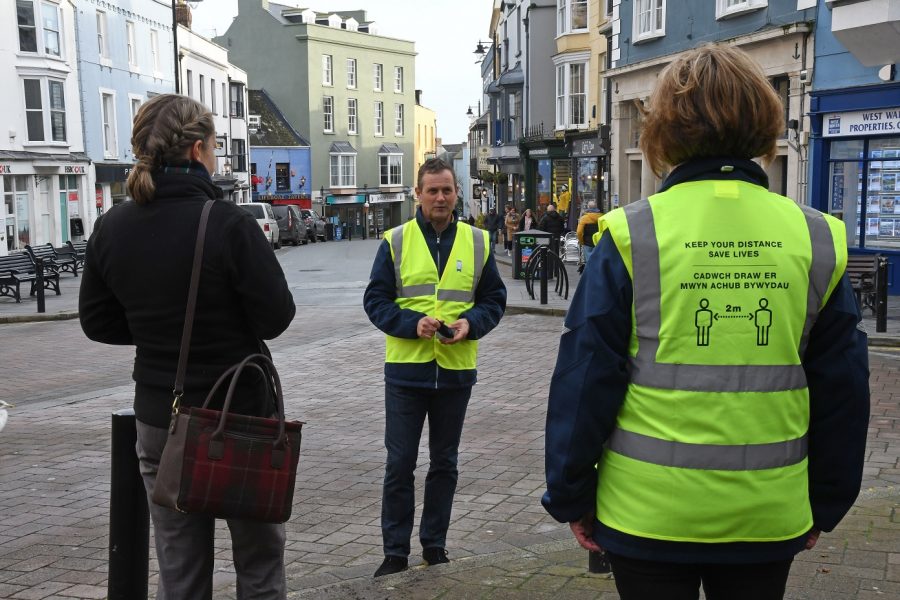
New enforcement unit given powers to search homes, seize assets and recover money from bank accounts
A NEW government counter-fraud squad has begun investigations into suspected Covid loan scammers as ministers step up efforts to recover billions of pounds lost during the pandemic.
The Public Authorities Fraud Investigation and Enforcement Service (PAFIES) has been launched with what ministers say are the strongest investigatory powers in a generation.
The new unit will be able to search the premises of suspected fraudsters, seize assets, compel information from third parties, and recover money directly from bank accounts and wages where debts are not repaid.
The window for pursuing civil claims relating to Covid fraud has also been doubled from six years to twelve years, meaning suspected fraudsters can be pursued until 2032.
The crackdown follows the government’s response to the Covid Counter Fraud Commissioner’s final report, which found that £10.9 billion was initially lost to pandemic fraud and error.
Nearly 2,000 company directors have already been banned and 86 criminals prosecuted.
The government says counter-fraud measures introduced in the 2024 and 2025 Budgets have protected £7.5 billion of public money over two years.
Chancellor Rachel Reeves said: “In contrast to the last government, who left the door open to £10.9 billion of pandemic era fraud and error, we have taken action to protect £7.5 billion of public money.
“My message to those who owe the public purse money is clear — those who profited, will pay.”
Satvir Kaur, Parliamentary Secretary in the Cabinet Office, said: “Those who chose to exploit a national crisis to line their own pockets now have nowhere left to hide.
“Our decision to go after those who have cheated the system as part of our wider crackdown on fraud against public services has already helped save £7.5 billion.
“We will use every tool at our disposal to protect public money and fund the frontline services the British people rely on.”

The new powers are contained in the PAFER Act 2025, which gives investigators enhanced search-and-seizure powers, stronger information-gathering powers, civil financial penalties, and direct recovery powers following a Public Sector Fraud Authority investigation.
Those who failed to respond to the Voluntary Repayment Scheme last year are expected to face enforcement action from the autumn.
A Covid fraud reporting website, launched in September, has already received more than 1,000 reports of suspected fraud.

Union says Welsh Government has funded repairs, meals and swimming lessons but failed to address one of the biggest pressures facing schools
SCHOOL leaders have welcomed extra Welsh Government funding for repairs, free school meals and swimming lessons — but warned that pupils with additional learning needs have been overlooked.
The criticism came after the Welsh Government set out its supplementary budget for 2026-27, including £40m for school buildings and repairs, £15m to expand free school meals in secondary schools, and £2m for swimming lessons.
Laura Doel, national secretary of school leaders’ union NAHT Cymru, said the extra capital funding for school buildings was welcome and would “go some way to plugging the gap”.
She also welcomed the expansion of free school meals, saying no child should go hungry because of their parents’ financial circumstances.
But Ms Doel said the “significant omission” was the lack of additional funding for ALN provision.
She said: “It beggars belief that of money that has come to Wales thanks to investment into additional needs in England, not a penny has gone to support pupils with ALN in Wales.
“We have seen local authorities, directors of education and the profession united on the need for significant investment in supporting our most vulnerable learners, but this government has chosen to ignore the pleas for support.
“It calls into question whether education is a key priority for this government.”
ALN pressure
Additional learning needs provision has become one of the major pressures facing schools and councils across Wales, with rising demand for specialist support, assessments, staffing and placements.
School leaders argue that without dedicated funding, already stretched school budgets are being forced to absorb costs which can affect support for both ALN pupils and the wider school community.
The Welsh Government says the supplementary budget is designed to support key priorities, including public services, schools, health and the cost of living.
But NAHT Cymru said the absence of new ALN money was difficult to justify at a time when schools are repeatedly warning that vulnerable learners need more support.
The Herald has asked the Welsh Government how much of the school buildings funding will come to west Wales and why no specific additional allocation has been made for ALN provision.



Community1 hour ago
Manorbier fire scandal: Council’s payout just £63,777 after school destroyed
PEMBROKESHIRE COUNTY COUNCIL has accepted an insurance settlement which leaves it with just £63,777.07 after the catastrophic fire which destroyed...


News10 hours ago
Bus overturns in major incident near Kidwelly
All passengers rescued as emergency services remain at scene A BUS overturned on the A484 between Kidwelly and Ferryside on...


Community1 day ago
Tenby Summer Spectacular cancelled amid council row over harbour access
Organisers say popular charity events cannot safely go ahead without clear powers to control crowds TENBY ROUND TABLE has announced...


News2 days ago
Motorcyclist dies after four-vehicle crash on A40 in Carmarthenshire
A MOTORCYCLIST has died following a four-vehicle collision on the A40 between St Clears and Whitland. Dyfed-Powys Police said the...


News2 days ago
Rhun ap Iorwerth urges new deal for Wales after Starmer quits
First Minister says next Prime Minister must focus on greater powers, fair funding and respect for Wales’ democratic mandate FIRST...


News2 days ago
How Labour’s landslide victory unravelled in just two years
Prime Minister announces resignation after losing support within his own party as Andy Burnham emerges as overwhelming favourite to take...


News2 days ago
Long Course Weekend set to bring thousands to Pembrokeshire
Three days of swimming, cycling and running will once again transform Tenby into one of the UK’s biggest endurance sporting...


Community2 days ago
The gentle giant behind the tattoos
Pembrokeshire security worker Josh Davies praised for professionalism, kindness and proving first impressions can be wrong JOSH Davies is hard...


Charity3 days ago
Toy Story fans fill charity toy box at Haverfordwest cinema
Donations pour in for SNAP Specialist Play as families embrace Toy Story 5 launch A TOY STORY-themed charity appeal at...


Community4 days ago
Lord Rhys emerges from the mist in St Davids
Giant puppet begins historic journey marking 850 years since the first Eisteddfod MIST swirled around St Davids Cathedral on Friday...
-

 Crime6 days ago
Milford Haven man jailed for breaching domestic violence protection order
-

 News5 days ago
Crash on Freeman’s Way causes school-run chaos across Haverfordwest
-

 Health3 days ago
Woman jailed assaults on police, harassment and XL Bully possession
-

 Crime3 days ago
Milford Haven woman spared jail despite string of shop thefts
-

 Crime6 days ago
Portfield Gate man faces careless driving allegation after Tufton crash
-
Community2 days ago
The gentle giant behind the tattoos
-

 Local Government5 days ago
Pembrokeshire faces accessible housing shortage as 403 people wait for homes
-

 News6 days ago
Brexit at 10: How Britain was sold a dream that cost us dearly