


Farming
Reduce costs by improving grassland efficiency


 REALISING that a profit from livestock farming is becoming more challenging, predominantly due to escalating input costs, Glamorgan NFU Cymru members attended an on farm meeting to explore ways of reducing their feed costs by investing more in their soils and grassland.
Charlie Morgan, an independent grassland consultant said, “The biggest savings we can make is by looking at our costs of production. With many farmers concerned about the current beef price situation in particular, now is a good time to looking more at effective grassland management as a way of reducing fertiliser bills and compound feed costs.” Members present took part in a farm tour of Mynachdy farm, near Ynysybwl, which runs from 750ft to 1150ft, to examine methods of reducing production costs, the implications of good versus poor soil management and the use of improved grasses and clovers to reduce the reliance upon artificial fertiliser usage. Charlie Morgan, explained to members the importance of good soil management and the benefits of using the correct seed mixtures, which are the key components to increasing feed quality and extending the grazing season. He said, “Some Welsh farms have the opportunity to treble grassland production per hectare by managing soils, nutrients, grass varieties and grazing systems better. Choosing the right grass leys is crucial and the timing of any grassland work being carried out is also an important factor when trying to make improvements to maximise the benefits of your soils and grasses.” Abi Reader, Glamorgan NFU Cymru County Chairman said, “The visit has provided farmers with an opportunity to review their own production systems and offered practical solutions to improving output/hectare by investing in new grass leys rather than having to rely on fertiliser and compound feeds. We all need to be looking at where we can cut costs and I certainly think there is benefit in soil testing as a starting point, to ensure that we are efficient in our fertiliser usage and allow us to identify areas for improvements in grass leys to made resulting in longer term gains.”



A CALL to keep a holiday pod sited on a Pembrokeshire farm, as part of a wider holiday pod farm diversification over two areas which saw the larger part supported, has been submitted to county planners.
In an application to Pembrokeshire County Council, Bill Ridge of Vaynor Farm Ltd, Bethesda, through agent Gerald Blain Associates Limited, seeks retrospective permission to keep a self-catering pod at Broomley Farm, Sodston, Narberth, works having been completed in 2022.
The application is part of a wider scheme of holiday pods diversification encompassing two farms.
Back in December, Pembrokeshire County Council’s planning committee granted delegated retrospective permission to Vaynor Farm Ltd for the siting of two self-catering holiday accommodation pods at The Cart House, Vaynor Farm, Bethesda, near Narberth as part of a farm diversification enterprise.
A supporting statement accompanying the latest application says: “Vaynor farm is a 400-acre working dairy farm with a herd of 700 milking cows. The enterprise comprises of three self-catering pods. Two of the pods are situated at the Vaynor homestead and another at the opposite end of the holding at Broomley farm.

“The first unit was sited adjacent to Vaynor farm stead some four years ago and a further two added in subsequent years. The units have enjoyed successful occupancy rates over several years offering a unique secluded tourism offer on a working dairy farm, more detail of which is outlined within the supporting business plan.”
It says the Broomley farm application is a resubmission of a previously refused scheme, adding: “It should be noted that this application was originally part of [the application] which was recommended approval at planning committee in December 2025. This element however was separated due to its location on another part of Vaynor farm deeming it not possible to be considered under the same application.”
At the December meeting, an officer report said: “A business plan has been submitted with [that] application, which explains that due to uncertainties associated with dairy farming, the applicant has sought to diversify the farm enterprise to incorporate tourism accommodation.
“The application makes the case that the proposed development represents farm diversification. It is acknowledged that the development has resulted in the provision of an alternative type of holiday accommodation for which it has been demonstrated there is a demand, contributing to the diversity and quality of accommodation available within the county and supporting an existing farm business, with consequent economic and social benefits.

“Evidence has been provided that demonstrates the extent to which the pods have provided income which has been used to support the farm business.”
That application was conditionally approved; the latest part to be considered by planners at a later date.
Fewer than five per cent of farms inspected as prosecutions remain rare
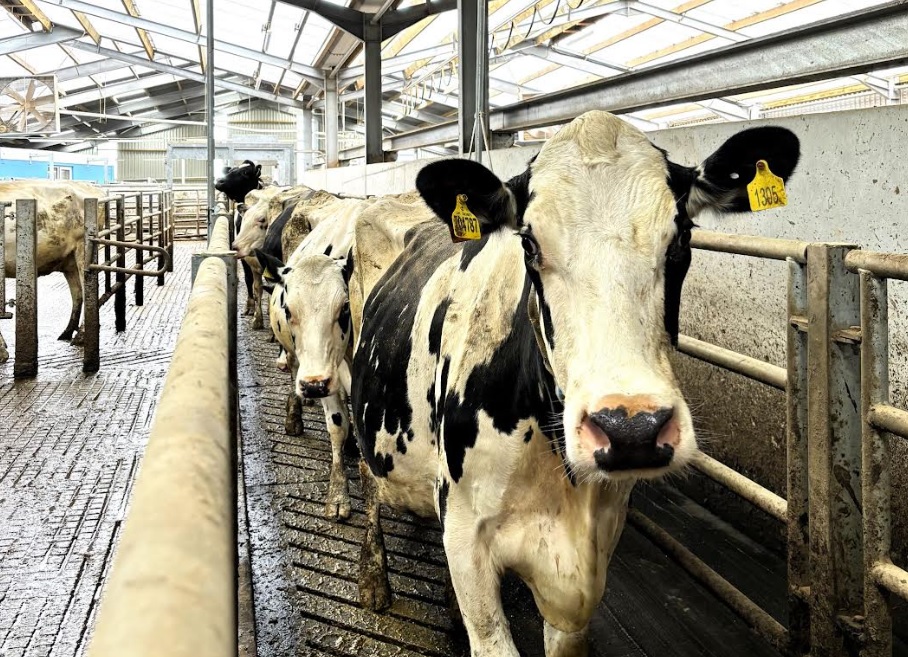
LEGAL experts have warned that animal welfare laws in Wales are being routinely ignored due to a “critical failure” in enforcement, with thousands of farms going uninspected and breaches rarely leading to action.
The stark warning came during an event at the Senedd on Tuesday (Mar 25), organised by the Animal Law Foundation and sponsored by Carolyn Thomas MS.
The meeting brought together legal specialists, enforcement bodies and Members of the Senedd to examine what campaigners describe as a growing gap between legislation and real-world enforcement.
Figures presented at the event paint a troubling picture. Just 4.67 per cent of Wales’ 34,777 farms are inspected, with only one inspector responsible for every 657 farms. Even when concerns are raised, only around 65 per cent of complaints result in an inspection.
More strikingly, where breaches are identified, prosecutions are launched in fewer than one per cent of cases.

The Animal Law Foundation described this as part of a wider “Enforcement Problem” — a term used to describe situations where laws exist but are not effectively applied.
Edie Bowles, Executive Director of the foundation, said: “These figures point to a system that is simply not working. When inspections are rare, complaints do not trigger investigations, and breaches do not lead to enforcement action, the legal safeguards risk becoming little more than words on paper.”
She added that meaningful enforcement is essential not only to protect animals, but to maintain public confidence in the law.
Carolyn Thomas MS said ensuring existing laws are properly enforced “should not be a controversial ask,” but acknowledged it remains a significant challenge.

Calls for stronger oversight were echoed by representatives of Animal Licensing Wales, who highlighted the need for greater resources and capacity within enforcement bodies.
The findings are backed by recent undercover investigations, including footage from a Wrexham slaughterhouse and a farm at Tafarn Y Bugail, which allegedly showed serious mistreatment of animals.
Abigail Penny, Executive Director of Animal Equality UK, said: “What we uncovered was an extraordinary failure of the systems meant to protect animals. That such cruelty could persist, undetected and unchallenged, shows the urgent need for stronger oversight and meaningful sanctions.”

Animal welfare on farms in Wales is governed by the Animal Welfare Act 2006 and a range of additional regulations covering farming, transport and slaughter. Enforcement responsibility lies primarily with local authorities, while the Food Standards Agency oversees welfare in slaughterhouses.
Campaigners say that without urgent reform, those protections risk being undermined by a lack of inspections, limited resources, and a reluctance to take enforcement action.

Rural communities urged to stay vigilant amid sharp increases in red diesel and heating oil costs
FARMERS and rural residents across Wales are being urged to remain vigilant against fuel theft following a sharp rise in fuel and heating oil prices linked to ongoing tensions in the Middle East.
FUW Insurance Services Ltd has issued the warning after recent data showed significant increases in fuel costs. Reports suggest the price of red diesel has climbed to around 109p per litre in mid-March, up from approximately 67p in February, representing an increase of more than 60%. Heating oil prices have also risen steeply, in some cases more than doubling from around 60p per litre to £1.30.
The increases are placing additional pressure on rural households, many of which remain heavily reliant on oil. In Powys, around 55% of homes are not connected to the gas grid, while in Ceredigion the figure rises to 74%, leaving communities particularly exposed to price fluctuations.
Concerns are also growing over the potential rise in rural crime. Historically, spikes in fuel costs have been linked to increased theft, with farms often targeted due to the presence of fuel tanks and machinery. Such incidents can lead not only to financial losses but also environmental damage where tanks are tampered with or fuel is spilled.
Farmers are being advised to take practical steps to protect their property, including regularly checking fuel levels, securing tanks and pumps with appropriate locks, and installing CCTV where possible. Reporting suspicious activity promptly is also seen as key to preventing theft.
The warning also applies to other rural premises, including churches, chapels, village halls and community buildings, which often rely on heating oil and may be left unattended for long periods.
Dafydd Peredur Jones, Senior Account Executive at FUW Insurance Services Ltd, said: “Rising fuel prices are placing additional pressure on rural communities, but they also increase the risk of theft. We are urging farmers and rural residents to take proactive steps to protect their fuel supplies and remain vigilant. Simple preventative measures can make a significant difference.”
FUW Insurance Services Ltd said it will continue to support customers during the current period and encouraged anyone with concerns about their insurance cover or security arrangements to seek advice.



Community22 hours ago
Three Amigos Easter Run roars through Pembrokeshire
MOTORCYCLE enthusiasts turned out in force today (Saturday, March 28) as the popular Three Amigos Easter Run returned to the...


Education2 days ago
Ysgol Henry Tudor reassures parents over Sikh ceremonial kirpan
School says religious item worn by pupil is secured, symbolic and non-functional YSGOL HENRY TUDOR has moved to reassure parents...


Crime3 days ago
Teen jailed after starting fire while others slept
Fire set in shared home left sleeping residents at risk and caused £130,000 damage A TEENAGER who started a fire...

Health3 days ago
GP crisis driving NHS pressure in Wales, Senedd report warns
Falling GP numbers and funding gaps blamed for worsening hospital delays THE NHS crisis highlighted earlier this week is being...


News4 days ago
Reform reveals west Wales candidates for Senedd battle
Monkton councillor tops Pembrokeshire list as party confirms Carmarthenshire names and includes Haverfordwest councillor in unwinnable Swansea spot REFORM UK...


Health4 days ago
Clash over Withybush Hospital services as Paul Davies challenges First Minister
A HEATED exchange in the Senedd has laid bare growing tensions over the future of hospital services in west Wales....


Crime5 days ago
Police stop car in Pennar as three arrested in drugs investigation
Suspected drug driver report leads to major police response and multiple arrests DRAMATIC scenes were reported in Pennar on Monday...


Business5 days ago
New pilot vessel Llanion arrives at Milford Haven
State-of-the-art 22-metre craft marks reset after £3.6m pilot boat controversy THE PORT OF MILFORD HAVEN has taken delivery of a...


Community5 days ago
Sycamore Gap legacy tree to take root in Pembrokeshire landscapes
A SAPLING grown from the famous Sycamore Gap tree is set to become part of Wales’ protected landscapes — with...


Business6 days ago
Could Primark be coming to Haverfordwest? Major retailer in talks for former Wilko site
Council confirms advanced discussions as speculation grows over high street boost HAVERFORDWEST could soon see a major high street revival,...
-

 Business5 days ago
Taxi fare shock in Milford Haven as drivers switch to meters
-
Business6 days ago
Could Primark be coming to Haverfordwest? Major retailer in talks for former Wilko site
-

 Sport7 days ago
Haverfordwest secure bonus-point win over title-chasing Tumble
-

 News4 days ago
Welsh Government outlines progress on flood resilience plans
-

 Health5 days ago
Average of 18 deaths a week in Wales linked to A&E delays, figures reveal
-

 Local Government6 days ago
Milford Haven set for £200m investment with schools, leisure centre and rail upgrade
-

 Community3 days ago
Hero female officer keeps job after sexual touching finding
-

 Community7 days ago
Broad Haven volunteers secure ‘national asset’ status for nature reserve