


News
Welsh road use 20% lower than rest of UK


PETROL sales at filling stations across Wales are 20% lower than their counterparts in the rest of the UK, according to newly released official figures.
The Department for Business, Energy & Industrial Strategy’s research shows that while road use across the country was slowly returning to pre-lockdown levels at the end of May, Welsh road users continued to limit the use of their vehicles more than motorists in England.
The figures revealed a nationwide 7.5% weekly rise in fuel sales for the week ending 31 May. However, the same rise was not reflected in the data for Wales.
Responding to the new data, Greg Wilson, founder of Quotezone.co.uk, one of the country’s leading car insurance comparison sites, says: “It seems most motorists are taking those rules very seriously because there is a very marked difference between road use in Wales compared with road use in England.”
In Wales motorists are not allowed to travel more than five miles from their homes, whereas drivers in England no longer have any travel restrictions.

Across the UK, sales are 39% below their pre-lockdown levels despite a gradual easing of the lockdown in many regions.
In the eight weeks to 23 March – the day the lockdown began – average daily road fuel sales were 17,690 litres per filling station. By contrast, in the following ten weeks sales fell to 7,900 litres, a 45% drop.
The month of April saw the sharpest decline in fuel consumption though, when UK motorists spent 63% less on fuel than they did in February. The lowest average daily figure – 2,500 litres – was recorded on 12 April, at the peak of the pandemic. A month earlier to the day filling stations sold on average 19,500 litres.
The report used petrol and diesel sales figures from 4,500 filling stations, which make up over 50% of petrol stations in Great Britain. The study covered the period from 1 February to 31 May.

Greg Wilson added: “The lockdown has caused financial difficulties for a lot of people in the UK, but one area where many have been able to save a bit of cash is their transport costs. This new research reveals that the average amount motorists spent on fuel in April was 63% lower than in February, and an average of 45% less during the course of the lockdown.
“With a typical British household spending an average of £25 on fuel during a normal week, that means households are likely to have saved an average of £112 on fuel during the lockdown, although people with longer commutes may well have saved as much as £400 or £500.
“Of course, fuel isn’t the only expense drivers have been able to save a bit of cash on during the pandemic. Some motorists have also applied for a Statutory Off-Road Notice (SORN), which means they will have saved money on their car insurance and road tax as well.

“And it’s also worth mentioning that some car insurance companies are willing to reduce motorists’ premiums to reflect the lower mileage they’ve been doing whilst working from home, so it’s worth speaking to your insurance provider about that if you haven’t done so already.”



Clear framework aims to deliver faster access, better support, and improved outcomes
PEOPLE across Wales are set to benefit from clearer and more consistent mental health care, as new national standards outlining what good services should look like are introduced.
Two new quality statements, published this week (Mar 24) set out the outcomes and expectations for NHS and social care services. They aim to ensure patients can access timely, compassionate, and effective support — including same-day, open access care and improved services for those who have self-harmed.
The measures form part of the Welsh Government’s wider Mental Health and Wellbeing Strategy and Suicide Prevention and Self-Harm Strategy. Ministers say they are designed to move Wales towards becoming the first nation to offer same-day, open access mental health support nationwide.
Around 20 pilot schemes are already underway across Wales, offering support without the need for a GP referral. These “demonstrator sites” are intended to provide early help and reduce the number of people reaching crisis point.
One such scheme includes a university liaison service in Cardiff, supporting students across Cardiff University, Cardiff Metropolitan University, the University of South Wales, and the Royal Welsh College of Music and Drama.

Since its launch in 2022, more than 240,000 people have contacted the NHS 111 “press 2” service for urgent mental health support.
The Mental Health Quality Statement sets out nine key principles aimed at reshaping services. These include designing care with input from people with lived experience, embedding trauma-informed approaches, and ensuring services are flexible, collaborative, and centred around individual needs.
A separate Self-harm Quality Statement outlines six pillars of care: immediate treatment, trauma-informed support, continuity of care, safety planning, holistic signposting, and skilled responders. It stresses that anyone who self-harms must receive compassionate, person-centred care, regardless of intent.
The standards have been developed in partnership with NHS Wales, third sector organisations, and individuals with lived experience.
The Cabinet Secretary for Health and Social Care, Jeremy Miles said: “These standards will ensure people have access to consistent, compassionate and effective mental health support wherever they are in Wales.
“We are moving towards a future of open access services, so people can get help earlier and avoid reaching crisis point. These standards will play a key role in improving mental healthcare across Wales.”
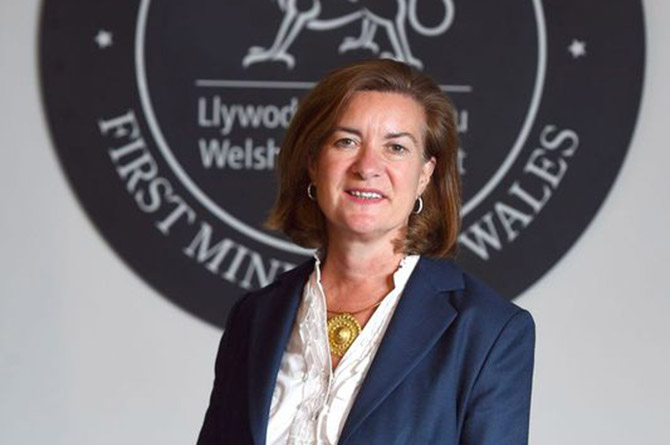
CONTROL of a £547m Local Growth Fund has been returned to the Welsh Government, with ministers setting out plans to use the money to boost the nation’s economy over the next three years.
During a visit to Ebbw Vale on Friday (Mar 20), First Minister Eluned Morgan is expected to outline details of a new Investment Plan, endorsed by both the Welsh and UK governments. The plan sets out how funding will be allocated across priority areas and within Wales’ four economic regions.
The fund will focus on three key areas: supporting productive and competitive businesses, improving skills and helping people into work, and investing in infrastructure.
Ministers say the programme is designed to empower regional decision-making while targeting areas with the greatest economic need. The aim is to increase productivity, support business growth and create better-paid jobs across Wales.
Funding will be distributed based on tailored regional plans, reflecting local strengths and opportunities, including sectors such as advanced manufacturing and clean energy.
The First Minister, Eluned Morgan said: “I’m really pleased decisions on this post-EU funding, which is so important in supporting regional and local economic growth in Wales, are being returned to the Welsh Government.
“We want to use all the levers we have to stimulate economic growth, especially in parts of Wales where economic inactivity and unemployment are higher and wages are lower.”
The Cabinet Secretary for Economy, Energy and Planning, Rebecca Evans added: “The Local Growth Fund for Wales will help create and secure jobs in key industries, providing exciting opportunities for people to develop high-quality, long-term careers.
“We will work with local government and other partners to ensure the fund is used effectively to create jobs, unlock growth and deliver for Wales.”
Secretary of State for Wales, Jo Stevens said: “This transformational funding will create jobs, boost productivity and support economic growth across all parts of Wales.
“Decisions about how funding is used in Wales are best made in Wales, and this agreement delivers our commitment to return control of post-EU funding to Wales.
“It is another example of the UK and Welsh governments working together to deliver for our communities.”
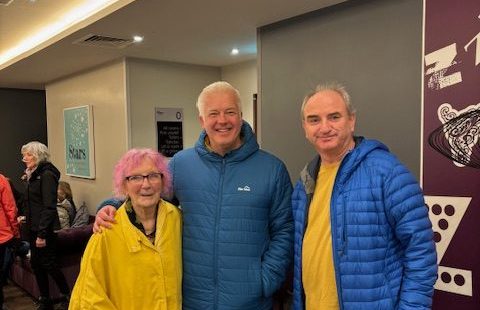
A WELL-KNOWN Welsh weather presenter was spotted in Pembrokeshire as he filmed scenes for a new series celebrating the county’s coastline.
Derek Brockway, who has been a familiar face on BBC Wales since 1995, was in St Davids recently working on another instalment of his popular walking series along the Pembrokeshire Coast.
Local resident Thomas Tudor said it was “lovely” to meet the broadcaster during filming, posing for a photograph alongside his mother, Beryl Tudor, and sister, Bethan Thomas Price.
Brockway, who is based at BBC Cymru Wales in Cardiff, is widely known not only for his weather forecasts across television, radio and online, but also for his programmes showcasing Wales’ landscapes and coastal paths.
The latest filming in St Davids is expected to form part of an upcoming series highlighting the natural beauty and walking routes of Pembrokeshire, an area long regarded as one of the jewels in Wales’ tourism crown.



Community17 hours ago
Broad Haven volunteers secure ‘national asset’ status for nature reserve
A SMALL stretch of woodland and former opencast coal mine has been transformed into a nationally recognised biodiversity site, in...


Entertainment2 days ago
Tenby steams up in spectacular style as crowds flock to festival
Colourful parade, towering creations and Victorian flair bring town centre to life TENBY was transformed into a vibrant Victorian fantasy...

Crime3 days ago
Publican jailed for six years for supplying cocaine and cannabis
Milford Haven man sentenced at Swansea Crown Court following drug dealing operation A MILFORD HAVEN publican has been jailed for...


Local Government3 days ago
Poverty summit highlights support efforts across Pembrokeshire
A SUMMIT bringing together key organisations from across Pembrokeshire has highlighted both the scale of local poverty and the work...


Education4 days ago
Milford Haven school plans unveiled but funding not yet secured
PLANS for a new £100 million school in Milford Haven have been unveiled, but the project has not yet secured...


News4 days ago
Council unveils plans for new state-of-the-art secondary school in Milford Haven
PEMBROKESHIRE COUNTY COUNCIL has revealed plans for a new state-of-the-art school in Milford Haven, promising modern, inspiring learning spaces for...


Health4 days ago
NHS waiting list falls — but cancer delays and diagnostic backlog worsen
Record progress claimed by Welsh Government as critics warn key targets are still being missed THE NHS in Wales has...


Crime5 days ago
Rapist jailed after ‘abhorrent’ attacks on woman and children
Haverfordwest man told police “women won’t have sex without force” A HAVERFORDWEST man who raped a woman and a young...


News5 days ago
Reform secures first Pembrokeshire councillor in Hakin by-election win
Late Reform candidate takes seat as independent surge and Labour withdrawal shape contest REFORM UK candidate Scott Thorley has won...


News6 days ago
Scott Thorley elected as Pembrokeshire’s first Reform councillor
REFORM UK candidate Scott Thorley has won the Hakin by-election after securing 179 votes. The full result is as follows:...
-

 News6 days ago
Emergency services flood Haverfordwest after reports of person in river
-

 Crime5 days ago
Mother given community order after admitting child cruelty offence
-
Health4 days ago
NHS waiting list falls — but cancer delays and diagnostic backlog worsen
-

 News6 days ago
Senedd vote to ban greyhound racing hailed as ‘landmark moment’ by charities
-
 News6 days ago
Senedd votes to ban Greyhound racing in Wales to protect animal welfare
-
News5 days ago
Reform secures first Pembrokeshire councillor in Hakin by-election win
-
 News7 days ago
£3.8m to help Welsh families struggling with soaring heating oil costs
-
 Crime5 days ago
Woman stole from pharmacy despite ban, court hears