


News
Badger treads Caerphilly

 JAMIE ADAMS, ‘popular’ leader of the IPPG, took to the Western Telegraph this week to deride those councillors seeking to examine the Staff Remuneration Committee’s decision to give Bryn Parry Jones a wodge of Council Tax payers’ cash rather than pay tax on his blue chip pension.
Councillor Adams, who is known to have difficulty remembering when to submit his expenses claims, pronounced confidently on the complex legal issues involved.
Unfortunately, the IPPG’s leader appears to be ignorant of what the Wales Audit Office (WAO) decided in Caerphilly. That Council was subject to a Public Interest Report by the WAO following a probe into payments made to senior officers. It is not suggested that there is any evidence of criminality in the decision made by Pembrokeshire County Council’s own remuneration committee, but elements of the decision-making process seem remarkably similar.
In Caerphilly, Councillors attended a meeting – at which officers were present – and during which officers’ pay and conditions were discussed.
In Pembrokeshire’s case, Councillors attended a meeting – at which officers were present – and during which officers’ pay and conditions were discussed.
In Caerphilly, the officers did not declare an interest and leave the meeting while their pay and conditions were discussed.
In Pembrokeshire, the officers did not declare an interest and leave the meeting while their pay and conditions were discussed.
Of course, one big difference exists:
In Caerphilly’s case, the Council had additional and external guidance to assist Councillors. Pembrokeshire did not. Councillors in Pembrokeshire relied upon an internal guidance prepared by an officer who potentially stood to benefit from the outcome of the Councillors’ decisions.
But even the presence of the independent report did not save Caerphilly Council from the auditor ruling the conduct of the relevant meeting unlawful.
As Jamie Adams appears to be of the opinion that he – and not the auditors – is best placed to determine the lawfulness of the decision-making process, Badger –produces the relevant section of the Auditors’ report on Caerphilly so Jamie Adams can take the time to read and try to understand it:
“Certain officers who were among the beneficiaries of the decision were present throughout the Committee meeting on September 5 2012, and no declarations of interest were made. In addition, the report presented to the Committee was authored by the Chief Executive.
“A person is disqualified from participation in a decision-making process if there is a real possibility that he or she would be influenced by a pecuniary or personal interest in the outcome of the decision as established by case law. Such an interest has to be declared. Individuals having such an interest are not entitled to participate in the decision-making process unless the interest is too remote or insignificant to matter. As such, we would have expected:
* officers to have declared an interest in the proceedings;
* officers to have left the meeting whilst the members of the Committee discussed the recommendations in the Chief Executive’s report and reached their decision;
and
* the members of the Committee to have approved the terms of reference for the independent advice commissioned into remuneration (AS A MINIMUM –emphases added – in respect of the Chief Executive’s pay).
“… In my view, the participation of these officers in the decision-making process renders the decision of the Committee ultra vires and therefore unlawful, on this further ground.”
Badger is a bit stumped as to how Jamie squares this circle.
As Bryn and the other officers were present, Jamie Adams’ bold assertion in the Telegraph that “the legality of the meeting is not in question” as the officers were “not part of the decision-making process” seems to try and draw a distinction where there is no difference. Council members’ own guidance unequivocally states that the presence of those with an interest in the outcome of meeting – whether they speak or not – is deemed to influence its outcome. How reassuring it must be to Bryn the Merciless to discover that Councillors are accustomed to ignoring him!
If Sunny Jamie and his IPPG cohorts have nothing to hide, they have nothing to fear from scrutiny. Instead they are running scared of giving Councillors the advice upon which they state they rely when making assertions of lawfulness and proper process.
When it is the conduct of Jamie Adams and his motley crew which is in question, the public have a need to know and a right to know.
Jamie Adams’ attack on the motives of Labour leader Paul Miller is a crass attempt to deflect criticism and play the man and not the ball. As a transparent and squalid attempt to smear a fellow Councillor, Jamie Adams’ comments are beneath contempt.
Badger asks his readers: why should the people of Pembrokeshire, let alone their representatives, put faith in Councillor Adams’ judgement or that of his discredited administration?

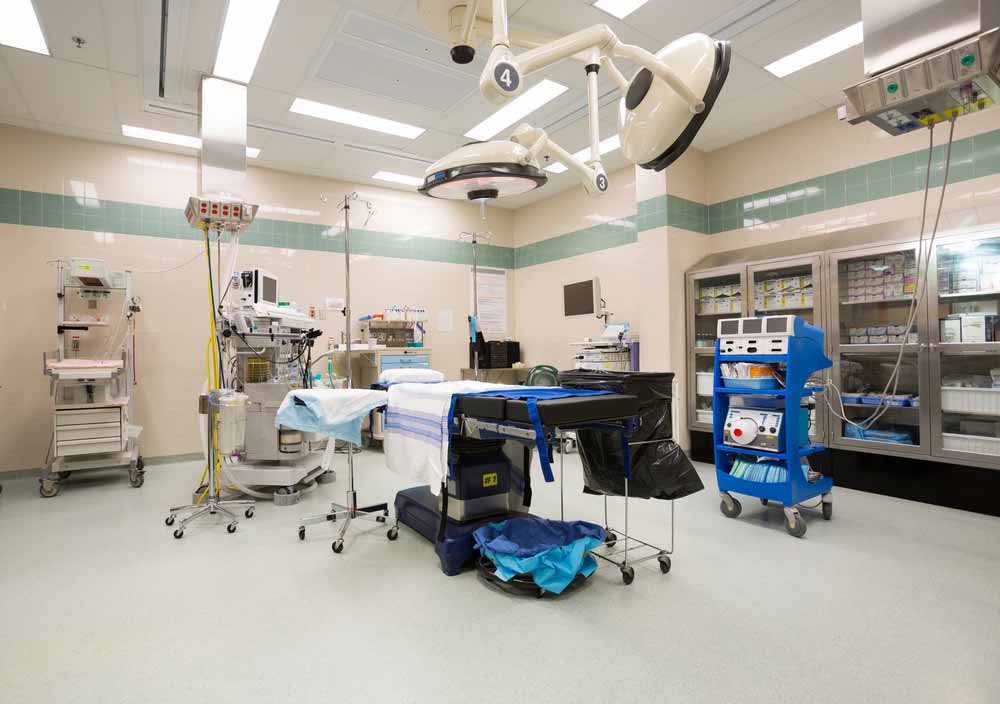
Senedd election promises collide with the harsh reality of ageing hospitals, fire safety concerns and a maintenance crisis stretching across the country
WALES’ NHS is facing a repair and maintenance crisis of almost £1bn, with some of the country’s biggest hospitals burdened by ageing buildings, serious safety concerns and growing pressure on already stretched budgets.
New figures covering 210 NHS sites show that the backlog of work classed as high risk or significant risk has now reached £917m — up 71% in just four years.
The data, published for 2024-25 by NHS Wales Shared Services Partnership, shows more than £616m of the total relates to serious problems at 12 of Wales’ 13 main hospitals.
Ysbyty Gwynedd has the biggest backlog of high and significant risk repairs at £110.5m, followed closely by University Hospital of Wales in Cardiff, where the figure stands at £106.8m.
The scale of the problem is not just financial. Three hospitals — Bronglais, Prince Philip and Ysbyty Gwynedd — have 40% or more of their space rated as not fire safety compliant. At Ysbyty Gwynedd, 35% of space is also not regarded as health and safety compliant.

Aging estate
The figures highlight the deep-rooted problem of an ageing NHS estate across Wales.
More than 30 NHS sites have buildings where over half the estate predates the creation of the NHS in 1948. Another 17 sites, including University Hospital of Wales and Bronglais Hospital, are mainly made up of buildings between 50 and 60 years old.
Only one major hospital in Wales — the Grange Hospital near Cwmbran — is said to have no maintenance backlog. But even that project, which cost £350m, was first proposed in 2004 and only opened during the Covid pandemic, showing how long major hospital developments can take.
When the wider risk-adjusted backlog is considered across all NHS buildings in Wales, focusing on problems where safety may be at risk, the total cost rises to more than £1bn.

The largest overall figure is in the Betsi Cadwaladr health board area, where the backlog stands at nearly £278m.
Despite the Grange being one of the newest hospitals in Wales, Aneurin Bevan health board still faces a backlog of almost £233m, much of it linked to older sites including the Royal Gwent and Nevill Hall hospitals.
In Hywel Dda, where hopes of a new west Wales hospital remain some way off, the total backlog has reached £221m. Among the worst affected sites is Glangwili Hospital in Carmarthen, where high and significant risk repairs and maintenance amount to £82m.

West Wales pressure
FOR west Wales, the figures are especially troubling.
Hywel Dda residents have already faced years of uncertainty over the future of hospital services, and the scale of the maintenance bill raises fresh questions about how long ageing buildings can continue to serve local communities safely and effectively.
Bronglais Hospital is among the sites with major fire safety compliance concerns, while Glangwili carries one of the largest repair backlogs in the region.
The growing cost of patching up older hospitals will inevitably intensify the political argument over whether ministers should prioritise maintaining existing buildings or push ahead with long-promised new developments.
The chair of Cardiff and Vale health board recently acknowledged that the age and condition of University Hospital of Wales was affecting morale and efficiency, describing the quality and upkeep of buildings as an ongoing concern.
Expert warning
Mark Dayan, a policy analyst at the Nuffield Trust, said Wales had a worryingly large maintenance backlog by any standard.
He warned that poor infrastructure could directly affect the way care is delivered, making it harder for the NHS to reorganise services, improve patient flow or create safe, modern working environments.
The issue is not unique to Wales. NHS England is facing its own enormous repair backlog, estimated at £16bn. But in Wales, where budgets are tighter and hospital plans often move slowly, the pressure is especially acute.
Election battleground
WITH the Senedd election set for Thursday, May 7, parties are offering different solutions to the growing crisis.
Labour has pledged a £4bn Hospitals of the Future fund, promising new hospitals including replacements for Wrexham Maelor Hospital and University Hospital of Wales, as well as a major development in west Wales.
Plaid Cymru says Labour’s sums do not add up, and argues urgent high-risk repairs should come first.
Reform UK says the Welsh Government should concentrate its capital budget on clearing the maintenance backlog rather than making promises on multiple new hospitals.
The Conservatives say they would declare a health emergency and expand capacity through new community hospitals, diagnostic centres and surgical hubs.
The Liberal Democrats say they would upgrade the worst parts of the NHS estate while backing a replacement for University Hospital of Wales, linking investment to wider reform of social care and community services.
The Green Party has called the backlog a disgrace and says it would launch a multi-year programme to bring NHS facilities up to a safe and modern standard.
Whatever the result in May, the next Welsh Government will inherit a stark reality: before it can deliver a new generation of hospitals, it must first confront the spiralling cost of keeping the current estate from falling further into decline.
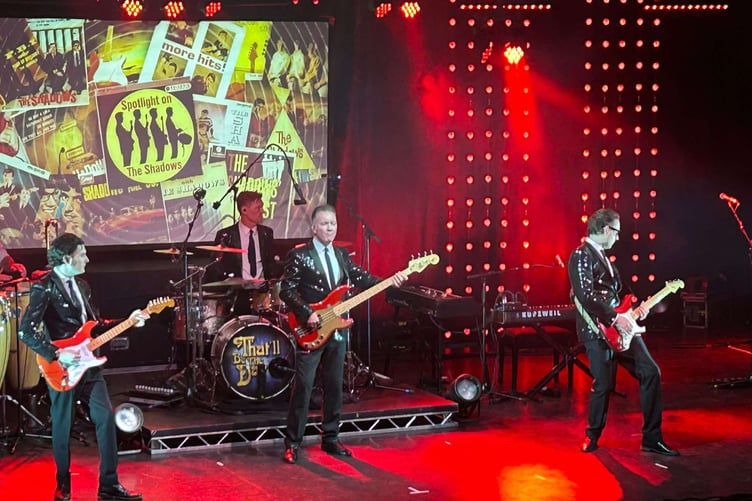
A MUCH-LOVED theatrical tradition returned to Folly Farm on Friday and Saturday, October 24 and 25, 2025, as That’ll Be the Day celebrated its ruby anniversary in memorable style, raising £5,469 for The Paul Sartori Foundation.
The charity performances were filled with celebration and significance. Saturday night marked the 40th performance of the show at Folly Farm’s Follies Theatre, staged in the 40th year of That’ll Be the Day itself — a remarkable double milestone that was warmly received by the audience.
The anniversary weekend captured everything people have come to love about the production, from its crowd-pleasing musical numbers and toe-tapping hits to its trademark comedy sketches and strong sense of community.
There was also an emotional note to the occasion, as the weekend was billed as Trevor’s final on-stage performance with the show. Or was it? Although retirement had been suggested, Phil Thompson has since confirmed that Trevor will be back this year — to the delight of fans.
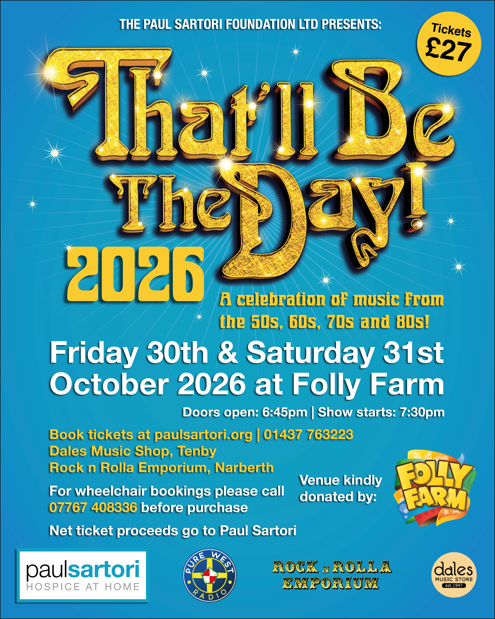
As one chapter closes, another begins, and excitement is already building for the future. That’ll Be the Day will return in 2026, with performances confirmed for October 30 and 31. Tickets are now on sale.

Audiences can expect new voices, a refreshed format, and the same talent and showmanship that Pembrokeshire audiences know and love.
Supporters keen to see the next chapter of this musical extravaganza can buy tickets through the Paul Sartori website, by calling the events team on 01437 763223, or in person at Dale’s Music in Tenby or Rock ‘n’ Rolla in Narberth.
If the ruby anniversary weekend proved anything, it is that That’ll Be the Day continues to shine, shimmy and entertain — all while helping to support hospice-at-home care in Pembrokeshire.
If you want, I can also turn this into a more polished newspaper-style piece with a headline and subheading.


NEW six-part BBC One programme is looking for five to eight-year-olds across Wales who are finding it hard to make friends
A NEW BBC television series is looking for children across Wales aged between five and eight who are finding it hard to make friends.
Will You Be My Friend? is a new six-part series for BBC One and iPlayer from Five Mile Films, the makers of Channel 4’s The Dog House. The programme will focus on children who are struggling socially, whether through shyness, feeling left out, or finding it difficult to connect with others their own age.
The series will centre on what producers call The Friendship Centre, where a team of psychologists will help children build confidence and social skills to form real and lasting friendships.
Each child will then be sensitively matched with a potential new friend from their local area for a play date. Six weeks later, the programme will return to see how their new-found confidence has helped them at school, in the playground and beyond.

The production team says the series aims to explore the challenge of friendship in modern childhood, at a time when many families remain concerned about loneliness, social confidence, screen time and the lingering effects of the Covid pandemic.
Emma Loach, Interim Head of Commissioning, Documentaries at the BBC, said: “The longing to connect, to be seen, and to belong is universal.
“Whether you’re five or fifty-five, I defy anyone to watch these children without seeing a little bit of themselves reflected.
“In a world that can feel increasingly disconnected, this series shows that the simplest gestures – a smile, a shared joke, a tentative ‘will you be my friend?’ – still have the power to change everything. Five Mile Films has brought us something very special, and we couldn’t be prouder to give it a home on the BBC.”
Nick Mirsky, CEO of Five Mile Films, said: “I don’t think there’s a commission I could be more thrilled to bring to Five Mile. Will You Be My Friend? will be joyful, warm and funny, but it also does something genuinely new – inviting us to look closely at the challenge and art of making friends.”
Filming is due to take place in July and August, and producers are now inviting applications from families in Wales who feel their child could benefit from taking part.
The series is being made by Five Mile Films for BBC One and iPlayer, with All3Media International acting as international partner.
Parents or guardians who would like more information or wish to apply can visit: bemyfriend.tv
Based on the press release and fact sheet you uploaded.


Health11 hours ago
Crumbling NHS faces £1bn repairs bill in Wales
Senedd election promises collide with the harsh reality of ageing hospitals, fire safety concerns and a maintenance crisis stretching across...

News20 hours ago
Emergency services respond to incident in Haverfordwest town centre
EMERGENCY SERVICES were called to an incident in Haverfordwest town centre on Saturday morning (Apr 4), with police and ambulance...
News20 hours ago
Teenager intervenes after bridge incident
A TEENAGER was left shaken after stepping in to help a young woman in distress on Clay Lanes bridge in...


Crime3 days ago
Driver spared jail after crash killed young couple
A PEMBROKE DOCK driver who caused the deaths of a young couple in a road crash has been given a...

Entertainment3 days ago
BBC unveils major new Welsh dramas with Tenby set for prime-time spotlight
New crime series Old Town Murders and supernatural thriller The Witch Farm will both be filmed and set in Wales...

Health3 days ago
No jobs for new paramedics in Wales as graduates told to apply for technician roles
Students trained at public expense urged to take lower-grade jobs as anger grows over NHS workforce planning NEWLY qualified paramedics...


News4 days ago
Health minister refuses to act on Withybush despite 15,000-signature petition
Senedd pressure grows as Welsh Government declines to intervene over surgery fears THE WELSH GOVERNMENT has refused to step in...

Business4 days ago
Fishguard to Wexford rail tunnel plan backed by Elon Musk firm
Six-hour London to Dublin service proposed in £32bn project ahead of Senedd election PLANS for a rail tunnel linking west...

Charity5 days ago
Milford Haven charity honoured with King’s Award for voluntary service
A PEMBROKESHIRE charity supporting vulnerable young people has received one of the highest honours in the UK for voluntary work....

News6 days ago
Plaid Cymru launches bid to lead next Welsh Government
Party positions itself as ‘government-in-waiting’ ahead of May election PLAID CYMRU has formally launched its campaign for the 2026 Senedd...
-
 News2 days ago
Accommodation providers in Wales will be required to register under new law
-
Business4 days ago
Fishguard to Wexford rail tunnel plan backed by Elon Musk firm
-

 Entertainment2 days ago
From Milford Haven to the world: The story of The Evolution Experience
-
Entertainment3 days ago
BBC unveils major new Welsh dramas with Tenby set for prime-time spotlight
-

 Charity6 days ago
RSPCA calls for stronger animal welfare measures as Welsh Labour launches manifesto
-
 Crime7 days ago
Gunshot fired by police during incident in Milford Haven
-
 Community6 days ago
Pembrokeshire school allows Sikh pupil to wear Kirpan
-

 News5 days ago
Labour promises 48-hour GP access as manifesto faces questions over delivery
law enforcement insignia laws
January 5, 2026 at 9:37 pm
This is one of the best explanations I’ve come across. Thanks!
your right to record police
January 5, 2026 at 9:44 pm
Well done! This article provides a lot of value.