

News
RNLI offers winter dip advice in new safety video


WITH indoor pools closed for much of the year due to Covid-19, there has been an explosion of interest and participation in outdoor swimming and dipping with many people trying it for the very first time. The Royal National Lifeboat Institution (RNLI) has now released a new safety advice video for anyone considering taking a dip in the sea this winter.
But, while most open water swimmers enjoy themselves completely safely, the RNLI are stressing the importance of being aware of the potential dangers of taking a dip in the sea at this time of year.
There have been several recent incidents around the UK and Ireland and earlier this month a 61-year-old man drowned after getting into trouble while swimming in the sea in Dorset.
The short YouTube video is presented by two members of the RNLI’s water safety team, Nick Ayers and Liam Fayle-Parr – both experienced open water swimmers themselves.
It is aimed primarily at people who are new to the sport or who want to bob around in the sea for a while, rather than more experienced open water swimmers – although the advice applies to anyone entering cold water this winter.

RNLI Head of Water Safety Gareth Morrison said: ‘There are well-documented physical and mental health benefits of swimming in the sea, but it can also be very dangerous if you are unaware or under-prepared. The purpose of this video is to help you enjoy it safely.
‘We hope that people will share the video and the safety advice in it with their family, friends and swimming groups.
‘Our volunteer lifeboat crews have dealt with a relatively high number of incidents since the end of the summer involving swimmers and dippers, so we are asking everyone to be aware of what they can do to keep themselves and others safe, and to respect the water.
‘There are a number of things to help ensure you have an enjoyable and safe time in the water such as not swimming alone, staying in your depth and knowing how to warm up properly afterwards, which sounds obvious but is crucial to avoid any delayed effects of the cold.
‘We would also always recommend checking with your doctor before trying it for the first time, especially if you have underlying health issues. If in any doubt, stay out of the water. If you or anyone else does get into trouble in or on the water please call 999 or 112 immediately and ask for the Coastguard.’
Swim Wales, an organisation which works closely with the RNLI is encouraging people to watch the video before heading out on a swim. Fergus Feeney, Chief Executive Officer Swim Wales said:
‘Swim Wales are delighted to support the RNLI with the release of their new educational video. We encourage those wanting to be aquatically active in open water to take heed of these key safety messages.’

The RNLI works closely with Adventure Smart UK, an initiative which encourages people to enjoy all that Wales has to offer safely. Paul Donovan, Adventure Smart Wales Project Manager, said: ‘Adventure Smart UK encourages all open water swimmers and dippers to consider their gear, the weather conditions and their level of skill and experience in the activity. As partners in the Adventure Smart campaign, the RNLI actively work with other organisations to encourage people to take simple steps to ensure their outdoor adventures are both safe and fun – together we urge people to #BeAdventureSmart. For more information go to www.AdventureSmart.uk.’
The RNLI’s key safety advice for taking a winter dip is:
Never swim alone – always go with someone else to a familiar spot
Always check the weather forecast, including tide information and wave height
If in doubt, stay out – there is always another day to go for a swim
Take plenty of warm clothes for before and after your dip, along with a hot drink to help you warm up again when you come out of the water
Wearing a wetsuit will help increase your buoyancy and reduce the chances of suffering cold water shock
Be seen – wear a brightly coloured swim cap and consider using a tow float
Acclimatise to the water temperature slowly – never jump straight in
Stay in your depth and know your limits
If you get into trouble remember FLOAT to live by leaning back in the water, extending your arms and legs, and resisting the urge to thrash around to gain control of your breathing
Take a mobile phone in a waterproof pouch
If you or someone else is in trouble call 999 or 112 and ask for the Coastguard












Last woman hanged in Britain receives conditional pardon after Government recognises domestic abuse and “profound injustice” of her death sentence
RUTH ELLIS , the last woman to be hanged in Britain, has been granted a conditional posthumous pardon more than 70 years after her execution.
Ellis was 28 when she was hanged at Holloway Prison in July 1955 after being convicted of murdering David Blakely, a racing driver with whom she had been in a violent and abusive relationship.
The pardon was granted by The King following advice from Deputy Prime Minister and Justice Secretary David Lammy. It follows an application made on behalf of four of Ellis’s grandchildren.
The Government said the case involved exceptional circumstances, including evidence of domestic abuse and coercive and controlling behaviour which would be understood very differently by the courts today.
Ellis shot Blakely on April 10, 1955. She was convicted of murder and executed on July 13 that year. No appeal was lodged and no reprieve was granted.
The conditional pardon does not overturn her conviction. Instead, it recognises that the death sentence itself was unjust, replacing it in legal effect with a sentence of life imprisonment.
Mr Lammy said: “We cannot change what happened seventy years ago. But we can recognise that this was an exceptional case. Today’s conditional pardon is an act of mercy. We hope it brings some measure of peace to Ruth’s family.”
Matrix Chambers, whose lawyers acted on the application, said Ellis had suffered “terrible abuse” by Blakely which affected her mental state and culpability, and that the full circumstances of the killing were not properly investigated or explored at trial.
The chambers said the case prompted widespread public condemnation at the time and helped accelerate the eventual abolition of capital punishment in Britain.
Ellis’s granddaughter Laura Enston said the pardon could not undo what happened, but formally acknowledged that Ellis should not have been executed and that the justice system had failed her.
The case has long been seen as one of the most controversial executions in modern British history, not only because Ellis was the last woman to be hanged, but because later accounts revealed the extent of the abuse she had suffered before the killing.
Under modern law, the Government said, Ellis may have been able to argue partial defences including loss of control or diminished responsibility. Had those arguments succeeded, her conviction could have been reduced from murder to manslaughter.

Lawyers Alex Bailin KC and Jessica Jones, of Matrix Chambers, were instructed by Mishcon de Reya on the application and acted pro bono.
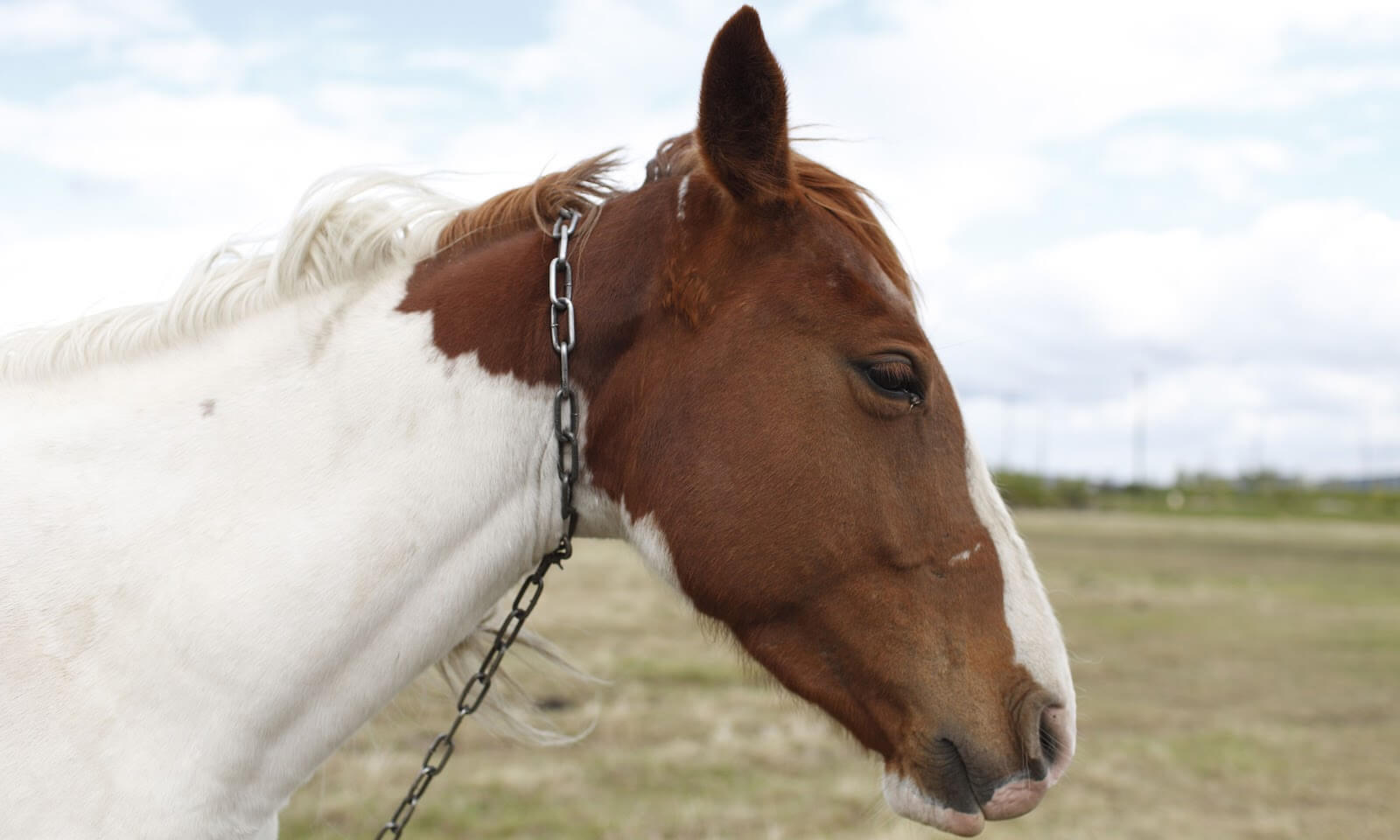
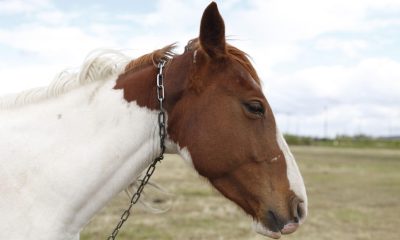
RSPCA Cymru warns heat and rising tethering cases could create a ‘deadly cocktail’ for horses across Wales
RSPCA CYMRU Senedd Members are calling for urgent Welsh Government action on horse tethering after reports to the charity almost doubled in a year.
The animal welfare charity received 122 reports concerning tethered horses across Wales in 2025, compared with 66 in 2024.
Since 2021, and up to June this year, the RSPCA has received 471 reports relating to horse tethering in Wales. A further 67 reports have already been made in 2026, with frontline rescuers expecting numbers to rise further during the summer months.
The charity has warned that high temperatures, combined with increased tethering, could create a “deadly cocktail” for horses left unable to seek shade, water or shelter.
Tethering involves restraining a horse with a rope, chain or strap attached to an anchor point in the ground. While the practice is not illegal in itself, owners have a legal duty to meet their animals’ welfare needs.
RSPCA Cymru says tethering can restrict a horse’s ability to exercise, forage, escape attacks from other animals, interact socially and access water or shade.
The Welsh Government’s Code of Practice for equine care states that tethering is “not a suitable method of management of an animal”, but the practice remains permitted in Wales.
Under the Control of Horses (Wales) Act 2014, local authorities have powers to seize horses that are fly-grazing, abandoned or straying on public land without lawful authority.
RSPCA Cymru is urging councils to use those powers where appropriate to prevent welfare issues from escalating and to protect community safety.
The issue was raised in the Senedd on Tuesday, July 7, by Huw Thomas MS, Member of the Senedd for Caerdydd Penarth.
He said horse tethering was a matter of “real concern” to many of his constituents, particularly where horses are tethered along approach roads into Cardiff.
Mr Thomas said: “Horse tethering is an issue of real concern for many of my constituents in Caerdydd Penarth.
“Yet horses continue to be tethered along approach roads into Cardiff, creating welfare concerns, particularly during periods of extreme weather like the recent heat, while also posing a risk to motorists.
“Following the sad death of a horse struck by a vehicle earlier this year, and with public concern continuing to grow, it’s clear we need to look again at whether the current legislation is fit for purpose.
“I’d hoped for a stronger statement of support from the First Minister to my question, but I will nevertheless continue to press for action on the issue of tethering.”
First Minister Rhun ap Iorwerth acknowledged that while horse tethering is not illegal, it raises “significant welfare concerns”.
Mike Hedges MS, Member of the Senedd for Gŵyr Abertawe, has also recently called for a ban on tethering horses.
Billie-Jade Thomas, RSPCA Cymru’s Senior Public Affairs Manager, said it was encouraging to see Senedd Members raising the issue.
She said: “Tethering is not compatible with good welfare, and RSPCA Cymru continually receives calls concerning horses left tethered across Wales.
“Our statistics clearly show that concerns from the public and reports are rising each year, with the number having nearly doubled between 2024 and 2025.
“Clearly, Welsh Government action is increasingly urgent, and we welcome the new First Minister’s acknowledgement of the welfare issues associated with tethering.”
She said tethering should only ever be used for short periods where a horse is being given access to grazing.
She added: “For the remainder of the day, the horse should have access to shelter, opportunities to freely roam, forage and, where suitable, interact with other horses.
“We understand it can be hugely frustrating to animal lovers when they report animals being kept in conditions which they do not approve of but which meet the minimum legal standards, for example, when horses are tethered.
“It is upsetting to our officers too, many of whom are horse owners themselves, as they can only act within the law.”
RSPCA Cymru is calling for a review of the Control of Horses (Wales) Act 2014, which it says is now 12 years old.
Billie-Jade Thomas said: “The Welsh Government must now lead a review into the Control of Horses (Wales) Act 2014 to assess its effectiveness and determine whether any changes are needed to enable local authorities to utilise it better, and better protect horses.
“With us having experienced several heatwaves already this year, and with more likely in the coming months and years as a result of climate change, such action is needed now more than ever.
“The hot weather combined with increased tethering could be a deadly cocktail for many helpless horses. Tethered horses may struggle to seek shade or access water during spells of warm weather, and it can be highly detrimental to their welfare if they overheat.”
RSPCA Cymru has also written an open letter to Llyr Gruffydd MS, Cabinet Minister for Rural Resilience and Sustainability, calling for animal welfare commitments made in Plaid Cymru’s manifesto to be prioritised by the new administration.
The charity is calling for action in several areas, including granting RSPCA inspectors limited statutory powers, making pet abduction a specific offence in Wales, regulating livery yards, addressing horse tethering, improving farm animal welfare, and taking a humane approach to bovine TB that does not involve badger culling.
Billie-Jade Thomas added: “To truly protect animals in Wales, we would love to see action on specific penalties for pet theft, improvements to equine welfare, the raising of farm animal welfare standards, a humane approach to bovine TB, and more.
“We need your help to ensure these critical issues aren’t left behind.”
Members of the public are being encouraged to support RSPCA Cymru’s open letter and its Cruelty Hurts, Love Rescues campaign, which aims to highlight rising levels of animal cruelty during the summer months.

COMMUNITY councils in Pembrokeshire are being encouraged to develop local emergency plans to help protect residents and strengthen resilience during major incidents.
Pembrokeshire County Council’s Emergency Planning Team recently met members of Stackpole and Castlemartin Community Council to deliver a briefing on emergency preparedness.
The session covered national and regional risks, the Civil Contingencies Act and the importance of locally owned Community Emergency Plans.
Council officers said the aim was not to suggest that an emergency was expected, but to ensure communities recognised potential risks and were prepared to reduce their impact.
A Community Emergency Plan can help local people respond to a wide range of incidents, identify and support vulnerable residents, and make better use of local knowledge and community networks during difficult situations.
Attendees were also briefed on the Wales Resilience Framework, which sets out how government, public services, voluntary organisations, businesses and communities can work together to reduce risks and improve emergency preparedness.
The council’s Emergency Planning Team also highlighted the Dyfed-Powys Local Resilience Forum Community Risk Register, which is currently being updated.
Community representatives were invited to give feedback on how the register could be improved and used as a trusted source of information.
The register is designed to inform communities about the most significant risks in the region and their potential impact, provide links to partner organisations and further guidance, and encourage practical steps to improve preparedness in homes, businesses and communities.
Cllr Tessa Hodgson, Leader of Pembrokeshire County Council, said: “Preparing for emergencies is about protecting our communities and ensuring local people have the information and support they need when it matters most.
“Community-led resilience planning strengthens neighbourhoods, supports vulnerable residents and helps communities work together during challenging situations.
“I would encourage other community councils to engage with the Emergency Planning Team and explore how they can develop their own plans.”




Business14 hours ago
Pembrokeshire lands £98m share of Wales marine energy boom
New industry report says county has received the second highest level of marine energy investment in Wales, supporting more than...


Crime14 hours ago
First aider tells jury teacher was “crying, shaking” after classroom stabbing
A SCHOOL first aider has told a jury that teacher Vicki Williams was “crying, shaking” and in “complete shock” after...


Crime1 day ago
Teacher feared she was dying after Milford Haven classroom stabbing
A TEACHER allegedly stabbed in the head at Milford Haven Comprehensive School told a jury she feared she was dying...


News1 day ago
Farage to resign as MP and fight Clacton by-election amid finance row
NIGEL FARAGE has announced he will resign as MP for Clacton and stand again in the by-election he intends to...
Crime2 days ago
Teacher tells jury there were ‘no issues’ with accused pupil hours before ‘stabbing’
Milford Haven teacher gives evidence as trial of 15-year-old continues at Swansea Crown Court A TEACHER allegedly stabbed at Milford...


News2 days ago
Major incident stood down after fire at Impala Terminal in Milford Haven
Fire involved decommissioned oil tank containing residual crude oil and around 60 cylinders A MAJOR incident declared during a fire...


News2 days ago
Large fire breaks out at Impala Terminal in Milford Haven
Black smoke seen for miles as emergency services respond to incident at former Puma Energy site A LARGE fire has...
Crime2 days ago
Prosecution outlines ‘planned attack’ as Milford Haven teacher stabbing trial opens
Jury hears teenager allegedly brought kitchen knife into school before teacher was stabbed in the head THE JURY in the...


Crime3 days ago
Boy, 15, denies attempted murder of Milford Haven teacher in ‘horrifying’ attack
Swansea Crown Court hears dramatic opening of trial over February stabbing A 15-YEAR-OLD boy from Milford Haven has gone on...


Crime3 days ago
Fishguard man cleared after five years in prison refused compensation again
Brian Buckle’s case raises fresh questions over justice system that says a man can be cleared by a jury but...
-

 Entertainment7 days ago
Pembrokeshire DJ lands record deal with London dance label
-

 Community6 days ago
Closure-threatened Stepaside school expected to remain open
-

 Education6 days ago
Education secretary vows to tackle ‘root causes’ of antisocial behaviour in schools
-

 Crime6 days ago
Llandeilo man accused of rape sent to Crown Court
-

 Education6 days ago
First Minister pressed on biological sex, additional learning needs, and NHS jobs
-

 Community6 days ago
Saundersfoot Harbour regeneration project wins national planning award
-

 Education5 days ago
Ysgol Glannau Gwaun celebrates prestigious Gold Active Travel award
-

 Charity7 days ago
Milford Haven Round Table receives £6,000 boost for carnival and fireworks