

Health
All four UK Chief Medical Officers recommend UK moves to ‘Alert Level 5’

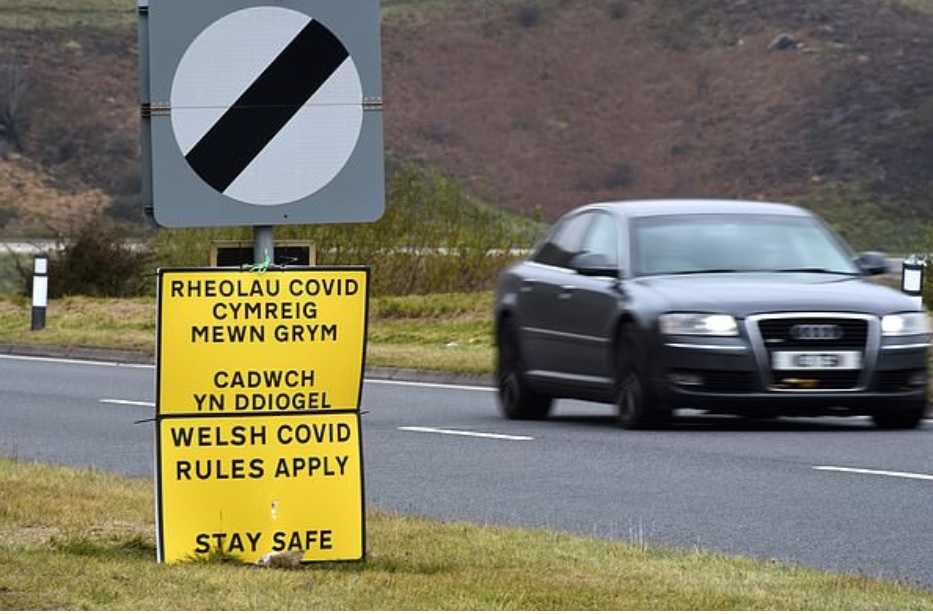
FOLLOWING advice from the Joint Biosecurity Centre and in the light of the most recent data, the four UK Chief Medical Officers and NHS England Medical Director have today (Jan 4) recommended that the UK Alert Level should move from Level 4 to Level 5.
In a joint statement the medical officers said: “Many parts of the health systems in the four nations are already under immense pressure. There are currently very high rates of community transmission, with substantial numbers of COVID patients in hospitals and in intensive care. Cases are rising almost everywhere, in much of the country driven by the new more transmissible variant. We are not confident that the NHS can handle a further sustained rise in cases and without further action there is a material risk of the NHS in several areas being overwhelmed over the next 21 days.
“Although the NHS is under immense pressure, significant changes have been made so people can still receive lifesaving treatment. It is absolutely critical that people still come forward for emergency care. If you require non-urgent medical attention, please contact your GP or call NHS111.”
The recommendation is from Chief Medical Officer for Wales, Dr Frank Atherton; Chief Medical Officer for England, Professor Chris Whitty; Chief Medical Officer for Scotland, Dr Gregor Smith
Chief Medical Officer for Northern Ireland, Dr Michael McBride; NHS England, National Medical Director Professor Stephen Powis.

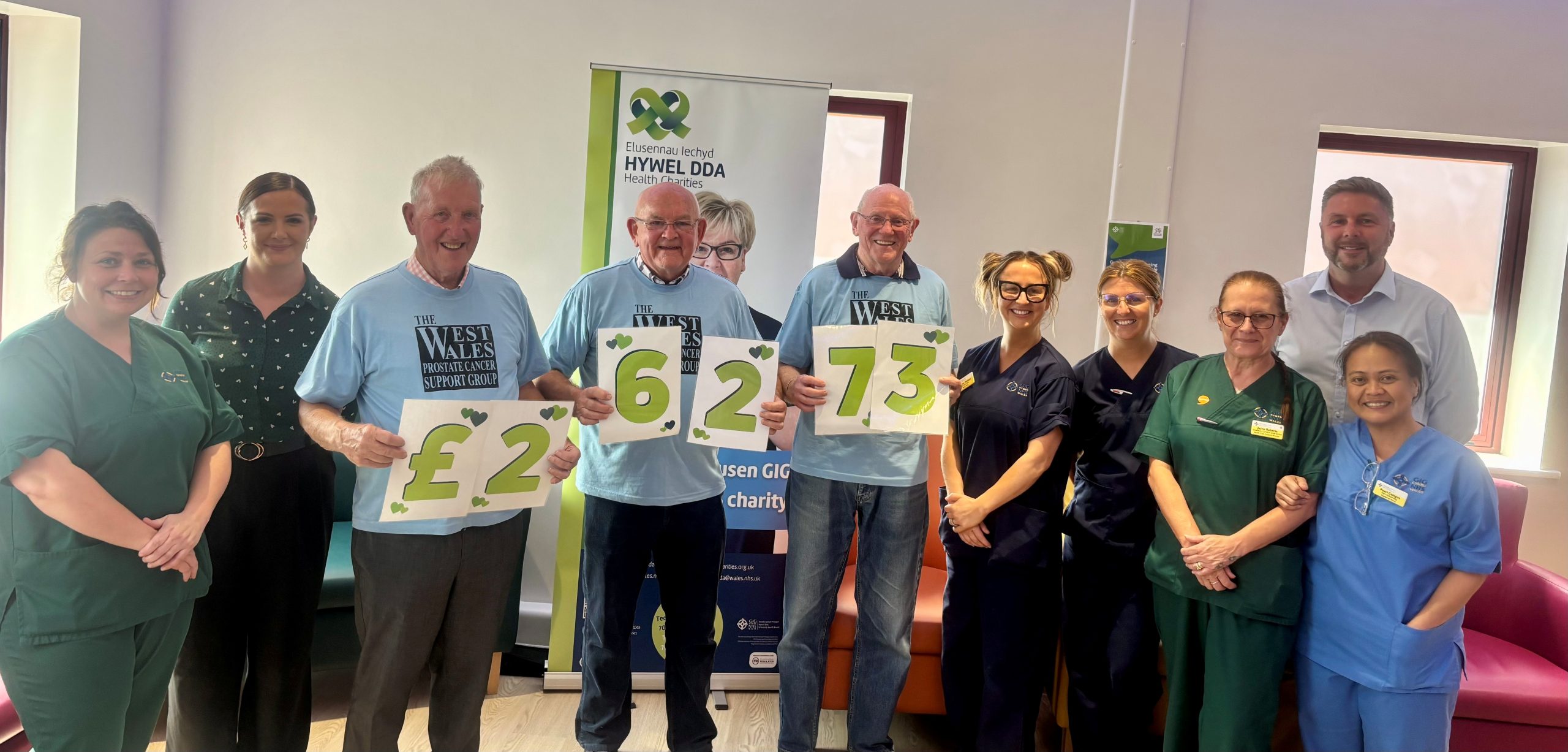
A £26,273 donation from the West Wales Prostate Cancer Support Group has helped create a calmer and more comfortable space for patients undergoing cancer treatment
A GENEROUS charitable donation has helped transform the patient waiting room at Glangwili Hospital’s Chemotherapy Day Unit.
Hywel Dda Health Charities, the official charity of Hywel Dda University Health Board, has used a £26,273 donation from the West Wales Prostate Cancer Support Group to fund a major refurbishment of the unit’s waiting room and adjacent kitchen.
The West Wales Prostate Cancer Support Group is a patient-led group of volunteers working across West and South West Wales, offering support to prostate cancer patients, as well as their families and friends.

The project has created a more welcoming, comfortable and calming environment for patients receiving treatment, along with relatives and carers who accompany them to appointments.
Before the refurbishment, the waiting area was described as dated, dark and uninviting, in contrast to the compassionate care provided by staff within the unit. Patients can often spend long periods in the space before treatment or clinic appointments.

The work included the removal of old fixtures, full redecoration, new flooring and ceiling, the purchase of more comfortable furniture, and the addition of artwork to help improve the atmosphere.
Gina Beard, Lead Cancer Nurse, said: “We are so grateful for the donation from the West Wales Prostate Cancer Support Group, which has enabled us to transform the space.
“This has made a real difference to our patients. We’ve been able to create a space that feels less clinical and more comforting. The calming colours and comfortable seating help ease anxiety and make a difficult time a little more bearable for patients and their loved ones.”
Nicola Llewelyn, Head of Hywel Dda Health Charities, added: “We are deeply grateful to the West Wales Prostate Cancer Support Group for their donation.
“Your generosity has enabled us to create a pleasant and relaxing space for patients and their families.”
Hywel Dda Health Charities supports NHS patients and staff across Carmarthenshire, Ceredigion and Pembrokeshire.

Plans include same-day mental health support, a National Care Service for Wales and action on women’s health
PLANS to improve access to social care, provide same-day mental health support and strengthen women’s health services have been outlined by the Welsh Government.
Deputy Minister for Social Care, Mental Health and Women’s Health Delyth Jewell said she wanted to give greater prominence to areas which she believes have not received the attention they deserve.
Her priorities include progressing plans for a National Care Service for Wales, with the ambition of delivering social care that is free at the point of need.
The Deputy Minister also said safeguarding arrangements would be strengthened to better protect children and adults at risk.
Mental health services are set to move towards a model of open-access, same-day support, with 21 demonstrator sites already underway and further rollout planned.
The Welsh Government said future action on dementia will also be set out in a new Dementia Strategy for Wales, focusing on brain health, earlier diagnosis and improved support.
A Women’s Health Summit will also be held later this month, bringing together women with lived experience and clinicians.
The summit will focus on tackling the normalisation of pain, with work already underway to improve endometriosis and abortion services, as well as maternity safety and support for families who experience the loss of a baby.
Delyth Jewell said: “I want to help shine a light onto areas that haven’t had the focus they are due.
“On mental health, women’s health, and yes, the social care system that for too long has been undervalued.
“These areas deserve more attention and prominence. They deserve a voice in the heart of government, and I promise I will give that to them.”
Alzheimer’s Society’s National Influencing Manager Gemma Roberts said: “We are delighted that the Welsh Government has reaffirmed its commitment to developing a new dementia strategy for Wales. We stand ready and eager to work with the Welsh Government to turn this ambition into a reality.

“People with dementia in Wales routinely face prolonged delays to diagnosis followed by gaps and stark inequalities in treatment and support. Delays of this scale have quietly become routine for dementia, Wales’s biggest killer, but would not be accepted for cancer or heart disease. It’s vital that the Plaid Cymru manifesto commitment to a diagnosis target of 12 weeks is included in the new strategy.
“The science is flying with faster, more accurate diagnosis and new treatments on the horizon. With the delivery of a bold dementia strategy for Wales that tackles diagnosis, care and support, delivering the transformation that people living with dementia need.”
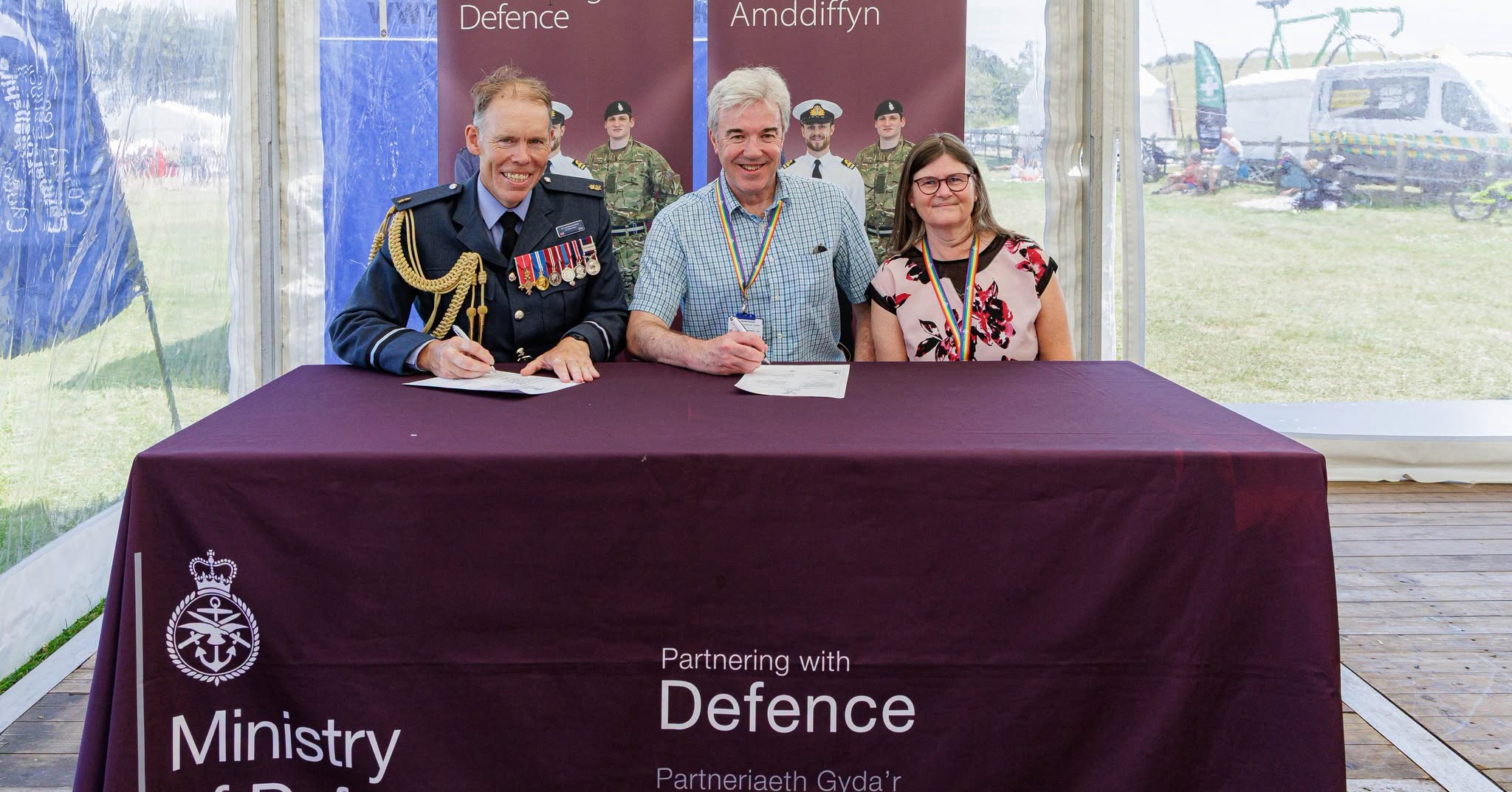
HYWEL DDA UNIVERSITY HEALTH BOARD has reaffirmed its commitment to the Armed Forces community by re-signing the Armed Forces Covenant.
The covenant was signed at the Wales National Armed Forces Day 2026 event, held at Pembrey Country Park on Saturday, June 27.
It was signed on behalf of the health board by Armed Forces Champion and Independent Board Member Michael Imperato, alongside Lisa Gostling, Deputy Chief Executive and Director of Workforce and Organisational Development.
The Armed Forces Covenant is a national promise to ensure that members of the Armed Forces community are treated fairly. It supports serving personnel, veterans, service leavers and their families, with a veteran defined as anyone who has served for at least one day.
By re-signing the covenant, Hywel Dda says it is continuing its role as an Armed Forces friendly employer and healthcare provider across west Wales.
This includes supporting the recruitment and employment of veterans, recognising military skills, providing additional support for reservists, offering flexible working for service families, working with partner organisations, supporting cadet groups and Armed Forces charities, and improving access to healthcare for veterans.
Anyone currently serving, or who has previously served in the Armed Forces, can find out more about the support available through Hywel Dda University Health Board’s Armed Forces Covenant pages.
Staff who are part of the Armed Forces community can also access support through the health board’s Armed Forces Staff Network by contacting [email protected].



Crime14 hours ago
Teacher stabbing trial: The first week of evidence
Jury hears accounts of alleged planned classroom attack, teacher’s fear she was dying, and boy’s words after leaving school A...


Community17 hours ago
Haverfordwest Castle refurbishment reaches new heights as roof goes on
Major milestone reached in project to transform historic gaol building into flagship visitor attraction A MAJOR milestone has been reached...


Business2 days ago
Pembrokeshire lands £98m share of Wales marine energy boom
New industry report says county has received the second highest level of marine energy investment in Wales, supporting more than...
Crime2 days ago
First aider tells jury teacher was “crying, shaking” after classroom stabbing
A SCHOOL first aider has told a jury that teacher Vicki Williams was “crying, shaking” and in “complete shock” after...


Crime3 days ago
Teacher feared she was dying after Milford Haven classroom stabbing
A TEACHER allegedly stabbed in the head at Milford Haven Comprehensive School told a jury she feared she was dying...


News3 days ago
Farage to resign as MP and fight Clacton by-election amid finance row
NIGEL FARAGE has announced he will resign as MP for Clacton and stand again in the by-election he intends to...
Crime3 days ago
Teacher tells jury there were ‘no issues’ with accused pupil hours before ‘stabbing’
Milford Haven teacher gives evidence as trial of 15-year-old continues at Swansea Crown Court A TEACHER allegedly stabbed at Milford...


News3 days ago
Major incident stood down after fire at Impala Terminal in Milford Haven
Fire involved decommissioned oil tank containing residual crude oil and around 60 cylinders A MAJOR incident declared during a fire...


News3 days ago
Large fire breaks out at Impala Terminal in Milford Haven
Black smoke seen for miles as emergency services respond to incident at former Puma Energy site A LARGE fire has...
Crime4 days ago
Prosecution outlines ‘planned attack’ as Milford Haven teacher stabbing trial opens
Jury hears teenager allegedly brought kitchen knife into school before teacher was stabbed in the head THE JURY in the...
-
 Education7 days ago
Education secretary vows to tackle ‘root causes’ of antisocial behaviour in schools
-

 Education7 days ago
Ysgol Glannau Gwaun celebrates prestigious Gold Active Travel award
-

 Community7 days ago
Closure-threatened Stepaside school expected to remain open
-
 Education7 days ago
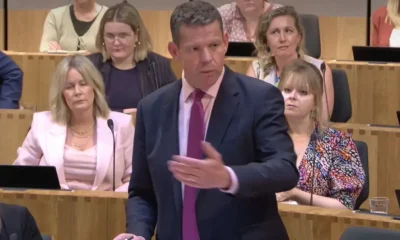
First Minister pressed on biological sex, additional learning needs, and NHS jobs
-

 Farming3 days ago
Pembrokeshire slaughterhouse given urgent improvement rating after audit failure
-
News3 days ago
Large fire breaks out at Impala Terminal in Milford Haven
-

 Education4 days ago
Council failed Welsh language standards over school closure
-

 Entertainment2 days ago
Swing and big band classics heading to Torch Theatre