


Health
New Covid vaccine arrives first in West Wales

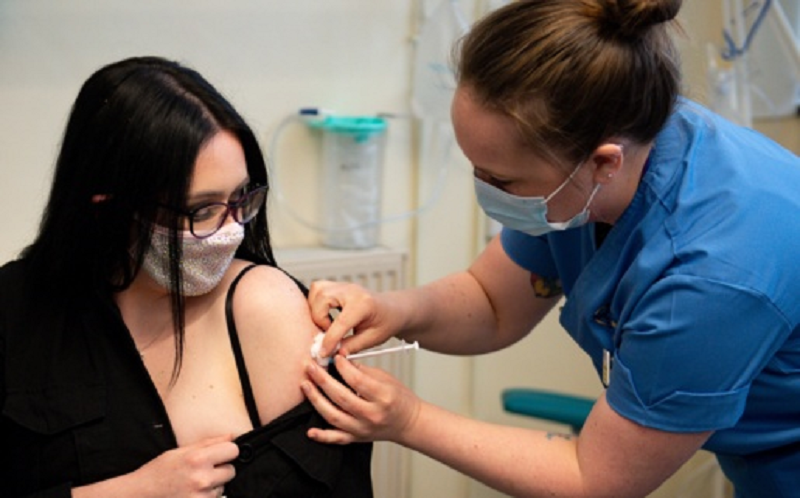
THE FIRST person in the UK to receive the Moderna vaccine against Covid-19 got their jab at 8:30 in the morning of Wednesday, April 7, at West Wales General Hospital.
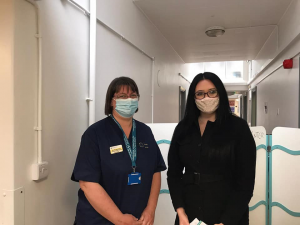
The recipient was Elle Taylor, aged 24. Ms Taylor is an unpaid carer from Ammanford.
Speaking after receiving the vaccine, the 24-year-old, who works at a further education college, said: “I’m very excited and very happy.
“I’m an unpaid carer for my grandmother, so it is very important to me that I get it, so I can care for her properly and safely.
“My grandmother has had her first dose and she is going for her second dose on Saturday.”
Miss Taylor said she only found out on Tuesday evening that she was to be the first in the UK to receive the jab by Moderna, an American company.
HEALTH BOARD ‘DELIGHTED’
The Medicines and Healthcare Products Regulatory Agency (MHRA) authorised the Moderna vaccine as safe and effective in January 2021 following rigorous clinical trials.
Moderna is the third Covid-19 vaccine distributed in the UK.
Two other vaccines, the Pfizer vaccine and the Astra Zeneca vaccine, are already in use across the UK. 31 million people across the UK have received their first shot of one of those vaccines since the inoculation programme began in December last year.
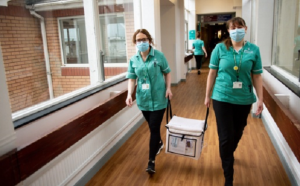
Supplies arrived in Wales on Tuesday, April 6.
5,000 doses were delivered to vaccination centres in the Hywel Dda University Health Board area.
The Moderna vaccine is a two-dose vaccine given at an interval of between four and twelve weeks.
Ros Jervis, Director of Public Health for Hywel Dda University Health Board, added: “We’re delighted to be able to use the Moderna vaccine for deployment across west Wales.
“We will be using this new vaccine, alongside Oxford Astra-Zeneca, to continue the immunisation’s roll out to our communities in Carmarthenshire, Ceredigion and Pembrokeshire.
“We are incredibly lucky to have a third vaccine in Wales, with a long shelf life and the ability to be easily transported, to help deliver the vaccination programme to small clinics across our rural communities.”
THE MODERNA VACCINE EXPLAINED
The Moderna vaccine does not contain the virus to produce immunity.
It cannot give you COVID-19.
The injection stimulates the body’s natural defences (immune system). It works by making the body produce its own protection (antibodies) against the virus that causes the COVID-19 infection.
The vaccine delivers the ‘instructions’ that cells in the body can use to make antibodies to fight the virus that causes COVID-19.
As with any vaccine, Moderna may not fully protect all those who receive it. Those who get it may not be fully protected until two weeks after the vaccine’s second dose.
In trials, the vaccine was 94.1% effective in preventing Covid-19 infection in patients with no prior history of the disease. It was 100% effective in preventing patients from developing the severe Covid-19 symptoms that lead to hospitalisation.
Although the Moderna vaccine is the priciest of the vaccines yet rolled out, it has an advantage over the Pfizer vaccine. It can be stored in a regular fridge for up to fourteen days after its delivery to a vaccination centre.
It contains no ingredient derived from animals.
A KEY MILESTONE
Health Minister Vaughan Gething said: “This is another key milestone in our fight against the COVID-19 pandemic. The third vaccine for use in Wales significantly adds to our defences in the face of coronavirus. It will help to protect our most vulnerable.
“Every vaccine given to someone in Wales is a small victory against the virus, and we would encourage everyone to go for their vaccine when invited.
“If people cannot attend their appointment, we ask them to let the health board know via the contact details provided in their invitation as this vaccination slot can be offered to someone else rather than be wasted.
“Once you have been vaccinated, you should continue to follow guidance, staying two metres apart, washing your hands and wearing a face covering to protect those around you.
“I want to thank all those who have been working tirelessly to deliver the vaccine across Wales and help us meet our second milestone of offering a vaccine to all phase one priority groups. I also want to thank the 1.5 million people in Wales that have already come forward for their vaccine and done their bit in this national effort.”
Welsh Conservative deputy health spokesperson and candidate for Ceredigion and Mid and West Wales, Amanda Jenner, said: “The Conservative UK Government’s decision to go it alone has been fully vindicated with the phenomenal results of the British vaccination programme.
“The roll-out of the Moderna vaccine, administered by our outstanding NHS and volunteers, will boost our ability to protect Welsh people and restore our freedoms.”
VACCINE SUPPLIES
Starting from the middle of last year, the UK Government secured a deliberate oversupply of vaccine to ensure continuity of supply.
As part of that strategy, the Department of Health placed provisional orders – pending approval by the medicines’ regulator – of seven different vaccines in different stages of development.
The UK has ordered 40 million doses of Pfizer’s vaccine, 100 million doses of the Oxford vaccine, and 17 million doses from Moderna.
A further four vaccines are either in clinical trials or awaiting MHRA approval: Novavax (60 million doses, Janssen (30 million doses), Valneva (60 million doses), GlaskoSmithKline (60 million doses).
The number of Covid-19 vaccine doses on order is enough to fully inoculate the UK’s entire population twice.
BOARD STATEMENT ON VACCINATION PROGRAMME
194,057 people in our three counties have now received their first dose of the vaccine, and 47,087 people are fully vaccinated having received both doses.
We will have offered a first dose of the vaccine to all those in priority groups 5-9 by Sunday 18 April.
To ensure no one is left behind, this week the health board has launched an appeal asking people in groups 1 to 9 who have not been contacted to get in touch to arrange their first vaccine dose.
If one or more of the following applies to you and you have not received your first vaccine appointment, please contact the health board on 0300 303 8322 or by email [email protected].
We will have offered a first dose of the vaccine to all those in priority groups 5-9 by Sunday 18 April.
To ensure no one is left behind, this week the health board has launched an appeal asking people in groups 1 to 9 who have not been contacted to get in touch to arrange their first vaccine dose.
If one or more of the following applies to you and you have not received your first vaccine appointment, please contact the health board on 0300 303 8322 or by email [email protected].
- are aged 50 or over
- are aged 16 to 64 and have underlying health conditions that put you at increased risk of COVID-19 mortality
- work in a care home or in health and social care in Carmarthenshire, Ceredigion or Pembrokeshire
- are the primary unpaid carer of an elderly or disabled adult who is at increased risk of COVID-19 mortality, or a child with severe neuro-disabilities
Please be patient if you haven’t been contacted about your vaccine yet and we politely ask that you do not contact the health board or your GP to ask about your vaccine. You will be contacted when it is your turn.
THE SECOND DOSE
Second doses are essential for longer-term protection, so it’s important that everyone comes forward for their full course when called.
When you will be contacted for your second vaccine dose depends on which vaccine you have received.
We are asking anyone who received the Pfizer vaccine and has not received a second vaccine appointment yet, to get in touch as soon as possible on 0300 303 8322. Please note our phone lines get very busy at times and you may have to wait for the call to be answered. You can also contact us by emailing your name and contact phone number to [email protected].
The health board aims to complete all second Pfizer vaccine doses by week commencing Monday 12 April.
To check which vaccine you received, look at the card given to you when you received your first vaccine. It will say if you received either the Pfizer BioNtech vaccine or the Oxford AstraZeneca vaccine.
If you received a first vaccine dose of the Oxford AstraZeneca vaccine, we politely ask that you do not contact your GP practice or health board at this time to ask about a second vaccine appointment. You will be contacted when it is your turn for a second dose – we are calling those who received a Pfizer first dose at this time.
Care home residents, people aged over 80 and all other priority groups who have received the Oxford AstraZeneca vaccine at the GP surgery will be contacted between 11 to 12 weeks following their first vaccine with an appointment time.
Confidence is building around the effectiveness of the vaccines.
Emerging evidence is clear on the impact of the vaccine in preventing severe disease and hospitalisation. That is now playing out in admissions to our hospitals, and thankfully, numbers of deaths from coronavirus being reported.
UK and EU regulators have also been very clear about the safety of the vaccines. The benefits of vaccination far outweigh any possible risks.
UK and EU regulators have also been very clear about the safety of the vaccines. The benefits of vaccination far outweigh any possible risks.
All three vaccines are safe and effective.






Tribunal history reveals medic was removed in 2012 for dishonesty before being allowed back to practise
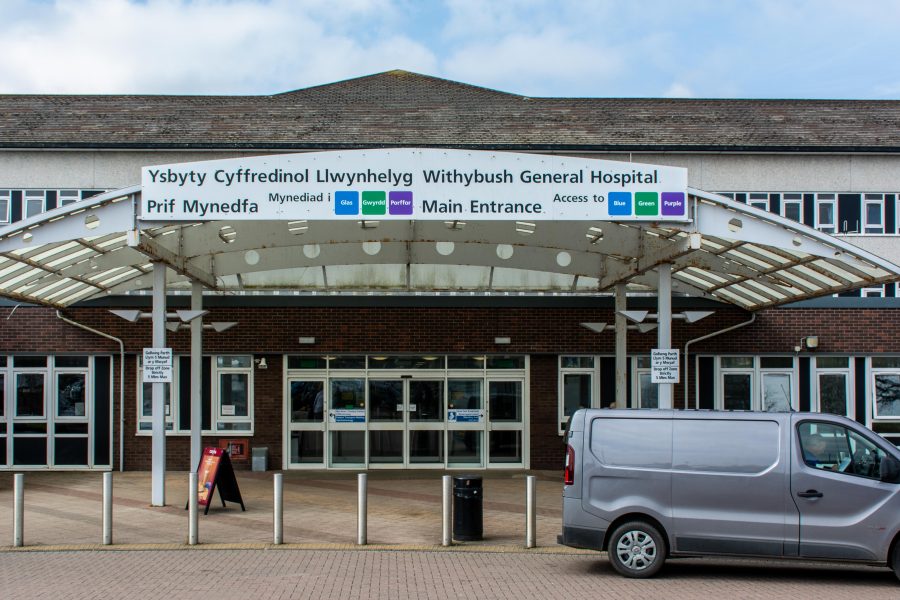
A DOCTOR accused of sexually harassing junior colleagues while working at Withybush Hospital had previously been struck off the medical register for lying about his qualifications, the Herald can reveal.
Dr Velmurugan Kuppuswamy is currently at the centre of fitness-to-practise proceedings after allegations he made sexually inappropriate comments and subjected two female doctors to unwanted physical contact during his time as a locum consultant in Haverfordwest.
But records show this is not the first time his conduct has come before regulators.
In 2012, an independent tribunal found he had been dishonest during an application and interview for a postgraduate cardiology training post at an NHS deanery in England.
The panel heard he falsely claimed to have submitted a Doctor of Medicine thesis, said he was a member of the Royal College of Physicians and stated he had passed a practical clinical skills assessment.

He initially admitted misleading information before later retracting parts of his account. The tribunal concluded he had “maintained his dishonest accounts” and had wrongly accused a witness of giving misleading evidence.
He was erased from the register and returned to India, where he later worked in a cardiac hospital.
In 2020, he applied to be restored to the UK medical register.
The General Medical Council investigated and opposed the application, arguing his expressions of remorse had come years late and raising concerns about a lack of independent evidence regarding his work overseas, as well as the absence of relevant ethics training.
However, an independent Medical Practitioners Tribunal at the Medical Practitioners Tribunal Service accepted his assurances that he had changed. His evidence was described as “compelling, heartfelt and genuine”, and the panel decided a well-informed member of the public would not be concerned about his return to practise.
His name was restored to the register.
Shortly afterwards, he began working shifts as a locum consultant at Withybush Hospital, which is run by Hywel Dda University Health Board.

Within months, fresh allegations emerged.
A tribunal has heard claims that between August and September 2021 he hugged junior colleagues without consent, touched their backs and waists, squeezed their wrists and arms and made sexually suggestive remarks at a staff social event.
On two occasions, he is alleged to have gripped one doctor so tightly it caused pain and ignored her requests to stop. He is also accused of staring at female colleagues, following groups of women around the venue, making comments about their bodies and placing a hand high on one doctor’s thigh.
Further allegations relate to behaviour at work, including sitting extremely close to a colleague, draping an arm behind her on a sofa and grabbing her arm while whispering comments.
According to the charges, his conduct created “an intimidating, hostile, degrading, humiliating or offensive environment” and amounted to a sexually motivated abuse of his senior position.
Dr Kuppuswamy denies wrongdoing.
Following the investigation, the case was referred to a tribunal by the General Medical Council. The decision on his fitness to practise was made independently by a Medical Practitioners Tribunal at the Medical Practitioners Tribunal Service.
The tribunal determined his behaviour amounted to serious professional misconduct and ordered that he be erased from the medical register.
Asked whether the doctor remains employed, the health board said it does not comment on individual staffing matters.
Medical director Mark Henwood said: “We have robust policies and procedures in place to ensure the safety of both staff and patients in our care and we take seriously our responsibility for their wellbeing. We are committed to providing a safe, supportive environment where patients and staff can be confident that best practice is being followed at all times.”
From sleeping on chairs to parking fines, patients say everyday barriers are pushing the NHS to breaking point
PATIENTS across West Wales are describing a health service under such strain that some say they now expect to be penalised simply for trying to access care.
At Glangwili Hospital, stories of patients sleeping on chairs for days due to a lack of beds have been accompanied by growing frustration over issues that begin long before anyone reaches a ward — including parking, access, and the sheer difficulty of getting through the hospital doors.
One disabled patient said they had resigned themselves to receiving a £25 parking fine in order to attend hospital appointments.
“I now accept I will be fined,” they said. “Parking is impossible, but it’s that or miss my appointment. I am too disabled to park miles away and the disabled spaces are always full.”
Others have described spending days in A&E or side rooms, unable to lie down, while waiting for a bed to become available. One patient admitted on New Year’s Day with pneumonia said they slept in a chair for four nights without a pillow or blanket before being moved, only to later discover they also had flu and should have been isolated sooner.
Across social media and in correspondence with the Herald, patients and families repeatedly stress that frontline NHS staff are not to blame — instead pointing to a system that they say is buckling under years of structural strain.
Glangwili, the largest hospital managed by Hywel Dda University Health Board, serves Carmarthenshire and is home to the county’s only accident and emergency department following the closure of A&E at Prince Philip Hospital. That closure, along with reductions in services elsewhere, is frequently cited by patients as a turning point.
Several people said the loss of local A&E and cottage hospitals has forced more patients into already stretched units, increasing ambulance reliance and long-distance travel — particularly difficult in a largely rural region.
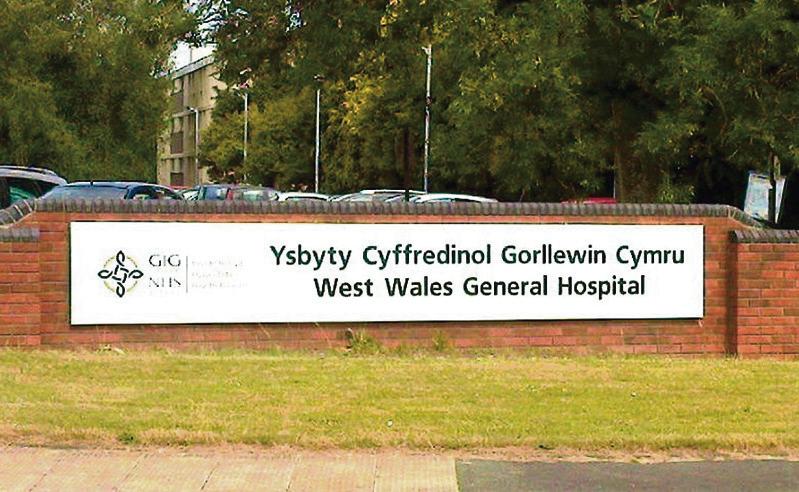
Further west, uncertainty over services at Withybush Hospital continues to fuel anxiety, especially given the scale of reinforced autoclaved aerated concrete (RAAC) identified across the site.

Hywel Dda has acknowledged that almost 90% of Withybush is affected by RAAC, while Glangwili itself is the oldest acute hospital in Wales. The health board says more than £50 million has been spent on the two hospitals in recent years, largely to address critical safety and infrastructure risks rather than expand capacity.
Patients, however, question where that money is felt on the ground.
Some have criticised NHS procurement and management structures, while others point to social care as the missing piece. Repeated comments highlight the lack of care packages and closed care homes, which many believe are leaving medically fit patients unable to be discharged — effectively blocking beds and creating bottlenecks throughout the system.

“There’s nowhere for people to go,” one reader said. “Until social care is sorted, nothing will change.”
Concerns have also been raised about staff morale, with some alleging bullying cultures and burnout contributing to recruitment and retention problems. Again, blame is consistently directed upward rather than at nurses, doctors or porters.
Behind it all looms the long-promised new ‘super hospital’ for Carmarthenshire — first discussed in 2006 and formally launched in 2018. Eight years on, construction has yet to begin, and public confidence in the project is fading.
While Hywel Dda and the Welsh Government insist improvements are under way — including additional funding to expand capacity at Glangwili and improvements to patient experience — many patients say their reality feels far removed from official assurances.
For those attending appointments, sleeping in chairs, or weighing up a parking fine against missing care, the crisis is no longer abstract.
“It’s not politics,” one patient said. “It’s whether you get treated — and how.”

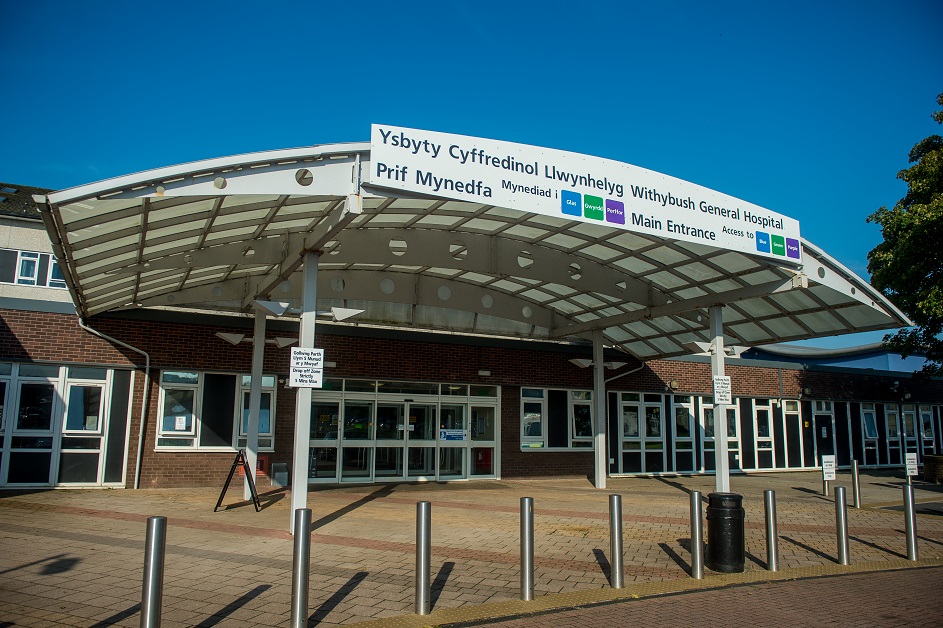
EARLIER this week, Hywel Dda UHB published the results of a consultation into the future configuration of its clinical services.
It is widely accepted that the current provision of clinical services is unsustainable. The Board cannot recruit enough staff to fill vacancies, particularly in rural areas, despite the existing staff shortages there. Only Prince Philip Hospital in Llanelli, situated close to the medical faculty and research facilities in Swansea, experiences relatively little difficulty recruiting and retaining staff.
A QUESTION OF TRUST
Public reactions online to the publication of the results, particularly in Pembrokeshire, were plentiful and mostly negative. Those initial reactions were predictable, even where the report’s details had not been read. However, an examination of the consultation’s findings paints a troubling picture for the Board.
Many of the approximately 4,000 respondents to the consultation said they understood the practical difficulties of delivering healthcare across rural Wales with limited resources. However, many also said they did not expect the Health Board to act in good faith upon its findings. Using the definition of ‘many’ adopted by ORS, a slight majority of respondents to the consultation said, in terms, that they did not trust their local health board.
We asked the Health Board to respond to those findings.
The Board told us: “We hope that by giving the people and communities in Hywel Dda the chance to share their views, we can work together on planning for the future of health care that is safe, accessible, sustainable and kind. More than 4,000 people engaged with us by attending our events, held throughout the Hywel Dda area, neighbouring Health Boards, and online.
“At the Extraordinary Board meeting on the 18 and 19 February, the Board will be considering 48 options across the nine services, 22 of which are alternative options generated directly through staff, public and stakeholder feedback during the consultation process. This reflects our genuine commitment to listening to our communities. There are no preferred options.”
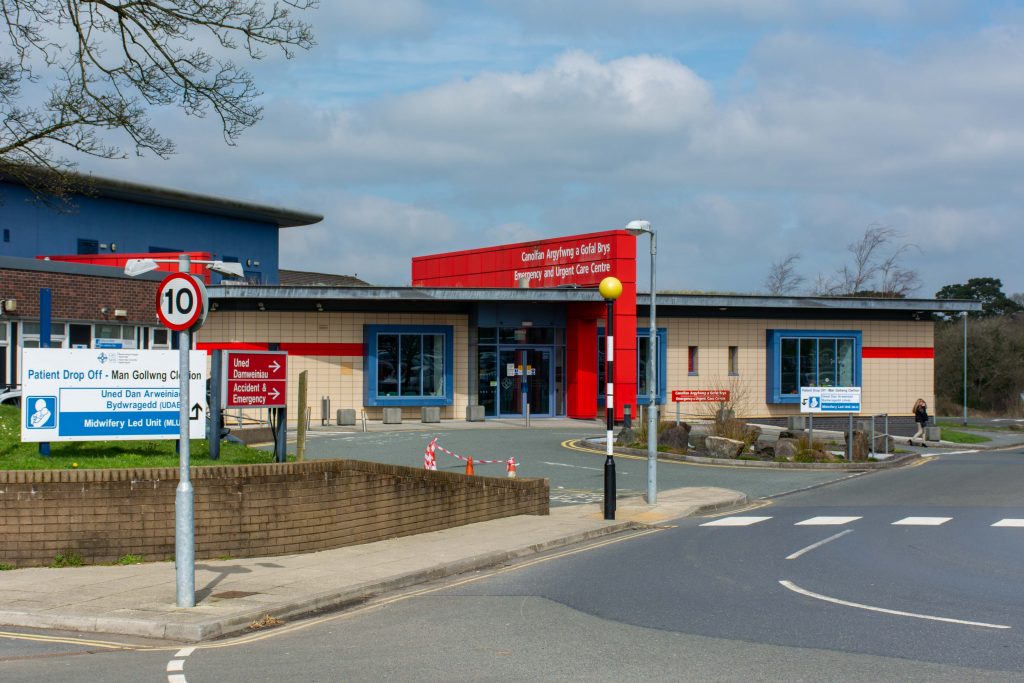
THE ROAD AHEAD
The consultation report included a large range of responses expressing serious concerns about access to services close to home. Respondents aired even stronger misgivings about the linked issue of transport for those attending hospital appointments. Simply put, options that proposed centralising services in one centre or another met with almost universal short shrift from the public.
The options proposed by the Board contained no hint of a transport assessment if key services were centralised, particularly from rural areas. Concerns about transport links, a bugbear for respondents from Pembrokeshire, were expressed by members of the public living in Ceredigion, in rural Carmarthenshire east and north of the M4 and A40.
Without a massive investment in patient transport services or a massively expanded public transport system, it is difficult to see how the Board could reasonably expect a patient with a debilitating condition to reach an appointment many miles away. Therefore, we asked the Board what transport it had commissioned to justify and underpin the options in the consultation.
The Board said: “We carried out Equality Impact Assessment (EqIA) and Quality Impact Assessment (QIA) during options development. Alongside this, there is a dedicated Patient and Travel Insights assessment to explore how changes could affect journeys and access to care. This includes analysis of travel times, transport patterns and the potential effects on different groups.
“We have carefully considered how proposed changes to healthcare services could impact travel and transport for patients, loved ones, and our staff. Some options may involve longer travel times for some people to ensure they can access better-quality care. We have worked with partners such as the Welsh Ambulance Service, the University NHS Trust, and the Adult Critical Care Transfer Service to ensure appropriate transport arrangements have been considered.
“We will continue to work with partners to understand how we can reduce the impact of any changes on travel and transport.”
A DIGITAL FUTURE?
This is at least the fourth consultation this reporter has reported on in the last eleven years. Each has suggested the future provision of healthcare services through technological solutions.
If patients must travel further for appointments, many of which will be clinically routine, remote medical appointments would go some way to addressing that issue. On the surface, it’s a win-win.
Progress has been slow. The technical demands of remote consultation and creaking IT infrastructure have delayed rollout. The risks attendant upon assessing a patient’s condition over a videolink remain undiminished. Moreover, a significant number of older patients either cannot or will not access services online. Rural broadband roll-out, which remains piecemeal, has not been the cure-all previously imagined.
We asked how the options accounted for the factors listed above.
The Board’s response stated that: “Digital is increasingly becoming the means by which we all interact with each other and with everything around us. However, we understand that some members of our Hywel Dda population cannot always access services online, or prefer not to, and we will support them in accessing healthcare in the way that is most convenient for them.”

FINDING (AND KEEPING) STAFF
The problems west Wales has in attracting and retaining healthcare staff are well known. They are chronic and, despite numerous initiatives, have not gone away. Rural areas are a hard sell to young professionals, especially those ambitious to specialise in cutting-edge practice areas. All principal research centres are based in or close to cities. In South Wales, that means Swansea, Cardiff, and Bristol. It follows that the more distant a post is from those centres, the less likely an early-career professional will apply for it.
Meanwhile, working conditions, shift patterns, and travel times to and from workplaces, often miles from home, mean that agency working (less secure, but better paid and more flexible) is an attractive alternative to direct employment. Despite Welsh Government diktats to cut the use of agency staff, healthcare delivery operates in the real world.
The Board told us: “Staff recruitment and retention are challenges across the NHS, especially in rural areas. We continue to recruit staff by offering them competitive remuneration packages and excellent opportunities to work, train and progress in our hospitals and health sites.
“An important motivation for the CSP programme was the expectation that more sustainable, higher-quality services would be more attractive to staff, helping with both retention and recruitment.
“Some options seek to recruit more substantive staff rather than temporary staff, which will be better for our clinical teams and improve patient care. Some options provide current staff with chances to work more closely together in teams and offer more training opportunities.”
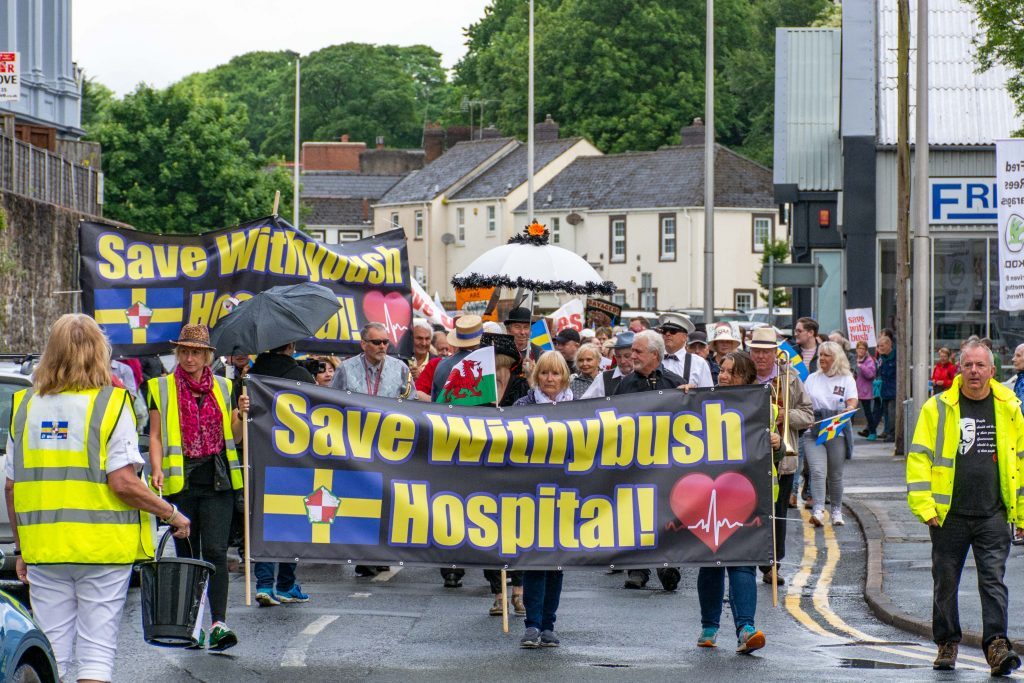
PEMBROKESHIRE FIGHTS FOR WITHYBUSH
Opposition to the options proposed by the Health Board was predictably strongest when it came to removing services from local hospitals. In Ceredigion, a 16,000-signature petition opposed the removal or reduction of stroke services at Bronglais. In Llanelli, an option to close the Emergency Care Unit drew a negative reaction. In Llandovery, the loss of radiology services garnered a similarly trenchant response. In particular, a large majority of responses rejected proposals to introduce a treat-and-transfer system.
Against that background, it is hardly surprising that Pembrokeshire respondents stood firmly against any further reduction in services provided in the county, and particularly at Withybush. Having experienced the salami-slicing of services away from Haverfordwest, and in the face of repeatedly broken assurances regarding the return of services ‘temporarily’ removed, those reactions are unsurprising. Those feelings are not limited to the public. One staff member was directly quoted in the consultation report claiming that cuts to Withybush were baked into the options the Board presented.
We asked the Board to provide specific reassurance about maintaining current service provision at Withybush and other Pembrokeshire hospitals.
Whether the Board’s response addresses that question, the reader can decide.
“Withybush Hospital will have an important role to play in the health care of the region, and our long-term plan for our hospital sites has been set out in our A Healthier Mid and West Wales strategy. In the interim, our CSP consultation has included our thinking on the role of each of our acute sites. For example, we anticipate that Withybush Hospital will provide more planned care, and initial access to acute care would remain on site, with transfers to Glangwili Hospital for patients with the highest needs.”
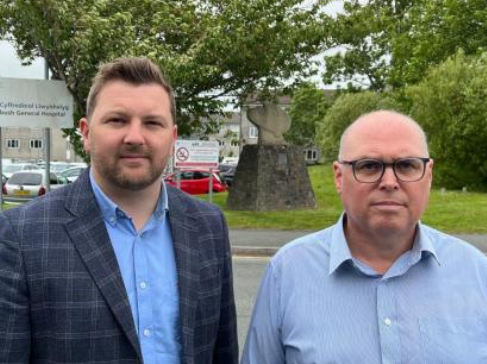
PEMBROKESHIRE MSs RESPOND
Local Welsh Conservative Senedd Members Paul Davies MS and Samuel Kurtz MS have warned that any decision which undermines the future of A&E services at Withybush Hospital would be “wholly unacceptable”, ahead of a crucial Hywel Dda University Health Board meeting in February.
Paul Davies MS, joined by fellow Welsh Conservative Senedd Member Samuel Kurtz MS, said Withybush Hospital must be protected as a vital lifeline for Pembrokeshire, and that communities are deeply concerned about the potential consequences of the Health Board’s proposals.
Paul Davies MS said: “People in Pembrokeshire are deeply worried about what these proposals could mean for Withybush Hospital. Over many years, we have seen a gradual erosion of services, and communities are understandably anxious that this process will continue.
“Withybush Hospital is not a ‘nice to have’ — it is a vital lifeline for a large, rural population. Any changes must strengthen services in Pembrokeshire, not weaken them. I will not support decisions that place patients at greater risk or force them to travel unreasonable distances for essential care.”
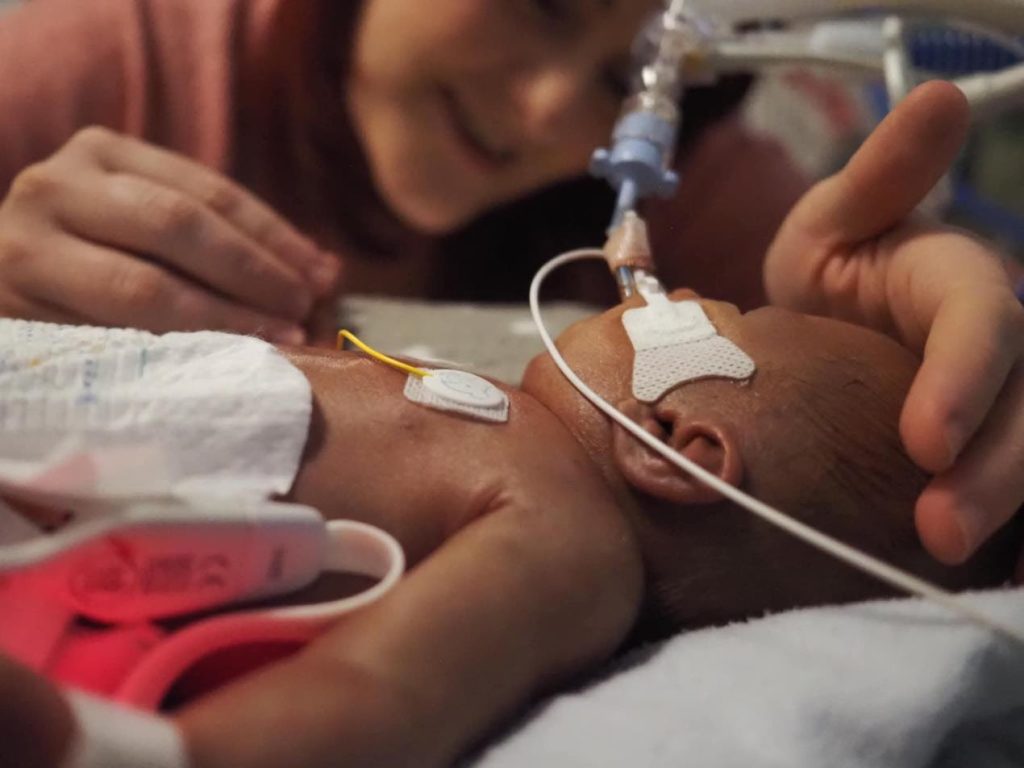
Samuel Kurtz MS added, “People in Pembrokeshire have heard this story before. Time and again, we are told services are fragile, and the result is that Withybush loses out.
“The loss of SCBU, consultant-led maternity and children’s A&E is still deeply felt locally. Removing one service often makes others unviable, and that is exactly what people are worried about now.
“Any decision that threatens the long-term viability of A&E at Withybush Hospital is a red line. It would be wholly unacceptable and would be met with fierce opposition from the community.”
Mr Kurtz also stressed that rurality, transport challenges and ambulance pressures must be central to decision-making, not treated as secondary considerations.
“Pembrokeshire is a rural county. Asking patients to travel further for emergency or urgent care is not a theoretical issue — it affects safety, outcomes, families and staff.
He continued: “There is also deep frustration that these decisions continue to be made in the shadow of the so-called ‘super hospital’ elsewhere in west Wales, which has never come to fruition. Pembrokeshire cannot be left with a slow erosion of services while waiting for something that may not materialise for a decade or more.”
Both Senedd members have written to Hywel Dda University Health Board and the Welsh Government ahead of the February meeting.
Paul Davies MS concluded: “We will be watching the outcome of this meeting very closely. Withybush Hospital is vital to Pembrokeshire. It must be properly supported, not hollowed out.”



Crime5 hours ago
Arrest made after Carmarthen park stabbing investigation
Police thank community and media following public appeal to trace suspect AN ARREST has been made following last week’s stabbing...


Crime6 hours ago
Search continues for attempted murder suspect after Carmarthen park stabbing
Police expand searches across riverbank and woodland as public urged to come forward with information DYFED-POWYS POLICE say their search for...

Community11 hours ago
Flood alert issued for Pembrokeshire coast this evening
Pembrokeshire residents are being urged to prepare for possible flooding along the coastline between St Dogmaels, Cardigan and Amroth, after...

News14 hours ago
Tributes paid to Pembroke Dock Councillor and former Mayor Pamela George
It is with great sadness that the Pembroke Dock community mourns the passing of Councillor Pamela George. Pamela, affectionately known...

Health1 day ago
Doctor struck off after sexual misconduct findings at Withybush Hospital
Tribunal history reveals medic was removed in 2012 for dishonesty before being allowed back to practise A DOCTOR accused of...

News1 day ago
Policing powers stay with Westminster as devolution debate reignites in Wales
THE UK GOVERNMENT has ruled out handing control of policing and criminal justice to Wales, triggering fresh political debate over...

Climate2 days ago
Ice warning issued as temperatures fall below freezing across Pembrokeshire
Cold snap expected to create hazardous roads and pavements overnight into Monday morning PEMBROKESHESHIRE residents are being urged to take...
Crime4 days ago
Manhunt intensifies after woman seriously injured in Carmarthen park stabbing
Police say suspect known to victim as attempted murder investigation continues A MAJOR police manhunt is under way after a...
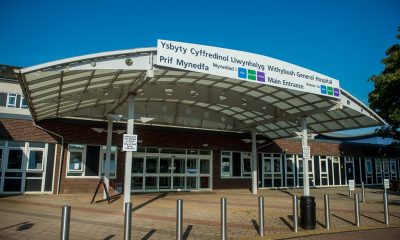

Health4 days ago
Consultation reveals lack of public trust in health board
EARLIER this week, Hywel Dda UHB published the results of a consultation into the future configuration of its clinical services....


Community5 days ago
Specialist team searches River Teifi in ongoing hunt for missing man
A SPECIALIST search team has carried out a renewed and highly technical search of the River Teifi in Cardigan as...
-
Health4 days ago
Consultation reveals lack of public trust in health board
-

 News6 days ago
Caldey still unsafe, survivors warn — despite Abbey’s reform claims
-

 Community5 days ago
Pembrokeshire students speak at national Holocaust Memorial Day event
-
 News6 days ago
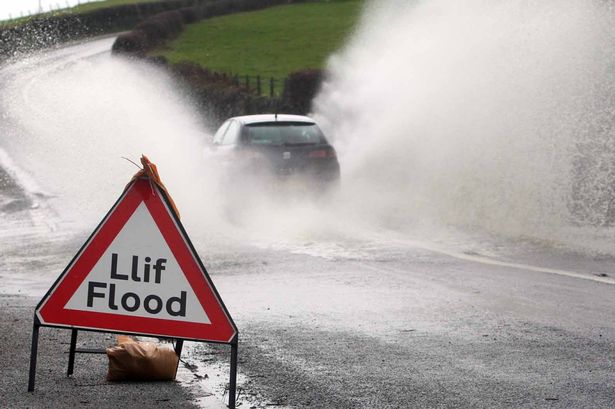
Kurtz raises Gumfreston flooding in the Senedd as petition deadline nears
-

 Entertainment7 days ago
Rapunzel brings festive magic to Torch Theatre
-

 Crime6 days ago
Man denies murdering brother as jury hears of ‘ferocious attack’ at Morriston flat
-
 Community7 days ago
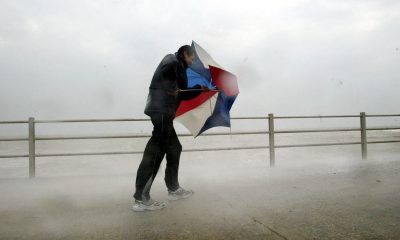
Storm Chandra: Morning impacts across Pembrokeshire
-
 Education5 days ago
‘Vulnerable teen’ questioned by police at Milford Haven School