


News
Four UK forces are piloting a new service to report sexual assault online

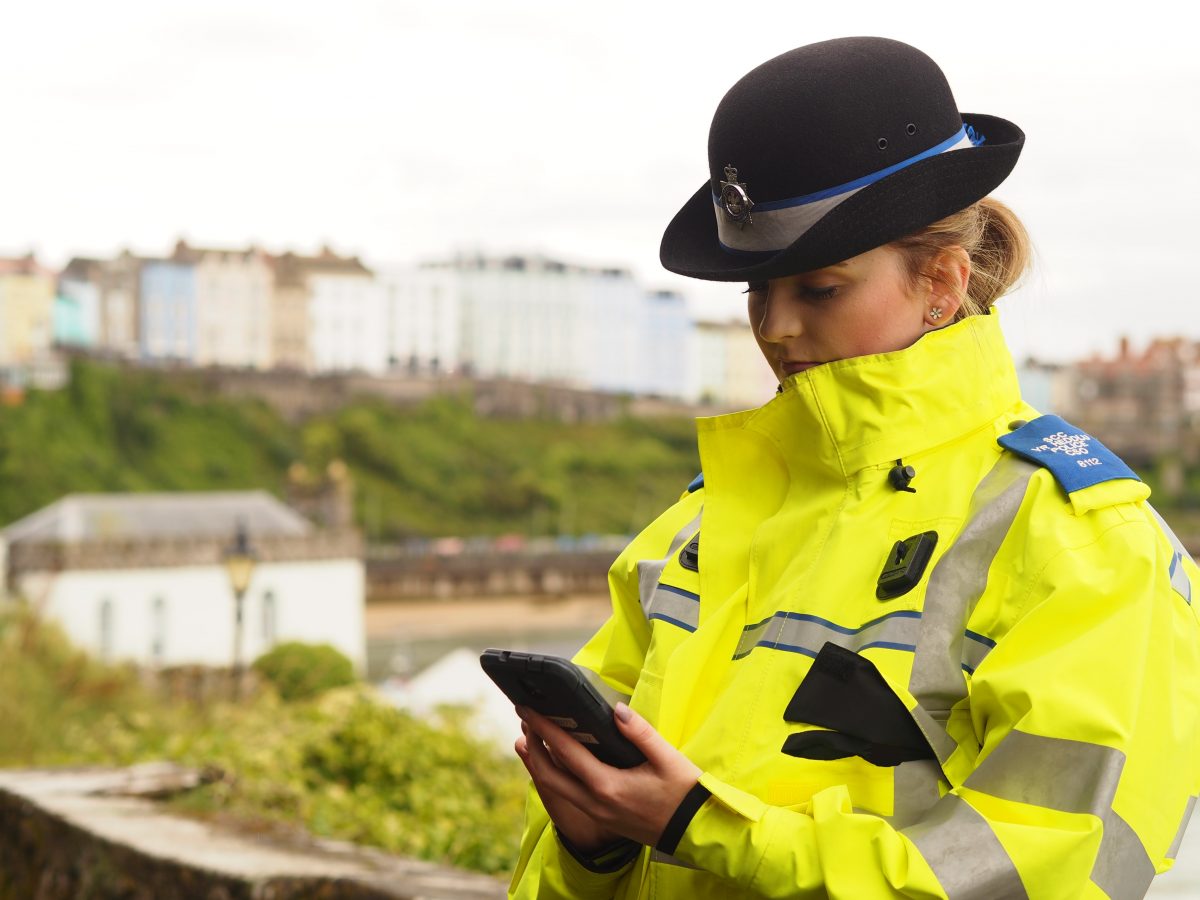
THE NEW online Rape and Sexual Assault reporting service is now live on the websites of British Transport Police, Merseyside Police, Dyfed Powys Police and Leicestershire Police.
It was created by the National Police Chief’s Council’s (NPCC) Digital Public Contact Programme (DPC) and launched on Tuesday 30 November.
The pilot will run for six weeks.
People wishing to report sexual offences have until now been directed to phone police forces, text 61016 in the case of British Transport Police, or dial 999 in an emergency.
If they do not require immediate police assistance, people – regardless of age or if they want to report the crime – will be directed online via their local force website.

They will find advice and details of charities and other organisations that can help. The forces will ask, if the person is willing, for details of what has happened. There is an option to report the offence anonymously. If reported anonymously, the police will only contact that person if there is believed to be an immediate threat to their life.
Det Ch Insp Sarah White from British Transport Police said: “We know from extensive research that there are a number of reasons why survivors and witnesses are not comfortable in reporting sexual offences to the police.
“One of the common factors remains the unwillingness to provide personal details. We understand this and have been working to look at how we can invite greater reporting, which can help us prevent further crimes and bring offenders to justice.
“Every report provides us with valuable information. And if people aren’t comfortable with making that report, then we want them to know how they can get the support and help they need.
“This new service in not only innovative in the way it has been designed – from the ground up in consultation with more than 40 organisations (including Rape Crisis, End Violence Against Women and the Survivors Trust) – but also in the way it is being deployed – online where people, especially younger people, increasingly are.”
When visiting the websites of those forces, options are available to report a sexual offence themselves, on behalf on another person, or as a witness. People can choose to report in English or Welsh.
If the pilot is successful, it will become a permanent reporting feature and will be available for other forces to adopt nationally.

Det Ch Insp White added: “We’re absolutely committed to ensuring our railways are a safe place for people to travel and we hope this is just another tool in our armoury against sexual offending.”
British Transport Police has also been accredited by White Ribbon, committed to ending violence against woman and girls. It recently signed a pledge encouraging all men within the organisation to make a promise to never commit, excuse or remain silent about violence against women.
Detective Superintendent Jayne Butler, Dyfed-Powys Police, said: “As a White Ribbon accredited organisation, committed to ending violence against woman and girls, protecting vulnerable people is a priority for Dyfed-Powys Police and we know how traumatic being the victim of a sexual offence is.
“We encourage victims to come forward to report incidents of this nature so we can thoroughly investigate the crimes whilst ensuring that all victims have the opportunity to be referred for specialist support. The ability to report a sexual offence online will provide another avenue for victims to come forward so we can help them and bring offenders to justice.”











Samuel Kurtz says public frustration has grown after two years of Labour controversies and policy decisions
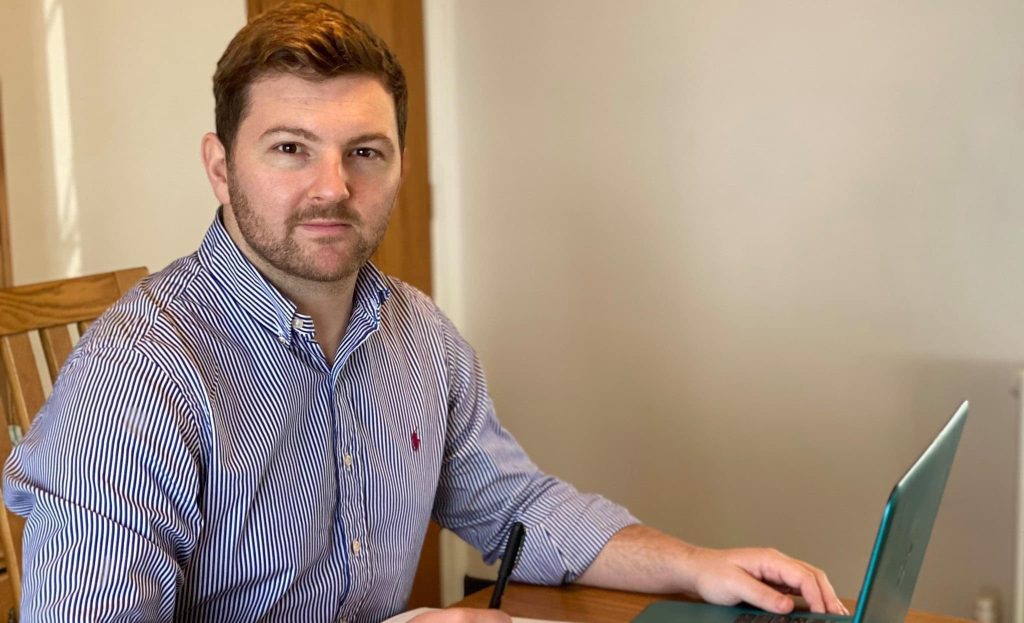
FORMER West Wales MS Samuel Kurtz has said Sir Keir Starmer’s resignation felt “increasingly inevitable” after months of controversy and public frustration.
The Welsh Conservative said he watched the Prime Minister’s Downing Street statement with “genuine frustration”, adding that he wanted the UK to be respected regardless of which party was in government.
Starmer announced on Monday (Jun 22) that he would resign as Prime Minister and Labour leader, just 12 days before the second anniversary of Labour’s 2024 general election victory.
Mr Kurtz said: “As a British citizen, I sighed genuine frustration while watching this morning. Whatever the political colour of the Government, I want our country to be respected at home and on the international stage.
“But, in truth, this moment has felt increasingly inevitable as the weeks turned into months.”
He pointed to a series of controversies and policy decisions, including the Lord Alli gifts row, winter fuel allowance cuts, the Family Farm Tax, rising National Insurance, defence spending and domestic energy production.
Mr Kurtz said people “simply feel worse off”, adding that confidence in the economy remained low.
He said: “A Government should ultimately be judged on whether life is getting better for the people it serves.
“After two years marked by the controversies and a series of damaging policy decisions mentioned above, it’s difficult to argue this Government has passed that test.”
Mr Kurtz also questioned what would happen next, asking whether Labour would see an “Andy Burnham coronation”, whether Wes Streeting could build enough support, or whether an outsider could emerge.
He added that he would be watching the leadership contest “from the sidelines with interest”.
Labour is expected to open nominations for a new leader on July 9, with Starmer remaining in office until his successor is chosen.

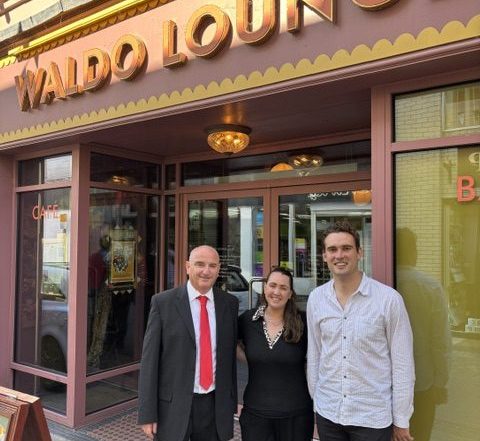
A HAVERFORDWEST venue has been praised for raising more than £2,600 for local charities through a series of community events.
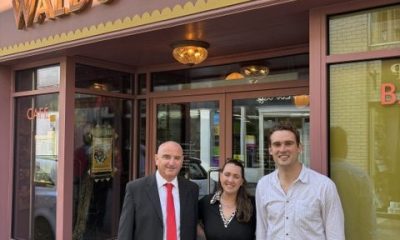
Castle Ward county councillor Thomas Tudor visited The Waldo Lounge in Haverfordwest with Henry Tufnell MP, where they met manager Stephanie Davies.
Cllr Tudor said Stephanie had “truly embraced” her role in the community, organising events including a duck race, sports quiz, Mad Hatter’s tea party for Little Loungers, a bake sale and a drag night show.
Together, the events have raised £2,637 for local good causes.
Charities to benefit include The VC Gallery, Tŷ Hafan and Adam’s Bucketful of Hope Cancer Support Centre.
Cllr Tudor said: “It was lovely to introduce Henry Tufnell MP to Stephanie Davies, manager of The Waldo Lounge in Haverfordwest.
“Stephanie has truly embraced her role in the community of Haverfordwest, running many exciting initiatives and raising a staggering £2,637 for local charities.”
The fundraising continues this week, with Rock ’n’ Roll Bingo and a Wild West country and western night featuring a rodeo bull.
Caption: Community support: Thomas Tudor, Stephanie Davies and Henry Tufnell MP outside The Waldo Lounge in Haverfordwest.

A MOTORCYCLIST has died following a four-vehicle collision on the A40 between St Clears and Whitland.
Dyfed-Powys Police said the crash happened at around 12:00pm on Sunday (Jun 21) and involved a grey Audi, a blue Seat, a grey Vauxhall and an orange KTM motorbike.
Sadly, the rider of the KTM died from their injuries and was pronounced dead at the scene. Their next of kin have been informed and are being supported by specialist officers.
A 38-year-old man has been arrested on suspicion of causing death by careless driving. He has since been released on conditional bail while further enquiries continue.
The road was closed while collision investigators examined the scene and reopened at around 8:30pm.
The latest tragedy follows two other serious motorcycle crashes in west Wales.
On Sunday afternoon, another motorcyclist was injured in a separate collision and is recovering in hospital.
Last week, a 22-year-old rider sadly died in a crash near Narberth, while his female pillion passenger was taken to hospital.
Anyone with information, or dashcam footage which could assist the investigation, is asked to contact Dyfed-Powys Police online, by emailing [email protected], by direct message on social media, or by calling 101.
Alternatively, contact Crimestoppers anonymously on 0800 555111 or visit crimestoppers-uk.org.
Quote reference: DP-20260621-177.



News2 hours ago
Motorcyclist dies after four-vehicle crash on A40 in Carmarthenshire
A MOTORCYCLIST has died following a four-vehicle collision on the A40 between St Clears and Whitland. Dyfed-Powys Police said the...


News2 hours ago
Rhun ap Iorwerth urges new deal for Wales after Starmer quits
First Minister says next Prime Minister must focus on greater powers, fair funding and respect for Wales’ democratic mandate FIRST...


News3 hours ago
How Labour’s landslide victory unravelled in just two years
Prime Minister announces resignation after losing support within his own party as Andy Burnham emerges as overwhelming favourite to take...


News15 hours ago
Long Course Weekend set to bring thousands to Pembrokeshire
Three days of swimming, cycling and running will once again transform Tenby into one of the UK’s biggest endurance sporting...


Community22 hours ago
The gentle giant behind the tattoos
Pembrokeshire security worker Josh Davies praised for professionalism, kindness and proving first impressions can be wrong JOSH Davies is hard...


Charity2 days ago
Toy Story fans fill charity toy box at Haverfordwest cinema
Donations pour in for SNAP Specialist Play as families embrace Toy Story 5 launch A TOY STORY-themed charity appeal at...


Community2 days ago
Lord Rhys emerges from the mist in St Davids
Giant puppet begins historic journey marking 850 years since the first Eisteddfod MIST swirled around St Davids Cathedral on Friday...


News3 days ago
Tragic tribute paid to Haverfordwest man after A4075 collision
FAMILY REMEMBERS “KIND AND LOVING” CALLUM HANSON THE FAMILY of a 22-year-old man from Haverfordwest who died following a road...

News4 days ago
Motorcyclist, 22, dies in A4075 crash in Pembrokeshire
A 22-year-old woman remains in hospital after two-vehicle collision A MOTORCYCLIST has died following a serious two-vehicle crash on the...

Community4 days ago
Why police will be visiting every home in Pembrokeshire
New operation aims to knock on more than 257,000 doors across Dyfed-Powys over the next three years DYFED-POWYS POLICE has...
-

 Crime4 days ago
Milford Haven man jailed for breaching domestic violence protection order
-

 Local Government6 days ago
Security privately arranged by Mayor at Beating of the Bounds
-

 News4 days ago
Crash on Freeman’s Way causes school-run chaos across Haverfordwest
-

 Crime6 days ago
Man wanted by court after failing to attend hearing over alleged shop thefts
-
 Crime6 days ago
Man banned from roads after drink-driving offence
-

 Crime6 days ago
Man jailed after admitting strangulation and assaults
-
 Crime6 days ago
Drug trafficker must repay £33,000 after court rules he made nearly £500,000
-
 Crime6 days ago
Man sentenced over stalking campaign and lock knife offence