


News
Monitoring firm warns of dangers of mobile masts


 A MILFORD HAVEN man has contacted The Pembrokeshire Herald with concerns over the safety of mobile phone masts located in the area.
Rodney Maile, aged 78, who runs TETRA Monitoring Services Ltd, says that special electronic equipment that he has purchased from a specialist supplier is showing dangerous levels of electromagnetic radiation being emitted from transmitters in Manchester Square, Milford Haven, The Torch Theatre, Milford Haven and from Milford Haven fire station. He is also claiming that EMR from the mobile phone transmitters near Sir Thomas Picton School in Haverfordwest are at dangerously high levels. Using an acousteimeter, built by EM Fields in Cambridge, Mr Maile says that he was able to record levels of radiation as high as 2.8vm2 and above. The current safe level according to European law is 0.6vm2 – however according to regulations, no level of radiation is acceptable in the grounds of schools or hospitals. Mr Maile told The Herald: “There are grave dangers for patients at the medical centre at Manchester Square there should not be any electromagnetic radiation near medical facilities.” Mr Maile has sent a letter to the Welsh Assembly Government. Environment and Health Policy Manager, Shane Williams: “While it is not possible to say with absolute certainty that there are no health risks associated with the use of mobile phone telecommunications equipment, including TETRA handsets and associated base stations, the evidence to date has not shown a link between this technology and ill-health.” Amanda Ryan, Governor’s Support Services, Pembrokeshire County Council contacted Mr Maile last year after he wrote a letter to Sir Thomas Picton School in Haverfordwest warning of the dangers to students. Ms Ryan said: “Government advice is that all operators of mobile phone masts should comply with international guidelines for public exposure to electromagnetic fields. The Governmentís policy on phone masts in particular is guided by the World Health Organisation. “A great deal of research has been, and continues to be undertaken. The weight of international evidence reviewed by these expert organisations indicates that there is no evidence of a direct link of harm from proximity to phone masts and to those operating TERTA systems.” Ms Ryan’s letter went on to say: “In 2000 the UK Government commissioned the Independent Expert Group on Mobile Phones (IEGMP) chared by Prof. Sir Wiliams Steward, to conduct a review of the possible health effects from the use of mobile phones, base stations and transmitters. It concluded that: “The balance of evidence indicates that there is no general risk to the health of people living near to base stations on the basis that exposures are expected to be small fractions of international guidelines.” Mr Maile told The Herald: “The EMR given out by the transmitters in the local area are much larger than international guidelines. I believe that the information given to me by Pembrokeshire County Council and The Welsh Government is wrong.” “A guideline is only an opinion”, he added.


Major supplier says confidence lower despite signs of stability returning
FARMERS across Wales are facing another difficult year as input costs remain significantly higher than before the pandemic, according to new industry insight from agricultural supplier Wynnstay Group.
The company, which has deep roots in rural Wales and generates around sixty per cent of its retail revenue in the country, says confidence among farmers is lower than this time last year, with rising costs, policy uncertainty and tightening margins influencing spending decisions.
However, there are also signs of resilience, with many producers focusing on efficiency and forward planning to cope with ongoing pressures.

Wales at heart of business
Wynnstay, originally founded by tenant farmers in Mid Wales in 1918, has grown into a major UK agricultural supplier serving more than 20,000 farming customers through manufacturing sites, stores and on-farm services. The group employs hundreds of staff across the UK and operates a nationwide distribution network supporting livestock and arable producers.
The company says Welsh farming businesses continue to play a central role in its commercial performance and long-term growth strategy.

Cautious investment decisions
According to Wynnstay, farmers are delaying some investment decisions but are increasingly seeking value-driven solutions that improve productivity.
Feed volumes have increased across the company’s Welsh store network over the past year, reflecting demand for blended feeds that offer greater flexibility and cost control. Rather than reducing purchases outright, many farmers are matching spending more closely to performance and output.
Fertiliser demand has also been strong, with sales ahead of last year, although some farmers have delayed buying in the hope prices may fall. Global supply pressures and rising gas costs mean prices are expected to remain firm into the busy spring season.

Costs still far above pre-Covid levels
Industry data shows overall farm input costs remain significantly higher than before 2020, with feed, fertiliser, fuel, electricity and machinery all continuing to put pressure on farm margins.
While some costs have eased from their peaks, they have not returned to previous levels, influencing buying behaviour across the sector.
Margins for livestock and dairy farms were strong last year, but Wynnstay says they are now tightening, particularly in the dairy sector where milk prices have fallen and volatility remains high.

Pressure on family farms
Smaller family-run farms are under greater strain than larger commercial operations, with less financial resilience to absorb rapid market changes. Reports of rising closures among family farms, particularly in dairy, reinforce concerns about the sector’s long-term sustainability.

Government policy changes are also contributing to uncertainty. The transition away from the Basic Payment Scheme and wider tax reforms have led many farmers to postpone larger investments until there is clearer long-term stability.
Local reaction
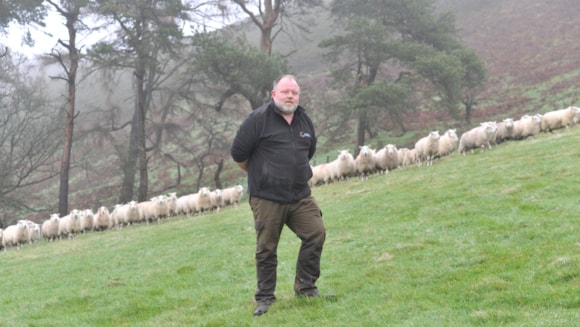
Pembrokeshire farmer Chris James said the situation reflected what many farmers were experiencing locally.
“We’ve definitely noticed the squeeze over the past year or two,” he said. “Costs for feed, fertiliser and fuel are still much higher than they used to be, and that makes you think twice about every decision. Most farmers I know aren’t cutting back on production — they’re just trying to be more efficient and careful with spending.”
He added: “People want to invest and move forward, but it’s hard when you don’t know exactly what the long-term policy picture will look like.”
NFU Cymru has also warned that rising costs and policy uncertainty continue to weigh heavily on farm businesses across Wales, with confidence affected by concerns over future support schemes and wider economic challenges. The union has called for greater long-term certainty to allow farmers to invest with confidence and maintain domestic food production.

Weather shocks impact behaviour
Extreme weather during 2025 — including a very dry spring followed by periods of intense heat and a challenging wet autumn — also affected purchasing patterns, with farmers spacing orders and prioritising essential inputs as conditions changed.
Ordering behaviour is now returning to more normal patterns as conditions stabilise.
Outlook for 2026
Despite ongoing pressures, Wynnstay says it is cautiously optimistic about the year ahead.
Many farmers are making careful decisions around efficiency, nutrition and planning, and the company believes there are opportunities for businesses to strengthen their position through 2026 with good cost control and smart investment.
Summing up the sector, the company said Welsh agriculture remains resilient, with farmers showing determination and adaptability despite continuing challenges.

Residents invited to support bid to buy former WI meeting room for community use
A PUBLIC meeting has been called in Boncath as residents prepare plans for a community buy-out of a historic corrugated iron building that has served local people for generations.
Villagers will gather at Boncath Village Hall on Tuesday (Feb 24) at 7:00pm to discuss proposals to purchase Bwthyn Boncath — the former Women’s Institute meeting room — and transform it into a community heritage space for the village.
WI members support community purchase
Local WI members have already agreed to offer the community first refusal on the building, paving the way for a potential community-led purchase.
Supporters say the project would preserve an important piece of local heritage while creating a flexible space for events, exhibitions, and activities in the heart of the village.
PLANED helping lead initiative
The meeting will be led by Cris Tomos of PLANED, the community development charity that previously helped facilitate the community purchase of Tafarn Sinc in Rosebush in 2017.
Mr Tomos said the Boncath project could become another example of successful community ownership in North Pembrokeshire.
He said: “It would be great to have another corrugated building owned by the community in North Pembrokeshire — especially in 2026 as Tafarn Sinc celebrates its 150th anniversary.”
Organisers estimate that around £12,000 will be needed to secure the purchase, with further fundraising planned to support restoration and future use.

How to get involved
Anyone interested in supporting the project or learning more is encouraged to attend the public meeting.

Further information is available via the Bwthyn Boncath Facebook page or by contacting PLANED on 01834 860965.

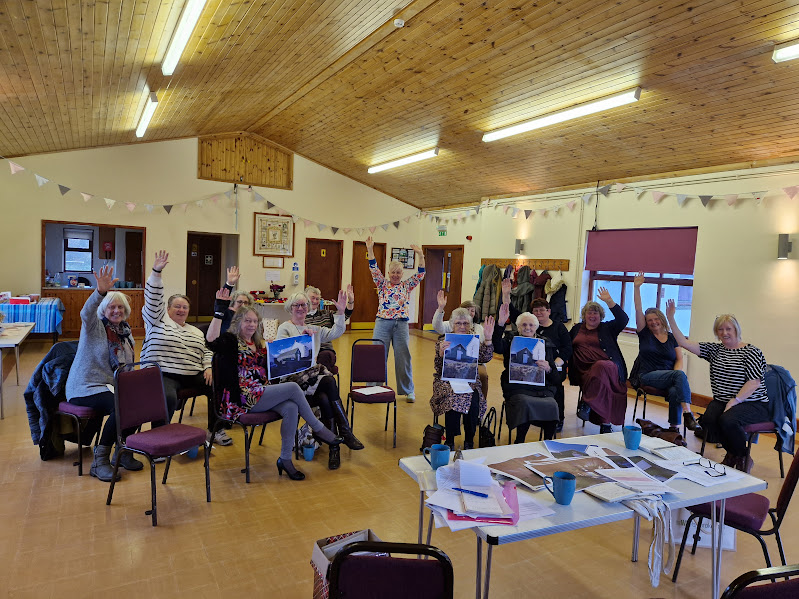
Photo caption: Community members gather to support plans for the purchase of Bwthyn Boncath (Pics supplied).

A NEW theatre production exploring the joys, pressures and complexities of modern motherhood in Pembrokeshire is set to premiere in Haverfordwest next month.
Pembrokeshire writer Ceri Ashe, known for Bipolar Me, 99er, Farmers Townies & Grocles, has teamed up with comedy writer-producer Angharad Tudor to create Enjoy Every Minute / Joia Bob Munud, a community-rooted performance commissioned by SPAN Arts and Unlimited.
The project grew out of the pair’s own experiences of motherhood and mental health, and began with a series of creative workshops held in 2025 for mothers of children aged four and under. Thirteen free places were offered to local mums with no previous creative experience, with weekly sessions taking place at Milford Haven Library and the Pill Social Centre.
Participants took part in poetry, storytelling, singing and movement sessions, with children welcome but the focus firmly on giving mothers time to explore their own creativity and wellbeing.
Ceri Ashe and Angharad Tudor said: “While we valued mother-and-baby groups, we felt something was missing in Pembrokeshire — a space for mums to explore creativity, connect honestly, and take time for themselves. To see it grow into a fully-fledged creative project rooted in the community has been a true pinch-me moment for us both.”

The resulting stage production features a cast of professional Pembrokeshire actors including Anna Monro, Anna Collcyz, Maya Jones, Tessa Ryan, Ceri Ashe, Cathy Davies and Janine Grayshon, alongside a chorus of community singers.
Alternative lyrics to well-known nursery rhymes — written by mothers who took part in the workshops — form part of the performance, capturing the humour and realities of parenting life.
The show blends poetry, storytelling, music and physical performance, aiming to offer an honest and heartfelt portrayal of motherhood while celebrating resilience and community connection.
A British Sign Language-interpreted performance will take place during the 4:00pm showing.
- Creative team:
- Director: Ceri Ashe
- Assistant Director: Siobhan McGovern
- Musical Director: Sara Benbow
- Movement Director: Tessa Ryan
The performances will take place at Albany Hall in Haverfordwest on Saturday, March 14, with shows at 12:00pm and 4:00pm. The production runs for approximately ninety minutes.
Tickets operate on a pay-what-you-can basis starting at £5, with free tickets available for carers.
SPAN Arts, a Narberth-based community arts charity with more than thirty years of work in Pembrokeshire, commissioned the production as part of the Unlimited Partner Commissions programme, supported by National Lottery Awards for All funding.

For tickets and information visit span-arts.org.uk or call 01834 869323.




Business17 hours ago
Pembrokeshire businesses ‘squeezed to breaking point’ amid economic pressures
MS highlights concerns from local firms as Wales employment figures lag behind UK BUSINESSES in Pembrokeshire are feeling increasingly squeezed...


News1 day ago
Council tax to rise again as Pembrokeshire sets new budget
Schools and social care receive extra funding in 2026–27 spending plans PEMBROKESHIRE COUNTY COUNCIL has approved its budget for the...

Health1 day ago
Stroke patients to be transferred to Carmarthen under new health plan
Withybush to provide initial treatment before specialist care elsewhere PEMBROKESHIRE patients who suffer a stroke are set to be transferred...


Health2 days ago
Health board confirms major hospital changes across west Wales
Emergency surgery centralised as Withybush role shifts toward planned care MAJOR changes to hospital services across west Wales have been...

Health2 days ago
Withybush loses emergency surgery in shock health board decision
Paul Davies vows Senedd fight as fears grow over travel times and patient safety PEMBROKESHIRE patients will be forced to...


Business2 days ago
Mounting complaints: More Computer Solutions Wales customers claim losses
Business owner issues legal threats and IPSO complaint to this newspaper while refusing to answer detailed questions about customers who...


Local Government2 days ago
Milford Haven Hakin by-election candidates confirmed
THE LIST of candidates standing in the upcoming Pembrokeshire County Council by-election for the Milford Haven: Hakin ward has been...

Crime4 days ago
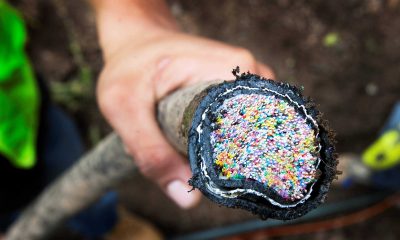
Telecom vandal admits causing £33,000 damage to Pembroke Dock network
Fibre cables cut in early-morning incident that triggered major service disruption A PEMBROKE DOCK man has admitted causing more than...


Community4 days ago
Smiles all round for Pancake Day celebrations in Tenby
TENBY was filled with laughter, cheers and the smell of freshly cooked pancakes on Tuesday (Feb 17) as the town’s...


Crime4 days ago
Man charged with GBH with intent following incident involving ‘Pembrokeshire Patriot’
Defendant remanded in custody as case linked to police raids on Friday A MAN has been charged with causing grievous...
-
Health2 days ago
Withybush loses emergency surgery in shock health board decision
-
Health2 days ago
Health board confirms major hospital changes across west Wales
-

 Health17 hours ago
Concerns grow over Bronglais stroke plans as politicians demand clarity
-

 Health2 days ago
Health board: Changes will bring “resilience and sustainability” to West Wales services
-

 Business4 days ago
MS’s host business advice surgery following demand from Business Rates Online Forum
-
Community5 days ago
Hywel Dda hospital services decisions will be made next week
-

 Community7 days ago
Second Milford Haven webcam launched after 1.3m views and US TV feature
-

 Business5 days ago
Svitzer crews at Milford Haven vote for industrial action in pay dispute