


News
Huge boost for Pembrokeshire as Celtic Freeport set to create 16,000 jobs

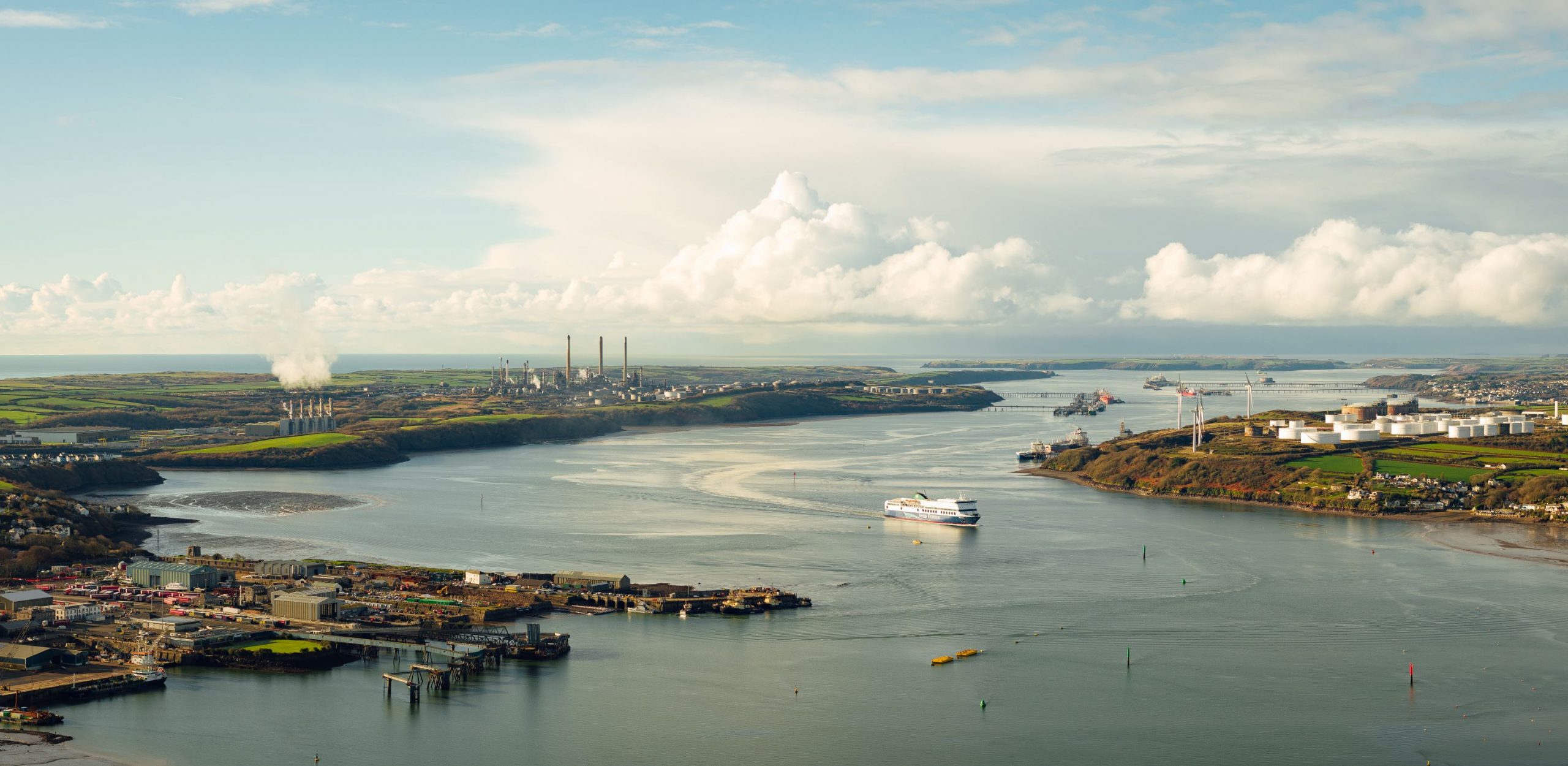
THE CELTIC FREEPORT in Milford Haven and Port Talbot and Anglesey Freeport on Ynys Mon have been chosen as Wales’ first freeports, helping to create tens of thousands of new jobs in the green industries of the future, the Welsh and UK Governments announced today.
In May 2022, the Welsh Government reached an agreement with the UK Government to establish a freeport programme in Wales.
Following a bidding process, the Welsh and UK Governments have jointly agreed to create two freeports in Wales, which are expected to be operational later this year.
The winning bids are:
- The Celtic Freeport in Milford Haven and Port Talbot. The freeport will be based around the port of Port Talbot in Neath Port Talbot, and the port of Milford Haven in Pembrokeshire. The plans focus on low carbon technologies, such as floating offshore wind (FLOW), hydrogen, carbon capture, utilisation, and storage (CCUS) and biofuels to support the accelerated reduction of carbon emissions. The freeport aims to attract significant inward investment, including £3.5bn in the hydrogen industry as well as the creation of 16,000 jobs, generating £900m in Gross Value Added (GVA) by 2030, and £13bn by 2050.
- The Anglesey Freeport, Ynys Mon. The freeport will be based around the port of Holyhead, Anglesey Prosperity Zone, Rhosgoch and M-Sparc. The freeport will develop the Energy Island Programme (EIP) by focusing on marine energy technology testing on the seabed (tidal and wind). The freeport aims to create between 3,500 and 13,000 jobs by 2030, with an increased GVA of approximately £500m. It also anticipates significant inward investment, including the possibility of £1.4bn in the green energy sector.
The freeports will form special zones with the benefits of simplified customs procedures, relief on customs duties, tax benefits, and development flexibility. Welsh freeports will promote fair work opportunities and prioritise environmental sustainability and the climate emergency.

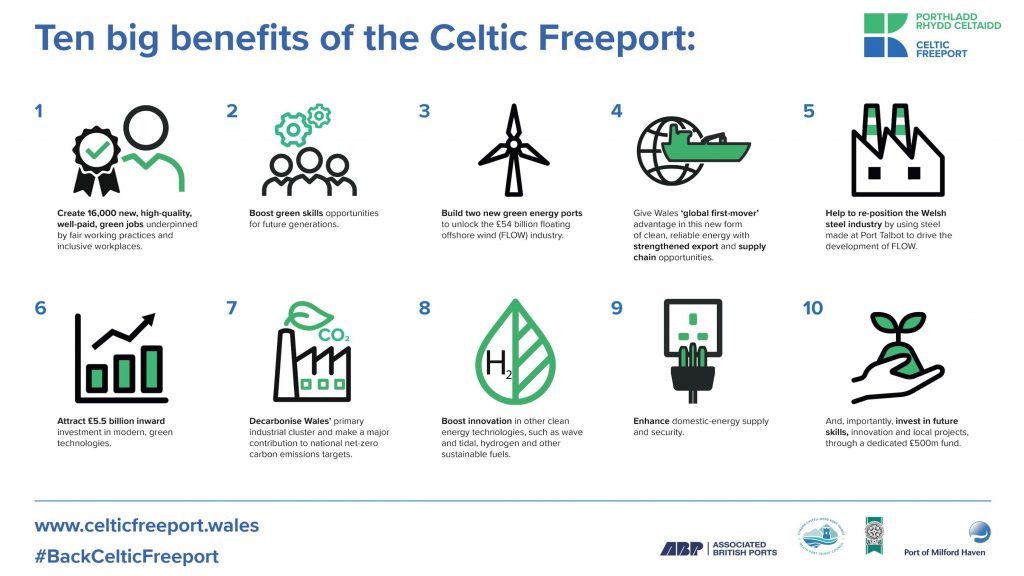
They are designed to promote regeneration and high-quality job creation, become a national hub for global trade and investment across the economy, and foster an innovative environment. The successful bids are focused on boosting the distinct strengths the sites boast, exploiting opportunities from offshore wind and marine energy to advanced manufacturing and innovation.
The two freeports aim to collectively create around 20,000 jobs by 2030 and attract up to £4.9bn in public and private investments.
Announcing the winning bids, First Minister of Wales, Mark Drakeford said: “I am pleased to confirm the Celtic Freeport in Milford Haven and Port Talbot and Anglesey Freeport have been selected as Wales’ new freeports.
“The Welsh Government has a clear economic mission to transform the Welsh economy, creating a stronger, fairer and greener future. The designation of these sites as Wales’ first freeports will reinforce that mission, building on the significant investments and partnerships we have made in these regions over many years.

“The joint working between governments on the freeport programme should serve as a blueprint for future intergovernmental work on a whole range of issues.”
Prime Minister Rishi Sunak said: “Wales is a thriving part of the UK, and today’s new Freeports will see businesses and opportunities for people in and around Anglesey, Port Talbot and Milford Haven go from strength to strength.
“Everyone deserves equality of opportunity and working closely with the Welsh Government has helped to deliver these fantastic new sites.

“Today’s Freeports show the hard work being done day in, day out to bring new, high-skilled jobs to communities across Wales nd deliver on my promise to grow the economy.”
Commenting on the selection of Celtic Freeport, Roger Maggs MBE, Chair of the Celtic Freeport bid consortium, said: “We hope that Wales’ two freeports will deliver for the country. The future is exciting. The Celtic Freeport has catalysed major business interest, local communities, trade unions and academia in using Wales’ largest industrial base as the launchpad for developing new technologies and the renewable energy manufacturing opportunities of tomorrow. This has the potential to unlock £5.5 billion of private and public investment for Wales and create new training and innovation facilities, factories and expanded green energy ports, as well as new alternative fuel production complexes.
“Our green investment and innovation corridor will support the creation of 16,000 green jobs, which will not just be good news for Milford Haven, Pembroke Dock and Neath Port Talbot, but also Bridgend, Carmarthen, Swansea, The Valleys and many other communities across Wales.”
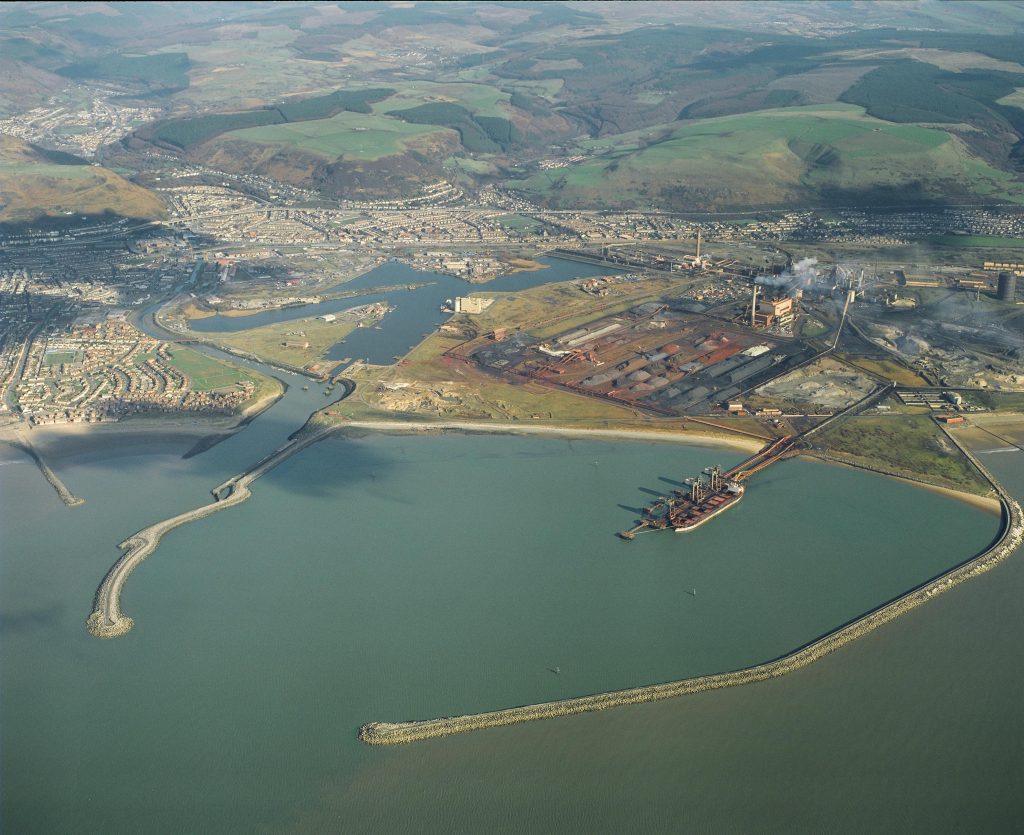
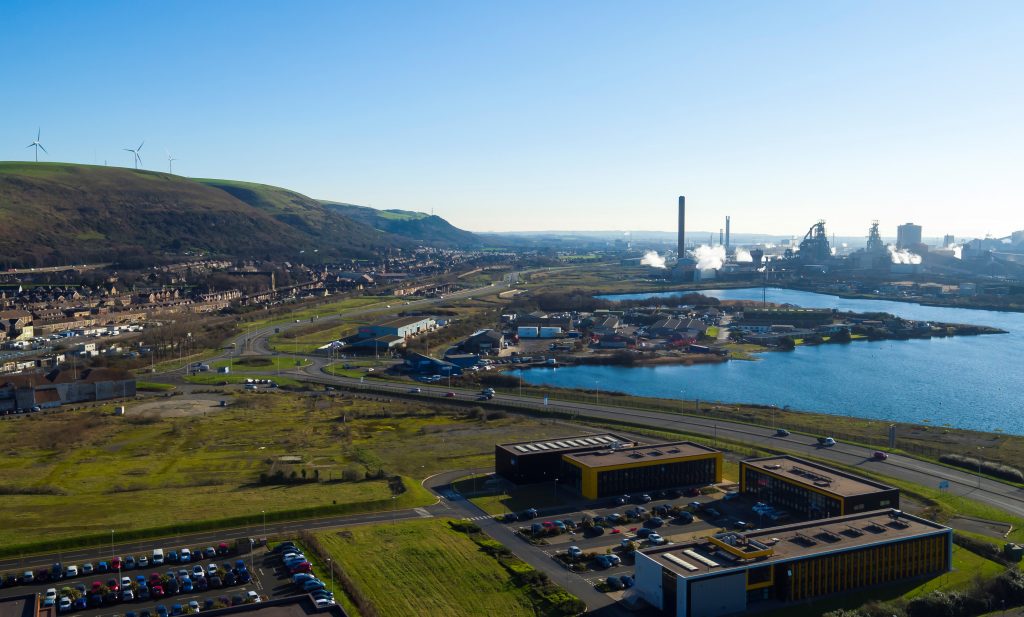
The Celtic Freeport consortium comprises Associated British Ports (ABP), Neath Port Talbot Council, Pembrokeshire County Council and the Port of Milford Haven. The bid’s strategically located tax and customs sites span almost 250 hectares in Pembrokeshire and Neath Port Talbot.
Cllr David Simpson, Leader of Pembrokeshire County Council, said: “Today’s announcement that the Celtic Freeport Bid has been successful is fantastic news for Pembrokeshire, Wales and Great Britain.
“The Celtic Freeport will unleash the full green industrial potential of Wales, accelerating the decarbonisation of our most carbon intensive industries and bringing new opportunities to our communities, major international investment and thousands of high skilled jobs to the region.”
Will Bramble CBE, Chief Executive of Pembrokeshire County Council, added: “The Celtic Freeport will produce significant investment in the region, particularly the focused areas of upskilling our workforce and ultimately creating job opportunities here in south west Wales. Fundamentally this will now put us at the leading edge of the green industrial revolution.”
Cllr Steve Hunt, Leader of Neath Port Talbot Council, said: “Today’s announcement is an absolute game changer for Neath Port Talbot and for Wales. It will transform the fortunes of people in all our communities. It puts us at the forefront of the world’s green energy revolution and our residents will soon be working in the industry of the future, learning the skills for securing green, well paid jobs.
Karen Jones, Chief Executive of Neath Port Talbot Council, said: “This great news is the first step towards a much brighter future here in our county borough. I look forward to working with our partners to make sure local people and businesses have the best possible benefit from what’s now in front of us.”
Tom Sawyer, Chief Executive of the Port of Milford Haven, said: “As the UK’s Energy Port, the Port of Milford Haven welcomes this fantastic news which allows us to build on the significant multi-million pound investment we’ve already made in the renewables sector at Pembroke Port. But what really excites us about this announcement today is the positive impact it’s going to have on our coastal communities. Securing the jobs of today and creating fantastic opportunities for future generations.”
Andrew Harston, Regional Director, Associated British Ports, said: “Associated British Ports is absolutely delighted that our Celtic Freeport bid has been successful. Floating offshore wind in the Celtic Sea is a once in a lifetime opportunity for Wales, and the scale needed is immense.
“ABP stands ready to invest £500 million in our port at Port Talbot to ensure first mover advantage to capture this global market. We want our ports to act as a base for FLOW manufacturing, maintenance and operations. And it’s not just about FLOW, it’s about sustainable fuels and hydrogen too.”








Defendant admitted using Xbox without informing police as required under court order
ANTHONY COOMBES, aged 26, of Sand Banks, Broad Haven, appeared before Llanelli Magistrates’ Court on Thursday (Mar 20) charged with breaching a sexual harm prevention order.
The court heard that between February 26 and March 19, 2026, at Haverfordwest, Coombes repeatedly breached the order by using an Xbox device without informing police within three days, as required.
The offences relate to a sexual harm prevention order imposed at Swansea Crown Court on October 20, 2021.
Coombes indicated guilty pleas to the offences at the first hearing.
Magistrates committed the case to Swansea Crown Court for sentence.

He was remanded in custody ahead of the next hearing, which is due to take place at 9:00am on Friday, April 3, at Swansea Crown Court.
The court refused bail on the grounds that he was likely to offend, citing the nature and seriousness of the offences and his previous record and character.
A pre-sentence report was ordered.

Police say death not suspicious as 46-year-old arrested over alleged Class A drug supply
A MAN has died following a medical emergency at a property in Haverfordwest, police have confirmed.
Emergency services were called at 3:18pm on Wednesday (March 18) after a report of a medical incident.
A man was pronounced dead at the scene.
Dyfed-Powys Police said the man’s next of kin have been informed and are being supported by officers.
The death is not being treated as suspicious at this time.
However, police confirmed that a man, aged 46, was arrested on suspicion of being concerned in the supply of Class A drugs.
He has since been released under investigation while enquiries continue.
No further details about the deceased have been formally released.

FOUR people from Mynyddygarreg, Kidwelly, have been ordered to pay more than £129,000 following a successful prosecution for illegal dog breeding.
At Swansea Crown Court on Tuesday (Mar 10), before His Honour Judge Thomas KC, Stacey May June Edwards, Peter John Edwards, Sian Eleri Thomas and David Malcolm James Thomas, all of Sea Breeze, Mynyddygarreg, pleaded guilty to offences under the Breeding of Dogs (Wales) Regulations 2014.
The court imposed confiscation orders totalling £129,873.41 under the Proceeds of Crime Act across the four defendants. They were also ordered to pay £8,000 in costs, while each defendant received a £2,000 fine.
The investigation began in April 2021 after Carmarthenshire County Council’s Animal Health team received an enquiry from Peter Edwards about obtaining a dog breeding licence. Although licensing guidance was provided and a partial application was submitted in February 2022, this was later withdrawn.
In March 2024, the council received a complaint that puppies were being advertised for sale without the required licence. Officers subsequently contacted online advertising platforms and issued data requests to assess the scale of activity.
Analysis of records from Pets4Homes, Freeads and Gumtree revealed multiple litters being advertised by members of the same household.
Correspondence under the Police and Criminal Evidence Act confirmed that up to 25 dogs were kept at the property, including between 16 and 19 breeding females.
While some defendants claimed joint ownership of the dogs, others attempted to minimise their involvement.
The Herald understands that numerous puppy advertisements were posted between July 2020 and April 2025, demonstrating a sustained pattern of unlicensed breeding.

Carmarthenshire County Council’s Cabinet Member for Climate Change, Decarbonisation and Sustainability, Cllr Aled Vaughan Owen, said: “This case demonstrates the council’s firm stance against unlicensed and illegal dog breeding.
“These regulations are in place to protect animal welfare and ensure that breeding activities are subject to proper oversight. The scale of activity uncovered at this property was entirely unacceptable, and we welcome the court’s decision to issue significant confiscation orders under POCA.”
He added: “We urge anyone with concerns about illegal dog breeding to report it. Our Animal Health officers will continue to investigate thoroughly and take action against those who disregard the law.”

Residents are reminded that anyone breeding and selling dogs must comply with licensing regulations designed to protect both animal welfare and consumers.



Crime11 hours ago
Publican jailed for six years for supplying cocaine and cannabis
Milford Haven man sentenced at Swansea Crown Court following drug dealing operation A MILFORD HAVEN publican has been jailed for...


Local Government14 hours ago
Poverty summit highlights support efforts across Pembrokeshire
A SUMMIT bringing together key organisations from across Pembrokeshire has highlighted both the scale of local poverty and the work...


Education1 day ago
Milford Haven school plans unveiled but funding not yet secured
PLANS for a new £100 million school in Milford Haven have been unveiled, but the project has not yet secured...


News1 day ago
Council unveils plans for new state-of-the-art secondary school in Milford Haven
PEMBROKESHIRE COUNTY COUNCIL has revealed plans for a new state-of-the-art school in Milford Haven, promising modern, inspiring learning spaces for...


Health2 days ago
NHS waiting list falls — but cancer delays and diagnostic backlog worsen
Record progress claimed by Welsh Government as critics warn key targets are still being missed THE NHS in Wales has...


Crime3 days ago
Rapist jailed after ‘abhorrent’ attacks on woman and children
Haverfordwest man told police “women won’t have sex without force” A HAVERFORDWEST man who raped a woman and a young...


News3 days ago
Reform secures first Pembrokeshire councillor in Hakin by-election win
Late Reform candidate takes seat as independent surge and Labour withdrawal shape contest REFORM UK candidate Scott Thorley has won...


News3 days ago
Scott Thorley elected as Pembrokeshire’s first Reform councillor
REFORM UK candidate Scott Thorley has won the Hakin by-election after securing 179 votes. The full result is as follows:...


News3 days ago
Police confirm man has died after being recovered from River Cleddau
Major emergency response in town centre after concerns raised for man in water A MAN has died after being recovered...


Community3 days ago
Davies and Kurtz urge groups to seek employability funding
Community organisations in Pembrokeshire encouraged to apply for new grants supporting skills and job access LOCAL Senedd Members Samuel Kurtz...
-

 News7 days ago
Rayner and Lammy visit Wales to discuss justice and community safety
-
 News6 days ago
Fishguard linked to allegations in Many Tears Animal Rescue investigation
-

 News3 days ago
Emergency services flood Haverfordwest after reports of person in river
-
 Local Government7 days ago
Investigation confirmed after inspectors visit Many Tears Animal Rescue
-

 Crime2 days ago
Mother given community order after admitting child cruelty offence
-

 Business7 days ago
Tesco B&Q Haverfordwest click and collect pod approved
-

 Business7 days ago
Legal action backed in case over development at Dinas Cross
-

 Business7 days ago
Oil firm praised for putting customers first during price surge