


News
Tributes and reactions from around Wales as Mark Drakeford quits

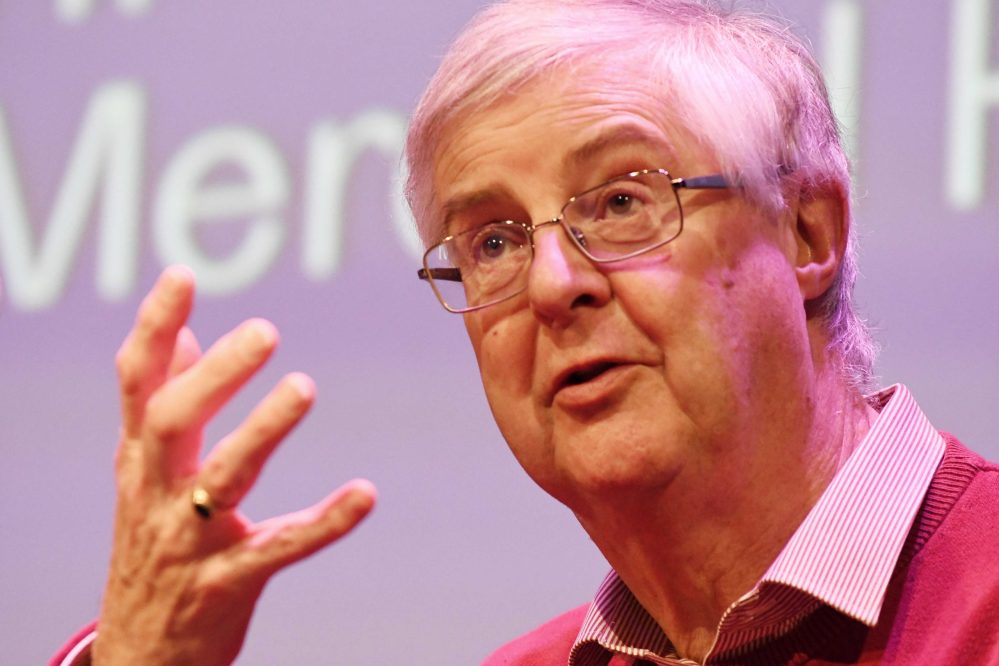
MARK DRAKEFORD resigned as leader of the Labour Party in Wales on Wednesday, December 13.
The First Minister announced his decision on the fifth anniversary of his succession from Carwyn Jones.
Although Mr Drakeford said he would step down during the current Senedd term, the timing of his announcement appeared to catch many of his colleagues on the hop.
Labour Party members will choose a new leader and new First Minister. The election process will likely end next March.
MARK DRAKEFORD’S RESIGNATION STATEMENT

The departing First Minister said: “Today, I have formally notified the chair of the Welsh Executive Committee of my intention to stand down as Leader of Welsh Labour in March 2024.
“When I stood for the leadership, I said that, if elected, I would serve for five years.
“Exactly five years have passed since I was confirmed as First Minister in 2018.
“Nominations for my successor as Welsh Labour Leader will open shortly.

“The process will be concluded by the end of the Spring term to enable the winner’s name to be put to the Senedd before the Easter recess.
“In the meantime, I remain your First Minister.
“We have a busy few months ahead of us – full of major events and challenges, which I will be fully focused on:

- A child poverty strategy
- The final report of the independent Commission on the Constitutional Future of Wales
- The future of steel-making in Wales
- The conclusion of consultations about making council tax fairer and the reform of the school year
- Module 2B of the Covid-19 UK Inquiry
- Cooperation Agreement commitments to deliver
- And a Budget to pass.
- “There will be plenty of time for political obituaries and retrospection once I cease to be First Minister.
“But not before.
“In a five-year period, which has seen Wales deal with austerity, Brexit, the covid pandemic, the climate crisis, wars in Ukraine and the Middle East and four different Prime Ministers – so far – there will be lots to reflect on.”
PANDEMIC MASKED LONG-TERM FAILINGS
Mark Drakeford’s bookish demeanour became a strength during the Covid pandemic.
As Westminster foamed and frothed in chaos – actual and apparent, as the Covid Inquiry has revealed – Mr Drakeford’s calm and level tones created a different narrative in Wales.
The appearance of dignified and cautious competence contrasted favourably with Boris Johnson’s erratic scandal-ridden conduct, and Labour reaped the benefits.
Mr Drakeford became the most visible and publicly identifiable First Minister in the history of devolution.
Labour reaped the rewards of his exposure by increasing the number of Senedd Members in May 2021.
For a time, UK Labour courted and paid tribute to the party’s electoral success in Wales. There was a lot of back-slapping and talk of learning from “the Welsh way” of doing things.
Anyone with any real idea about Welsh politics and the Welsh Government’s record could have warned Kier Starmer about the dangers of that approach.
Whatever credit built up during the pandemic rapidly evaporated as long-term and systemic problems in Wales were scrutinised. The state of Welsh public services – especially the NHS, education, and transport infrastructure – is, at best, dismal. And while Mr Drakeford does not carry the can for every failure, he’s done little meaningful to remedy them.
As he pointed out in his resignation statement, Mark Drakeford has been at the heart of Welsh politics for a quarter of a century. His lasting achievements are few.
His most significant measure, the proposed expansion of the Senedd and electoral reform, faces a choppy ride through the Welsh Parliament. The Cooperation Agreement upon which that legislation relies will end with Mr Drakeford’s final departure and is unlikely to be renewed.
As passing Senedd reform relies on Plaid votes – and as Plaid is unhappy with the proposals its previous leader agreed – the case for reform and expansion will come under renewed pressure and scrutiny. And that ignores the significant minority of Labour backbenchers who dislike the proposals.
TRIBUTES TO MARK DRAKEFORD
Paul Butterworth, CEO at Chambers Wales South East, South West and Mid, said: “We would like to thank the First Minister, Mark Drakeford, for his years of public service to Wales, leading the country during a time of tough economic circumstances and a global pandemic with dignity, a time that severely tested businesses and society at large.”
Trade Unions echoed those sentiments.
Transport union TSSA said: “Mark is a principled, honourable man whose resignation is a sad loss to Welsh politics.
“Mark’s resignation, like his career in politics, shows him to be a man of integrity and professionalism.
“He has kept his promise to voters to serve five years in the post and given his successor a fair run in post before the next Senedd elections. He will be sorely missed.”
UNISON Cymru/Wales regional secretary Jess Turner said: “We thank Mark Drakeford for his close relationship with the trade union movement and the social partnership act which he helped deliver to place unions at the heart of decision-making in Wales.
“We look forward to working with the next Welsh Labour leader to prioritise public sector workers and the vital services they provide.”
FUW President Ian Rickman said: “We thank the First Minister Mark Drakeford for his service to Wales and wish him the best in his future endeavours.
“We look forward to working with the next First Minister and Welsh Labour Leader to be appointed, ensuring that we continue to see thriving, sustainable, family farms in Wales.”
BRICKBATS AMID THE PRAISE
Plaid Cymru Leader Rhun ap Iorwerth MS said: “I recognise and pay tribute to the First Minister’s dedication to public life and, in particular, the tone of his leadership through the pandemic.
“We have built a constructive relationship in delivering transformative policies through the Cooperation Agreement between the Welsh Government and Plaid Cymru.
“When he took office, the First Minister spoke of the opportunities that came with the position of Leading the Welsh Government. Regrettably, those opportunities have been squandered, resulting in longer waiting lists, falling educational standards and a stagnant economy.
“The First Minister told me in the Senedd yesterday that the question of his successor was ‘nothing to do’ with me. But who can become First Minister through an internal Labour Party election matters to all of us.”
The Leader of the Welsh Liberal Democrats, Jane Dodds MS, said: “I’d like to personally thank the First Minister for his leadership and dedication to Wales throughout his five years in the role.
“Whether you agree or disagree with the First Minister and his government’s decisions, it would be untrue to say that Mark has lacked any passion for his job.
“Throughout his time in office, he was provided consistent and clear leadership that has steered this country through difficult times. For that, we owe him a debt of gratitude.
“On a personal level, Mark has shown me nothing but kindness and support throughout my time in the Senedd, and I will forever be grateful.”
Ms Dodds continued: “As a nation, we face multiple crises in our NHS, our schools, our economy and the cost of living.
“We desperately need fresh ideas and a real drive to radically change the future of our country for the better.”
Leader of the Welsh Conservatives, Andrew RT Davies MS, said: “I wish Mark well as he stands down from the helm.
“While we may have different visions for Wales, I know colleagues join me in holding a huge amount of respect for his dedication to the job of First Minister.
“It’s important, however, with this announcement that there is no distraction from the really important job of delivering for the people of Wales.
“Labour politicians jockeying for the role of First Minister must not detract from this.”


Campaign leaders criss-cross country in last-minute battle for crucial votes
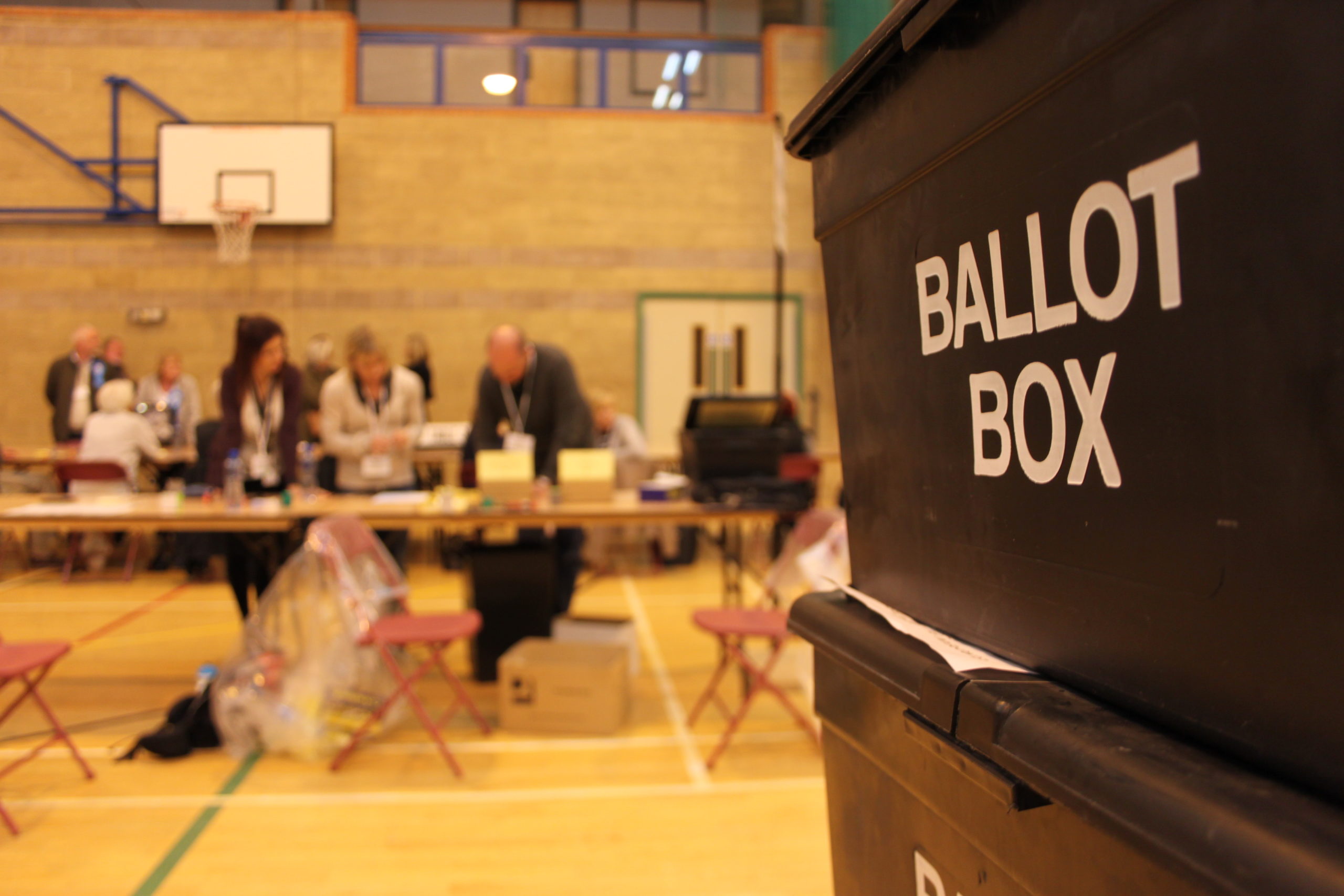
WALES heads to the polls tomorrow (Thursday, May 7) after a frenetic final day of campaigning that saw party leaders, candidates and activists make one last push to win over undecided voters in what is being described as the most unpredictable Senedd election in modern Welsh history.
With polling stations due to open at 7:00am, parties spent Wednesday targeting key battleground constituencies across the country, including the new Ceredigion Penfro seat, amid growing expectations of a fragmented Senedd and a dramatic shake-up in Welsh politics.
The election is the first to be held under Wales’ new expanded Senedd system, with 96 Members of the Senedd being elected across 16 large constituencies using a proportional closed-list voting system.
Reform UK appeared to finish the campaign with significant momentum following a major rally on Tuesday attended by party leader Nigel Farage. The event drew large crowds and considerable online attention as Reform attempted to convert strong polling figures into seats in Cardiff Bay for the first time.
Farage used the rally to attack both Labour and Plaid Cymru, while positioning Reform as the party of “change” for disillusioned voters. Reform campaigners have focused heavily on immigration, cost of living pressures and opposition to what they describe as “wasteful government spending.”
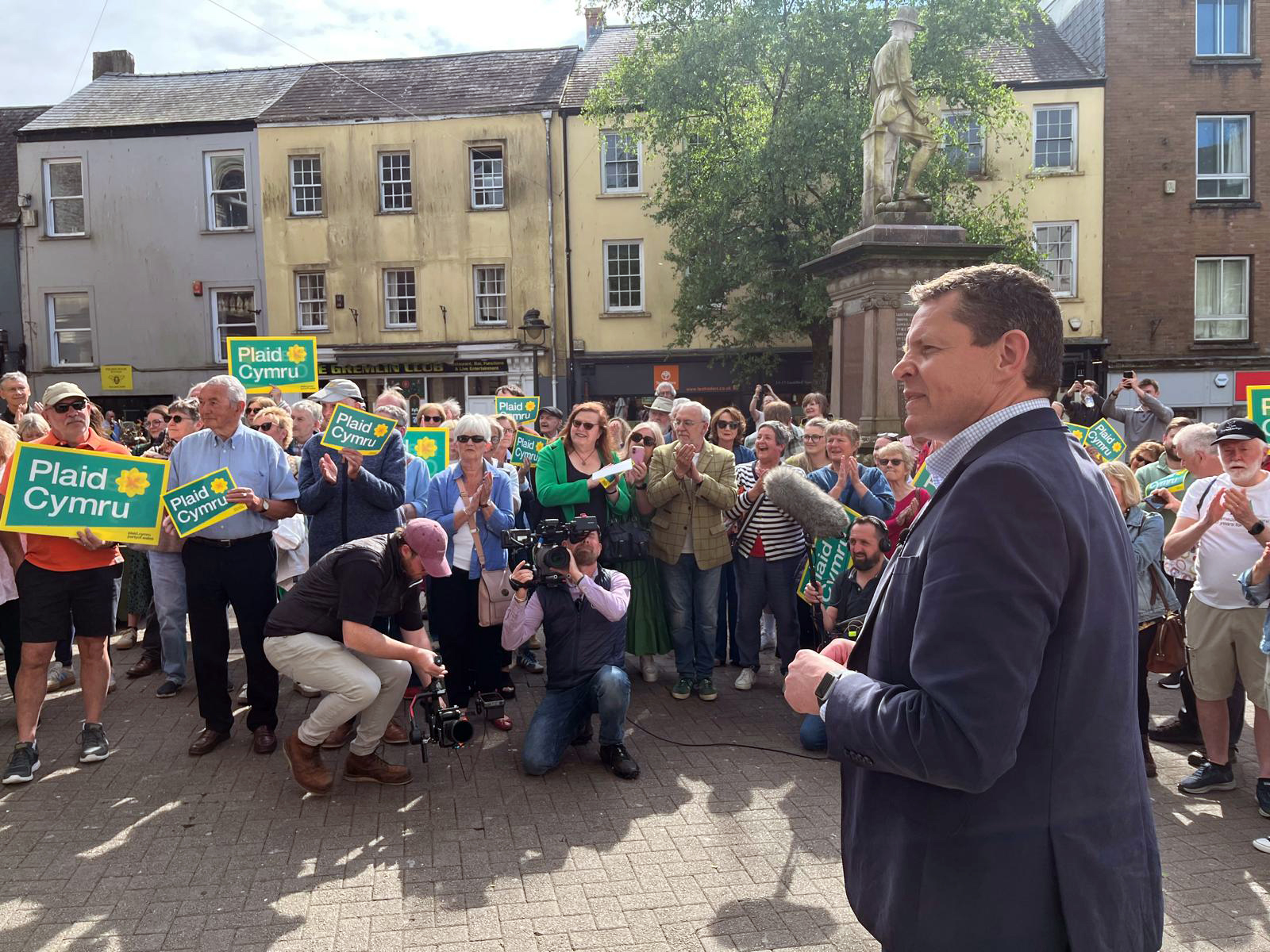
Plaid Cymru leader Rhun ap Iorwerth spent the final day presenting his party as the main alternative to both Labour and Reform UK, insisting Plaid could “build a fairer Wales” while warning against what he described as “divisive politics.”
Labour figures, including First Minister Eluned Morgan and deputy leader Huw Irranca-Davies, urged voters not to “take risks” with public services, arguing only Welsh Labour could protect the NHS and local councils during a period of economic uncertainty.
Labour activists were heavily focused on turnout operations in traditional strongholds, amid polling suggesting the party could lose ground after decades as the dominant force in Welsh politics.
The Conservatives attempted to rally core voters with warnings about both Labour and Reform, while also focusing on farming, the rural economy and healthcare waiting lists.
In west Wales, Conservative candidates Paul Davies and Sam Kurtz spent the day meeting voters and carrying out final campaign visits across Pembrokeshire and Ceredigion, arguing their experience and local knowledge would be important under the new electoral system.
The Liberal Democrats and Green Party also maintained visible campaigns in several areas, hoping tactical voting and the proportional voting system could help them secure representation.
Across Wales, campaign teams handed out leaflets outside transport hubs, supermarkets and town centres, while social media campaigning intensified throughout the day.

Political analysts believe turnout could prove decisive, particularly because the new voting system means relatively small shifts in support could determine the allocation of the fifth and sixth seats in many constituencies.
The campaign has been dominated by debates over the NHS, farming, the economy, transport, tourism and the rising cost of living, alongside concerns about the future direction of Welsh devolution.
Polling stations open across Wales from 7:00am until 10:00pm on Thursday, with counting due to begin on Friday morning.
The Herald will provide live election coverage online throughout polling day and count day, including updates from count centres, candidate interviews and reaction as results emerge from across west Wales and the rest of the country.
Final poll suggests Welsh politics could be on the brink of a major realignment
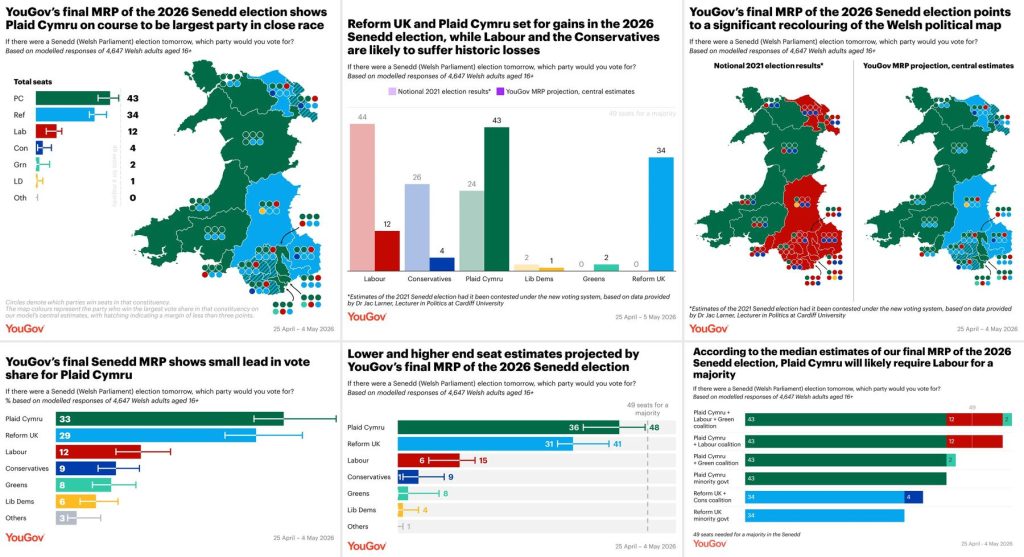
PLAID CYMRU is on course to become the largest party in the Senedd, according to the final YouGov MRP projection for ITV Cymru Wales before polling day.
The model suggests Labour’s century-long dominance of Welsh elections could be coming to an end, with Plaid projected to win 43 seats in the newly expanded 96-member Senedd.
Reform UK is forecast to finish second on 34 seats, while Labour is projected to fall to just 12.
The poll, based on responses from more than 4,600 adults between April 25 and May 4, puts Plaid Cymru on 33% of the vote, ahead of Reform UK on 29%. Labour is on 12%, the Conservatives on 9%, the Greens on 8% and the Liberal Democrats on 6%.

Labour facing major losses
The projection points to a dramatic collapse in Labour support across Wales.
YouGov’s central estimate would represent a notional loss of 32 seats for Labour compared with the 2021 result under the new electoral system.
It would also be Labour’s worst result at any major Welsh election since 1906.
The model suggests Labour may fail to top the poll in any of the 16 new Senedd constituencies, and could return no members at all in four of them.
In west Wales, Labour’s support is projected to have fallen into single figures in some areas.

First Minister Eluned Morgan, who leads Labour’s list in Ceredigion Penfro, could also be at risk if the projection proves accurate.
Reform surge
Reform UK is projected to make major gains, rising from just 1% of the vote in 2021 to 29% in the final pre-election model.
The party’s support appears to be spread widely across Wales, though it is weaker in Cardiff and strongest in parts of the south Wales valleys.

One of the most striking projections is in Pontypridd Cynon Merthyr, which includes the Merthyr Tydfil area where Keir Hardie was elected as Wales’s first Labour MP in 1900.
There, YouGov’s central estimate puts Reform UK narrowly ahead on 34%, Plaid Cymru on 33%, and Labour on 14%.
Smaller parties
The Conservatives are projected to win just four seats, which would be their weakest devolved election result.
That would leave them one short of the five members needed to form an official political group in the Senedd.
The Greens are forecast to enter the Senedd for the first time, winning two seats in Cardiff.
The Liberal Democrats are projected to win one seat in Brycheiniog Tawe Nedd, keeping Jane Dodds in the Senedd.
No majority expected
No party is projected to win the 49 seats needed for an outright majority.
YouGov’s modelling suggests Plaid Cymru would be best placed to lead the next Welsh Government, but would probably need support from another party.
Plaid and Labour together reach a majority in most of the model’s simulations, while a Plaid-Green arrangement does so far less often.
A Reform-Conservative majority appears unlikely in the projection.
Under the new D’Hondt voting system, small movements in vote share could still make a significant difference, particularly for the final seats in each constituency.
Polling stations open tomorrow, Thursday, May 7.
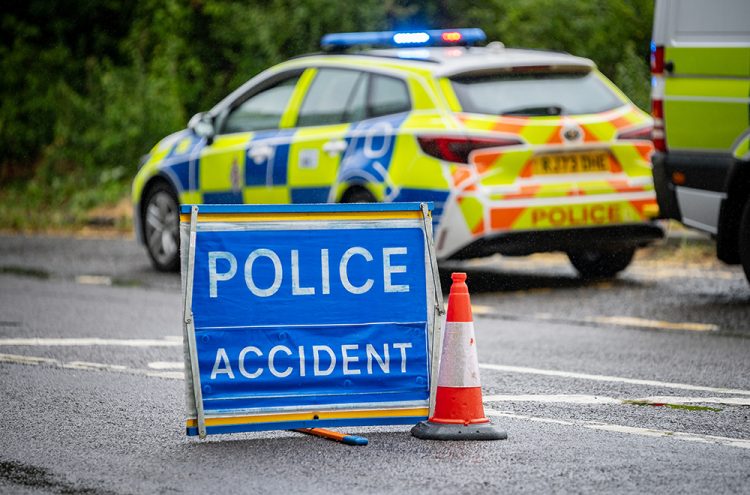
POLICE are appealing for witnesses after a driver died in a crash on the A44.
Dyfed-Powys Police said the collision happened at around 6:10pm on Tuesday (May 5) on the A44 between Capel Bangor and Goginan, near Aberystwyth
The crash involved a single vehicle, a white Volkswagen Golf, which was travelling eastbound towards Goginan when it left the carriageway.
Sadly, the driver died at the scene. Their next of kin have been informed and are being supported by specialist officers.
Police confirmed there were no other passengers in the vehicle.
Officers are now asking anyone who witnessed the collision, or who may have dashcam footage from the area at the time, to come forward.
Anyone with information is asked to contact Dyfed-Powys Police online, by emailing [email protected], or by calling 101.



News8 hours ago
Plaid Cymru projected to lead Senedd as Labour faces historic collapse
Final poll suggests Welsh politics could be on the brink of a major realignment PLAID CYMRU is on course to...

Community16 hours ago
Rescue bid planned for lambs stranded below Stack Rocks cliffs
Tree surgeon preparing 150ft descent after live firing delayed rescue attempt A MAJOR rescue operation is being planned this afternoon...

News18 hours ago
Bishop’s report reveals major renewal challenge at St Davids Cathedral
Formal Visitation highlights financial, structural, leadership and spiritual pressures at one of Wales’ most important religious sites ST DAVIDS CATHEDRAL...

Crime1 day ago
Farming company fined £19,000 for damaging protected wildlife site
A CARDIGAN farming company has been ordered to pay almost £20,000 after recklessly damaging a Site of Special Scientific Interest....

News2 days ago
Baby in critical condition after Fishguard emergency
Teenagers arrested as police investigate circumstances A BABY remains in hospital in a critical but stable condition after being taken...


Community2 days ago
Tenby phone signal crisis goes national as businesses warn of summer disruption
TRADERS SAY CARD PAYMENTS, TAXIS AND VISITOR SAFETY ARE BEING HIT BY ‘DEAD ZONE’ COVERAGE TENBY’S long-running mobile phone signal...

News3 days ago
Final poll puts Plaid and Reform level ahead of Senedd vote
Labour faces historic setback as new modelling points to a hung Senedd PLAID CYMRU and Reform UK are projected to...

News3 days ago
West Wales coracle fishermen raise alarm over suspected sewage pollution
A CENTURIES-old fishing tradition on the River Towy could be under threat after coracle fishermen reported suspected sewage pollution entering...


Community5 days ago
Scooter rally brings colour and nostalgia to Tenby
TENBY is buzzing with the sights and sounds of classic scooters this Bank Holiday weekend as the Welsh National Scooter...


Entertainment5 days ago
Haverfoodfest returns to Haverfordwest town centre today
HAVERFORDWEST town centre is expected to be busy today as Haverfoodfest 2026 returns for a full day of food, drink,...
-
News2 days ago
Baby in critical condition after Fishguard emergency
-

 News19 hours ago
Former housing officer admits drink-driving in Pembrokeshire retail park
-
 Crime19 hours ago
Job loss threat for convicted Pembrokeshire drug-driver
-
 Crime19 hours ago
Milford motorist disqualified for drug-driving
-

 Crime18 hours ago
Police tip-off leads to driving ban for Milford motorist
-
 Community7 days ago
Dogs removed after welfare concerns at Milford Haven property
-
 Crime18 hours ago
Delivery driver caught twice over legal drink-drive limit
-

 Community15 hours ago
Sixth-former firefighter balances schoolwork with saving lives