


Education
Secondary school attendance rates post-pandemic are a concern


A NEW report published this week by Estyn, and seen by The Herald, shows that attendance in secondary schools has declined since the COVID-19 pandemic and has been slow to improve. Pupils who are eligible for Free School Meals (eFSM) have lower rates of attendance than pupils who are not eligible for FSM. The number of pupils who are persistently absent has increased substantially.
Im summary, Estyn says that improving attendance requires a multi-agency and cross service approach alongside support from the Welsh Government.
The report finds that schools have responded to these challenges by increasing their support for pupil well-being and putting measures into place to improve attendance such as rigorous monitoring and analysis of attendance rates. However, overall attendance has not improved at a fast enough rate. Schools which have been the most effective have a strong culture of high expectations regarding attendance, make effective us of data, focus on high quality teaching and effectively evaluate the impact of their work.
Owen Evans, Chief Inspector says: ‘Attendance rates in secondary schools are a cause for concern; when pupils are not in school, they are not learning, and the data reported equates to too many pupils having at least one day off per fortnight. Absence holds back many learners, particularly those living in poverty where non-attendance among pupils eligible for Free School Meals is a notable concern.
While most schools understand the importance of improving pupils’ attendance, in some schools, work to improve attendance has not had enough impact. Schools that are successful in improving attendance target resources carefully, monitor attendance with rigorous use of data, work with families, and set high expectations of pupils. Schools, Local Authorities and Welsh Government all have their role to play in improving attendance and should carefully consider the recommendations in the report.’


The report considers a range of barriers that schools face when tackling poor attendance, including how parents view the importance of good attendance, increasing costs associated with school transport, and the lack of dedicated Welsh Government funding to improve attendance.
Alan Edwards, author of the report, says: ‘It’s clear that although schools have an important role in improving attendance, they cannot tackle this issue alone. Improving attendance will require a cross-service approach alongside support from the Welsh Government. This includes reviewing the three-mile limit to free transport which particularly impacts pupils from lower-income families and how those not eligible for free school transport can be better supported to attend school. We also recommend that Welsh Government should consider how the funding that is available to schools can best help to build capacity and support staff to improve attendance. We have also recommended that Welsh Government develop a national campaign to improve parental and carer perception of the importance of attending school.’
Commenting, Laura Doel, National Secretary of school leaders’ union NAHT Cymru, said: “It is true that attendance has not fully recovered since the pandemic. There are many complex reasons for this, including continued illness, changing parental attitudes, increased issues with mental health and anxiety, and the appalling impact of rising poverty levels due to the cost-of-living crisis.
“As this report points out, some of this schools can – and are – attempting to tackle, but much of it is beyond schools’ expertise or ability to control. Access to mental health support, for example, is extremely limited following over a decade of neglect and under-funding of public services as a result of UK Government austerity. Continued cuts to core budgets for schools mean that posts like family liaison officers are under threat if they haven’t been cut already. Schools used to be able to rely far more on a wide range of services there to help support families and children that simply don’t exist in the same way.
“If the Welsh Government is serious about solving attendance issues – and is certainly is vital that children are in school as much as possible – then serious investment into a multi-agency approach is required. As ESTYN points out, Local Authorities and Welsh Government have a big part to play in solving this problem – schools can’t be left alone to try and fix it.”


Youth-led ‘Think Outside the Block’ toolkit rolled out to secondary schools across Pembrokeshire
A wNEW mental health and wellbeing resource designed by young people for young people has been launched in Pembrokeshire to mark Children’s Mental Health Week.
The county’s Children and Young People’s Rights Office (CYPRO) has unveiled Think Outside the Block – an interactive booklet and game aimed at helping pupils better understand emotional health and feel more confident talking about it.
The resource, launched this week (Feb 9–15), encourages open discussion, challenges common misconceptions and builds awareness around issues including anxiety, self-esteem, neurodiversity and general wellbeing.
Importantly, the project has been created by members of the Pembrokeshire Youth Assembly, working alongside CYPRO and the Primary Mental Health and School In-Reach teams.
The idea grew out of the county-wide “What Matters to You?” consultation, where young people identified mental health and emotional wellbeing as one of their top concerns. Participants said terms linked to mental health and neurodiversity are often used without clear understanding, which can create confusion and stigma.

Think Outside the Block aims to tackle that by using accessible language and interactive activities to help children explore key topics and develop the vocabulary they need to speak openly about how they feel.
Over the coming days, CYPRO will distribute the resource to secondary schools across the county. Staff will be able to use it in classrooms, youth settings and dedicated wellbeing sessions.
A spokesperson for CYPRO said: “This project has been led by young people, for young people. Their voices and experiences have shaped every part of this resource.
“We are delighted to share it with schools across the county and support meaningful conversations about mental health, emotional health and wellbeing.”
The Youth Assembly continues to play a central role in representing the views of young people locally, with this latest initiative described as a strong example of co-production in action..
Picture: Members of the Youth Assembly launch the Think Outside the Block resource (Pic: Supplied).
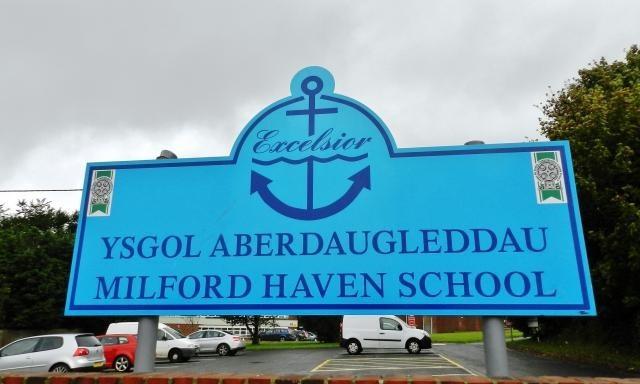
Headteacher absent as council confirms support plan and oversight visits
CONCERNS have been raised about leadership and staffing at Milford Haven Comprehensive School following last week’s alleged stabbing of a teacher on site.
The Herald has been contacted by a member of teaching staff who described the school as “rudderless” in the days after the incident and questioned whether enough senior management support was in place.
The teacher, who asked not to be named, said staff morale had been affected and claimed there had been little direct communication from the headteacher, who has been absent due to injury.
They said: “We teachers are all saying the same thing. The school feels rudderless. This is a time when a leader needs to step up and let us know they’re still in charge and concerned.”
Concerns were also raised about administrative capacity, with the business manager role reportedly unfilled.
A spokesperson for Pembrokeshire County Council confirmed the current arrangements.
The council said headteacher Ms C. A. Morris remains in post but is currently absent, with deputy headteacher Mr Daryl John deputising.
It added that the business manager position is a matter for the school.
Additional support has been put in place for staff and pupils, including the Education Psychology team on site, access to counselling services and an increased presence from the School Police Liaison Officer throughout the week.

The authority also said the Director of Education is in daily contact with the deputy head.
In terms of oversight, the council confirmed Steven Richards-Downes, Director of Education, has visited the school 35 times and met staff on two occasions. Cllr Guy Woodham, Cabinet Member for Education and Welsh Language, has made eight visits since taking up the role in May 2019.
Last week’s incident saw a 15-year-old male charged grievous bodily harm with intent and possession of a bladed article.

At an initial hearing it was explained that the teacher, who was named as Vicky Williams, has since been discharged from hospital.
The prosecution explained to the court that the boy attacked Williams with a kitchen knife.
The case has been sent to Swansea Crown Court.

A GROUP of students from Haverfordwest High School have been recognised on the national stage after winning a prestigious award at the Wales final of the The King’s Trust and TK Maxx Awards.
The students scooped the JD Foundation Community Impact Award during a ceremony held on Monday, January 19, at voco St Davids Cardiff, celebrating their efforts to transform a vandalised and neglected subway into a bright, welcoming mural for the community.
The project was delivered through the Achieve programme run locally by Pembrokeshire Youth Service, giving pupils a more hands-on, practical approach to learning outside the traditional classroom.
Reclaiming a neglected space
The group identified the graffiti-covered underpass, used daily on their walk to school, as somewhere that left a poor impression of the town.
Ffion, one of the students, said: “The subway was really unwelcoming and gave people a negative impression of the town. We wanted to reclaim the space and turn it into something positive.”
Working together, the pupils applied for funding, secured sponsorship from local businesses and organised school fundraising events. They also partnered with local artist Lloyd Griffiths to design and paint a colourful mural celebrating wellbeing, identity and pride in Haverfordwest.
The artwork even features their daily emotional “check-in” system – a tool they used throughout the programme to support each other’s mental health.
Building confidence and skills
Many of the young people involved had faced barriers in mainstream education, including social and emotional challenges or caring responsibilities at home. Several were at risk of leaving school with few qualifications.
Through the Achieve programme, they say they found a more supportive environment where they could develop confidence and practical skills.
Lateesha said: “We were really pushed outside of our comfort zone throughout the project, which helped us discover confidence in ourselves and just how much we’re capable of.”
The students developed teamwork, communication, fundraising and public speaking skills while delivering a lasting improvement to their neighbourhood.
Ffion added: “This project is our legacy. We’ve created something lasting that represents who we are and where we come from. It’s amazing what a cup of tea and a conversation can result in.”

Recognition on the national stage
Aaron Probert, JD Foundation Manager, presented the award on the night.
He said: “It is an honour to present this very special group of young people with the Community Impact Award. The way you have worked together to benefit your community is truly inspiring and the impact you have had is clear to see.”
The win now puts the Haverfordwest students in the running for a national King’s Trust Award, with finalists invited to a celebration event in May at London’s Royal Albert Hall.
The King’s Trust supports young people aged eleven to thirty with skills, training and opportunities, with three in four participants moving into work, education or training.
For these Pembrokeshire pupils, their award-winning mural is already proof of what can happen when young people are given the chance – and the support – to make a difference close to home.



Crime11 hours ago
Pendine man jailed for abducting and drugging teenage girl
Offender had 1,101 unlawful images of children stored on his devices, including 122 Category A images – the most serious...


Crime2 days ago
Publican admits supplying cocaine and cannabis at Crown Court
Admits cocaine and cannabis supply but denies intent and cash allegations A MILFORD HAVEN pub landlord has admitted supplying cocaine...


Local Government2 days ago
Plaid win in Fishguard North East by-election
PLAID CYMRU has taken the Fishguard North East seat on Pembrokeshire County Council following this week’s by-election. Billy Shaw was...


News2 days ago
Man to return to court over alleged harbour collision
Three charges relate to navigation of vessel in Milford Haven A NEWPORT man is due to return to court later...


Business3 days ago
Computer Solutions Wales under fire from customers
Claims of unreturned devices, unpaid refunds and small claims court cases as company blames landlord dispute CUSTOMERS across west Wales...


News3 days ago
Starmer under fire as aides quit and Scottish Labour leader calls on him to resign
Two senior Downing Street exits in 24 hours as Anas Sarwar breaks ranks, but ministers insist the Prime Minister is...


News3 days ago
Fresh concerns over £60m A40 scheme after resurfacing works just months after opening
QUESTIONS are being asked about the condition of the newly-opened A40 Llanddewi Velfrey to Redstone Cross carriageway after sections of...


Charity4 days ago
RSPCA looks back at the Sea Empress oil tanker disaster 30 years on
Charity reflects on one of the biggest environmental disasters to hit UK IN just a few days time it will...


Crime5 days ago
Pembroke Dock man admits threatening to hack woman’s head off with sword
Court imposes strict bail conditions and bans contact with named individuals ahead of sentencing A PEMBROKE DOCK man has admitted...


Crime5 days ago
Teenager remanded after teacher injured in knife incident at Milford Haven school
Fifteen-year-old charged with Section 18 grievous bodily harm and possession of a bladed article appears before Swansea magistrates A FIFTEEN-YEAR-OLD...
-

 Health1 day ago
Health Board to decide future of nine key services at two-day meeting
-
Business3 days ago
Computer Solutions Wales under fire from customers
-

 Business6 days ago
Six-figure negligence victory leaves retired builder trapped in divorce limbo
-

 Business5 days ago
Minimum alcohol price to rise by 30 per cent as retailers warn of border impact
-

 Education6 days ago
Second west Wales school placed in lockdown within days
-

 Community2 days ago
Facebook ‘news’ site targeting Herald editor collapses after community backlash
-

 Charity3 days ago
Welsh patient voices help shape new UK-wide online kidney forum
-

 Comment7 days ago
Opinion: How Milford Haven school reached this point