


Health
A&E at Bronglais and Withybush hospitals under ‘unprecedented pressure’


IN AN URGENT call to the public on Tuesday (Feb 13) Hywel Dda University Health Board highlighted the extreme pressures facing emergency departments across the region, with particular emphasis on the facilities at Bronglais and Withybush hospitals.
The health authority has issued a plea for community cooperation to ensure emergency services can be preserved for those in dire need of urgent care.
The Health Board’s appeal underscores a critical situation where the efficiency and effectiveness of emergency services could be compromised by an overwhelming demand.
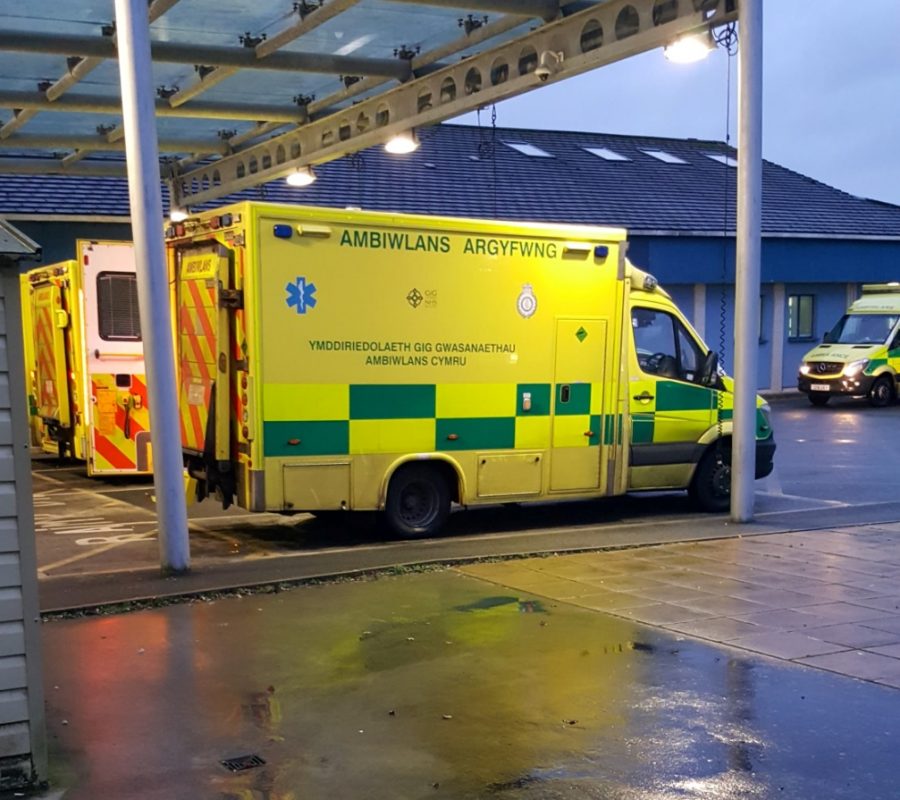
The public is being urged to make informed decisions about how they access healthcare services, reserving emergency department visits for acute and emergency health issues only.
This strategic approach, the health board hopes, aims to alleviate the strain on emergency services and ensure that resources are allocated to the most critical cases.

To assist the public in navigating the healthcare system during this challenging period, Hywel Dda UHB has provided guidance on alternative care options. The guidance, detailed on their official website, offers insights into the appropriate channels for various health concerns, aiming to direct non-emergency cases to more suitable services.
This measure not only helps in managing the current demand on emergency departments but also contributes to the overall efficiency of healthcare delivery in the region.
The Health Board’s message is clear: “Please help us to help you.” By choosing the right service for healthcare needs, the public can play a crucial role in supporting the sustainability of emergency services during this critical time. The community’s cooperation and understanding are vital in ensuring that emergency departments can continue to provide life-saving care to those who need it the most.
For more information on how to access healthcare services during the winter months, and to stay updated on the latest healthcare developments in the region, visit Hywel Dda UHB’s official website.












Youth-led ‘Think Outside the Block’ toolkit rolled out to secondary schools across Pembrokeshire
A wNEW mental health and wellbeing resource designed by young people for young people has been launched in Pembrokeshire to mark Children’s Mental Health Week.
The county’s Children and Young People’s Rights Office (CYPRO) has unveiled Think Outside the Block – an interactive booklet and game aimed at helping pupils better understand emotional health and feel more confident talking about it.
The resource, launched this week (Feb 9–15), encourages open discussion, challenges common misconceptions and builds awareness around issues including anxiety, self-esteem, neurodiversity and general wellbeing.
Importantly, the project has been created by members of the Pembrokeshire Youth Assembly, working alongside CYPRO and the Primary Mental Health and School In-Reach teams.
The idea grew out of the county-wide “What Matters to You?” consultation, where young people identified mental health and emotional wellbeing as one of their top concerns. Participants said terms linked to mental health and neurodiversity are often used without clear understanding, which can create confusion and stigma.
Think Outside the Block aims to tackle that by using accessible language and interactive activities to help children explore key topics and develop the vocabulary they need to speak openly about how they feel.
Over the coming days, CYPRO will distribute the resource to secondary schools across the county. Staff will be able to use it in classrooms, youth settings and dedicated wellbeing sessions.
A spokesperson for CYPRO said: “This project has been led by young people, for young people. Their voices and experiences have shaped every part of this resource.
“We are delighted to share it with schools across the county and support meaningful conversations about mental health, emotional health and wellbeing.”
The Youth Assembly continues to play a central role in representing the views of young people locally, with this latest initiative described as a strong example of co-production in action..
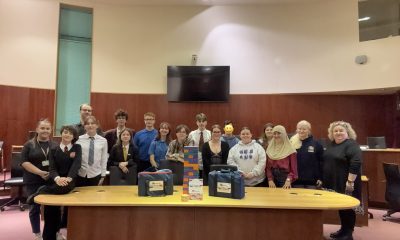
Picture: Members of the Youth Assembly launch the Think Outside the Block resource (Pic: Supplied).

COMMUNITY pharmacies across Wales are being forced to sell some medicines at a loss because of an outdated NHS funding system that no longer reflects real-world costs, owners have warned.
Under current rules, pharmacists must dispense prescriptions at prices set nationally, even when those prices are lower than what they paid wholesalers — leaving them out of pocket on everyday items such as aspirin.
The situation has led to mounting debts, emergency loans and, in some cases, owners remortgaging their homes simply to keep their doors open.
Figures from the National Pharmacy Association suggest four in ten Welsh pharmacies were not profitable last year, with many described as “clinging on by their fingertips”.
Selling at a loss
Unlike normal retailers, pharmacies cannot set their own prices or refuse to stock products.
They are contracted to the NHS through the Welsh Government’s Community Pharmacy Contractual Framework, which fixes reimbursement rates for prescription medicines.
But wholesalers’ prices have risen sharply due to inflation, supply shortages and higher manufacturing costs.
That means the maths often no longer adds up.
In one example shared by pharmacists, a packet of 75mg aspirin costs £3.75 to buy but is reimbursed at just £3.05 — a loss of 70p each time it is dispensed.

Multiply that across hundreds of packs a month and dozens of other medicines, and small losses quickly turn into thousands of pounds.
One west Wales pharmacy owner told The Herald: “You wouldn’t run a corner shop selling bread for less than you paid for it. But that’s effectively what we’re told to do every day.”
‘Averaging out’ no longer works
The government’s model assumes that losses on some drugs will be balanced by profits on others.

But pharmacists say that system — once workable — has broken down.
Generic medicines that previously provided modest margins are now also rising in price, while reimbursement rates lag weeks or months behind market costs.
At the same time, running costs have surged.
Energy bills, staff wages, National Insurance contributions, fuel for deliveries and regulatory costs have all increased, while core NHS funding has remained largely flat in real terms for nearly a decade.
Owners say they are now busier than ever too, as GP surgeries redirect patients to pharmacies for minor ailments, vaccinations and clinical advice — work that takes time and staff but often brings little additional income.
Debt and closures
The result is growing financial pressure.
Some pharmacists report taking out short-term loans just to cover monthly payroll, while others have dipped into pensions or personal savings.
Across the UK, hundreds of community pharmacies have closed in recent years, with rural and small-town chemists particularly vulnerable.
Health campaigners warn that if closures continue, patients could lose easy access to prescriptions, advice and walk-in care — pushing more pressure back onto already stretched GP practices and hospitals.
David Thomas, Welsh Board member for the National Pharmacy Association said: “These shocking findings should sound major alarm bells to the Welsh government and will understandably cause concern to patients who depend on their local pharmacy.
“It is simply unsustainable and unfair to expect individual pharmacy owners to remortgage their house and dip into their pension pot to subsidise the cost of prescriptions and to keep their doors open for their patients.
“Pharmacies are hanging on by their fingertips and something has to change. Without urgent action, the government risks pharmacies closing for good and their New Prescription Service going up in smoke.
“To prevent this from happening, the government should step in and offer pharmacies a stabilisation payment, similar to recently offered to GP colleagues.
“Only through stabilisation and long term investment can pharmacies deliver the expansion in services for patients and take pressure away from others in the NHS.”
Russell Goodway, Chief Executive at Community Pharmacy Wales, the organisation representing all community pharmacy owners in Wales, said:
“The findings of this poll closely mirror our own evidence and reinforce the very real financial pressures currently facing community pharmacies across Wales, regardless of size or ownership model.
“Community Pharmacy Wales has been in ongoing dialogue with the Welsh Government Cabinet Secretary for Health and Social Care since before Christmas, seeking to secure a recurring stabilisation payment. Such support is essential to prevent further deterioration and to safeguard the sustainability of the sector. We will continue to make a strong and evidence-based case for the additional resources that are urgently needed.”
Government response
The Welsh Government says it recognises pharmacies are an essential part of primary care and points to increased investment, including additional stability payments and grants for premises improvements.
A spokesperson said reimbursement prices are set using supplier data and that “while some medicines may be reimbursed below cost on occasions, this is offset by the profits pharmacies make on most of the medicines they dispense”.
But pharmacists argue that assumption no longer reflects reality.
A simple question
At the heart of the row is a basic principle.
If the NHS commissions a service, pharmacists say, it should at least cover the cost of providing it.
As one owner put it: “No business can survive by selling stock at a loss and hoping it balances out. Eventually the numbers catch up with you.”
Unless the funding formula changes, many fear more local chemists could disappear from Welsh high streets — and with them one of the most accessible parts of the health service.
Photo caption: Community pharmacies say fixed NHS prices are forcing them to dispense some medicines below cost (Pic: stock).

DECISIONS on the future of nine frontline hospital services across west Wales will be made later this month when Hywel Dda University Health Board holds a special two-day Board meeting.
The Extraordinary Board will meet on Wednesday (Feb 18) and Thursday (Feb 19) to determine the next steps for critical care, dermatology, emergency general surgery, endoscopy, ophthalmology, orthopaedics, stroke, radiology and urology services.
Health chiefs say the proposed changes are aimed at tackling staffing shortages, improving clinical standards and cutting waiting times for diagnosis and treatment.
More than 4,000 people responded to a public consultation on the plans. Feedback was gathered through questionnaires, public meetings, staff sessions and discussions with stakeholder groups.
An independent consultation report compiled by Opinion Research Services will form part of the evidence considered by Board members. It will sit alongside updated data on workforce pressures, estate condition, clinical standards and how services link together across hospitals.
All documents to be considered by the Board have now been published online ahead of the meeting.
Alternative ideas assessed
During the consultation, communities also submitted 190 alternative proposals.
Each idea was tested against “hurdle criteria” to check whether it was safe, practical and capable of delivery before being taken forward.
Of those, 22 met the criteria and have been developed into full options. These will be considered alongside the Health Board’s original proposals.
Board members will assess whether each option is clinically sustainable, deliverable, accessible to patients, aligned with the Health Board’s long-term strategy and financially viable. They will also decide whether further engagement or evidence is needed before any final changes are introduced.
Some changes, if approved, could be phased in over time.
Dr Neil Wooding, Chair of the Health Board, said: “At our meeting next week, the Board will carefully consider the consultation feedback alongside the latest clinical evidence, workforce insights, updated impact assessments and the alternative options that were put forward during the consultation.

“Our responsibility is to consider the full range of evidence and ensure we make decisions that ensure that our services are sustainable for the future. No decisions have been made ahead of the Board. We are committed to a thorough and transparent process, ensuring each option and alternative options are considered in the round, and focused on improving services for the people who rely on them.”



Crime3 hours ago
Pendine man jailed for abducting and drugging teenage girl
Offender had 1,101 unlawful images of children stored on his devices, including 122 Category A images – the most serious...


Crime1 day ago
Publican admits supplying cocaine and cannabis at Crown Court
Admits cocaine and cannabis supply but denies intent and cash allegations A MILFORD HAVEN pub landlord has admitted supplying cocaine...

Local Government1 day ago
Plaid win in Fishguard North East by-election
PLAID CYMRU has taken the Fishguard North East seat on Pembrokeshire County Council following this week’s by-election. Billy Shaw was...


News2 days ago
Man to return to court over alleged harbour collision
Three charges relate to navigation of vessel in Milford Haven A NEWPORT man is due to return to court later...


Business3 days ago
Computer Solutions Wales under fire from customers
Claims of unreturned devices, unpaid refunds and small claims court cases as company blames landlord dispute CUSTOMERS across west Wales...


News3 days ago
Starmer under fire as aides quit and Scottish Labour leader calls on him to resign
Two senior Downing Street exits in 24 hours as Anas Sarwar breaks ranks, but ministers insist the Prime Minister is...


News3 days ago
Fresh concerns over £60m A40 scheme after resurfacing works just months after opening
QUESTIONS are being asked about the condition of the newly-opened A40 Llanddewi Velfrey to Redstone Cross carriageway after sections of...

Charity3 days ago
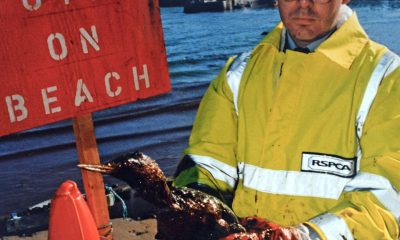
RSPCA looks back at the Sea Empress oil tanker disaster 30 years on
Charity reflects on one of the biggest environmental disasters to hit UK IN just a few days time it will...


Crime5 days ago
Pembroke Dock man admits threatening to hack woman’s head off with sword
Court imposes strict bail conditions and bans contact with named individuals ahead of sentencing A PEMBROKE DOCK man has admitted...

Crime5 days ago
Teenager remanded after teacher injured in knife incident at Milford Haven school
Fifteen-year-old charged with Section 18 grievous bodily harm and possession of a bladed article appears before Swansea magistrates A FIFTEEN-YEAR-OLD...
-

 Health7 days ago
Health board targets rise in steroid and gym drug use across west Wales
-

 Health1 day ago
Health Board to decide future of nine key services at two-day meeting
-
 Crime7 days ago
Teacher injured and teenager arrested for attempted murder at Milford Haven School
-
Business3 days ago
Computer Solutions Wales under fire from customers
-
 Business6 days ago
Six-figure negligence victory leaves retired builder trapped in divorce limbo
-

 Business5 days ago
Minimum alcohol price to rise by 30 per cent as retailers warn of border impact
-

 Crime7 days ago
Teacher assaulted by pupil with weapon at Milford Haven school
-

 Climate7 days ago
Investment prospectus puts Pembrokeshire at heart of £20bn clean energy drive