


Community
Renewed calls for undergrounding as pylon consultation draws to an end


PLAID CYMRU politicians have reiterated their calls for a controversial proposed pylon route between south Ceredigion and Carmarthen to be undergrounded as the initial consultation period draws to an end.
The Green Gen Towy Teifi project will link Bute Energy’s proposed Lan Fawr Energy Park, north of Lampeter, into a new National Grid substation proposed for south of Carmarthen.
As part of the project, a 52km-long 132kV overhead line has been proposed – with the development in its first phase before a formal application is submitted, classified as a Development of National Significance in Wales.
As part of the initial consultation process, significant concerns have been raised by residents and businesses about the visual, environmental and economic impact of the proposed overhead line – with several public meetings and campaign groups forming over recent weeks to oppose the proposals.
Concerns have been echoed by local Plaid Cymru politicians, who have pressed on the proposed line to be buried underground – in accordance with best practice in other areas of the UK and Europe.

Concerns over the proposed Tywi Teifi network were raised in the Senedd last week with the First Minister, Mark Drakeford, by Cefin Campbell, Plaid Cymru’s Senedd Member for Mid & West Wales, reiterating calls for the undergrounding of the route.
Responding to Mr Campbell’s question, First Minister Mark Drakeford confirmed the Welsh Government’s policy – being “electricity transmission cables should be placed underground where possible, not just in designated landscapes, but where possible.”
Cefin Campbell MS also outlined the case for the Welsh Government to consider cable ploughing in future electricity transmission projects.
The methods involves moving machinery cutting a slit in the ground and laying a cable or duct as it goes along with the disturbed ground flattened and reinstated as part of the process.

Cable ploughing allows the burial of up to a Kilometre of132kV cable in a day – and is considered to be more cost effective and less disruptive than other methods of undergrounding or pylon erection.
Speaking following his question, Cefin Campbell MS: “I’m glad the First Minister reiterated the Welsh Government’s stance that cables should be placed underground where possible. With more and more of these overhead pylon proposals popping up across the length and breadth of Wales, now is the time to put such policy into practice.
We already know that undergrounding is already commonplace in many European countries – particularly through the developing cable plough technology. Welsh Government should be placing greater emphasis for developers to incorporate such undergrounding into their proposals.”

Elin Jones MS said: “We are all keen to ensure that we produce more green energy so that we tackle climate change and improve energy self-sufficiency. Whilst wind turbines obviously have to be above ground, there is no such necessity for grid cables. I strongly believe that such cables should be underground and I’ll be pressing this case strongly on behalf of constituents.”
Ben Lake MP for Ceredigion said: “In recent weeks I have been contacted by a large number of residents and community groups regarding the Tywi Teifi proposal by Green Gen Cymru. They have expressed a range of concerns about the proposed route, and have made a persuasive case against the deployment of new pylon infrastructure.
“I have relayed these concerns to the company, in addition to the suggestion that was put to me by many residents that any necessary transmission infrastructure should be placed underground. Indeed, I understand that a number of European countries have adopted this approach for new transmission lines by embracing new methods of undergrounding the infrastructure, which I believe Green Gen Cymru should urgently consider.”
The initial deadline for Green Gen Cymru’s consultation on the proposed route was the 6 March 2024. However, following issues with the website, which were raised by Ben Lake MP, the deadline was extended to 11:59pm on 13 March 2024. The consultation can be completed by visiting their website:

FREE LIFE-SAVING SESSIONS AVAILABLE ACROSS THE REGION
A CARMARTHENSHIRE-based training company is offering free first aid awareness talks to community groups across West Wales.
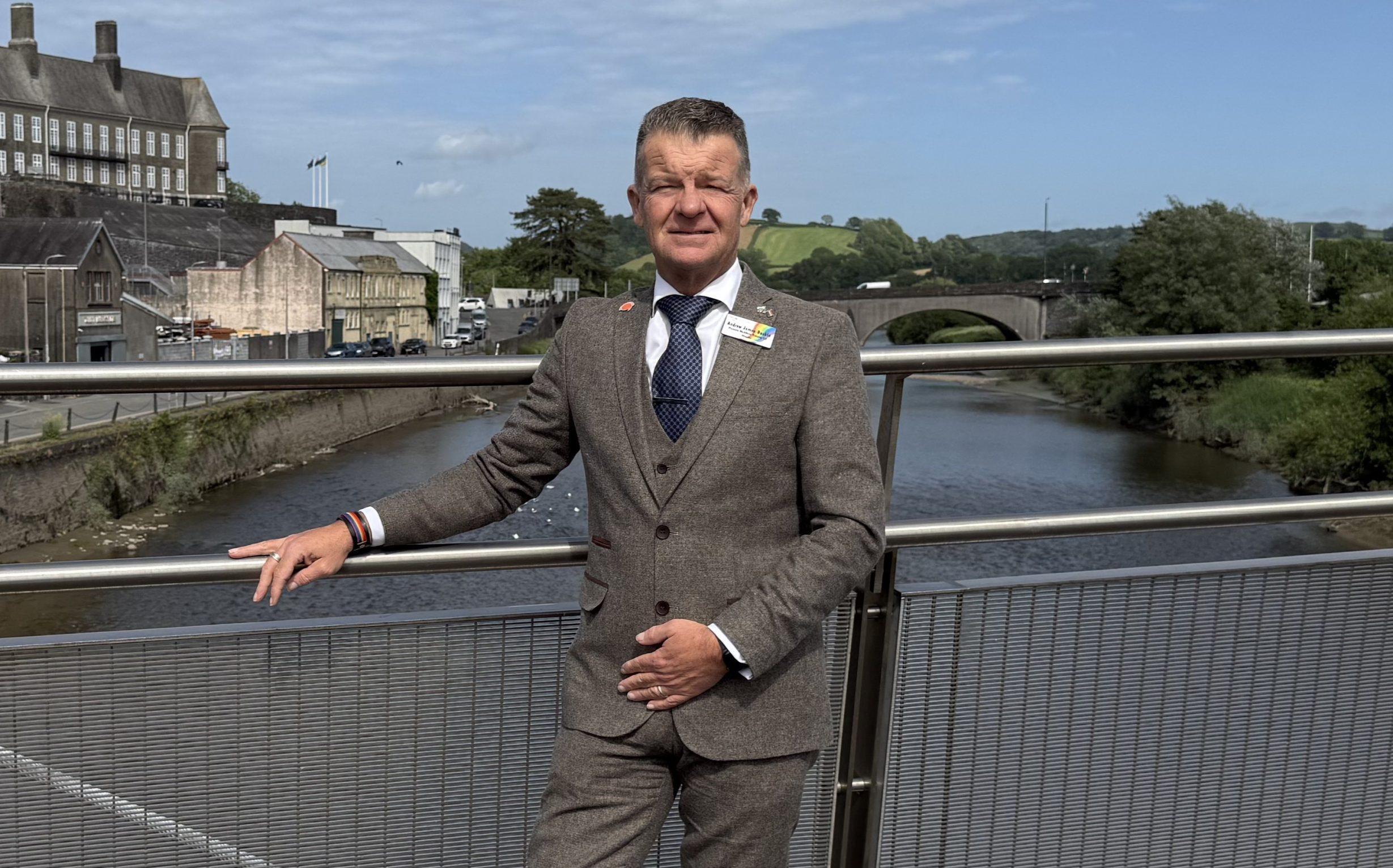
Pinnacle Workforce Training Ltd, founded by trainer and health and social care professional Andrew James-Deakin, is inviting organisations including Women’s Institutes, U3A groups, Rotary Clubs, Probus Clubs, churches, charities and community groups to book an interactive presentation.
The session, titled Could You Save a Life? Practical First Aid for Everyday Emergencies, covers CPR awareness, defibrillator use, choking, stroke recognition, heart attack awareness, burns and scalds, falls, seizures and anaphylaxis.
Andrew, who has more than 25 years’ experience in training, assessment, quality assurance, leadership and health and social care, said: “Many people worry that they would not know what to do if someone collapsed, suffered a stroke, had a heart attack or started choking.
“These talks are designed to give people confidence and practical knowledge that could make a real difference while waiting for professional help to arrive.”
The sessions are designed to be informative, engaging and interactive, giving participants practical knowledge that could help them support family members, friends, colleagues or members of the public during an emergency.
As part of a community introduction programme, Pinnacle Workforce Training Ltd is currently offering the talks free of charge.
Organisations within 20 miles of Llanelli can book a session at no cost, while groups further afield are only asked to cover travel expenses.
Andrew added: “One of the aims of Pinnacle Workforce Training is to support local communities by making valuable skills and knowledge accessible to as many people as possible.
“If even one person leaves a session feeling more confident to help in an emergency, it will have been worthwhile.”
Community organisations interested in arranging a talk can contact Andrew James-Deakin on 07364 138827 or email [email protected].
Andrew James-Deakin: Director of Pinnacle Workforce Training Ltd, pictured on the River Towy footbridge in Carmarthen (Pic: Supplied).

‘PETTY AND MINDLESS’ ATTACK CRITICISED BY LOCAL COUNCILLOR AND MS
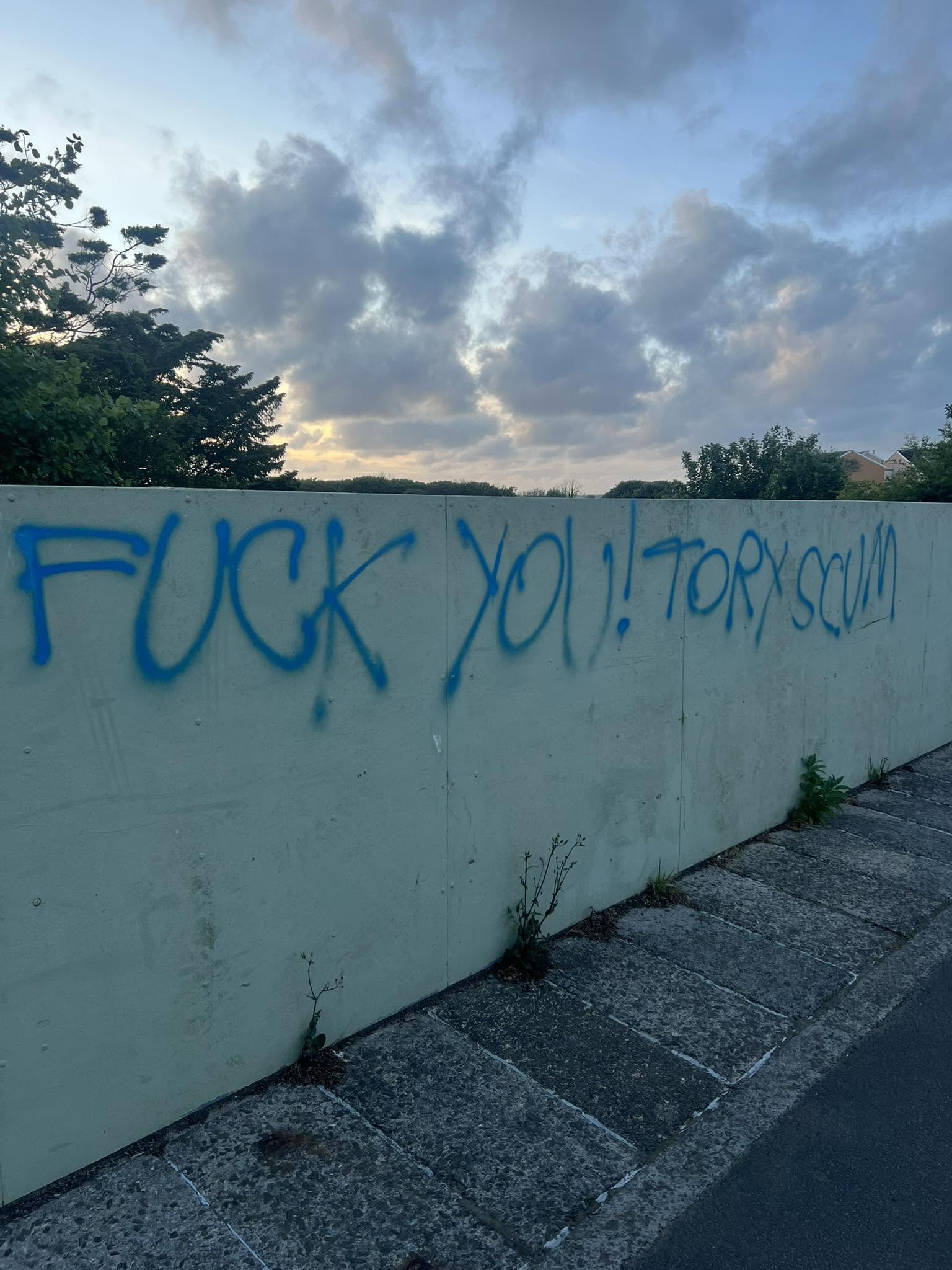
A PEMBROKESHIRE councillor has condemned “mindless” graffiti daubed on a wall in Johnston, saying it sends the wrong message to children, visitors and residents.
Cllr Aled Thomas, who represents Johnston, said he was “really angry” after seeing the words sprayed in blue paint in the village.
He said he was not personally offended by the abuse, but was upset by the impact on the wider community.
Cllr Thomas said: “What really angered me was what type of message this sends to visitors and young people in our community, particularly as there are so many hardworking people behind the scenes just trying to make Johnston a better place for everyone.”
He said Johnston Community Council had worked hard to improve local green spaces, including Glebelands Field, the Woodland Walk and Vine Field, as well as ensuring play parks were safe to use.
He added: “Someone throwing all that hard work by local residents down the drain by detracting from it with petty graffiti makes me angry.”
The councillor also said children walking to Johnston School should not be exposed to “mindless disgusting language”, adding that staff and governors worked hard to foster “decency and respect”.
Addressing whoever was responsible, he said: “If you have a personal problem with me or my party, I suggest you reach out to me to discuss your problems without ruining the village for everyone else.
“Failing that, you can graffiti your ballot paper next May instead and vote me out as your local councillor — but until that day comes, I’ll continue doing my very best to help Johnston and its residents thrive, and no graffiti will ever stop me.”
Paul Davies MS also criticised the vandalism, saying: “This is absolutely disgraceful. Of course, I realise that people disagree with our views as Conservatives but to vandalise, use this language and spoil our environment is totally unacceptable.”
Photo caption:
Vandalism condemned: Graffiti sprayed on a wall in Johnston has been criticised by Cllr Aled Thomas and Paul Davies MS (Pic: Facebook).

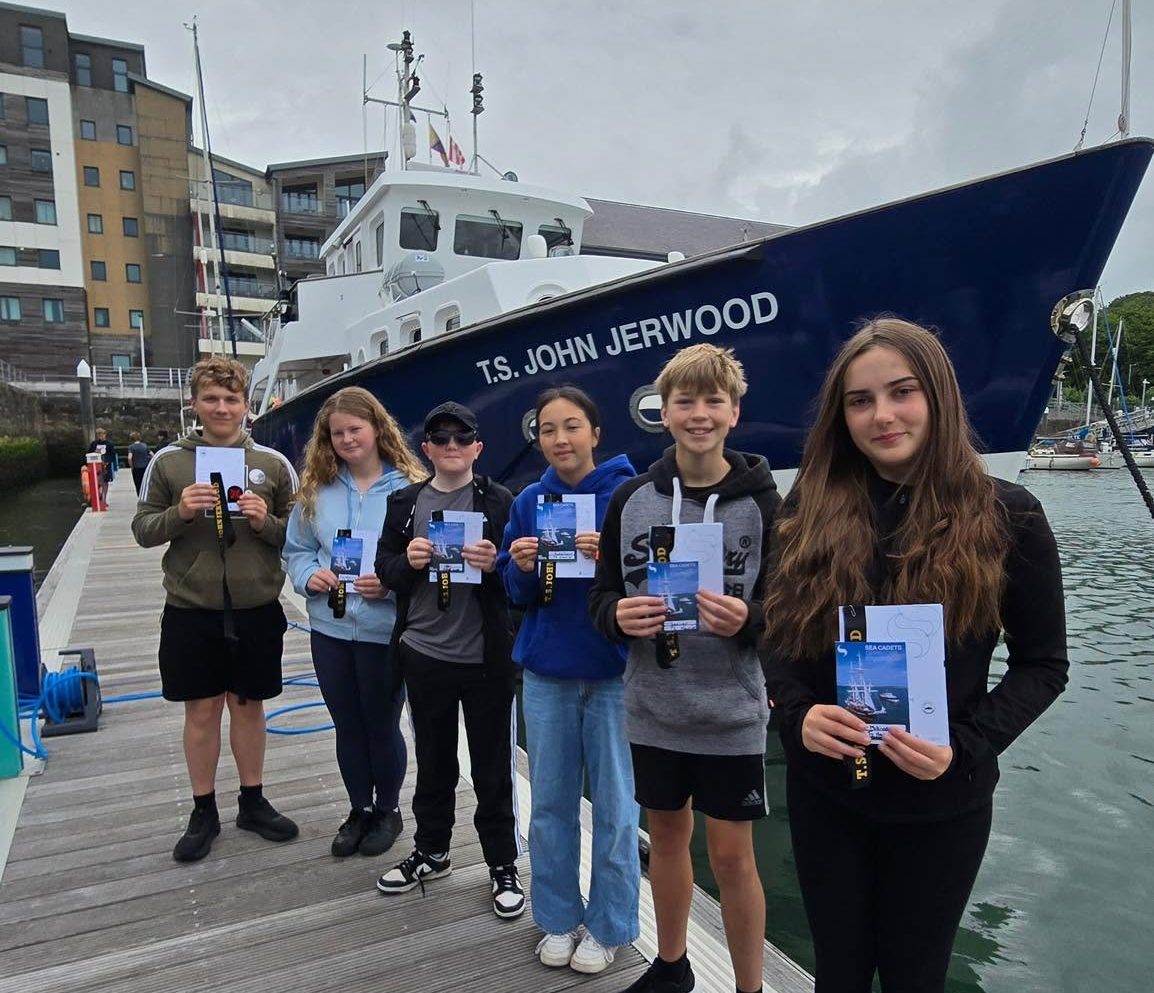
SIX CADETS from Milford Haven Sea Cadets and Royal Marines Cadets have completed a challenging week-long offshore voyage aboard T.S. John Jerwood.
The cadets took to the water for a demanding but enjoyable week, gaining a number of qualifications despite difficult weather conditions.
The unit congratulated all six cadets on their achievements and thanked the Sea Cadet Offshore team for making the voyage possible.
A spokesperson said: “Voyages like this are only made possible by the brilliant Sea Cadet Offshore team. Thank you for the amazing work you do to allow this amazing opportunity to be possible.
“BZ all!”
The Milford Haven unit also thanked West Wales District Sea Cadets, South West Area Sea Cadets, Sea Cadets Offshore, South West Area Senior Staff Officer, and RFCA for Wales for their support.



News14 hours ago
First Minister challenged over jobs for student nurses
REFORM WALES has accused the First Minister of failing to guarantee jobs for student nurses in Wales, despite continuing pressure...

Crime16 hours ago
Knife blankets call as school staff face rising violence fears
GMB says protective equipment should be considered where risk assessments show staff could face blades SCHOOL staff should be given...


News17 hours ago
Claire Archibald secures review of Milford Haven train times
RURAL TRANSPORT CONCERNS RAISED WITH TFW CLAIRE ARCHIBALD MS has secured a review of train times between Milford Haven and...


Crime17 hours ago
PCC review calls for stronger youth crime prevention work
REPORT MAKES 13 RECOMMENDATIONS A REVIEW into crime and anti-social behaviour services for young adults has called for stronger prevention...


Crime19 hours ago
Families condemn failed appeal by paddleboard boss jailed over Haverfordwest tragedy
RELATIVES SAY LATEST COURT BID HAS REOPENED PAIN AFTER FOUR DEATHS ON WESTERN CLEDDAU THE FAMILIES of victims of the...


Community1 day ago
Forgotten wartime archive found in Pembroke Dock attic after 80 years
Remarkable family collection reveals story of father and son who served through two world wars A REMARKABLE untouched family archive...


Crime2 days ago
Milford Haven woman left with facial fractures after drunken attack
A WOMAN in her late fifties suffered facial fractures after being repeatedly punched through the window of her car during...


Crime2 days ago
Sex offender in senior role at Tenby family hotel
CREST HOTEL GROUP says it is investigating safeguarding concerns after staff at the Imperial Hotel in Tenby raised alarm over...


Sport2 days ago
Runners tackle new route in Ras Y Castell 10k
MORE than 90 runners took to the streets and paths around Cardigan on Friday evening (June 5) for the annual...


Business3 days ago
Turkish Kitchen reaches Welsh restaurant award semi-finals
Haverfordwest café praised as small independent business flies flag for Pembrokeshire A HAVERFORDWEST café has been named as a semi-finalist...
-
Crime4 days ago
Paddleboard company owner loses bid to cut sentence over Haverfordwest tragedy
-

 Crime3 days ago
Milford Haven man admits harassment and assault
-

 Crime7 days ago
Milford Haven man bit neighbour’s neck near cashpoint
-

 News3 days ago
Community appeal for privacy after serious emergency in Pendine
-

 Crime7 days ago
Pembroke Dock driver avoided jail after drug-drive crash
-

 Crime7 days ago
Dinas Cross man jailed over shop thefts
-
Crime2 days ago
Sex offender in senior role at Tenby family hotel
-
Community1 day ago
Forgotten wartime archive found in Pembroke Dock attic after 80 years