


Crime
Forces and commissioners launch national anti-corruption reporting service


POLICE forces and Police and Crime Commissioners (PCCs) have commissioned the independent charity Crimestoppers to run a service for the public to anonymously or confidentially report corruption and serious abuse by police officers, staff and volunteers.
The new service will bolster forces’ capability to take action against those who are not fit to serve, a commitment made by all police chiefs and PCCs to strengthen police standards and culture. The launch follows a year of joint working between forces, PCCs and Crimestoppers to ensure that the service is available to all communities across the UK.
The Police Anti-Corruption and Abuse Reporting Service covers reports relating to officers, staff and volunteers who:
- Provide information or influence in return for money or favours.
- Use their policing position for personal advantage – whether financial or otherwise.
- Cross professional boundaries or abuse their position for sexual purposes.
- Abuse or control their partner, or those they have a relationship with.
- Engage in racist, homophobic, misogynistic or disablist conduct, on or off duty, in person or online.
Crimestoppers will take calls from the public about individuals employed by any police force in the UK, regardless of whether the information relates to them whilst they are on or off duty, online or in person. Reports can be submitted online and telephone calls are free.
When people contact the service, they can choose to remain 100% anonymous, or can opt to leave their details if they are willing for the force investigation team to contact them directly.

Information received by Crimestoppers will be passed to the relevant force’s specialist unit, such as Professional Standards or Anti-Corruption, for assessment. It may be passed to specialist detectives to begin an investigation, take steps to safeguard someone at risk or in danger, or record the information to inform future investigations.
The service sits alongside each force’s existing complaints procedure and has been set up solely to take reports of serious corruption and abuse committed by serving police officers and staff made by the public.
Police and Crime Commissioner, Dafydd Llywelyn said: “This new anonymous reporting method provided by Crimestoppers is an additional tool that supports our aim to safeguard the integrity of police forces.
“With almost 3,000 reports already received since its inception by the Met Police in November 2022, it is evident that the public are ready to engage with it.

“In the wake of recent scandals, including deeply concerning incidents, such as the tragic murders of Sarah Everard, Bibaa Henry, and Nicole Smallman, it is imperative that we take decisive action to address any breaches of trust or abuse of power within our ranks.
“We are committed to upholding the highest standards of integrity, and we want our communities to trust that we are actively confronting any instances of misconduct and that our officers can rely on robust systems for addressing wrongdoing.
Chief Constable Gavin Stephens, Chair of the National Police Chiefs’ Council, said: “This reporting service will enable us to take action by giving the public a new, anonymous and confidential route to report corruption, criminality, or abusive behaviour within policing.

“We do not underestimate the impact recent events have had on trust and confidence in policing, including the appalling findings of the Angiolini report.
“We have made progress in strengthening procedures around misconduct and vetting, and forces are taking a proactive approach to finding and rooting out wrongdoing. However, we know there is always more to do to ensure that we meet the high standards rightly expected and deserved by the public.
“The vast majority of police officers and staff act professionally and with integrity in the fulfilment of their duties to protect the public. We must take tough action to purge policing of those responsible for wrongdoing, for now and for the future.
“This year, we checked our entire work force for unknown allegations or concerns and will begin long-term screening to ensure that there is no place for corrupt or abusive officers and staff to hide in our forces.”
Mark Hallas, Chief Executive of the independent charity Crimestoppers, said: “We all share the same aim of wanting to see dangerous and abusive police officers and staff rooted out. The public deserves a safe and transparent policing environment that they can trust.
“Crucially, the launch of this service gives people an option to make that initial report via our independent charity and not directly to the police. Those with serious allegations who have previously stayed silent will have greater confidence to come forward.”
Policing Minister Chris Philp said: “Public confidence in our police has been severely damaged. There can be no stone left unturned in our efforts to clean up the workforce and culture, and rebuild trust.
“This anonymous helpline will give people the confidence to challenge the behaviour of officers who fall below the high standards the public deserve.
“This is alongside a broad range of continuous action being taken to root out officers unfit to serve and tighten vetting processes to ensure the right people are in policing.”



Registered sex offender Wayne Evans, who moved to Carmarthenshire for a fresh start, was caught after the National Crime Agency flagged activity linked to a Kik account
A CONVICTED child rapist who moved to rural west Wales in an apparent attempt to start over was found with indecent images of children on his phone after his online activity was flagged by the National Crime Agency.
Wayne Evans, 59, of Pentrecourt Road, Llandysul, appeared before Swansea Crown Court after officers discovered the images during an investigation triggered by the NCA.
The court heard that in January last year, the NCA alerted Dyfed-Powys Police to a Kik messaging account involved in downloading indecent images of children. The email address linked to the account was already known to police and belonged to Evans, a registered sex offender.
Officers went to his home on January 28 and arrested him. Evans told police he had not downloaded the images himself and claimed they had appeared in a Kik group he was part of, adding that the group had since been shut down.
Police seized six devices from the property and Evans handed over the pin numbers for his phones and tablets. He later answered “no comment” to questions in interview and was released under investigation while the devices were examined.

A forensic analysis of his Samsung Galaxy phone uncovered 13 Category A images, eight Category B images and two Category C images. The material involved children aged between four and 12.
Category A images are considered the most serious and involve the gravest forms of sexual abuse.
The court was told Evans has six previous convictions covering 23 offences. In 1990, he was convicted of gross indecency with a child and indecent assault of a child. In 2002, he was jailed for 15 years for raping a child under 16, attempted rape, gross indecency and five further counts of indecent assault. He was placed on the sex offenders register for life and released from prison in 2011.
Evans had admitted three counts of making indecent images of children, covering Categories A, B and C.
Emily Bennett, representing Evans, said her client knew the court would view the offences in the “dimmest of lights”. She said he had moved to a rural part of Wales where he kept himself to himself and had taken steps to reduce his contact with females.
She also told the court Evans accepted that he still had an inappropriate sexual attraction to children, and said he was in a long-term stable relationship with a partner who knew about his past offending.
Sentencing Evans, Recorder Mark Powell KC said he accepted that the defendant had taken some steps to change his life, but said it was clear he continued to have a sexual interest in children.

The judge said his priority was to pass a sentence which reduced the risk Evans posed. He said an immediate prison term available under the guidelines would be relatively short, could be destabilising, and might even increase the danger to the public.
With credit for his guilty pleas, Evans was sentenced to 16 months in prison, suspended for 18 months. He was also ordered to complete a rehabilitation activity requirement, a Building Choices programme, and 100 hours of unpaid work.
A Sexual Harm Prevention Order was imposed for 10 years, and Evans will remain on the sex offenders register for life.
Photo caption:
Wayne Evans was sentenced at Swansea Crown Court after indecent images of children were found on his phone
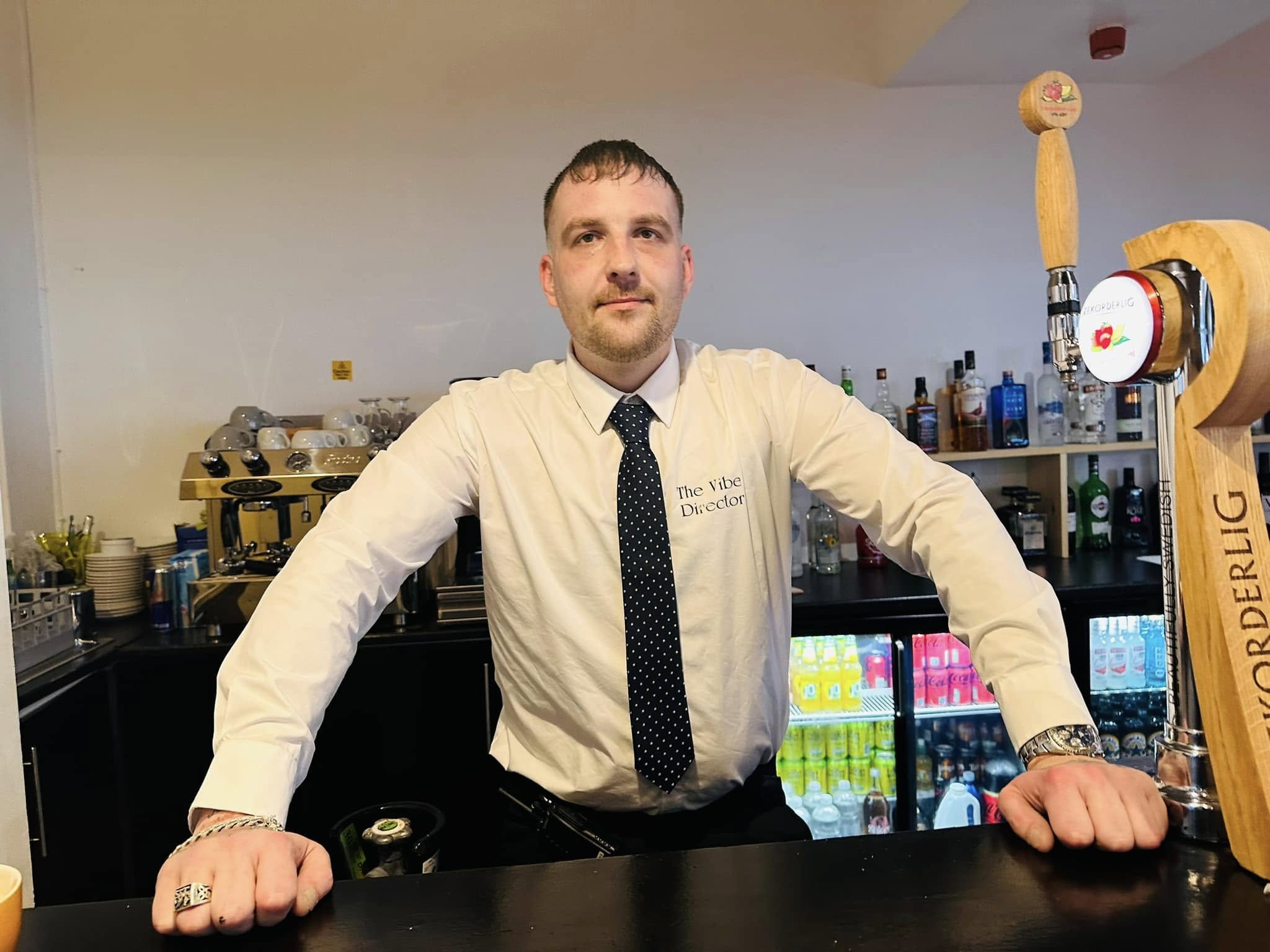
Dealer who claimed £160,000 profits was later calling police for protection as threats escalated over money he owed to his suppliers
A MILFORD HAVEN drug dealer who bragged he had “the best coke out there” and claimed to have made up to £160,000 in just four months has been jailed for six years.
But behind the image of a confident, high-earning operator, the reality was starkly different — a man in debt, under threat, and repeatedly calling police for protection as his world closed in.
The 35-year-old defendant admitted multiple offences relating to the supply of cocaine and cannabis when he appeared before Swansea Crown Court.
The court heard he played a significant role in the supply of Class A and Class B drugs, purchasing large quantities — including claims he was buying cocaine by the kilogram — and maintaining contact with upstream suppliers.
In messages shown to the court, he boasted about his profits, claiming to have made £38,000 and suggesting that far larger sums were within reach. He also claimed to have earned £160,000 in just four months and said he had bought two houses.
He told customers he had “the best coke out there” and responded aggressively to complaints, stating: “Out of £30,000 worth, you’re the only one to complain,” before adding: “Bad mouthing me is a bad idea you little slag.”
Violence and intimidation
The court was also shown chilling footage of a confrontation at a property on the Mount Estate, where the defendant was heard directing violence over a debt.
In the video, he shouted: “I got boys, yeah, I got boys,” before telling others to “kick his head in” as the attack unfolded inside the victim’s home.
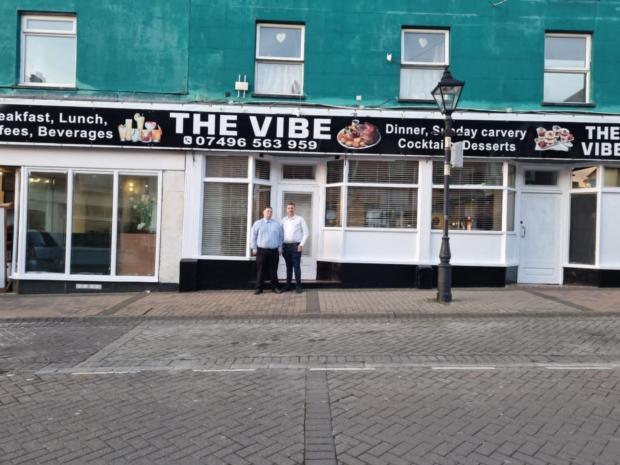
Witnesses described him as having become a “kingpin” in Milford Haven’s drug scene, operating from The Vibe public house, which they claimed was used as both a legitimate business front and a base linked to drug dealing.

Fear behind the façade
Yet the court heard that behind the bravado, the defendant was living in fear.
He had accumulated drug debts estimated at between £18,000 and £26,000 and was being threatened by those higher up the supply chain. His partner reported people turning up at their home, with threats including claims it would be bombed or burned down.
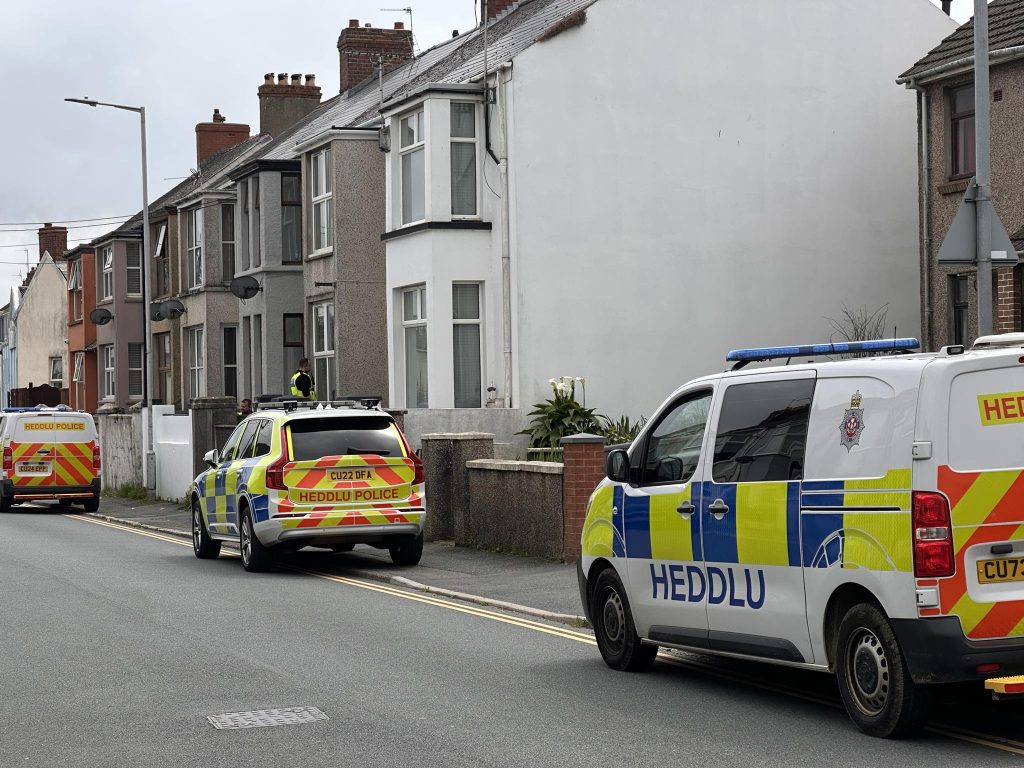
The Herald attended his home address on multiple occasions to report on police activity after he called officers for protection.
In a direct call to this newspaper during the period, he said: “There are threats to my life — people want me dead, dead. I don’t want this in the paper. It’s over money… hundreds of thousands of pounds.”
Documents reveal further pressure
The Herald can also reveal that the defendant was served with a statutory demand in late 2025 over an alleged unpaid debt relating to stock, fixtures and fittings following his takeover of The Vibe public house in March 2024.
Documents seen by this newspaper indicate the financial pressures he was under extended beyond drug debts.
National attention
The case has already drawn national interest, with Channel 4 making a documentary featuring the defendant after interviewing local people in Milford Haven over recent months.
‘Significant role’ in drug trade
Police arrested the defendant on January 5 last year on suspicion of being concerned in the supply of Class A drugs. A search of an address on Priory Road uncovered 18 grams of cannabis, while a separate incident involving a vehicle led to the discovery of 73 grams of cocaine and cannabis.
Prosecutors said he was actively involved in the supply of drugs and purchasing large quantities, describing him as a key player in the local trade.
He has 57 previous convictions, mostly for theft-related offences.
‘Only a custodial sentence’
Defending, Mr Ibrihim described his client’s background as a “tale of woe,” telling the court his father was addicted to heroin and his mother struggled with alcohol. His younger sister died in 2022.
The court heard he had gone “off the rails” in his late teens and that his drug dealing was linked to debts, including those connected to his father. It was also said that many of his claims about wealth were exaggerated and amounted to “bravado”.
Sentencing, the judge said: “The seriousness of this offending means that only an immediate custodial sentence is appropriate.
“You played a significant role in drug dealing. What is clear is that you were dealing with a lot of cocaine.
“I have no doubt that some of what you did was due to pressure, but some of it was for your own gain.”
The judge added that despite the defendant’s claims of wealth, “you haven’t got hardly anything left”.
For the supply of cocaine, he was sentenced to six years in prison, with a concurrent sentence of 30 months for supplying cannabis.
He will serve at least half the sentence in custody before being eligible for release.
A victim surcharge of £228 was also imposed.

National scheme aims to support hundreds of victims of modern slavery across the UK
MORE than 600 adult survivors of modern slavery are set to receive dedicated support through a new national pilot scheme providing accredited, independent advocates.
The initiative will see specially trained professionals working directly alongside survivors of human trafficking and exploitation, helping them navigate complex legal, social, and recovery processes.
While survivors of crimes such as domestic and sexual abuse already have access to specialist advocacy, no equivalent provision previously existed for victims of modern slavery—despite the often severe and long-term trauma they experience.
Over the next three years, 24 Independent Modern Slavery Advocates (IMSAs) will be deployed across the UK. Each advocate will complete a postgraduate qualification and receive support from a central hub hosted by anti-trafficking charity Hope for Justice.
Tim Nelson, CEO at Hope for Justice, said the pilot aims to tackle inequalities in support: “We want to end the postcode lottery that adult survivors of modern slavery and human trafficking are experiencing in the UK.
“There are many organisations already doing incredible work, but by working together and setting new standards, we can give survivors the best possible chance of rebuilding their lives.”
The scheme is backed by a £1 million National Lottery grant and involves several organisations, including Unseen UK, Medaille Trust, Bawso, SOHTIS, Hope for Justice, and the Snowdrop Project.
Since the pilot began six months ago, advocates have already supported 121 survivors, helping to secure housing, legal recognition, and access to vital services.
Key outcomes so far include:

Ten survivors provided with safe and secure housing
Seventeen Home Office decisions successfully challenged, granting victims access to support
Humanitarian protection secured for a young adult survivor
Advocates have also helped individuals access healthcare, mental health support, education, employment, and secure immigration status.
One survivor described the support as “life changing” after escaping a trafficker. In a letter to her advocate, she said: “You have fought our corner tirelessly when I did not have the strength. You stood beside us every step of the way.

“You helped me rebuild trust, believe in myself, and slowly find my voice again.”
The IMSA role aligns with international guidance on independent advocacy and has been shaped by experts and those with lived experience.
Louise Mensah, Head of Frontline at Unseen, said: “This pilot is a step towards a world without slavery. We are proud to be part of something that will improve outcomes and change futures.”
Ben Ryan, Deputy CEO at Medaille Trust, added: “We know the value of long-term support in recovery. This partnership allows us to embed best practice and develop new approaches.”
Organisations wishing to join the final phase of the pilot have until May 2026 to apply.
Further information is available at www.hopeforjustice.org/imsa/



Community2 hours ago
Broad Haven volunteers secure ‘national asset’ status for nature reserve
A SMALL stretch of woodland and former opencast coal mine has been transformed into a nationally recognised biodiversity site, in...


Entertainment1 day ago
Tenby steams up in spectacular style as crowds flock to festival
Colourful parade, towering creations and Victorian flair bring town centre to life TENBY was transformed into a vibrant Victorian fantasy...


Crime2 days ago
Publican jailed for six years for supplying cocaine and cannabis
Milford Haven man sentenced at Swansea Crown Court following drug dealing operation A MILFORD HAVEN publican has been jailed for...

Local Government2 days ago
Poverty summit highlights support efforts across Pembrokeshire
A SUMMIT bringing together key organisations from across Pembrokeshire has highlighted both the scale of local poverty and the work...


Education3 days ago
Milford Haven school plans unveiled but funding not yet secured
PLANS for a new £100 million school in Milford Haven have been unveiled, but the project has not yet secured...


News3 days ago
Council unveils plans for new state-of-the-art secondary school in Milford Haven
PEMBROKESHIRE COUNTY COUNCIL has revealed plans for a new state-of-the-art school in Milford Haven, promising modern, inspiring learning spaces for...


Health3 days ago
NHS waiting list falls — but cancer delays and diagnostic backlog worsen
Record progress claimed by Welsh Government as critics warn key targets are still being missed THE NHS in Wales has...


Crime4 days ago
Rapist jailed after ‘abhorrent’ attacks on woman and children
Haverfordwest man told police “women won’t have sex without force” A HAVERFORDWEST man who raped a woman and a young...


News4 days ago
Reform secures first Pembrokeshire councillor in Hakin by-election win
Late Reform candidate takes seat as independent surge and Labour withdrawal shape contest REFORM UK candidate Scott Thorley has won...

News5 days ago
Scott Thorley elected as Pembrokeshire’s first Reform councillor
REFORM UK candidate Scott Thorley has won the Hakin by-election after securing 179 votes. The full result is as follows:...
-

 News5 days ago
Emergency services flood Haverfordwest after reports of person in river
-

 Crime4 days ago
Mother given community order after admitting child cruelty offence
-
Health3 days ago
NHS waiting list falls — but cancer delays and diagnostic backlog worsen
-

 Crime7 days ago
Man cleared of sexual assault allegation after magistrates rule no case to answer
-

 News5 days ago
Senedd vote to ban greyhound racing hailed as ‘landmark moment’ by charities
-
News4 days ago
Reform secures first Pembrokeshire councillor in Hakin by-election win
-
 News5 days ago
Senedd votes to ban Greyhound racing in Wales to protect animal welfare
-

 Crime7 days ago
Man sentenced for stalking Milford Haven woman