


Community
What the Child Benefit rate rise means for you


MILLIONS of families who claim Child Benefit will automatically receive increased payments from 6 April 2024, HM Revenue and Customs (HMRC) has confirmed.
Families with one child will now receive up to £1,331 a year – an annual increase of £83.20, and up to £881 a year per additional child – an annual increase of £54.60. There is no limit to how many children families can claim for.
Parents will receive £102.40 every 4 weeks (£25.60 per week) for the first or only child and £67.80 every 4 weeks (£16.95 per week) for each additional child.
Families with ongoing claims do not need to contact HMRC, as the increased benefit payment will continue to be paid directly into their bank accounts. Anyone who needs to update their personal details, such as a change of bank account or address, can do so using the HMRC app or online at GOV.UK.
Parents with a newborn baby are encouraged to make a claim online as soon as possible and could receive their first payment in as little as three days. Child Benefit claims can be backdated by a maximum of three months.

Angela MacDonald, HMRC’s Deputy Chief Executive and Second Permanent Secretary, said:
“The increase in Child Benefit rates for existing claimants is automatic and families do not need to contact us. New claimants should apply online or using HMRC’s app. Search ‘child benefit’ on GOV.UK for more information.”
HMRC is reminding parents yet to benefit from Child Benefit that it is quick and easy to claim on GOV.UK or via the HMRC app, which can be used to:
· apply online

· backdate claims for up to 3 months
· add a new baby to a claim
· tell HMRC about a change in circumstances

· update details i.e. change of address/bank details
· view or print proof of entitlement to Child Benefit
From 6 April 2024, families where the highest earner has a salary of up to £60,000 a year will not be subject to the High Income Child Benefit Charge (HICBC). Previously, a person who had an annual income of £50,000 or more would be liable to pay the charge if they or their partner were receiving Child Benefit.
Laura Trott, Chief Secretary to the Treasury, said:
“We are ending the unfairness in the child benefit system, and as a result 170,000 families will no longer have to pay back child benefit, and nearly half a million families will save an average of around £1,300 next year.
“The legacy of the pandemic and the war in Ukraine has put pressures on everyone’s cost of living. But, by taking difficult decisions, the economy is starting to turn a corner, and we can now provide further support to parents.”
For those earning between £60,000 and £80,000, the amount of Child Benefit they are entitled to receive reduces as income increases within this range. If an individual’s income exceeds £80,000 the HICBC will be equal to the Child Benefit payment. Parents who make a claim and then choose to opt-out of receiving Child Benefit payments can still receive National Insurance credits if one parent is not working.
Parents with an income above £50,000, who reinstate their Child Benefit before 6 April 2024, may be subject to HICBC charges if they choose to start payments in the 2023 to 2024 tax year. For new claimants who claim Child Benefit on or after 6 April 2024, any HICBC liability will be based on the new 2024 to 2025 threshold of £60,000 to £80,000.
More information can be found on GOV.UK. Search ‘High Income Child Benefit Charge.’


THIRTEEN volunteer crew members at Royal National Lifeboat Institution’s Angle Lifeboat Station have successfully completed a demanding week of assessments, marking the culmination of months of training and preparation.
The pass-outs strengthen the station’s operational capability and ensure the all-weather lifeboat remains fully crewed and ready to respond to emergencies across the Milford Haven Waterway and the wider Pembrokeshire coast.
Three crew members – Anthony Thomas, Gareth Thomas and Nathen Houston – qualified as All-weather Lifeboat (ALB) Navigators after completing a four-hour practical and theory assessment.

Their test covered a range of search and rescue scenarios, including simulated taskings, radar work, position fixing and traditional paper chart navigation – all skills vital during poor visibility and challenging sea conditions.
A further ten volunteers – Phil Jones, Tom Meehan, Nick Gale, Rob Davies, Finn Frost, James Findlay, Allen Price, Seymore Phillips, Graham Booth and Matt Nicholas – passed their Tier 2 ALB Crew assessments.
The qualification tests every aspect of lifeboat operations, from man overboard recovery and towing to mooring, berthing, helming and anchoring. Candidates were put through their paces by an RNLI assessor in realistic scenarios designed to mirror live shouts.
Station representatives said the results reflect the commitment and professionalism of the volunteer crew, many of whom balance training with full-time jobs and family life.
The latest qualifications come as the Angle crew continue to play a crucial role in rescues around Milford Haven and the south Pembrokeshire coastline, one of the busiest and most complex maritime areas in Wales.
A spokesperson said the achievements “demonstrate the dedication of our volunteers and the continued strength of lifeboat operations from the town of Milford Haven.”

With 13 newly qualified crew now ready to serve, the station is better equipped than ever to respond when the pager sounds.

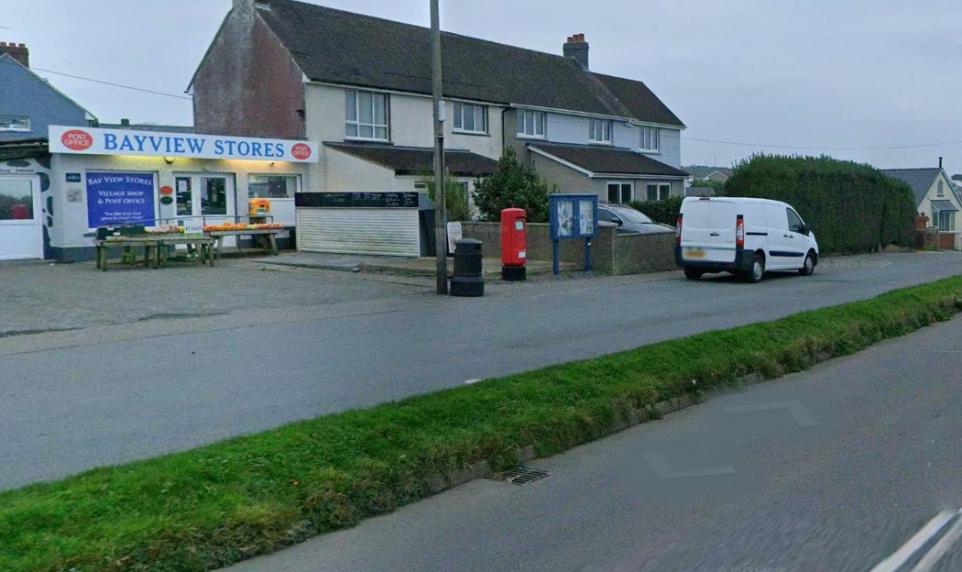
PLANS for an InPost e-commerce parcel locker service at a Pembrokeshire seaside village have been given the go-ahead by the national park despite concerns about its impact on neighbouring properties.
In an application to Pembrokeshire Coast National Park, InPost UK, through agent Skipton-based NL Jones Planning, sought permission for an InPost Parcel Locker at Bay View Stores, Maes Ewan, Solva.
InPost is a parcel locker service throughout the UK where you can send and return parcels quickly with contact-free delivery.
A supporting statement says e-commerce now accounts for 30 per cent of all retail UK sales, but “while this growth brings consumer convenience, the final leg of delivery – known as the ‘last-mile’ – is putting pressure on our streets and wallets, if all deliveries continue to be delivered to door,” with both more delivery vehicles on the road and “home deliveries more inconvenient and missed parcels more common” as more people return to the office post-Covid.
It added: “This service offers substantial new business opportunities often for local small and medium businesses, such as Etsy sellers, offering a more convenient, efficient and cost-effective alternative to traditional services.”
It says the service also benefits small local businesses such as convenience stores through increased footfall, adding: “In exchange for hosting a locker, InPost pays landlords guaranteed rent, transforming unused spaces to become a popular in-demand community asset that also provides a new additional income stream.”
An officer report recommending approval said: “The principle of development is considered acceptable, and the proposal is not considered to result in unacceptable harm to the special qualities of the Pembrokeshire Coast National Park.”
It said there were two letters of concern from members of the public raising issues including “potential noise and disturbance arising from use of the locker outside shop opening hours, including late night and early morning activity, vehicle movements and locker door noise,” increased parking demands, the effect of any CCTV systems on neighbours, and concerns it would be visually harmful “within the village street scene”.
The report concluded: “It is acknowledged that Solva is a relatively quiet village setting outside of peak daytime periods, and that noise can carry. However, the proposed parcel locker is to be located within the curtilage of an established convenience store where there is already regular customer activity, vehicle movements and servicing/delivery activity.
“The proposal is not considered to introduce a materially different form of activity to that already associated with the lawful retail use of the premises. In addition, the parcel locker itself is a passive facility and would not generate continuous noise.
“Any noise associated with its use would be intermittent and comparable to typical short-duration activity associated with customers visiting the shop.”
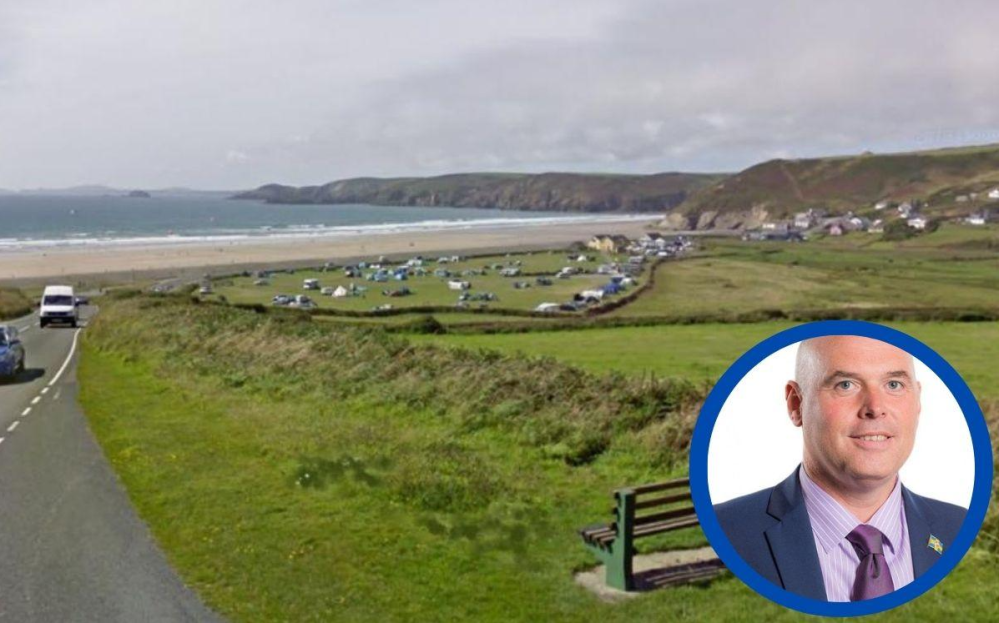
LOCAL Senedd Member Paul Davies has welcomed the decision taken by Pembrokeshire County Council’s Cabinet to pause its proposed road‑realignment scheme in Newgale.
Newgale was hit hard by flooding following storms in early 2014 storms, and later by Storm Dennis in 2020.
In 2014 it even saw a visit by the-then Prime Minister David Cameron following the storms.
A public consultation – through agent AtkinsRéalis – was launched last year ahead of a formal council application to Pembrokeshire Coast National Park for Phase 1 of the Newgale Coastal Adaptation Project, which would see the development of a new inland section of road with bridge over Brandy Brook some 2.3km inland, to replace the coastal section of A487 at Newgale that will be closed.
Varied claims have been made about the cost of this scheme, from £20m upwards, some even saying it could cost as much as £60m, with millions spent on consultation fees to date.
An alternative, cheaper, scheme had been proposed by STUN – Stand Up for Newgale, proposing a section of the shingle bank at Newgale be realigned 10-12 metres seaward leaving an over-wash barrier between it and the A487 to capture any pebbles and sea water.
At the February meeting of Pembrokeshire County Council’s Cabinet, in a report presented by Residents’ Services Cllr Rhys Sinnett, members received an update on the scheme, which included options of a formal submission, abandoning it, and the favoured option of putting it on hold for a period of between 18 and 24 months.
The option recommended, and later backed by members, was: “Acknowledge that the scheme is required to be delivered, in light of climate change, the work undertaken to date and the results of the WG Roads Review and Pre Application Consultation. “However, taking into account the current financial climate and the immediate risk to the A487; pause the scheme prior to submitting planning application, and review the position in the next 18- 24 months.”
It also recommended maintain surveys of the scheme “with a view of future progression of the scheme to planning application as the scheme is required in the long term,” along with reviewing “options available for short term improvements, including passing places and signage, to the division route implemented during road closures as a result of storm/ flooding impacts at Newgale through the Regional Transport Plan Funding,” and to “continue to review external funding options to support the delivery of the construction phase of the project”.
Mr Davies, who has supported the alternative proposals, said he was pleased that the Cabinet had halted its plans and urged the authority to give full consideration to the alternative community‑led scheme.
Mr Davies said: “Coastal erosion in Newgale has been a longstanding issue, and it’s crucial that any response is both effective and proportionate. The community has developed its own Newgale Beach Access and Shingle Bank Realignment Scheme which offers a less invasive approach that would significantly reduce costs for the council and local taxpayers.”
“Pembrokeshire County Council’s Cabinet is right to stop its own scheme from going ahead and I now urge the Council to consider the community’s proposal, which strikes a far better balance between environmental protection, financial responsibility and the needs of local residents.”




Crime13 minutes ago
Pendine man jailed for abducting and drugging teenage girl
Offender had 1,101 unlawful images of children stored on his devices, including 122 Category A images – the most serious...


Crime1 day ago
Publican admits supplying cocaine and cannabis at Crown Court
Admits cocaine and cannabis supply but denies intent and cash allegations A MILFORD HAVEN pub landlord has admitted supplying cocaine...


Local Government1 day ago
Plaid win in Fishguard North East by-election
PLAID CYMRU has taken the Fishguard North East seat on Pembrokeshire County Council following this week’s by-election. Billy Shaw was...


News2 days ago
Man to return to court over alleged harbour collision
Three charges relate to navigation of vessel in Milford Haven A NEWPORT man is due to return to court later...


Business3 days ago
Computer Solutions Wales under fire from customers
Claims of unreturned devices, unpaid refunds and small claims court cases as company blames landlord dispute CUSTOMERS across west Wales...


News3 days ago
Starmer under fire as aides quit and Scottish Labour leader calls on him to resign
Two senior Downing Street exits in 24 hours as Anas Sarwar breaks ranks, but ministers insist the Prime Minister is...


News3 days ago
Fresh concerns over £60m A40 scheme after resurfacing works just months after opening
QUESTIONS are being asked about the condition of the newly-opened A40 Llanddewi Velfrey to Redstone Cross carriageway after sections of...


Charity3 days ago
RSPCA looks back at the Sea Empress oil tanker disaster 30 years on
Charity reflects on one of the biggest environmental disasters to hit UK IN just a few days time it will...


Crime4 days ago
Pembroke Dock man admits threatening to hack woman’s head off with sword
Court imposes strict bail conditions and bans contact with named individuals ahead of sentencing A PEMBROKE DOCK man has admitted...


Crime5 days ago
Teenager remanded after teacher injured in knife incident at Milford Haven school
Fifteen-year-old charged with Section 18 grievous bodily harm and possession of a bladed article appears before Swansea magistrates A FIFTEEN-YEAR-OLD...
-

 Health7 days ago
Health board targets rise in steroid and gym drug use across west Wales
-

 Health22 hours ago
Health Board to decide future of nine key services at two-day meeting
-

 Crime7 days ago
Teacher injured and teenager arrested for attempted murder at Milford Haven School
-
Business3 days ago
Computer Solutions Wales under fire from customers
-

 Business6 days ago
Six-figure negligence victory leaves retired builder trapped in divorce limbo
-

 Sport7 days ago
Wales name squad for Six Nations opener against England
-

 Business5 days ago
Minimum alcohol price to rise by 30 per cent as retailers warn of border impact
-

 News7 days ago
Another Senedd member defects to Reform as Lib Dem MP hits out