


Climate
West Wales health board to cut its energy bill by £100,000 per year


HYWEL DDA Health board has launched an innovative, yet simple ‘Switch it off’ campaign to help drastically reduce both its energy usage and costs.
The campaign consists of ‘switching off’ all non-essential equipment when not in use; from computer monitors and laptops to medical equipment, lights, and radiators. This is one of the several initiatives being delivered as part of Hywel Dda’s Decarbonisation Delivery Plan. All of which are aimed at helping to reduce energy costs and CO2 emissions for non-essential equipment by around 20%, which could save around £100,000 per year.
From March 2022 to April 2023, the health board reported spending almost £14 million on energy, producing more than 20 million kg in CO2 emissions. It was evident action needed to be taken to meet its targets to reduce emissions to just 34% by 2030 as set out in the NHS Wales Decarbonisation Strategic Delivery Plan.
Sarah Thorne, Senior One Health Practitioner at Hywel Dda, who has been leading on the implementation of the campaign said: “The ‘Switch-it-off’ campaign is something we expect everyone across the health board and hospital to get involved in. If we all work together, we will see those changes immediately.
“While analysing our energy usage, we discovered that leaving just one TV or PC monitor on standby, instead of switching it off, can waste almost £25 of electricity per year. We have over 6000 screens across the hospital and offices within the health board so if everyone switched off their screen when they weren’t using it, it could help to save a huge amount of money, while also reducing CO2 emissions. It is simple actions like this that will have a massive impact.”

As well as launching the ‘Switch it off’ campaign, the health board has benefitted from Estates Funding Advisory Board (EFAB) funding and Salix funding to support the delivery of a range of decarbonisation projects such as roof mounted Photovoltaics (PV), heat pumps, and solar canopies. It has also made a start in switching its lightbulbs to LED energy saving ones and is planning to install light sensors in communal areas such as toilets and kitchens. Earlier this year, the health board also received funding to install its own solar farm which provides sustainable electricity to power some services, reducing carbon emissions and promoting biodiversity in the area.
Julie James, Minister for Climate Change said: “The ‘Switch it off’ campaign from Hywel Dda is a great example of how organisations can inspire and empower their staff to work together to reduce both carbon emissions, energy usage, costs, and our impact on the environment.
“If everyone could do their bit by ‘switching off’ unnecessarily appliances, it would make a huge difference to the amount of energy we use, which will in turn help us to create a cleaner, greener Wales.”
The Welsh Government has committed to taking action on climate change. Since 2019, the Welsh Government has helped people access greener energy choices. Investing £120million in energy efficiency improvements to social housing through the Optimised Retrofit programme, helping around 148,000 people to live in homes that are cheaper and more efficient to run. The Nest scheme has supported tens of thousands of people to improve the energy efficiency of their home, while in turn reducing energy bills and improving health and wellbeing.

The Welsh Government has also backed flagships schemes such as Ripple Energy’s Wind turbine cooperative, Morriston Hospital’s solar farm and Pobl’s Penderi shared energy initiative, which has seen a community generate and share its own renewable energy. Pilots like these pave the way for similar projects in the future, enabling more people to save money on their energy.
For more advice on how you can reduce your energy use visit climateaction.gov.wales


Cold snap expected to create hazardous roads and pavements overnight into Monday morning
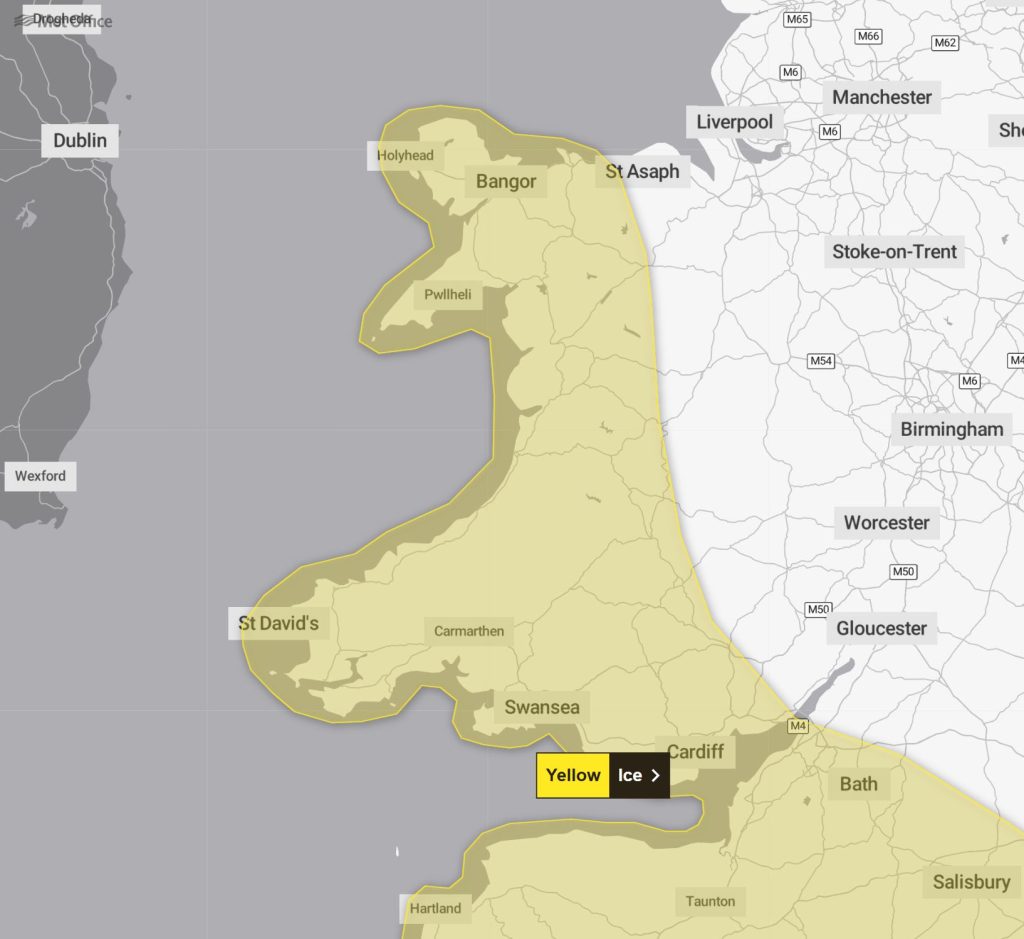
PEMBROKESHESHIRE residents are being urged to take extra care after a yellow weather warning for ice was issued for the whole of Wales.
The alert, issued by the Met Office, covers the period from late Sunday night (Feb 1) until mid-morning on Monday (Feb 2), with temperatures expected to drop to around minus two degrees Celsius in some areas.
Forecasters say wet roads and surfaces left by earlier showers are likely to freeze quickly after dark, creating icy stretches on untreated roads, pavements and rural lanes across Pembrokeshire.
Travel disruption possible
The Met Office warns that icy patches may form widely, increasing the risk of slips and falls and making journeys slower and more hazardous, particularly during the Monday morning commute.
Untreated side roads, country routes and shaded areas are expected to be most affected, with black ice possible in places where frost is not easily visible.
Drivers are advised to allow extra time for journeys, slow down and keep a safe distance from other vehicles. Pedestrians are urged to wear suitable footwear and take care on steps, slopes and pavements.
Gritting teams are expected to treat main routes overnight, but officials warn that not every road can be covered.
Local outlook
Temperatures across the county are forecast to fall sharply after sunset on Sunday, with frost forming widely before dawn. Inland and higher ground areas are likely to see the coldest conditions.
Residents are also being encouraged to check on elderly or vulnerable neighbours and ensure homes are adequately heated during the cold spell.
Conditions are expected to improve later on Monday as temperatures rise above freezing, but further updates may be issued if the forecast changes.
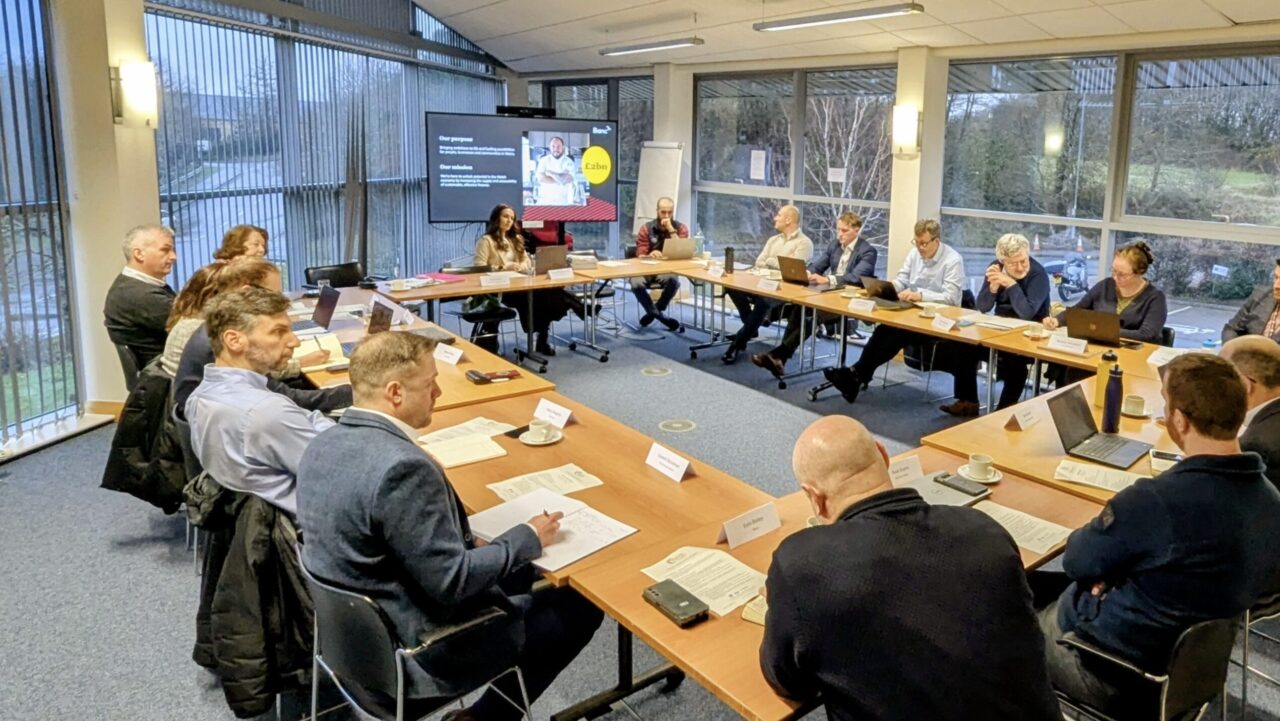
EARLIER this week, Marine Energy Wales brought together senior representatives from national and devolved finance institutions with developers, ports and supply-chain companies operating across Wales’ offshore renewable energy sector for a dedicated finance roundtable in Pembroke Dock. Attendance was limited to premium MEW members to allow for frank, focused discussion.
The session was intentionally designed to be different.
Rather than relying on formal presentations or sales pitches, the roundtable created a facilitated, closed-door space for open dialogue. Finance organisations were able to explain clearly how they operate, what types of projects they can support, and where constraints still exist. Industry participants, in turn, set out the real-world challenges they are facing across tidal energy, floating offshore wind, port infrastructure and supply-chain development.
What emerged was more than information sharing—it was a clearer, shared understanding of how decisions are made on both sides.
From siloed conversations to shared problem-solving
A consistent theme from the discussion was that significant public and institutional finance is now available to support clean energy projects. However, navigating that landscape remains complex, particularly for early-stage developments, smaller supply-chain businesses and emerging technologies.
By bringing the right people into the room at the same time, the roundtable helped to:
- demystify how different finance bodies assess risk, scale and project readiness
- highlight where policy ambition, market signals and investment criteria are not yet aligned
- identify opportunities where better sequencing and coordination of funding could unlock progress
- establish direct relationships that will support follow-up conversations beyond the room
The discussion also surfaced where gaps remain. In particular, the need for clearer market signals and more tailored support for tidal stream and other early-stage marine technologies was repeatedly raised. These are challenges that are difficult to address in isolation, but far more productive to tackle collectively.
The value of convening
For Marine Energy Wales, the roundtable reinforced the importance of our role as a neutral convener for the sector.
Members consistently tell us that access to finance is one of the most significant barriers to progress—not only in terms of capital availability, but in understanding how to engage effectively with funders. At the same time, finance organisations are keen to deepen their understanding of project development timelines, technology risk and the scale of Welsh supply-chain ambition.
Creating space for those conversations is where real value is added.
This is not about Marine Energy Wales brokering individual deals. It is about building shared understanding, reducing friction, and helping to align finance, policy and industry around credible pathways to delivery.
What comes next
This roundtable was not a one-off.

Marine Energy Wales is committed to continuing this work, developing structured and trusted forums where finance, industry and government can engage early, openly and constructively. As Wales moves from ambition to delivery in offshore wind and tidal energy, these relationships and conversations will be critical to ensuring projects are investable, deliverable and anchored in Welsh economic benefit.
We will continue to work with our members and partners to identify priority issues, convene the right voices, and help turn opportunity into tangible outcomes on the ground.

THE LATEST figures are in, and they’re impressive – Wales has pushed its recycling rate up to 68.4% in 2024-25, climbing from 66.6% the previous year. It’s a remarkable turnaround for a country that was recycling just 5% of its waste before devolution.
The boost comes as Wales’ new workplace recycling rules begin to show real results. Businesses, public sector organisations and third sector workplaces across the country are now required to separate key recyclable materials, and it’s making a measurable difference.
Local authorities collected an additional 8,187 tonnes of recyclable material from workplaces this year – that’s a 42% jump compared to last year. Meanwhile, residual waste from workplaces has dropped by 15.8%, meaning thousands of tonnes of valuable materials are being fed back into the economy rather than burned or buried.
The landfill figures tell their own story – just 0.7% of Wales’ waste ended up in landfill in 2024-25, compared to 95% before devolution.
Deputy First Minister Huw Irranca-Davies, who has responsibility for climate change, said: “We continue to build on Wales’ already world class recycling. This shows the huge shift in attitudes over the last few decades; recycling is now a part of who we are as a nation.”

He added: “I’m proud of every person in Wales who has played their part in getting us to where we are today – in our homes and now in our workplaces too. Thank you for joining this collective effort.”
Wales currently sits second in the world for recycling – leading the UK and trailing only Austria in global rankings published by Eunomia Research and Consulting and Reloop in 2024. More than half of Welsh councils hit the 70% recycling target, and over 90% improved their rates year-on-year.
The Deputy First Minister said: “Our recycling track record is something to be proud of as we continue taking action to tackle the climate and nature emergency and grow the green economy. But let’s not be complacent. Being number one in the world for recycling is within our grasp if we keep up the momentum.”



Crime13 hours ago
Sex offender jailed after living off grid in Pembrokeshire and refusing to register
Man walked into police station after months avoiding authorities A CONVICTED sex offender who told police he intended to live...


Crime19 hours ago
More rape and sexual assault survivors to get right to challenge dropped cases
New review scheme to be rolled out across CPS Cymru-Wales following successful pilot SURVIVORS of rape and serious sexual assault...

Crime2 days ago
Man spared jail after admitting child abuse image offences
Police seized devices after intelligence linked Pembrokeshire address to illegal cloud storage accounts A 23-YEAR-OLD Pembrokeshire man has avoided immediate...


Community2 days ago
Cleddau at heart of major water reforms as ministers promise ‘fundamental reset’
New regulation plan aims to tackle pollution, sewage spills and ageing infrastructure COMMUNITIES along the River Cleddau could see tighter...


Crime2 days ago
Man caught in hotel sting after trying to meet girl, 13
Laugharne defendant confronted by paedophile hunters at St Clears Travelodge before suspended jail term at Swansea Crown Court A LAUGHARNE...


News2 days ago
Princess of Wales visits historic Pembrokeshire woollen mill
Catherine the Princess of Wales visited Melin Tregwynt, a historic family-owned woollen mill, today, highlighting the enduring traditions and skills...


Crime3 days ago
Arrest made after Carmarthen park stabbing investigation
Police thank community and media following public appeal to trace suspect AN ARREST has been made following last week’s stabbing...


Crime3 days ago
Search continues for attempted murder suspect after Carmarthen park stabbing
Police expand searches across riverbank and woodland as public urged to come forward with information DYFED-POWYS POLICE say their search for...

Community3 days ago
Flood alert issued for Pembrokeshire coast this evening
Pembrokeshire residents are being urged to prepare for possible flooding along the coastline between St Dogmaels, Cardigan and Amroth, after...


News3 days ago
Tributes paid to Pembroke Dock Councillor and former Mayor Pamela George
It is with great sadness that the Pembroke Dock community mourns the passing of Councillor Pamela George. Pamela, affectionately known...
-

 Health7 days ago
Consultation reveals lack of public trust in health board
-
News2 days ago
Princess of Wales visits historic Pembrokeshire woollen mill
-

 Crime6 days ago
Pembroke man accused of child sex offences sent to Swansea Crown Court
-
Crime13 hours ago
Sex offender jailed after living off grid in Pembrokeshire and refusing to register
-

 Health4 days ago
Doctor struck off after sexual misconduct findings at Withybush Hospital
-
 Crime2 days ago
Hakin man’s appeal delayed again as Crown Court seeks guidance on insurance law
-

 Community6 days ago
50s women threaten legal action over pension compensation refusal
-

 Business7 days ago
Eight-year prison sentence after vehicle stop uncovers drugs worth over £150,000