


Farming
Animal health and welfare workshops help family farm shape future business

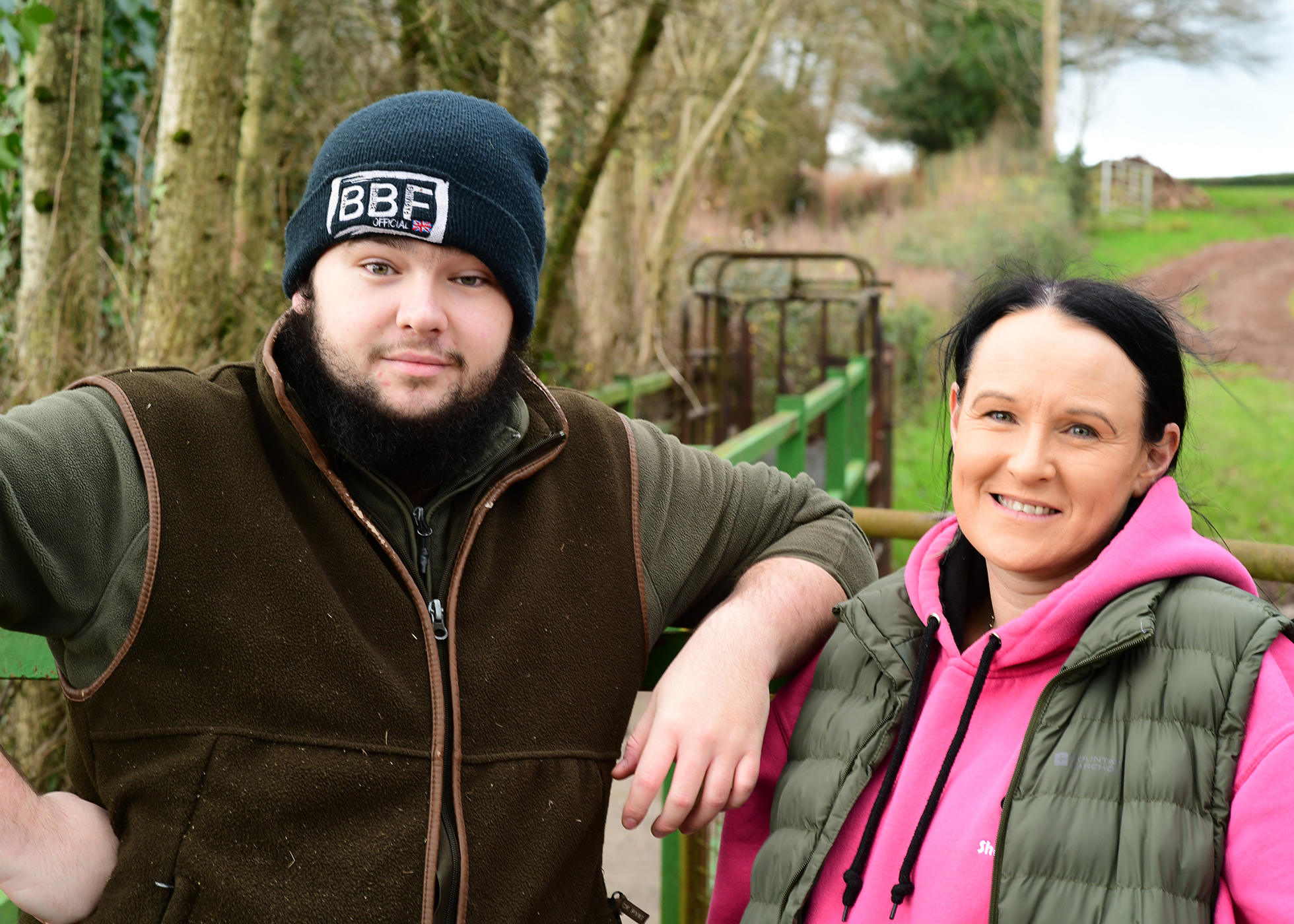
AN eagerness to learn new skills and knowledge is helping mother and son Dianna and Iestyn Spary to continually improve their livestock farming enterprise and build a financially sustainable business fit for the future.
Technical expertise and good business sense are not qualities the Sparys lack since embarking on an impressive number of Farming Connect workshops, covering a range of animal health and welfare topics.
“It’s been an amazing opportunity, we have learned so much that we can apply within the day to day running of our farm and herd, and we can draw on that knowledge as we look at developing new enterprises and diversifications,’’ says Dianna.
She is the fifth generation of her family to farm at Goytre Farm at New Church West, Chepstow, Iestyn the sixth.
Together they farm 110 hectares, running a Hereford-cross beef suckler herd and also rearing beef cattle purchased as baby calves, including more recently British Blues, taking these through to slaughter.

Although they have been immersed in agriculture all their lives, they recognise that it is an industry that is constantly changing as new research and ideas are rolled out and applied.
This is where the Farming Connect workshops have been so incredibly valuable, says Dianna.
“You are never too old to learn, things are changing all the time. If we hadn’t got involved in attending the workshops, we would never have known about some of those new ways of doing things.’’
From learning how to maximise suckler cow productivity and protecting youngstock health to understanding diseases such as Johne’s and bovine TB, the animal health and welfare training workshops have been “enormously valuable’’, she adds.
The pair have tapped into Farming Connect accredited training courses covering areas such as calf management, health and housing, body condition scoring and safe use of veterinary medicines.
“You name it we have done it,’’ says Dianna.
They were announced the winners of the 2023 Farming Connect Animal Health and Welfare Award at the Lantra Cymru Awards in January.

The knowledge gained through Farming Connect workshops and training has helped inform changes in the business.
“We now monitor cattle weights more closely and have introduced different ways of feeding,’’ Dianna explains.
“We have also been revamping all the cattle sheds and have a couple of new ones that will be going up.
“We’ve also invested in calf jackets and if there are any drops in weights, we are more responsive with feed intakes, little things like that.’’
Iestyn has also benefited from a number of sheep-related topics offered through the animal health workshops.
Through the Farming Connect Advisory Service, they have received specialist veterinary advice on their Herd Health Plan with a focus on incoming stock and biosecurity. They have also had guidance on soil health through the soil clinic.
The Sparys largely use traditional farming methods at Goytre Farm where they have several hay meadows.
All feed is produced on-farm. “By doing everything in-house we know exactly what we are feeding and that’s important to us,’’ says Dianna.
That distinctiveness, which sets them apart from some of the more mainstream farming systems, has given them the confidence to consider establishing a diversification into meat box sales, what Dianna describes as a ‘farm to fork’ approach.
Working with a local butcher who has an abattoir licence, they hope to do everything on-site, from slaughter through to hanging the carcass for 28 days, and then selling cuts direct to the consumer.
“We have also spoken to a chef who is going to produce some recipe cards for us to include in the boxes along with a bit of history of where the meat has come from,’’ says Dianna.
Another future project could be converting stone barns in the farmyard to holiday accommodation.
To help focus their minds on their plans, the Sparys will get guidance at a Farming Connect diversification surgery; they have also signed up for a ‘planning a diversification’ training course and will attend a ‘Dos and Don’ts of Diversification’ event in the coming weeks.
For Iestyn, another form of diversification, into agricultural contracting, has provided a secondary income stream.
His customer base is largely farms with smaller acreages with crops that require harvesting or spraying.
Farming Connect has helped with this process too as Iestyn has gained his Level 2 Award in the Safe Use of Pesticides (PA1) and Safe Application of Pesticides Using Vehicle mounted Boom Sprayer Equipment (PA2).
He also offers field maintenance and fencing and works on a neighbouring farm during the lambing season.
This is where Farming Connect has again helped; through the animal health workshops, he has covered modules advising on the prevention of lambing losses and lameness, improving lamb performance post-weaning and parasite controls.
Dianna says the opportunities available through Farming Connect have really helped to drive the family farming business forward.
“We have a good relationship with our local Farming Connect development officer Lisa Powell, she has been brilliant in giving us advice on which courses and workshops are right for us and signing us up for those,’’ she says.
All your achievements, training and knowledge transfer activities are saved within your personal, online Storfa Sgiliau account, the unique, online professional development tool, available for you to view and download at any time from your BOSS (Business Online Support Service) account.

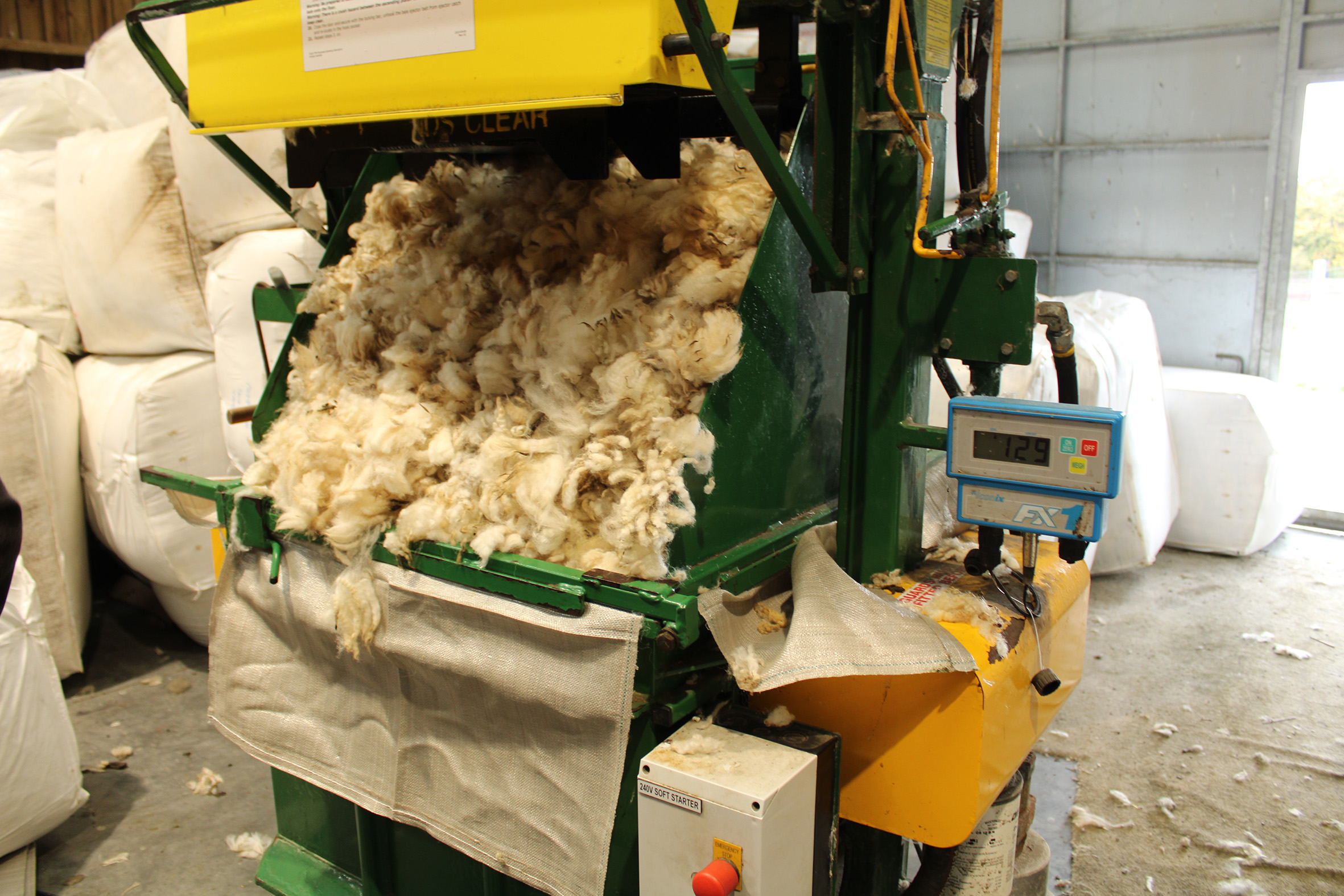
AS GLOBAL demand for sustainable textiles continues to grow, wool is presenting farmers with a renewed opportunity to increase revenue by improving flock quality.
Competition shearer and sheep farmer Matt Smith has been working for several years to enhance the value of wool from his Romney flock. However, he believes it could take another decade before he achieves the level of fleece quality needed to deliver a significant uplift in returns.
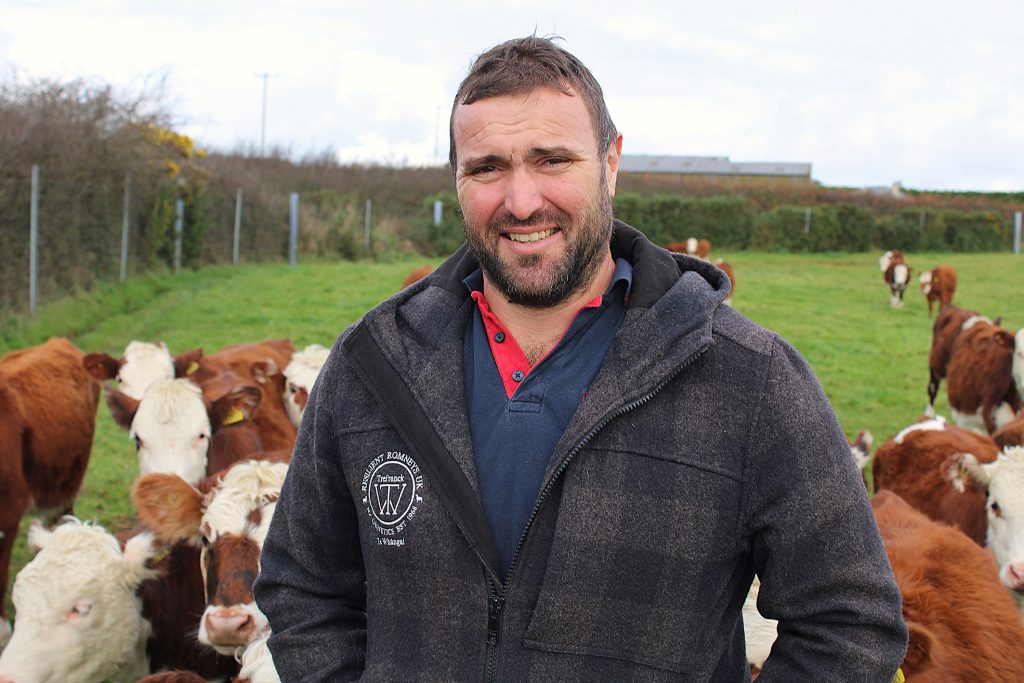
“We have invested heavily in genetics, particularly to improve micron density within the flock,” he said. “High-quality wool is in demand for premium, sustainable clothing, and better micron density combined with a higher comfort factor will always attract stronger prices.”
While his flock already produces wool that commands a good return, Smith believes there is further potential—particularly with the introduction of new technology that allows more precise measurement of wool quality.
“I have been fortunate to trial a new handheld device from Woven Optics, which measures micron and comfort factor in real time,” he explained. “It has allowed me to clearly see how breeding decisions are influencing wool quality.”

Developed in Australia, the Woven Optics device is designed for use in a range of conditions and has proven to be an accurate on-farm testing tool. In the UK, the company has partnered with Heiniger to bring the technology to farmers.
“I have been working with Hefin Rowlands from Heiniger to monitor our Romneys using the device,” Smith added. “While it represents a significant investment, it is small compared to what we already spend on genetics.”
He believes the technology offers farmers a practical way to track improvements and better understand how breeding choices impact wool value.
“It is an enabler,” he said. “Having the ability to test wool on farm in seconds could help shift the industry back towards prioritising wool as a key genetic trait.”

Smith argues that this shift is not just about profitability, but also about animal health and long-term sustainability.
“In recent years, breeding has focused heavily on carcass weight to meet market demand for larger cuts of meat, and wool quality has been overlooked,” he said. “That has had unintended consequences.”
Drawing on his experience as a contract shearer across the UK, Smith has observed a decline in fleece quality in many flocks.

“I am seeing more yellowing in fleeces and a stronger odour, which can increase susceptibility to fly problems,” he said.
He warns that neglecting wool quality may also be contributing to a growing reliance on chemicals, antibiotics and anthelmintics—raising concerns about resistance and animal welfare.
“As a sheep breeding nation, we risk forgetting how important wool quality is to overall sheep health,” he added. “Changes in fleece condition, combined with warmer temperatures, can increase flystrike risk. By breeding for better wool, we can reduce these issues and cut reliance on pharmaceuticals.”
Smith believes that embracing technology such as the Woven Optics device could help reverse current trends.
“Breeding in the wrong direction is not sustainable,” he said. “By improving wool quality, farmers can produce healthier, more valuable sheep. The tools are now available, and the opportunity is there to restore wool as a priority within UK sheep farming.”

A CALL to allow a Pembrokeshire farm to keep a storage facility for more than 200 caravans, boats, cars and farm machines as a form of diversification has been submitted to county planners.
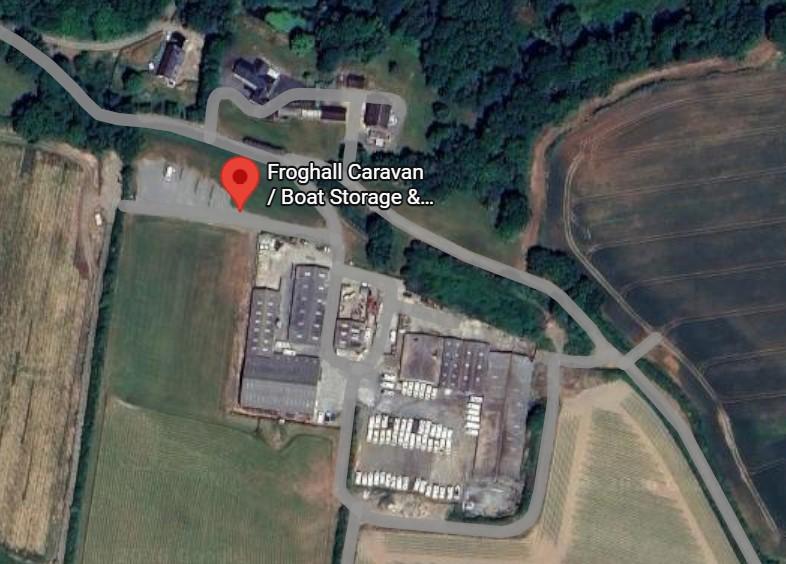
In an application to Pembrokeshire County Council, Mr & Mrs Davies, through agent A.D Architectural Design Consultants Ltd, seek retrospective permission for a farm diversification scheme to accommodate the storage of caravans, boats, cars and farm machinery in four of eight agricultural sheds and on hard-standing concrete courtyards at Froghall Farm, Spittal.
The works were completed back in 2019.
A supporting statement accompanying the application said: “At present, four of the eight shed structures on the site form part of the caravan and boat storage scheme, with additional touring caravans stored externally on the concrete courtyards.”
It said the storage provision was split as follows: Shed 1 – farm workshop, and 30 caravans, motorhomes, boats & cars; shed 2 – 16 caravans; shed 3 – 28 caravans, motorhomes, boats & cars – 28; shed 8 – cubicle shed, 11 units of farm machines, motorhomes & caravans; courtyard storage of 120 touring caravans, for an overall storage of 205 units.
The statement added: “It would take place in an accessible location, would incorporate sustainable transport and accessibility principles and would not result in a detrimental impact on highway safety or in traffic exceeding the capacity of the highway network; access road is a no-through road with no increase in traffic due to the nature of development.
“There won’t be a constant stream/flow of traffic as the site’s used for storage. Our client offers a towing service to sites in and around Pembrokeshire, which is used by 45 per cent of their customers, who are unable or prefer not to tow themselves. This gives our client control over the flow of traffic.”
The application will be considered by county planners at a later date.
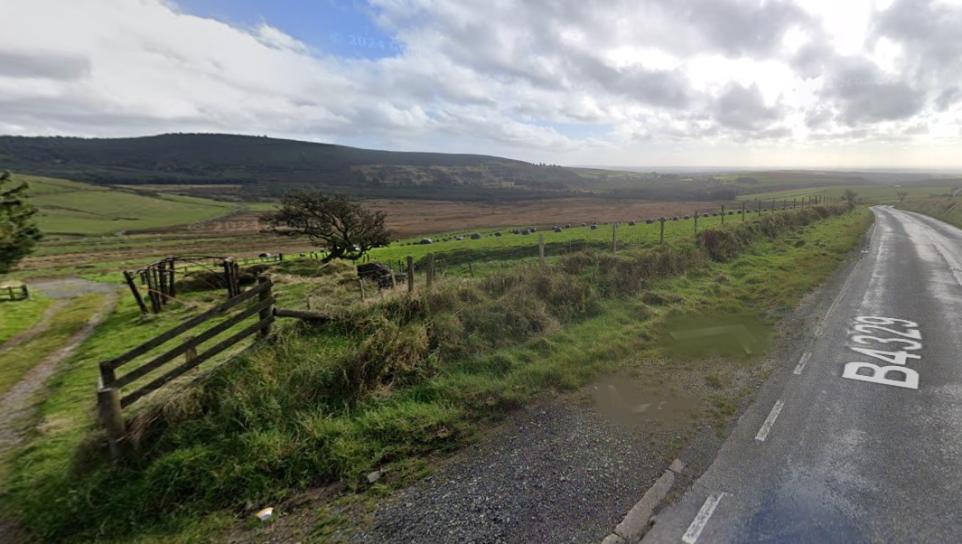
A CALL to rebuild a fire-damaged Pembrokeshire farm building, as a family home to help manage one of the largest sheep flocks in Wales, has been submitted to the national park.
In the application to Pembrokeshire Coast National Park, D B Davies and Sons through agent Harries Planning Design Management, with a supporting statement by Reading Agricultural Consultants Ltd, seek permission to renovate an existing fire-damaged dwelling, together with the conversion and extension of outbuildings to form an agricultural worker’s dwelling at Mynydd Du, Rosebush.
The supporting statement through Reading Agricultural Consultants Ltd says Mynydd Du is part of a wider holding which includes Eisteddfa Fawr and land around the village of Brynberian, the farms approximately six km apart, with land under control of the applicant amounting to some 1,500 acres, with a further 3,000 acres of Preseli mountain common land also used; the land accommodating a 5,000-ewe flock with 10 suckler cows and followers.
It says DB Davies & Sons Unlimited, has five partners: the two Davies brothers, Berian and Ken; their wives; and Berian’s son, Dyfed.
Berian and Ken are in their late 70s, with most of the heavy work on the farm is undertaken by Dyfed.
Dyfed and his wife Megan are first language Welsh speakers, living some 10 km away in Nevern, while Berian and Ken, and their wives, live at Eisteddfa Fawr, Brynberian.
The dwelling at Mynydd Du, where most sheep are now wintered, is structurally sound and repairable but has been unoccupied since 1990, and was subject to arson circa 2013, the statement says.
It says Dyfed works full-time on the farm, alone with increasing frequency as the older business members are above retirement age, working “long hours out of necessity to undertake all the work associated with one of the largest flocks of sheep in Wales”.
“His working hours are extended further due to the fact that he lives remote (6kms) from the main block of land at Tyllosg, where Mynydd Du is situated in the centre of the farm. Travelling back and forth several times each day during lambing and other times during poor weather, to check on flock welfare is an arduous task and can be dangerous, particularly if driving when tired during inclement conditions.”

The statement adds: “The application seeks permission to repair the fire damaged dwelling at Mynydd Du and bring it back to serve a useful purpose to enable Dyfed to closely monitor the ewes, not only at lambing, but throughout the year when the flock is grazing on the adjacent common land.
“It will also enable Dyfed to be with his partner and young child on a more regular basis than simply at the end of a long day when he is away from their current home, tending the sheep at Mynydd Du.”
The application will be considered by park planners at a later date.


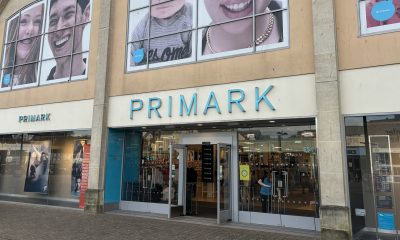

Business15 hours ago
Could Primark be coming to Haverfordwest? Major retailer in talks for former Wilko site
Council confirms advanced discussions as speculation grows over high street boost HAVERFORDWEST could soon see a major high street revival,...


Business16 hours ago
Rail investment ‘could unlock 40,000 jobs and £11bn for Wales’ says new report
RAILWAY stations across Wales could help unlock around 40,000 jobs and more than £11 billion for the economy by 2036,...


Local Government16 hours ago
Milford Haven set for £200m investment with schools, leisure centre and rail upgrade
Council outlines major plans for town with backing from Welsh Government MILFORD HAVEN is set for a major transformation with...
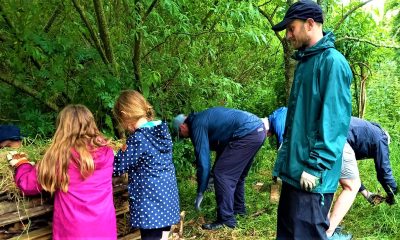

Community1 day ago
Broad Haven volunteers secure ‘national asset’ status for nature reserve
A SMALL stretch of woodland and former opencast coal mine has been transformed into a nationally recognised biodiversity site, in...


Entertainment3 days ago
Tenby steams up in spectacular style as crowds flock to festival
Colourful parade, towering creations and Victorian flair bring town centre to life TENBY was transformed into a vibrant Victorian fantasy...


Crime4 days ago
Publican jailed for six years for supplying cocaine and cannabis
Milford Haven man sentenced at Swansea Crown Court following drug dealing operation A MILFORD HAVEN publican has been jailed for...


Local Government4 days ago
Poverty summit highlights support efforts across Pembrokeshire
A SUMMIT bringing together key organisations from across Pembrokeshire has highlighted both the scale of local poverty and the work...


Education5 days ago
Milford Haven school plans unveiled but funding not yet secured
PLANS for a new £100 million school in Milford Haven have been unveiled, but the project has not yet secured...


News5 days ago
Council unveils plans for new state-of-the-art secondary school in Milford Haven
PEMBROKESHIRE COUNTY COUNCIL has revealed plans for a new state-of-the-art school in Milford Haven, promising modern, inspiring learning spaces for...


Health5 days ago
NHS waiting list falls — but cancer delays and diagnostic backlog worsen
Record progress claimed by Welsh Government as critics warn key targets are still being missed THE NHS in Wales has...
-

 News7 days ago
Emergency services flood Haverfordwest after reports of person in river
-

 Crime6 days ago
Mother given community order after admitting child cruelty offence
-
Health5 days ago
NHS waiting list falls — but cancer delays and diagnostic backlog worsen
-
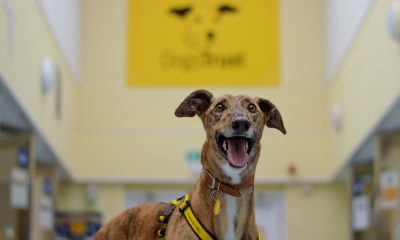
 News6 days ago
Senedd vote to ban greyhound racing hailed as ‘landmark moment’ by charities
-
 News6 days ago
Senedd votes to ban Greyhound racing in Wales to protect animal welfare
-

 News6 days ago
Reform secures first Pembrokeshire councillor in Hakin by-election win
-

 Crime5 days ago
Woman stole from pharmacy despite ban, court hears
-
 Crime5 days ago
Illegal workers found at Cardigan takeaway after immigration raid